
Nasolabial Folds: Why They Form and What Actually Softens Them
The science of the lines from nose to mouth — and the topical strategies with real evidence.
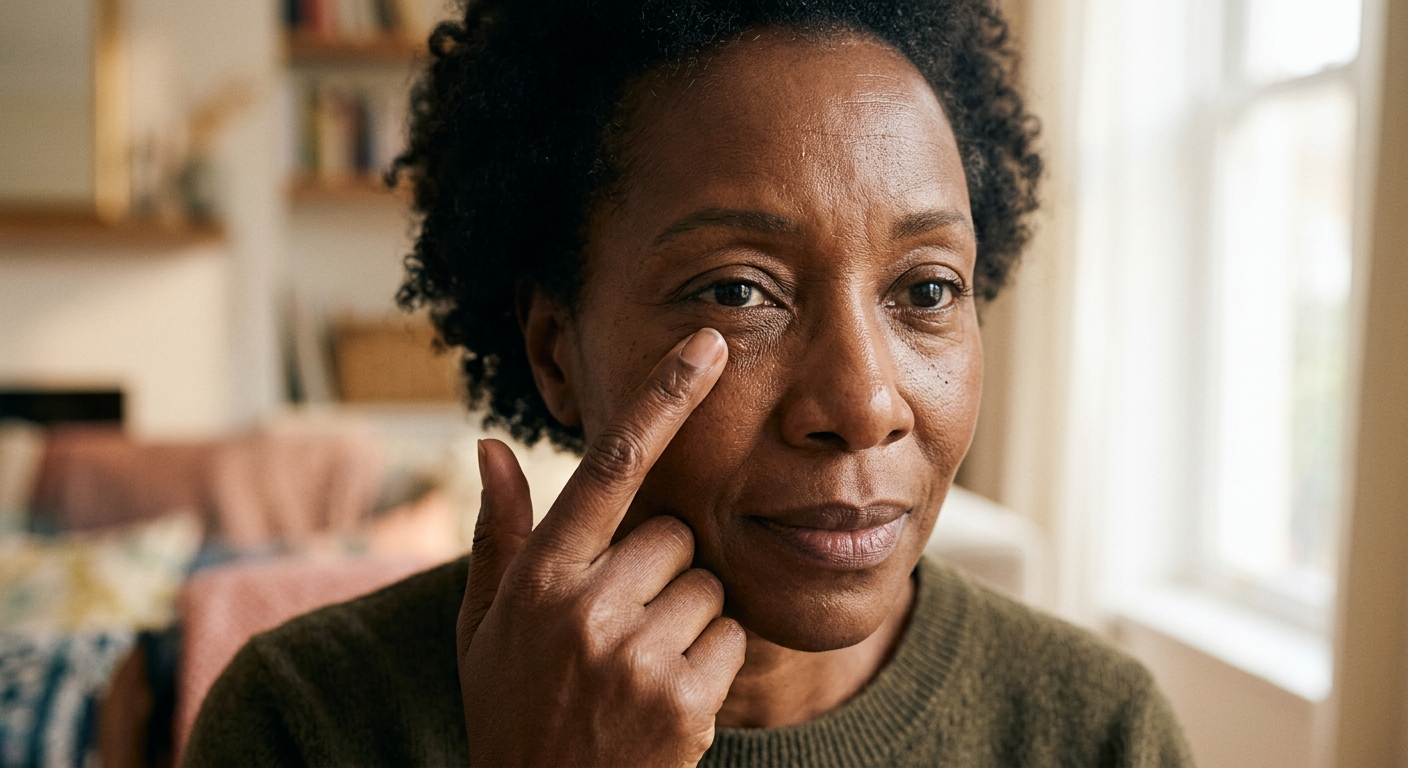
You probably first noticed them in a photo. Two grooves running from the sides of your nose down to the corners of your mouth — quiet during a neutral expression, then deeper and longer the moment you smile. You may have called them smile lines, or wondered if they were always this prominent. They are nasolabial folds, and almost everyone develops them eventually.
What changes after 40 isn’t whether they exist — it’s whether they relax all the way back when you stop smiling. Up to a point, the skin and underlying tissue spring back. After enough years of collagen loss, fat-pad shifting, and muscle pull, they start to stay.
What a Nasolabial Fold Actually Is
The nasolabial fold isn’t a wrinkle in the simple sense. It’s a transition line — the boundary where the cheek tissue ends and the upper lip begins. Anatomically, it sits at the medial border of the nasolabial fat compartment, with several muscles that lift the upper lip (the levator labii superioris group, the zygomaticus muscles) attaching directly into the skin along that line [1].
Every time you smile, those muscles pull the skin into a crease. In your twenties, the dermis snaps back instantly. The fold appears, then disappears. By 45 or 50, three things make that bounce-back less reliable: the collagen scaffolding that holds the skin taut has thinned, the deep fat pad in the cheek has shifted slightly downward, and the muscle attachments have repeatedly etched the same groove for decades.
That’s why a nasolabial fold can be both a static feature (visible at rest) and a dynamic one (deeper when you talk and smile). Treatment that addresses only one component rarely works as well as people hope.
The Three Forces Behind Deepening Folds
1. Collagen loss in the dermis. Type I collagen is the main structural protein of the dermis — the protein that gives skin its tensile strength. After 30, dermal collagen declines steadily; after menopause, it can fall by roughly 30% in the first five years and continues at about 2.1% per postmenopausal year afterward [2]. As the dermal scaffold thins, the skin can’t resist the muscular pull as effectively. The fold stops snapping back.
2. UV-driven matrix breakdown. Sun exposure is the dominant accelerator. UV radiation triggers reactive oxygen species, which activate matrix metalloproteinases (MMPs) — enzymes that degrade collagen and elastin. UV elevates MMP-1, MMP-3, and MMP-9 in human skin in vivo, and these enzymes literally chew through the structural proteins faster than fibroblasts can replace them [3]. This is why folds deepen faster on the side of your face that gets more sun (often the driver’s side, in the U.S.).
What changes after 40 isn’t whether they exist — it’s whether they relax all the way back when you stop smiling.
3. Volume descent. The cheek fat compartments don’t just shrink with age — they shift. The superficial nasolabial fat pad gets stopped at the muscular insertions in the skin, which is why volume seems to “pile up” along the fold. This piling effect is what makes deep folds look like an overhang, especially in profile.
What Topical Treatment Can — and Can’t — Do
Let’s be direct: a serum will not erase a deep nasolabial fold. The fold has a structural component (volume descent, fat compartmentalization) that no cream can reverse. That’s territory for fillers, and dermal fillers are well-documented for this indication.
But topical treatment can absolutely make folds shallower, shorter, and less etched, especially in the early-to-moderate stages — and it’s the only intervention that actually rebuilds the dermal collagen that’s missing in the first place. Skipping that step and going straight to filler is treating the symptom while the underlying scaffold keeps thinning.
The ingredient with the most evidence for this is the retinoid family.
Why Retinoids Are the First-Line Topical
In the landmark 1993 NEJM study, Griffiths and colleagues showed that tretinoin treatment of photodamaged skin produced an 80% increase in collagen I formation, compared with a 14% decrease with vehicle alone [4]. The point of that study wasn’t just that tretinoin smooths wrinkles — it was that retinoids actually rebuild the dermal scaffold.
For nasolabial folds specifically, a 2015 double-blind randomized trial directly tested topical retinol (0.2%) paired with a botanical booster against prescription tretinoin 0.025%. After 84 days, both treatments produced statistically significant improvements in nasolabial fold appearance — and the retinol formulation matched the tretinoin’s effect on the fold while being substantially better tolerated [5].
In the landmark 1993 NEJM study, Griffiths and colleagues showed that tretinoin treatment of photodamaged skin produced an 80% increase in collagen I formation, compared with a 14% decrease with vehicle alone.
The mechanism is twofold: retinoids upregulate the genes for collagen, fibronectin, and tropoelastin in dermal fibroblasts, and they suppress MMP-1 expression — meaning more new collagen is laid down while less existing collagen is degraded [6]. Over months, that shifts the dermal scaffold toward density rather than thinning.
If you’re starting topical retinoids specifically for nasolabial folds, the article on retinol and peptides and how long retinol takes to work cover what to expect over the first six months.
What Else Has Evidence
Topical vitamin C is the best-evidenced antioxidant for boosting collagen synthesis. A 6-month double-blind trial of 5% L-ascorbic acid cream produced significant improvements in deep furrows and skin relief, with histological confirmation of new collagen [7]. Vitamin C is also a cofactor in collagen cross-linking, so it pairs naturally with retinoids.
Peptides, particularly Matrixyl 3000 and copper peptides, have data showing they signal fibroblasts to produce more collagen. They are weaker than retinoids alone but stack well with them for users who want a multi-pathway approach.
Daily SPF, while not glamorous, is the only intervention that prevents new MMP activation in the first place. Folds that aren’t being actively broken down by UV every afternoon respond to topicals far faster.
What Doesn’t Work
Face yoga claims to “lift” the cheeks and reduce nasolabial folds. The mechanism doesn’t hold up: a fold caused partly by repetitive muscle pull is unlikely to improve from more muscle pull. Frownies-style adhesive patches can hold the skin flat overnight, but they don’t change the underlying collagen scaffold. Coconut oil and rosehip oil can hydrate, which masks the appearance temporarily, but neither has clinical-trial-grade evidence for fold reduction.
The Smarter Topical Strategy
The challenge with conventional retinol is that nasolabial fold skin is thin and constantly moving — exactly the area where conventional retinol formulations tend to cause irritation, redness, and peeling. Many women start a retinol, react to it around the mouth and nose, and quit before the collagen-rebuilding effect ever gets a chance to compound.
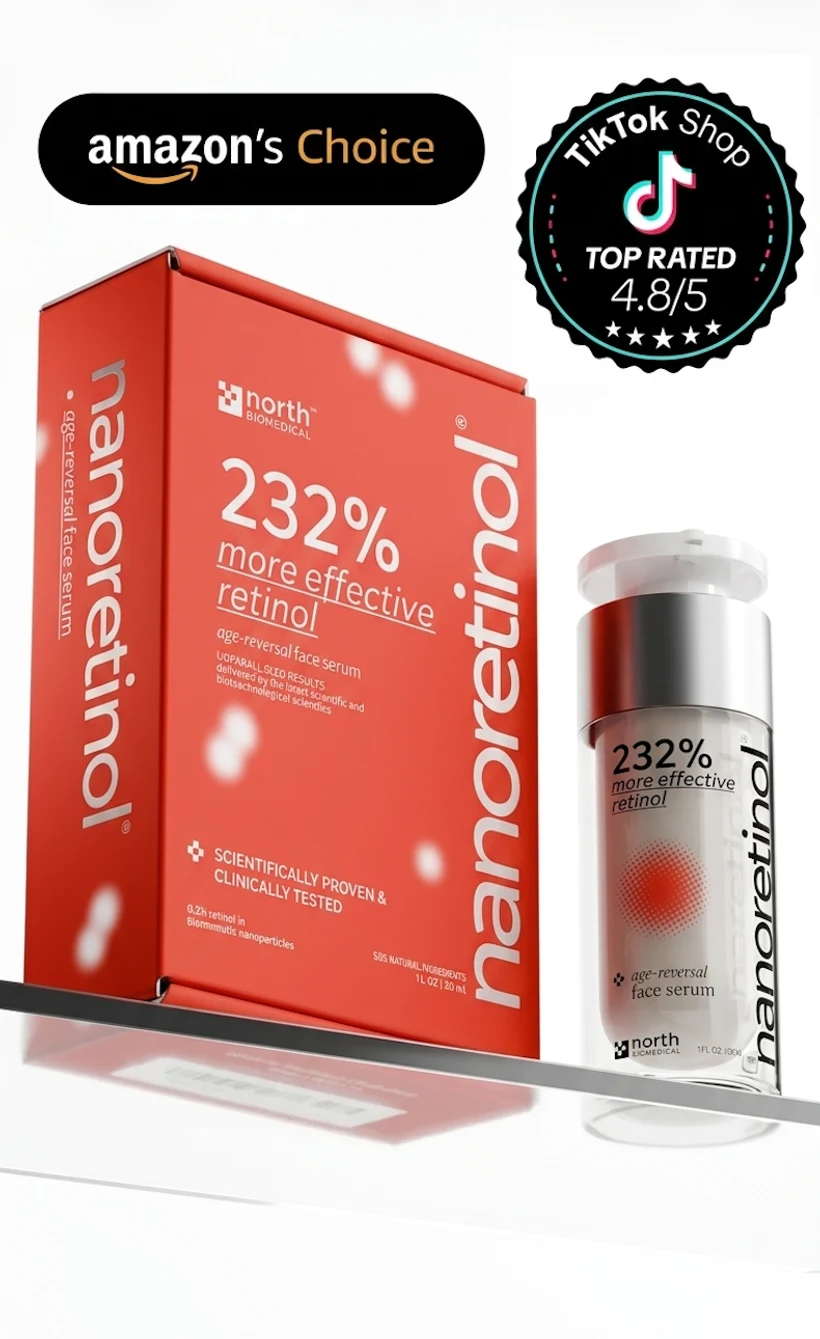
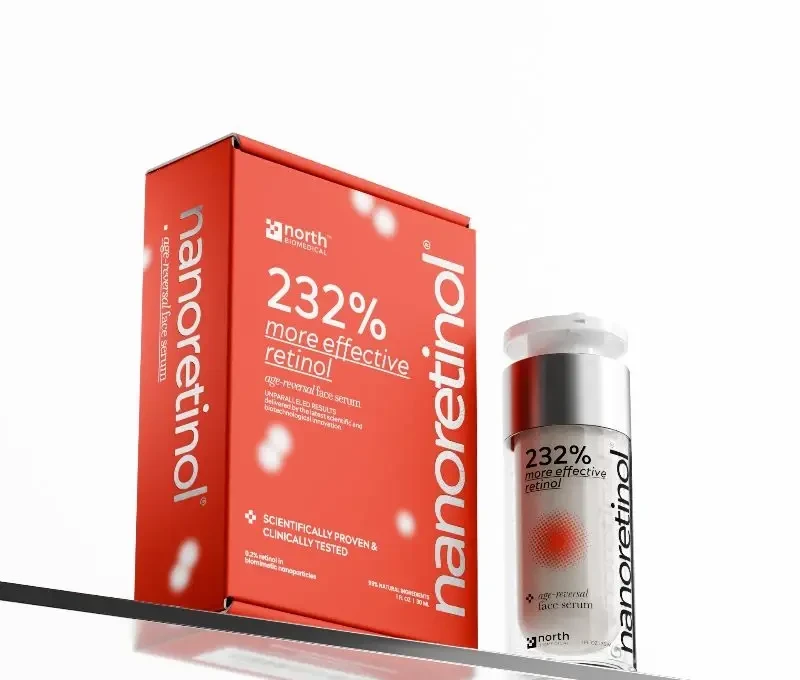
Nanoretinol takes a different approach. It encapsulates retinol in biomimetic lipid nanoparticles that the skin recognizes as “self” — the same drug-delivery technology used in modern medicine to ferry actives across cell membranes without damaging them. The retinol crosses the epithelial barrier intact, without the chemical penetration enhancers that drive irritation.
In clinical study, Nanoretinol delivered 232% more collagen recovery and 73% more elastin recovery than conventional retinol — at only 0.2% concentration. The delivery efficiency, not the dose on the label, is what determines how much retinol actually reaches the fibroblasts that need to rebuild your dermal collagen.
For the area around the nasolabial fold, that gentleness matters. You can apply it nightly — including across the fold itself — without the weeks of irritation that derail most retinol routines.
Putting It Together
Nasolabial folds are a structural feature, not just a wrinkle, which is why no single intervention erases them. But the dermal collagen loss that lets folds deepen is reversible, and topical retinoids are the only widely available intervention proven to rebuild it. Stack a well-tolerated retinol with daily SPF, add vitamin C in the morning if you want a faster collagen response, and give the routine six to twelve months. Compounded over that timeline, the fold doesn’t disappear — but it stops winning.
References
- Hong GW, Song S, Park SY, Lee SB, Wan J, Hu KS, Yi KH. “Why Do Nasolabial Folds Appear? Exploring the Anatomical Perspectives and the Role of Thread-Based Interventions.” Diagnostics (Basel). 2024;14(7):716. doi:10.3390/diagnostics14070716
- Thornton MJ. “Estrogens and aging skin.” Dermato-endocrinology. 2013;5(2):264-270. doi:10.4161/derm.23872
- Pittayapruek P, Meephansan J, Prapapan O, Komine M, Ohtsuki M. “Role of Matrix Metalloproteinases in Photoaging and Photocarcinogenesis.” International Journal of Molecular Sciences. 2016;17(6):868. doi:10.3390/ijms17060868
- Griffiths CE, Russman AN, Majmudar G, Singer RS, Hamilton TA, Voorhees JJ. “Restoration of Collagen Formation in Photodamaged Human Skin by Tretinoin (Retinoic Acid).” New England Journal of Medicine. 1993;329(8):530-535. doi:10.1056/NEJM199308193290803
- Bouloc A, Vergnanini AL, Issa MC. “A double-blind randomized study comparing the association of Retinol and LR2412 with tretinoin 0.025% in photoaged skin.” Journal of Cosmetic Dermatology. 2015;14(1):40-46. doi:10.1111/jocd.12131
- Mukherjee S, Date A, Patravale V, Korting HC, Roeder A, Weindl G. “Retinoids in the treatment of skin aging: an overview of clinical efficacy and safety.” Clinical Interventions in Aging. 2006;1(4):327-348. doi:10.2147/ciia.2006.1.4.327
- Al-Niaimi F, Chiang NYZ. “Topical Vitamin C and the Skin: Mechanisms of Action and Clinical Applications.” Journal of Clinical and Aesthetic Dermatology. 2017;10(7):14-17. PMID: 29104718
- North Biomedical LLC. “Nanoretinol vs. Conventional Retinol: Efficacy in Collagen and Elastin Recovery.” Clinical Study Summary, 2024. northbiomedical.com