Natural Retinol Alternatives: What Actually Works (and What's Hype)
Bakuchiol, rosehip, peptides, vitamin C — the science on the gentler ingredients people reach for instead of retinol, and where each one really lands.
Retinol has a reputation problem. It is the most decorated anti-aging ingredient in dermatology, and yet a huge number of people who try it quietly give up — defeated by the flaking, redness, and stinging that often come first. So they go searching for something gentler, typing “natural retinol alternative” into a search bar and hoping the plant kingdom has an answer that does not sting.
The honest answer is layered. Some natural alternatives have genuinely impressive science behind them. Others are marketing dressed up in botanical language. And there is a third path most people never hear about — one that keeps real retinol but removes the reason people wanted to quit it in the first place.
Why People Want Out of Retinol
To judge the alternatives fairly, it helps to know what retinol actually does. Once absorbed, retinol converts into retinoic acid, which switches on genes that ramp up collagen production, speed cell turnover, and disperse excess pigment. The retinoid family is, by a wide margin, the best-documented anti-aging tool we have, with decades of trials behind it [1].
The problem is not whether retinol works — it plainly does. The problem is tolerance. Conventional retinol formulas tend to disrupt the skin barrier on their way in, which is exactly what produces the redness, peeling, and irritation that send people looking for the exit. For anyone with sensitive skin, that trade-off can feel like it is not worth it. That is the gap the “alternatives” market rushed to fill. Some people also drop retinol because clean-beauty apps flag it, a worry our guide to non-toxic skincare puts into context.
Bakuchiol: The Alternative With Real Evidence
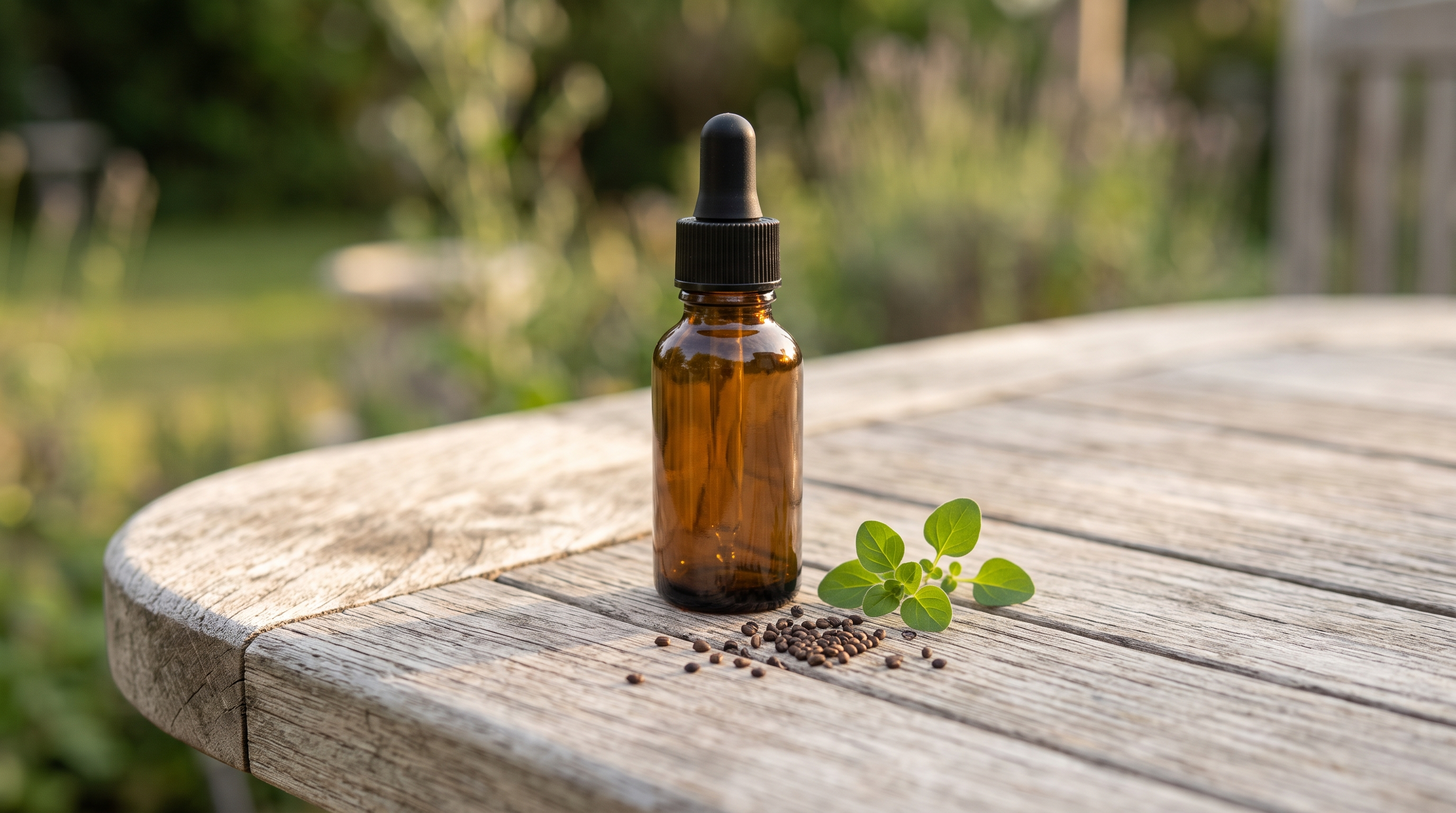
If one natural ingredient has earned its hype, it is bakuchiol. Extracted from the seeds of the Psoralea corylifolia plant, bakuchiol bears no structural resemblance to retinol — and yet it appears to flip many of the same genetic switches.
To judge the alternatives fairly, it helps to know what retinol actually does.
A gene-expression study found that bakuchiol’s effect on skin-cell genes closely mirrored retinol’s, including the upregulation of collagen types I, III, and IV [2]. More convincingly, a randomized, double-blind clinical trial put 0.5% bakuchiol head-to-head against 0.5% retinol over twelve weeks. Both significantly reduced wrinkle area and hyperpigmentation, with no statistical difference between them — but the retinol group reported noticeably more scaling and stinging [3]. In short: comparable results, gentler ride. For sensitive skin, bakuchiol is a legitimately good option, and we compare the two in detail in our guide to bakuchiol vs retinol.
The Supporting Cast — Real, but Different Jobs
Several other “natural” actives get marketed as retinol substitutes. Most are useful — they just are not doing the same job.
Vitamin C is a powerhouse antioxidant that supports collagen synthesis and defends against UV-driven free radicals [4]. It is a brilliant morning partner to sun protection, but it works through a different mechanism than retinol and is best thought of as a teammate, not a replacement.
Peptides are short chains of amino acids that can signal skin to behave more youthfully — supporting firmness and hydration. They are gentle and worth using, but the evidence for dramatic wrinkle reversal is more modest than retinol’s. See our breakdown of peptides for skin.
Rosehip oil and other botanical oils contain trace amounts of vitamin A precursors and useful fatty acids. They are lovely moisturizers and barrier-supporters, but the concentration of active retinoid is far too low to rival a true retinol, which is why a bakuchiol oil that uses a plant oil only as the carrier for purified bakuchiol is a different product altogether.
Instead of swapping retinol out for a lower-potency botanical, it re-engineers how retinol gets into the skin.
The pattern is clear: each of these earns a place in a routine, as do acne-focused botanicals such as tea tree oil, which calms breakouts but does nothing for collagen, yet only bakuchiol genuinely competes with retinol on retinol’s home turf — and even then, retinol remains the more potent of the two.
The Question Nobody Asks
Here is the assumption baked into the whole “natural alternative” search: that the only way to make retinol gentle is to stop using retinol.
But irritation was never an inherent property of retinol itself — it was a property of how retinol was delivered. Conventional formulas rely on chemicals and barrier-disrupting agents to force the molecule through the skin, and that disruption is what causes the burning and peeling. Change the delivery, and you change the experience. Tellingly, the retinoid research community has pointed to advanced delivery systems — nanoparticles in particular — as the most promising route to keeping retinoid efficacy while shedding the irritation [1].
So the real choice is not “harsh retinol or gentle plant.” There is a third option: real retinol, delivered gently.
Where Nanoretinol Fits
This is precisely the principle behind Nanoretinol. Instead of swapping retinol out for a lower-potency botanical, it re-engineers how retinol gets into the skin. The retinol is encapsulated inside biomimetic lipid nanoparticles — particles externally identical to your own skin cells, which the body recognizes as “self” and lets pass through the barrier without the chemical disruption traditional formulas depend on.
The payoff is the best of both worlds the alternatives market keeps promising but rarely delivers: the proven, gene-level potency of genuine retinol, with the gentleness people went looking for in plants. At a fully stabilized 0.2% in a lightweight, water-based, 99% natural formula, it is designed for the exact person who reached for a “natural alternative” because conventional retinol was too much — without asking them to settle for a weaker ingredient. If you want the deeper science on smarter delivery, our article on encapsulated retinol goes further.
So, What Should You Use?
If you want a truly plant-based route and gentleness is your top priority, a well-formulated bakuchiol serum has the evidence to back it up. If you simply want retinol’s results without the sandpaper phase, the smarter move is not to abandon retinol but to upgrade its delivery. Layer in vitamin C and peptides as supporting players, protect your skin from the sun daily, and give whatever you choose a few patient months. The ingredient matters — but so does whether you can actually keep using it.
References
- Mukherjee S, Date A, Patravale V, Korting HC, Roeder A, Weindl G. “Retinoids in the treatment of skin aging: an overview of clinical efficacy and safety.” Clinical Interventions in Aging. 2006;1(4):327-348. doi:10.2147/ciia.2006.1.4.327
- Chaudhuri RK, Bojanowski K. “Bakuchiol: a retinol-like functional compound revealed by gene expression profiling and clinically proven to have anti-aging effects.” International Journal of Cosmetic Science. 2014;36(3):221-230. doi:10.1111/ics.12117
- Dhaliwal S, Rybak I, Ellis SR, et al. “Prospective, randomized, double-blind assessment of topical bakuchiol and retinol for facial photoageing.” British Journal of Dermatology. 2019;180(2):289-296. doi:10.1111/bjd.16918
- Pullar JM, Carr AC, Vissers MCM. “The Roles of Vitamin C in Skin Health.” Nutrients. 2017;9(8):866. doi:10.3390/nu9080866