Niacinamide Sunscreen: What Vitamin B3 Adds to Your SPF
Niacinamide does not block a single ray of UV light, but it may help your skin cope with the light that gets through. Here is what the research shows, who benefits and how to read the label
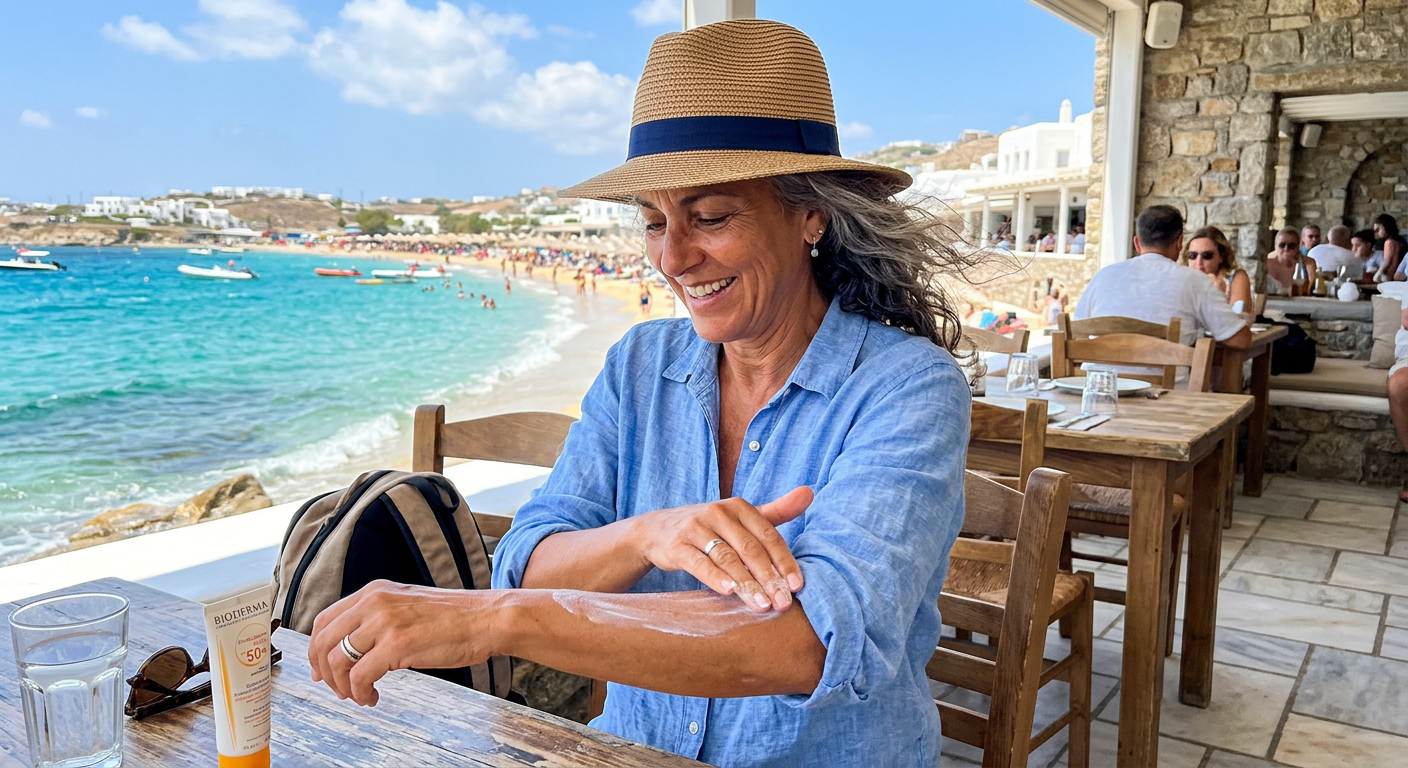
Niacinamide has become one of the most common extras in modern sunscreens. Scan the ingredient list of a new SPF and there is a good chance vitamin B3 sits somewhere below the filters, usually with a front-of-pack promise about brightness, oil control or “skin defense.”
Some of that promise is well supported. Some of it is marketing stretched over a real but narrower finding. This guide explains what niacinamide can genuinely add to a sunscreen, what it cannot do, who benefits most, and how to fit a niacinamide sunscreen into a routine that includes retinol.
Niacinamide is not a UV filter
Start with the most important point. Niacinamide does not absorb or reflect ultraviolet light. Every bit of the SPF number and the broad-spectrum claim on a sunscreen comes from its filters, such as zinc oxide, titanium dioxide or the organic filters in chemical formulas.
A niacinamide sunscreen labeled SPF 30 protects you exactly as well as any other properly applied SPF 30. The vitamin does not raise that number, and it cannot make up for applying too little or skipping reapplication.
What niacinamide may do is help the skin deal with the ultraviolet light that a sunscreen never fully stops. No filter blocks everything, and some of the damage sunlight causes happens at doses far below the ones that turn you pink.
Your skin can lose part of its local immune defense after less sun than it takes to burn, which is the hidden damage niacinamide appears to soften.
What niacinamide adds under the filters
Sunlight does not only burn and age skin. It also suppresses the skin’s immune system for a while, which makes it harder for the body to clear sun-damaged cells. Researchers in Sydney tested this in healthy volunteers by irradiating small patches of their backs and then measuring how well the skin mounted a standard immune reaction. Even doses too low to cause redness suppressed the response, and a 5% nicotinamide lotion (nicotinamide is another name for niacinamide) applied to the skin prevented that suppression [1]. The authors concluded that it could be added to sunscreens or after-sun lotions to improve protection.
Your skin can lose part of its local immune defense after less sun than it takes to burn, which is the hidden damage niacinamide appears to soften.
A follow-up series of four randomized studies found that topical nicotinamide at 0.2% or 5% protected against immune suppression caused by short-wave light, long-wave light and repeated simulated sunlight [2]. That matters because long-wave ultraviolet light, which most sunscreens filter less well, was strongly immunosuppressive even at doses equivalent to about 20 minutes in the sun.
The same group showed in laboratory skin cells and in pieces of human skin that nicotinamide speeds the repair of ultraviolet-induced DNA damage, partly by keeping cells supplied with the energy that repair requires [3].
The most famous niacinamide trial is a different kind of evidence. In a phase 3 trial of 386 people who had already had at least two skin cancers, 500 mg of oral nicotinamide twice daily lowered the rate of new non-melanoma skin cancers by 23% over 12 months compared with placebo, and the benefit faded once people stopped taking it [4]. That study used tablets in a high-risk group, so it does not show that a sunscreen with a little niacinamide prevents cancer. It does show that the vitamin’s effect on sun-damaged skin is real enough to measure in people.
The everyday benefits you will actually notice
Most people do not buy a niacinamide sunscreen for immune protection they cannot feel. They buy it for the cosmetic effects, and here the evidence is solid.
- Less shine: in a placebo-controlled trial of 100 Japanese adults, a 2% niacinamide moisturizer significantly lowered sebum production after two and four weeks, and in a separate split-face study of 30 Caucasian adults it reduced surface oil after six weeks [5].
- Fewer dark spots: in laboratory models, niacinamide blocked 35% to 68% of the transfer of pigment from melanocytes into surrounding skin cells. In a trial of 120 Japanese women with facial tanning that compared a vehicle, a sunscreen and a sunscreen with 2% niacinamide, niacinamide significantly reduced hyperpigmentation and lightened skin compared with the vehicle after 4 weeks [6].
- Smoother, more even aging skin: in a 12-week split-face trial of 50 women with sun-aged skin, 5% niacinamide reduced fine lines, wrinkles, spots, red blotchiness and sallowness, and improved elasticity [7].
If dark spots are your main reason for buying, our guide to choosing sunscreen for hyperpigmentation explains why visible light and tinted iron oxides matter as much as SPF for melasma and post-acne marks, and when a niacinamide formula is worth the extra cost.
Your skin needs about 4 weeks of daily niacinamide before blotches and shine start to fade, which is longer than most people give a new sunscreen.
Who a niacinamide sunscreen suits
It is a strong choice if you have oily or combination skin, visible pores, uneven tone, post-acne marks or early sun spots, or if you simply want one product that protects and treats in the morning.
Your skin needs about 4 weeks of daily niacinamide before blotches and shine start to fade, which is longer than most people give a new sunscreen.
It also suits sensitive skin better than many actives, because niacinamide is generally well tolerated at the 2% to 5% levels used in skincare. If you are new to the ingredient, our overview of niacinamide benefits covers how it strengthens the barrier, how it differs from vitamin C and why it pairs with almost everything else in a routine.
Very dry skin is the one group that may want a richer formula, since many niacinamide sunscreens are designed as light, mattifying fluids for oily skin.
How to read the label
- Broad spectrum and SPF 30 or higher: these claims come from the filters, so check them first and treat niacinamide as a bonus.
- Filter type: mineral formulas use zinc oxide or titanium dioxide, while chemical formulas use organic filters, and our comparison of mineral vs chemical sunscreen walks through how each feels, how each protects and which suits sensitive or darker skin.
- Where niacinamide sits: brands rarely state the percentage, but if niacinamide appears in the first half of the ingredient list after the filters, the product likely contains a meaningful amount.
- Texture: gels and fluids suit oily skin, and the best formulas for shine control are covered in our guide to the best sunscreen for oily skin, which also explains why a matte finish depends on more than the filter.
- Fragrance-free: helpful if you plan to use retinol at night.
Building it into a retinol routine
The single best anti-aging habit is still plain daily sunscreen. In a randomized trial of 903 Australian adults under 55, people assigned to daily broad-spectrum sunscreen showed no detectable increase in skin aging over four and a half years, and their aging was 24% lower than in people who used sunscreen when they felt like it [8].
That makes a niacinamide sunscreen an ideal morning partner for retinol. The two ingredients work on different problems and do not interfere with each other, and retinol makes daily sun protection even more important.
A simple plan:
- Morning: cleanse, apply moisturizer if you need it, then a generous layer of niacinamide sunscreen. Reapply when you are outdoors.
- Evening: cleanse, apply retinol, then moisturizer.
- Skip doubling up: if your night serum is already a niacinamide product, a niacinamide sunscreen is still fine. The ingredient is gentle and does not build up to irritating levels.
Where Nanoretinol fits
A niacinamide sunscreen protects and evens your skin by day, but it does not rebuild the collagen that sunlight has already broken down. Retinol does. The problem is that many conventional retinol formulas rely on chemicals that loosen the skin’s protective lipids to push retinol through, which is what causes the redness and peeling that makes people quit.
Nanoretinol takes a different route. Its 0.2% stabilized retinol is carried in biomimetic lipid nanoparticles that the skin recognizes as its own, so retinol passes the barrier without damaging it. The water-based gel absorbs completely to a smooth matte finish and suits oily, combination and sensitive skin, so it sits comfortably under a morning sunscreen routine.
In North Biomedical’s study summary, Nanoretinol was 232% more effective in collagen recovery and 73% more effective in elastin recovery than conventional retinol, and over 56 days of clinical use, skin firmness increased by 61% and elasticity by 56% [9]. Apply it at night, and wear your niacinamide sunscreen every morning after.
References
- Damian DL, Patterson CR, Stapelberg M, et al. “UV radiation-induced immunosuppression is greater in men and prevented by topical nicotinamide.” Journal of Investigative Dermatology. 2008;128(2):447-454. doi:10.1038/sj.jid.5701058
- Sivapirabu G, Yiasemides E, Halliday GM, et al. “Topical nicotinamide modulates cellular energy metabolism and provides broad-spectrum protection against ultraviolet radiation-induced immunosuppression in humans.” British Journal of Dermatology. 2009;161(6):1357-1364. doi:10.1111/j.1365-2133.2009.09244.x
- Surjana D, Halliday GM, Damian DL. “Nicotinamide enhances repair of ultraviolet radiation-induced DNA damage in human keratinocytes and ex vivo skin.” Carcinogenesis. 2013;34(5):1144-1149. doi:10.1093/carcin/bgt017
- Chen AC, Martin AJ, Choy B, et al. “A Phase 3 Randomized Trial of Nicotinamide for Skin-Cancer Chemoprevention.” New England Journal of Medicine. 2015;373(17):1618-1626. doi:10.1056/NEJMoa1506197
- Draelos ZD, Matsubara A, Smiles K. “The effect of 2% niacinamide on facial sebum production.” Journal of Cosmetic and Laser Therapy. 2006;8(2):96-101. doi:10.1080/14764170600717704
- Hakozaki T, Minwalla L, Zhuang J, et al. “The effect of niacinamide on reducing cutaneous pigmentation and suppression of melanosome transfer.” British Journal of Dermatology. 2002;147(1):20-31. doi:10.1046/j.1365-2133.2002.04834.x
- Bissett DL, Oblong JE, Berge CA. “Niacinamide: A B vitamin that improves aging facial skin appearance.” Dermatologic Surgery. 2005;31(7 Pt 2):860-865. doi:10.1111/j.1524-4725.2005.31732
- Hughes MC, Williams GM, Baker P, Green AC. “Sunscreen and prevention of skin aging: a randomized trial.” Annals of Internal Medicine. 2013;158(11):781-790. doi:10.7326/0003-4819-158-11-201306040-00002
- North Biomedical LLC. “Nanoretinol vs. Conventional Retinol: Efficacy in Collagen and Elastin Recovery.” Clinical Study Summary, 2024. Study summary