
Best Sunscreen for Oily Skin: Why the Vehicle Matters More Than the SPF
Shine, slide and pilling are formulation problems, not filter problems — and the fix changes how much protection you actually get
People with oily skin rarely quit sunscreen on principle. They quit because of what happens by eleven in the morning: a face that has gone glossy, a formula that has slid into the creases beside the nose, and the specific irritation of watching a white cast turn grey where it mixed with sebum.
So the search starts at the shelf, and it almost always starts with the wrong number. SPF is the most prominent thing on the packaging and the least useful variable for deciding between two broad-spectrum products. What separates a sunscreen you wear every day from one that migrates into a drawer is the vehicle — the base carrying the filters, and the film it leaves behind.
Oily skin changes the physics, not the chemistry
Sebum output is measurable and it varies enormously between people. Classic work quantifying sebum excretion rate across age and sex found wide individual variation with a clear peak in early adulthood and a decline thereafter, which is why two people applying the identical product get completely different results by lunchtime [1].
That matters because sunscreen does not work as a chemical reaction in the skin. It works as a film sitting on top of it. Every published SPF figure comes from a laboratory test at a standardised application density of 2 mg/cm², spread on skin that is not simultaneously producing oil. On a face that is, the film has to survive dilution by sebum, contact with fingers and phones, and whatever went on top of it.
Almost nobody applies the label dose
This is the finding that reframes the entire category. When researchers measured the protection actually delivered at realistic application amounts, they found that people apply far less than the tested density, and that protection does not fall proportionally — it falls off faster, because SPF and applied thickness have a non-linear relationship [2]. A high number applied thinly can deliver less real protection than a moderate number applied properly.
For oily skin this compounds badly, because the instinct is to apply less. A heavy vehicle feels greasy, so the hand stops early, and a product that was never going to be worn generously starts from an already reduced dose. A lighter formula that gets applied at a normal amount and reapplied without dread will out-protect a rich cream used sparingly, every time.
Repeated across years, that enzymatic breakdown is what produces the loss of firmness, the crepiness and the etched lines that no topical routine fully reverses.
What you are actually protecting against
The visible outcome people associate with sun exposure is burning, which is largely UVB. The aging outcome is mostly UVA, and its mechanism is well characterised: UV exposure induces matrix metalloproteinase-1, the principal collagenase responsible for degrading dermal collagen in irradiated human skin [3]. Repeated across years, that enzymatic breakdown is what produces the loss of firmness, the crepiness and the etched lines that no topical routine fully reverses.
That daily protection prevents this is not an inference. In a randomized controlled trial, adults assigned to daily broad-spectrum sunscreen use showed no detectable increase in skin aging over four and a half years, while the discretionary-use group did [4]. Sunscreen is the only genuinely proven preventive step in an anti-aging routine — which is exactly why the formula has to be one you tolerate every single morning.
The same logic extends to pigmentation. In a prospective randomized comparison, patients using a sunscreen that also protected against short-wavelength visible light had significantly fewer melasma relapses than those using UV-only protection [5]. Discolouration and photoaging respond to the same daily habit.
Reading the vehicle instead of the number
Once the filter question is settled — any broad-spectrum product will do the physics — the choice comes down to what the filters are suspended in.
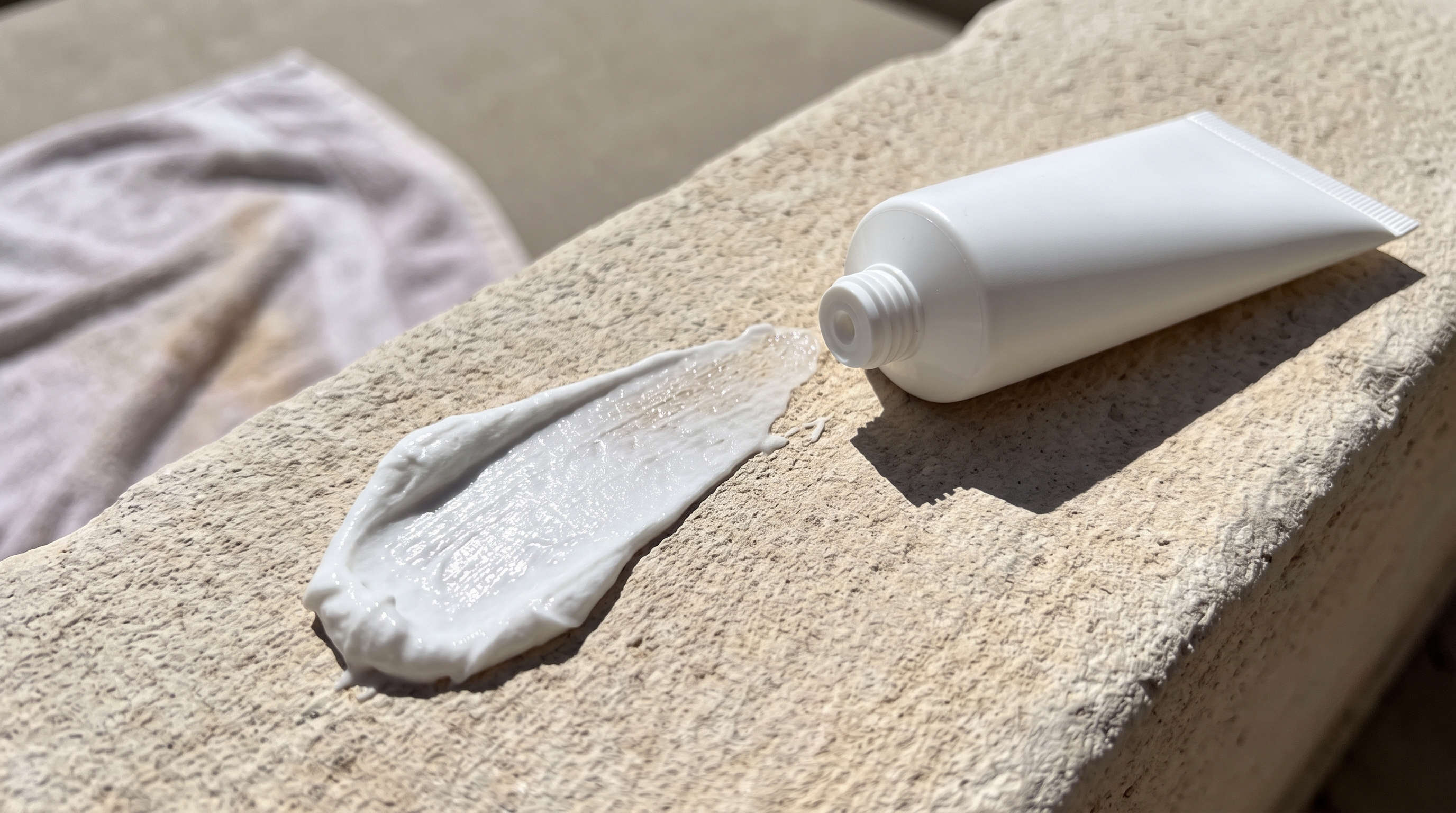
Fluid, gel and “milk” bases built on water or volatile silicones spread thin and set fast. They tend to leave the least residual tack, which is what oily skin experiences as shine, and many now add niacinamide, the oil-calming vitamin explained in our guide to niacinamide sunscreen.
Alcohol-forward Asian-style fluids dry down flat and are popular for a reason, though they can feel tight on skin that is oily and dehydrated at the same time — a combination that is far more common than it sounds.
Neither replaces a proper morning layer, and neither should be counted on for the initial dose — but as the eleven o’clock top-up, they are the difference between theoretical protection and the kind you actually have on your face.
Rich creams and lotions carry emollients and film formers that keep the layer flexible and water-resistant. Excellent on dry skin, and the usual source of the slide, pilling and midday gloss on oily skin.
Mineral formulas use zinc oxide and titanium dioxide, which perform differently from one another in vitro and are not interchangeable [6]. They often finish more matte, since the particles absorb some surface oil, but a poorly dispersed mineral base is also the most likely to leave a cast and to grey out over sebum.
Ignore “oil-free” as a decision rule. It is not a regulated claim, and comedogenicity is a property of a finished formula rather than of any one ingredient in it — the traditional single-ingredient comedogenicity assays translate poorly to real products, as reviewers of the concept have pointed out [7]. A well-built formula containing an ester can behave better on your skin than an oil-free one that pills.
The reapplication problem, solved practically
Two hours is the guidance. Nobody with makeup on wants to wash their face at eleven and start over, so the realistic answer is a second format rather than a second application of the first one.
Powder sunscreens with mineral filters press over existing makeup and absorb surface oil in the same motion. Sunscreen sticks handle the nose, the tops of the cheeks and the hairline in seconds. Neither replaces a proper morning layer, and neither should be counted on for the initial dose — but as the eleven o’clock top-up, they are the difference between theoretical protection and the kind you actually have on your face.
Where sunscreen stops and repair begins
Sunscreen is a prevention tool with a hard limit: it stops new damage and does nothing about the accumulated kind. Filters cannot signal a fibroblast, and no amount of daily SPF will rebuild collagen that MMP-1 has already broken down. That work belongs to a different category of ingredient, and the evidence for retinoids there is deeper than for anything else on the shelf.
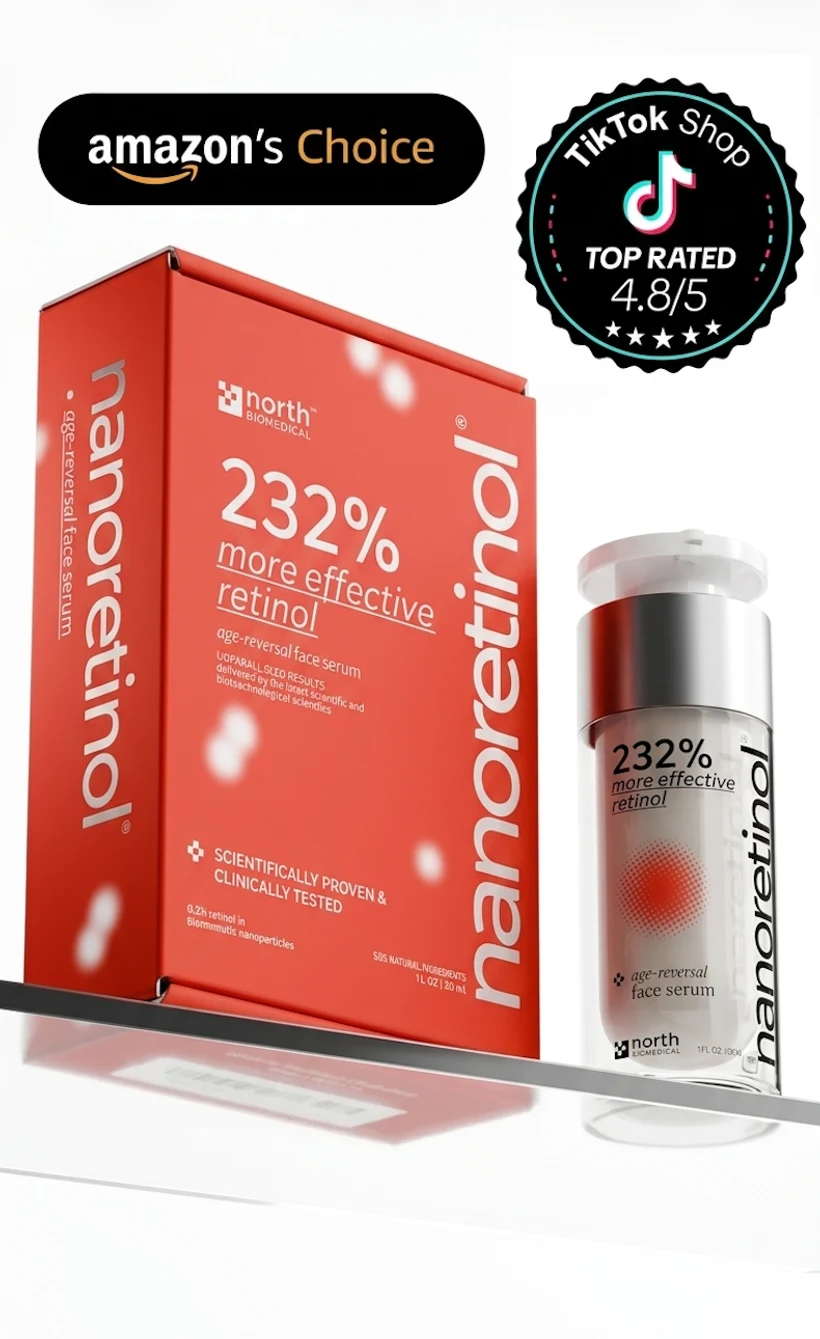
The catch for oily skin has always been the vehicle, again. Conventional retinol formulations tend to arrive in rich, occlusive bases that oily skin resists, and they rely on chemistry that loosens the barrier to get the molecule in — which is where the peeling and redness come from. Nanoretinol was built around the opposite approach: 0.2% retinol encapsulated in biomimetic lipid nanoparticles that pass the skin barrier because it recognises them as self, carried in a water-based gel that absorbs to a smooth matte finish with no oily residue. In testing against conventional retinol it proved 232% more effective in collagen recovery and 73% more effective in elastin recovery, with drastically reduced cytotoxicity. Since it is used at night, it also sidesteps the layering conflict that makes oily skin dread a heavy morning routine.
Two more pieces close the loop: the mineral versus chemical filter comparison if you are still choosing between them, and a compatible moisturizer for oily skin, since a sunscreen applied over the wrong base is the most common cause of pilling. Our broader guide to sunscreen and aging skin covers the prevention side in more depth.
The version of this that works
Pick a broad-spectrum product in a fluid or gel base, apply a genuinely generous layer rather than a cautious one, and keep a powder or stick within reach for the middle of the day. That combination beats any amount of shelf-comparison over SPF numbers, because it is the only one that solves the variable actually limiting your protection — not the strength of the formula, but how much of it stays on your face.
References
- Cotterill JA, Cunliffe WJ, Williamson B, Bulusu L. “Age and sex variation in skin surface lipid composition and sebum excretion rate.” British Journal of Dermatology. 1972;87(4):333-340. doi:10.1111/j.1365-2133.1972.tb07419.x
- Kim SM, Oh BH, Lee YW, Choe YB, Ahn KJ. “The relation between the amount of sunscreen applied and the sun protection factor in Asian skin.” Journal of the American Academy of Dermatology. 2010;62(2):218-222. doi:10.1016/j.jaad.2009.06.047
- Brennan M, Bhatti H, Nerusu KC, et al. “Matrix metalloproteinase-1 is the major collagenolytic enzyme responsible for collagen damage in UV-irradiated human skin.” Photochemistry and Photobiology. 2003;78(1):43-48. PMID: 12929747
- Hughes MC, Williams GM, Baker P, Green AC. “Sunscreen and prevention of skin aging: a randomized trial.” Annals of Internal Medicine. 2013;158(11):781-790. doi:10.7326/0003-4819-158-11-201306040-00002
- Boukari F, Jourdan E, Fontas E, et al. “Prevention of melasma relapses with sunscreen combining protection against UV and short wavelengths of visible light: a prospective randomized comparative trial.” Journal of the American Academy of Dermatology. 2015;72(1):189-190.e1. doi:10.1016/j.jaad.2014.08.023
- Couteau C, Alami S, Guitton M, Paparis E, Coiffard LJ. “Mineral filters in sunscreen products - comparison of the efficacy of zinc oxide and titanium dioxide by in vitro method.” Die Pharmazie. 2008;63(1):58-60. doi:10.1691/ph.2008.7623
- Draelos ZD, DiNardo JC. “A re-evaluation of the comedogenicity concept.” Journal of the American Academy of Dermatology. 2006;54(3):507-512. doi:10.1016/j.jaad.2005.11.1058