Night Skincare Routine: What Your Skin Actually Does While You Sleep
The evening protocol that works with your skin's overnight biology instead of against it
Most people build an evening routine by copying their morning one and adding a heavier cream. That approach misses the point of the night entirely. Your skin at 11pm is running a measurably different program from the one it runs at 8am, and a night skincare routine that ignores the difference wastes both product and the only repair window you get.
The shift is not folklore. Researchers have tracked skin properties around the clock and found genuine rhythms in water loss, temperature, oil production and surface pH.
Your skin keeps its own clock
Human skin carries a functioning circadian oscillator. Keratinocytes express the core clock genes CLOCK and PER1, which means the tissue itself tracks time rather than simply reacting to whatever you put on it [1]. A large population-level analysis later confirmed the point at scale, identifying hundreds of genes in human epidermis that rise and fall on a daily cycle [2].
That clock has visible consequences. When investigators measured facial skin properties across a full day, sebum output, surface pH and skin temperature all followed reproducible rhythms rather than sitting flat [3].
The barrier loosens after dark
The most useful finding for routine design concerns the skin barrier. Transepidermal water loss, the standard measure of how much water escapes through the stratum corneum, is significantly higher in the evening and night than it is in the morning [4]. Skin temperature climbs in the same window. Both point the same direction: the barrier is more permeable overnight.
There is a second half to that finding. When researchers deliberately disrupted the barrier and watched it rebuild, recovery was slower during the evening than in the morning [5]. So the overnight barrier is both leakier and slower to patch itself.
Your skin at 11pm is running a measurably different program from the one it runs at 8am, and a night skincare routine that ignores the difference wastes both product and the only repair window you get.
This cuts two ways, and getting the balance right is the whole job of an evening routine. Higher permeability means actives applied at night have an easier path in. Higher water loss and slower repair mean the same skin needs more support holding moisture and lipids in place. A good night skincare routine does both things at once instead of picking a side.
Repair genuinely happens at night
The idea that skin “repairs itself while you sleep” gets repeated so often it sounds like marketing. It has real support. Work on the clock protein BMAL1 showed that epidermal cell proliferation is under circadian control, with the wave of cell division concentrated in the night phase, and that susceptibility to UVB-induced DNA damage varies with the same clock [6].
That is why the night is the right slot for ingredients that ask something of the skin. You are applying them when the tissue is already in build mode rather than defence mode.
Why retinoids belong here and nowhere else
Retinoids are night products for a straightforward chemical reason. Vitamin A and its derivatives are photolabile: exposed to UV, retinol degrades quickly and the breakdown generates reactive oxygen species in the process [7]. Applied in daylight you lose much of the active and gain an oxidative burden you did not want.
Applying it at night solves both problems and lands the ingredient in the window when cell turnover is already running. The order you apply things in matters more than most people expect, because tolerance is usually decided by sequence and skin condition rather than by percentage on the label.
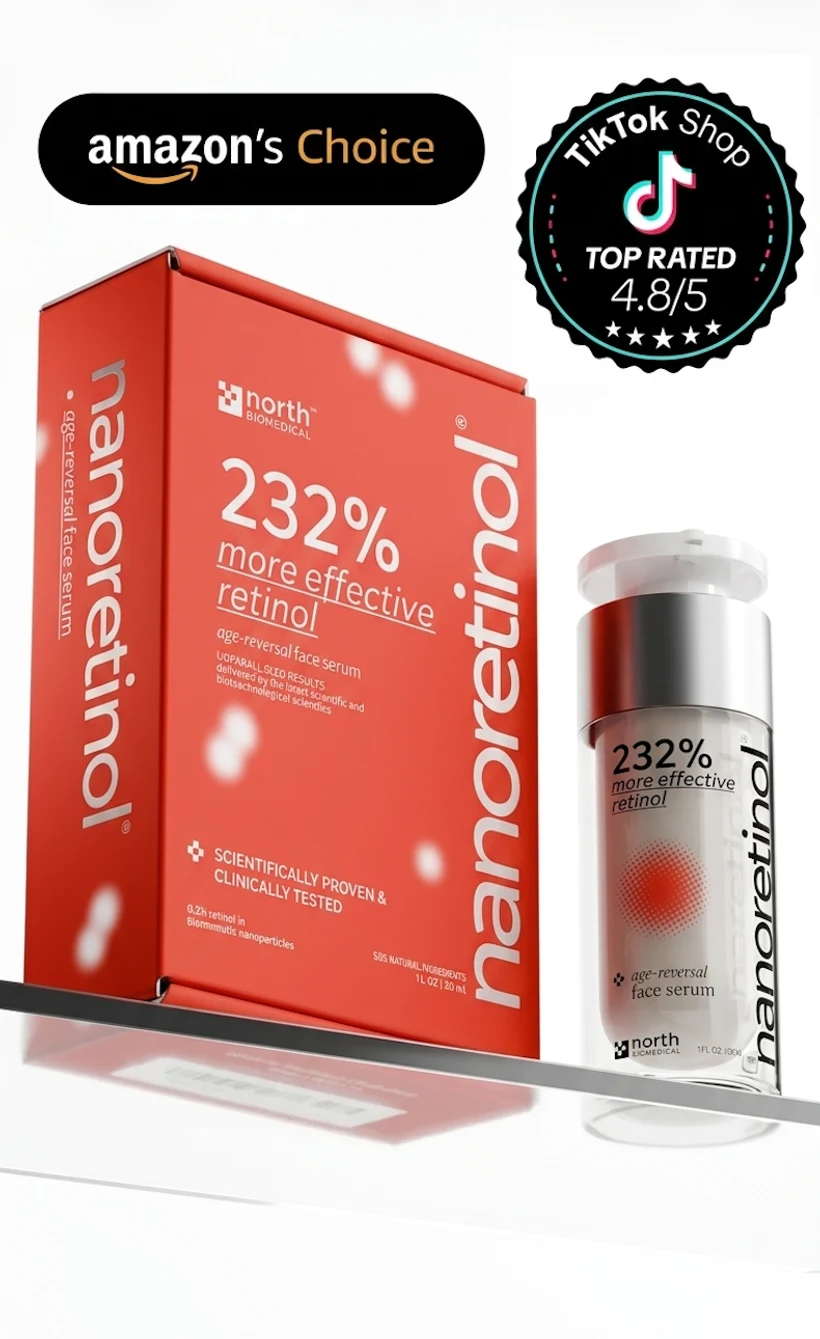
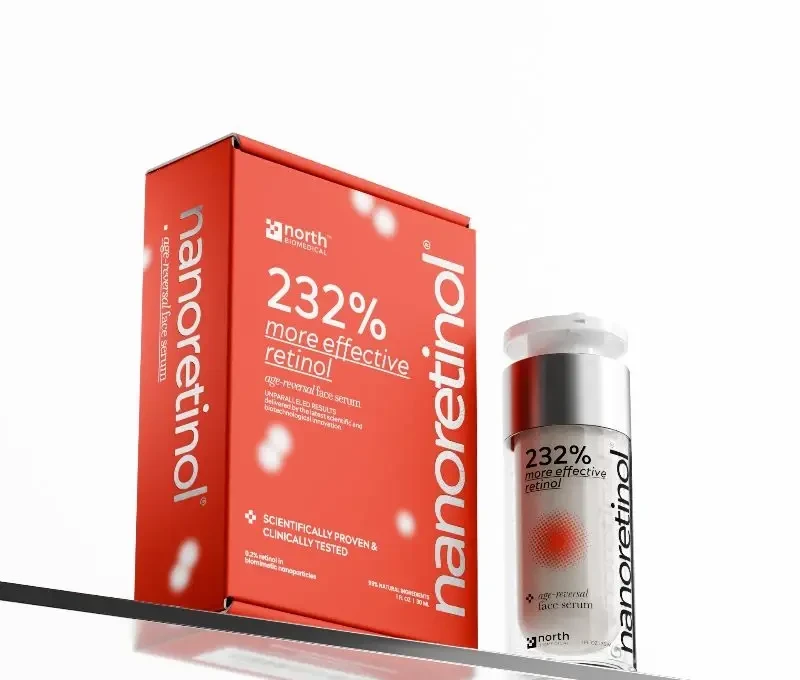
It encapsulates 0.2% retinol in biomimetic lipid nanoparticles that the skin recognises as self and admits without the barrier being forced open.
A four-step night minimum
Ten-step routines photograph well. Four steps do the work.
One: remove the day properly. Sunscreen and long-wear makeup are built to resist water, so a water-based cleanser alone leaves residue behind. This is the one place a cleansing balm earns its slot, followed by your normal wash.
Two: treat. One active, applied to dry skin. A retinoid most nights for collagen, or an exfoliating acid on the nights you are not using it. Stacking both in one evening is the fastest route to a compromised barrier.
Three: hydrate. A humectant layer while skin is still slightly damp gives the water something to bind to.
Four: seal. Given that overnight water loss runs higher and barrier repair runs slower, the occlusive step is doing more here than it does in the morning. This is the argument for a richer night cream rather than reapplying your daytime lotion.
What to drop
Vitamin C serums are usually better placed in the morning, where their antioxidant role complements sunscreen. High-SPF products at night do nothing. Multiple actives layered in one evening tend to cancel each other out through irritation. And a second exfoliation on retinoid nights is the single most common reason people conclude their skin “cannot tolerate retinol” when the real problem was the schedule. The broader case for aligning products with the body’s daily cycle is covered in our piece on circadian skincare.
Where delivery becomes the limiting factor
Once the schedule is right, the constraint moves to the product. A retinoid only works to the extent it reaches living cells in the dermis, and conventional formulations solve that problem by disrupting the skin barrier, which is exactly the structure already under strain overnight. That trade-off is the source of the peeling and redness people associate with retinol.
Nanoretinol takes a different route. It encapsulates 0.2% retinol in biomimetic lipid nanoparticles that the skin recognises as self and admits without the barrier being forced open. In testing against conventional retinol it proved 232% more effective at collagen recovery and 73% more effective for elastin, with drastically reduced cytotoxicity. Over 56 days of use, skin firmness rose 61% and elasticity 56%. For a night routine, that combination matters twice over: you get the collagen work you applied it for, and you keep the barrier intact through the hours when it is leakiest.
Getting the timing right
The value of a night skincare routine comes from matching what you apply to what your skin is already doing. Clear off the day thoroughly, use one active rather than three, hold water in, and seal it. Skin that stays intact through the night is skin that can actually use what you gave it, and consistency across weeks beats any single product decision you make tonight.
References
- Zanello SB, Jackson DM, Holick MF. “Expression of the circadian clock genes clock and period1 in human skin.” Journal of Investigative Dermatology. 2000;115(4):757-760. doi:10.1046/j.1523-1747.2000.00121.x
- Wu G, Ruben MD, Schmidt RE, et al. “Population-level rhythms in human skin with implications for circadian medicine.” Proceedings of the National Academy of Sciences. 2018;115(48):12313-12318. doi:10.1073/pnas.1809442115
- Le Fur I, Reinberg A, Lopez S, et al. “Analysis of circadian and ultradian rhythms of skin surface properties of face and forearm of healthy women.” Journal of Investigative Dermatology. 2001;117(3):718-724. doi:10.1046/j.0022-202x.2001.01433.x
- Yosipovitch G, Xiong GL, Haus E, et al. “Time-dependent variations of the skin barrier function in humans: transepidermal water loss, stratum corneum hydration, skin surface pH, and skin temperature.” Journal of Investigative Dermatology. 1998;110(1):20-23. doi:10.1046/j.1523-1747.1998.00069.x
- Denda M, Tsuchiya T. “Barrier recovery rate varies time-dependently in human skin.” British Journal of Dermatology. 2000;142(5):881-884. doi:10.1046/j.1365-2133.2000.03466.x
- Geyfman M, Kumar V, Liu Q, et al. “Brain and muscle Arnt-like protein-1 (BMAL1) controls circadian cell proliferation and susceptibility to UVB-induced DNA damage in the epidermis.” Proceedings of the National Academy of Sciences. 2012;109(29):11758-11763. doi:10.1073/pnas.1209592109
- Fu PP, Xia Q, Yin JJ, et al. “Photodecomposition of vitamin A and photobiological implications for the skin.” Photochemistry and Photobiology. 2007;83(2):409-424. doi:10.1562/2006-10-23-IR-1065