Oxygen Facial: What Pressurized Oxygen Actually Does to Your Skin
The post-treatment glow is real. The explanation printed on the menu is not the reason for it.
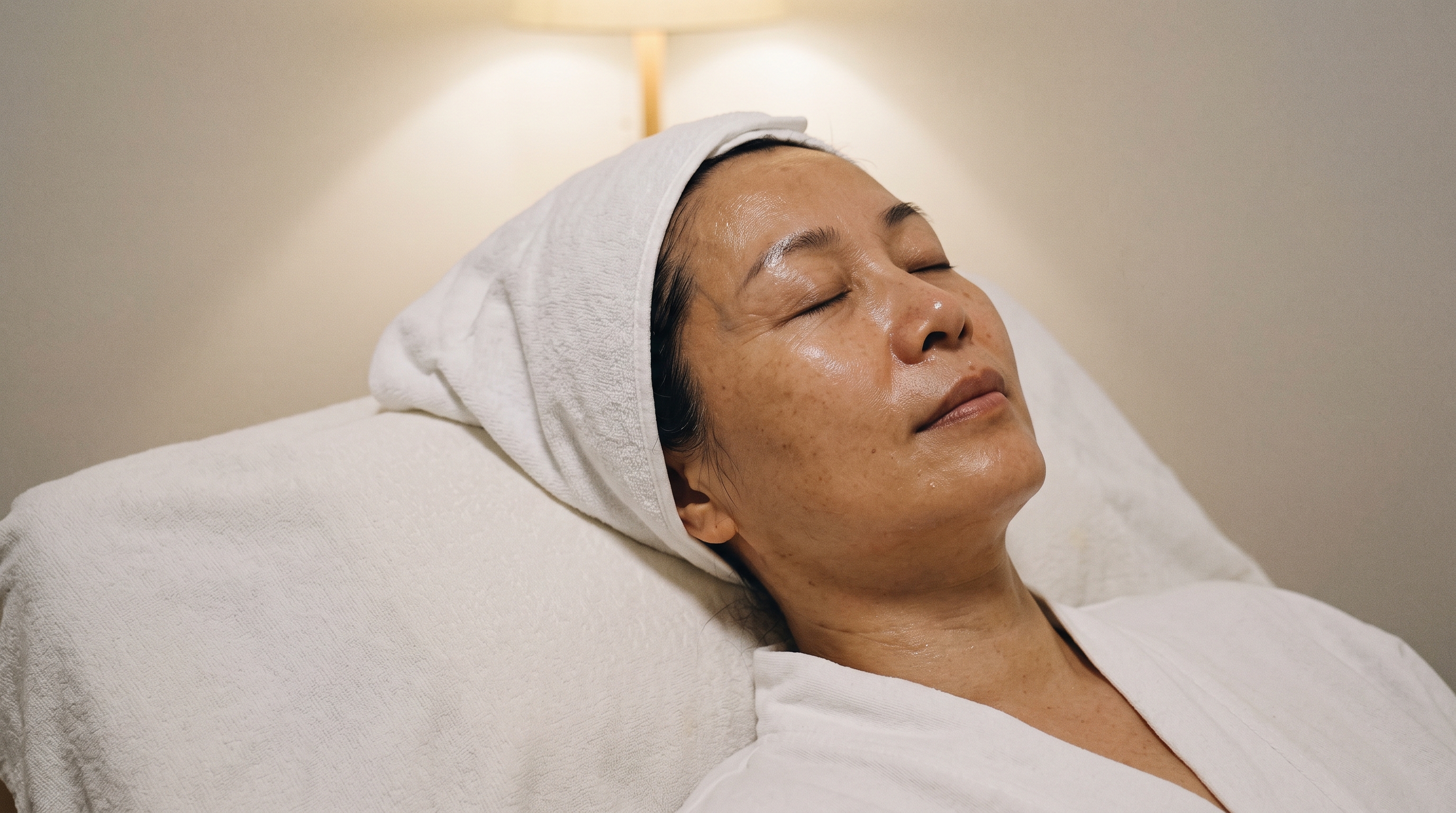
The oxygen facial occupies a particular niche in the treatment menu: the one you book three days before a wedding. It is painless, there is no downtime, and the result is immediate and photogenic. You walk out plumper, brighter, and noticeably more rested than you walked in, which is a rare combination in aesthetics.
The stated rationale is that pressurized oxygen is being driven into skin that has become oxygen-starved with age, feeding the cells and stimulating them to produce collagen. That explanation is elegant, memorable, and largely wrong. What is interesting is that the treatment still works, for a completely different reason than the one on the menu.
What Happens in the Chair
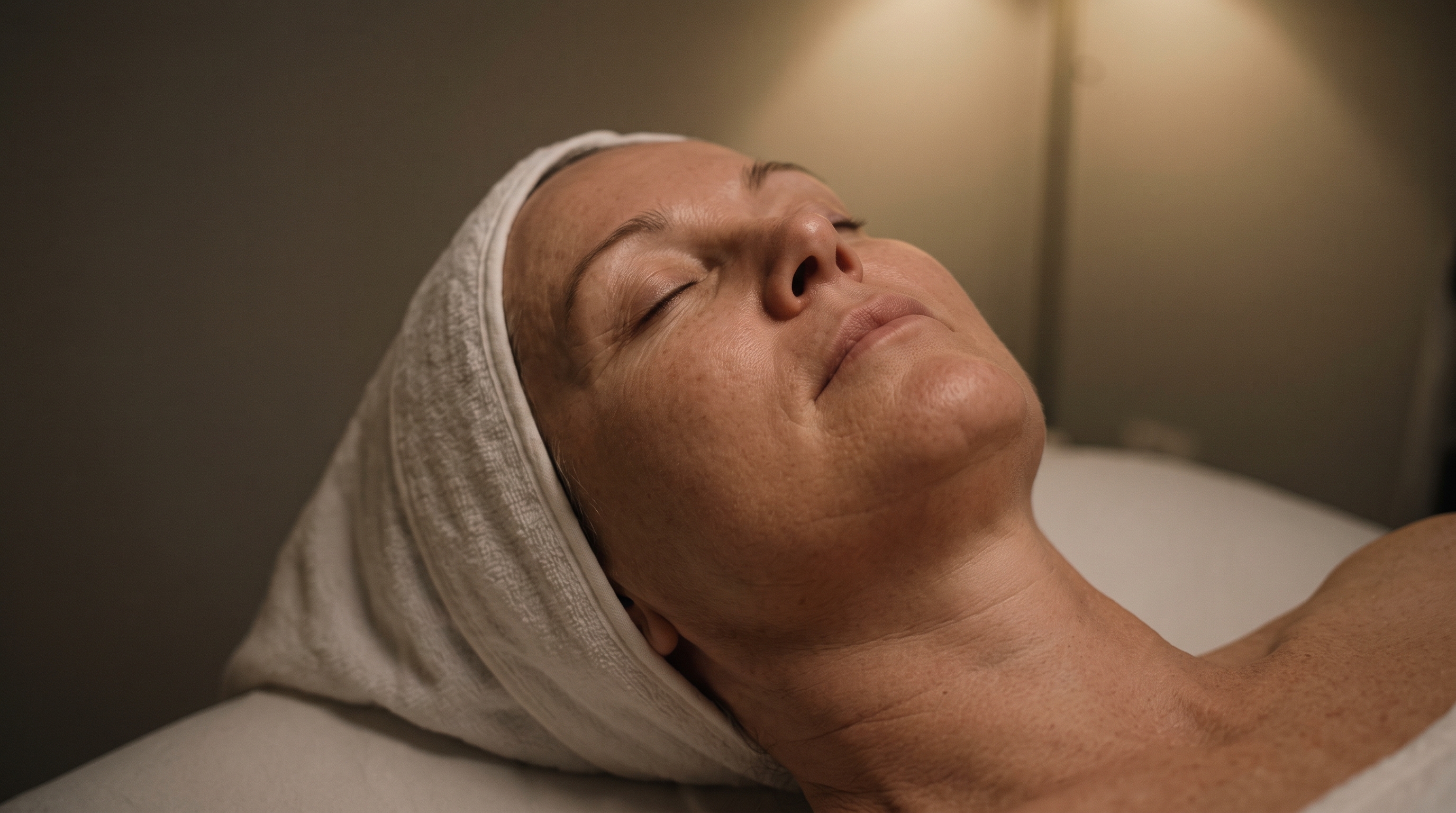
Protocols vary, but the shape is consistent. Skin is cleansed and usually exfoliated, sometimes with a mild acid or a mechanical step. Then a handpiece delivers a stream of pressurized oxygen across the face, typically carrying a serum in the airflow, most often hyaluronic acid with assorted peptides, vitamins, and botanical extracts. The whole thing takes thirty to sixty minutes and costs somewhere between one hundred and three hundred dollars.
Two claims are usually attached. The first is that your skin is oxygen-deprived. The second is that this device fixes it.
Your Skin Already Breathes Air
The first claim runs into a well-established piece of physiology. In a study measuring oxygen partial pressure at graded depths in human skin, researchers demonstrated that the upper skin layers draw their oxygen supply predominantly from the atmosphere rather than from the bloodstream, with atmospheric uptake supplying the epidermis and the uppermost dermis almost entirely [1].
Your face has been sitting in an atmosphere that is roughly 21% oxygen for your entire life. The outer layers are not starved, and they are not waiting for a nozzle. If atmospheric contact were the limiting factor, going outdoors would be a facial.
Your face has been sitting in an atmosphere that is roughly 21% oxygen for your entire life.
The Barrier That Makes the Pitch Difficult
The second claim runs into the stratum corneum. The outermost layer of skin is organized as a brick-and-mortar structure of corneocytes embedded in ordered lipid lamellae, and its central biological function is to be a permeability barrier [2]. It exists specifically to control what crosses in either direction.
Blowing gas at that structure at cosmetic pressures does not meaningfully change what reaches living tissue below. Some serum is deposited efficiently on the surface, and the airflow may aid spreading. The oxygen itself has nowhere useful to go.
Where Topical Oxygen Genuinely Earns Its Place
None of this means topical oxygen is meaningless in medicine. It has a real evidence base in a different setting. A meta-analysis of randomized controlled trials and observational studies of topical oxygen therapy for wound healing found a benefit in healing outcomes for chronic wounds [3].
The distinction that matters is the barrier. A chronic wound is an open defect where the stratum corneum is gone and hypoxic tissue is directly exposed. Applied oxygen reaches cells that are genuinely short of it. Intact, healthy facial skin is the opposite situation on both counts. Evidence from wound care does not transfer to a cosmetic treatment on unbroken skin, though it is regularly cited as though it does.
So Why Do You Look So Good Afterward?
Because several things are happening that have nothing to do with oxygenation.
The serum matters most. A multicenter clinical evaluation of a topical hyaluronic acid serum documented measurable improvements in hydration and skin appearance [4]. Hyaluronic acid binds water in the upper layers, and hydrated skin is optically different from dehydrated skin: fine lines are shallower, light scatters more evenly, and the surface reads as plump. Applied to freshly exfoliated skin under a stream of air, it performs at its best.
Water-based, 99% natural, and mild enough for nightly use including the eye contour, it does the work of building collagen continuously rather than in a monthly appointment.
Then there is mechanical stimulation and mild vasodilation from the treatment itself, along with a small amount of transient tissue swelling. That combination produces the flushed, filled-out look people book the appointment for.
Every one of those mechanisms is real, and every one of them is measured in hours to days.
What the Clinical Record Actually Contains
The published evidence for oxygen-based facial treatment is thin. The most frequently cited example is a small evaluation of a combined exfoliation, infusion, and oxygenation system paired with radiofrequency, reporting improvement in texture and brightness in a modest, uncontrolled patient group [5]. It is a reasonable piece of preliminary work. It is not a randomized controlled trial, the sample is small, there is no control arm, and radiofrequency is doing part of whatever work was done.
For comparison, the hydradermabrasion-style treatments and mechanical resurfacing that sit next to it on the same menu have a broader literature behind them, largely because they are doing something structural to the surface rather than relying on a gas.
The Standard a Treatment Has to Clear
Visible aging is a dermal problem. Reviews of dermal aging describe progressive collagen loss, fragmentation of the extracellular matrix, and declining fibroblast function as the drivers of wrinkling and laxity [6]. A treatment that changes how much water sits in the epidermis for two days does not touch any of that.
Something does. In the landmark controlled trial of tretinoin in photodamaged skin, researchers found photodamaged skin contained substantially less type I collagen than protected skin, and that months of topical tretinoin restored collagen formation, producing an 80% increase in type I procollagen against vehicle control [7]. That is a structural change in the layer where aging actually occurs, demonstrated with a control group and a biochemical endpoint.
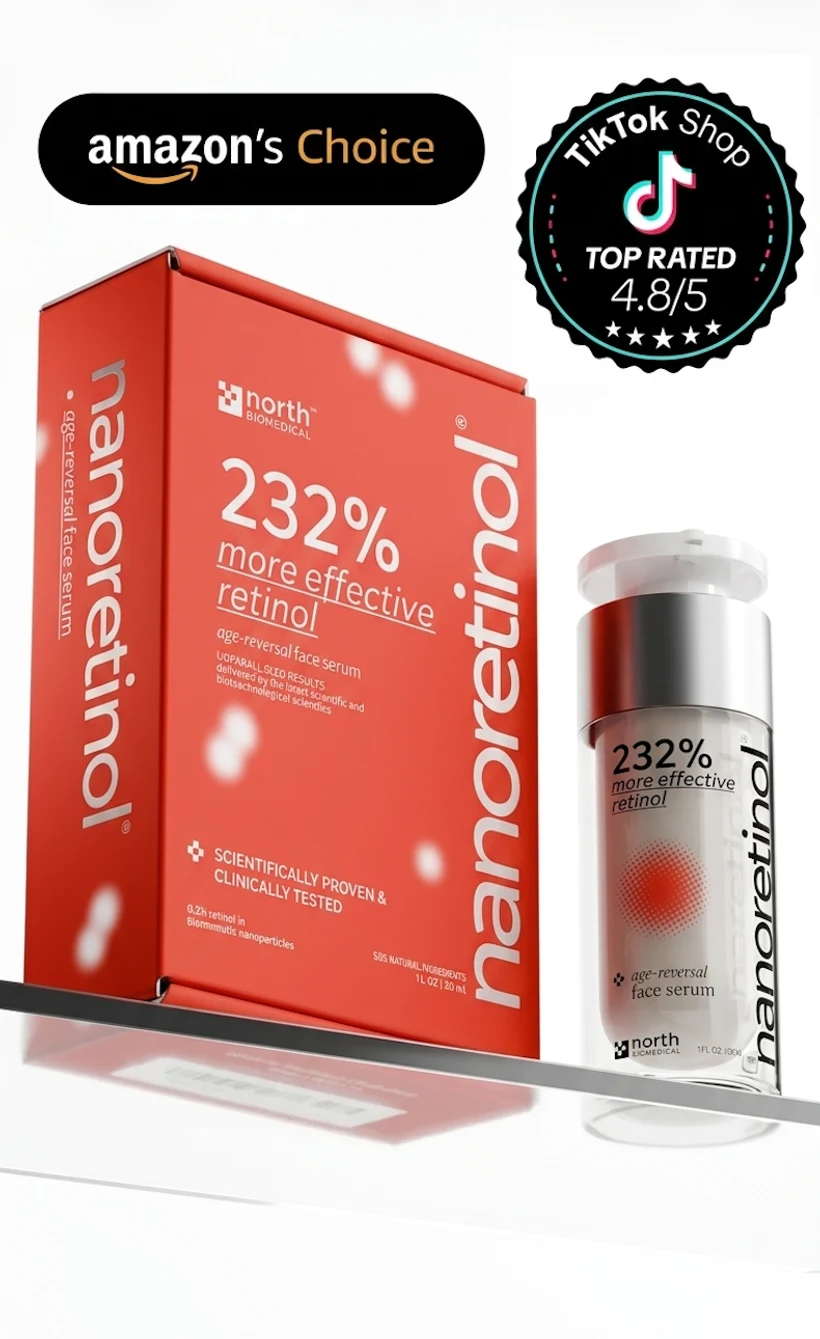
Where Nanoretinol Fits
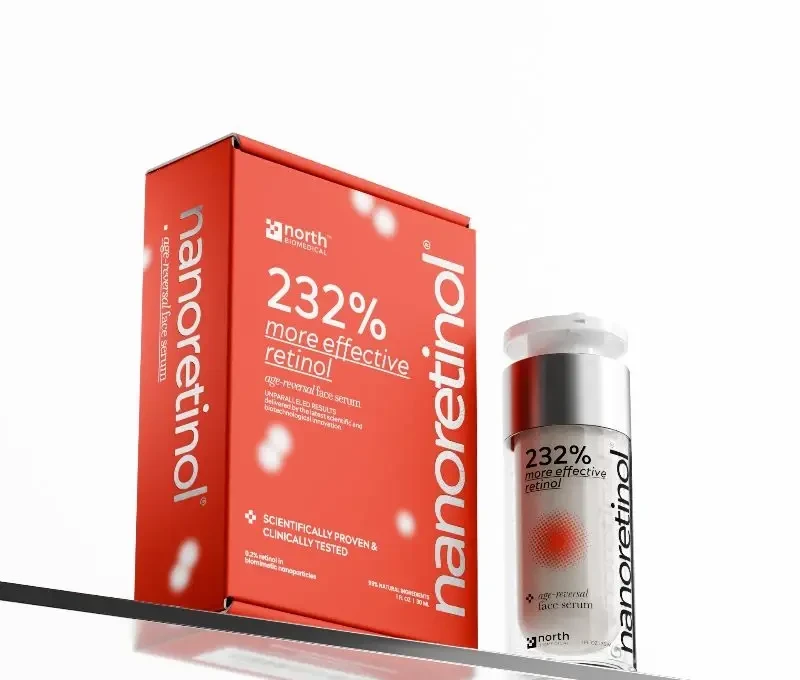
Retinoids have one persistent practical failure, and it is the same barrier the oxygen facial cannot cross. Conventional retinol formulations rely on chemical penetration enhancers and petroleum derivatives that disrupt the barrier’s lipid organization to force the active through, which is why so many people meet retinol as burning, flaking, and redness and quit before the eight-week mark when results begin.
Nanoretinol solves the delivery problem without attacking the barrier. Retinol is encapsulated in biomimetic lipid nanoparticles that are externally similar to the body’s own cells, so the skin admits them as “self” and lets them pass intact. That is why a gentle 0.2% concentration outperforms harsher conventional formulas: in North Biomedical’s clinical testing it delivered 232% more collagen recovery and 73% more elastin recovery than conventional retinol, with users gaining a 61% increase in firmness and a 56% increase in elasticity across 56 days. Water-based, 99% natural, and mild enough for nightly use including the eye contour, it does the work of building collagen continuously rather than in a monthly appointment.
Booking One Anyway? Make It Count
There is nothing wrong with an oxygen facial, and a treatment that reliably makes you look rested for an event is worth what it costs if that is what you want from it. Book it two to three days before you need to look your best rather than the morning of, since a little settling improves the result. Ask what is in the serum, because the serum is the active part of the appointment. And do not stop your nightly routine to accommodate it.
Just price it honestly: you are buying a very good three-day glow, not an investment in your skin’s structure. The structural work happens at home, on the nights nobody photographs.
References
- Stücker M, Struk A, Altmeyer P, Herde M, Baumgärtl H, Lübbers DW. “The cutaneous uptake of atmospheric oxygen contributes significantly to the oxygen supply of human dermis and epidermis.” The Journal of Physiology. 2002;538(Pt 3):985-994. PMID: 11826181
- Elias PM. “Structure and Function of the Stratum Corneum Permeability Barrier.” Drug Development Research. 1988;13(2-3):97-105. doi:10.1002/ddr.430130203
- Putri IL, Alyssa A, Aisyah IF, et al. “The efficacy of topical oxygen therapy for wound healing: A meta-analysis of randomized controlled trials and observational studies.” International Wound Journal. 2024;21(7):e14960. doi:10.1111/iwj.14960
- Robinson DM, Vega J, Palm MD, Bell M, Widgerow AD, Giannini A. “Multicenter evaluation of a topical hyaluronic acid serum.” Journal of Cosmetic Dermatology. 2022;21(9):3848-3858. PMID: 35833366
- Diaz D, Boonsiri M, Okawa J, Dekranes D, Ditre CM. “Oxygeneo—A Unique Three-in-one Treatment of Exfoliation, Infusion, and Oxygenation via the Bohr Effect and TriPollar Radiofrequency for Skin Rejuvenation.” Journal of Clinical and Aesthetic Dermatology. 2017;10(11):22-25. PMID: 29399257
- Shin JW, Kwon SH, Choi JY, et al. “Molecular Mechanisms of Dermal Aging and Antiaging Approaches.” International Journal of Molecular Sciences. 2019;20(9):2126. doi:10.3390/ijms20092126
- Griffiths CEM, Russman AN, Majmudar G, Singer RS, Hamilton TA, Voorhees JJ. “Restoration of Collagen Formation in Photodamaged Human Skin by Tretinoin (Retinoic Acid).” New England Journal of Medicine. 1993;329(8):530-535. doi:10.1056/NEJM199308193290803