Phytoceramides for Skin: The Plant-Derived Lipids Your Aging Barrier Is Missing
What ceramides actually do, why they decline after 40, and the surprising data on oral plant ceramides
If your moisturizer has stopped working, the problem probably isn’t the moisturizer.
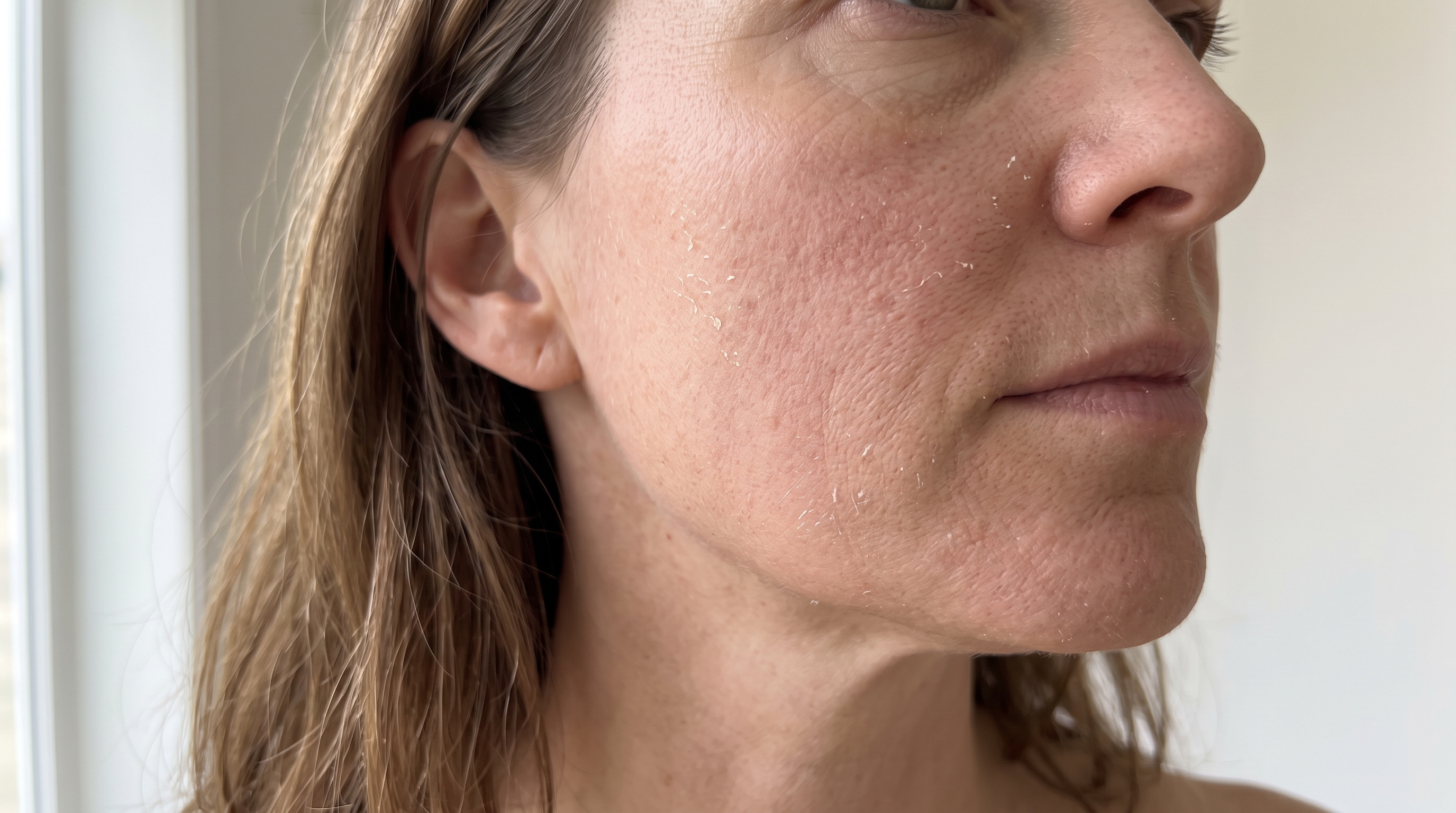
Somewhere in your forties, the math of facial hydration changes. The same products that used to leave your skin soft now leave it tight by mid-afternoon. You’re not imagining it: aging skin actually loses the ability to hold water, and the reason traces back to a class of lipids most people have never heard of. Ceramides — the molecular cement of your skin barrier — start to disappear, and the structure that kept moisture in starts to leak.
Phytoceramides are the plant-derived version of those lipids. They are getting attention for two reasons. First, the ceramide story behind aging skin is real and well-documented. Second, an unusually convincing body of clinical evidence shows that phytoceramides can help — including, surprisingly, when taken orally rather than applied topically. This is one of the few “swallow a pill for your skin” categories where the data is strong enough to take seriously.
Here’s what’s actually going on, and why it matters more after 40 than it did before.
What Ceramides Are Doing Down There
Imagine the surface of your skin as a brick wall. The keratinocytes — the flat dead cells at the very top — are the bricks. The lipids between them, packed in tight ordered layers, are the mortar. Without the mortar, the wall doesn’t hold anything: not water, not heat, not protection from the outside world.
Ceramides are the dominant lipid in that mortar. They make up roughly half of the lipid mass of the stratum corneum (the outermost skin layer), with cholesterol and free fatty acids filling out the rest [1]. The structure they form is so specific that even small disruptions in the ratio of these three components measurably impair barrier function [1]. When ceramide content drops, transepidermal water loss (TEWL) goes up, and you start losing water through your skin faster than your moisturizer can put it back.
This is why the trend in skincare ingredient lists toward “ceramide-rich” products isn’t marketing fluff. The barrier is a lipid construction project, and ceramides are the load-bearing material.
Why the Decline Hits Around 40
Skin doesn’t run out of ceramides on a sudden cliff. It loses them gradually, and the decline accelerates noticeably with age. A study published in Archives of Dermatological Research measured stratum corneum lipid composition across age groups and found that aged stratum corneum displays more than 30% less total lipid content than young stratum corneum, with the most significant declines in the cholesterol and ceramide fractions [2]. The drop is not subtle — at the structural level, you’ve lost roughly a third of the mortar between your bricks.
Compounding the problem, the synthesis pathways that make new ceramides also slow with age. Aging keratinocytes don’t manufacture lipid replacements as efficiently, which means the barrier doesn’t repair itself as quickly after damage [1]. Add in the assaults of low-humidity indoor air, hot showers, and a cleanser routine designed for the oilier face you had in your 20s, and the math gets worse fast.
Here’s what’s actually going on, and why it matters more after 40 than it did before.
This is the structural reason that “tight, dry, papery” emerges as a complaint around the same age range that other aging changes start showing up. It is not just dehydration. It’s a measurable lipid deficit in a specific structural compartment.
The Topical Approach (And Its Limit)
The most direct response to a ceramide deficit is to put ceramides back on the surface. This works — to a point. Topical ceramide creams genuinely improve barrier function in dry and aging skin, and most evidence-based moisturizer formulations now include some combination of ceramides, cholesterol, and free fatty acids in proportions that mimic the natural barrier ratio [1].
The limitation is reach. Topical ceramides supplement the outermost layer of dead cells. They don’t directly resupply the deeper layers where new ceramide synthesis happens, and they don’t address the root issue of slowed lipid production. They are a useful surface intervention with a real but bounded effect.
The Oral Phytoceramide Story
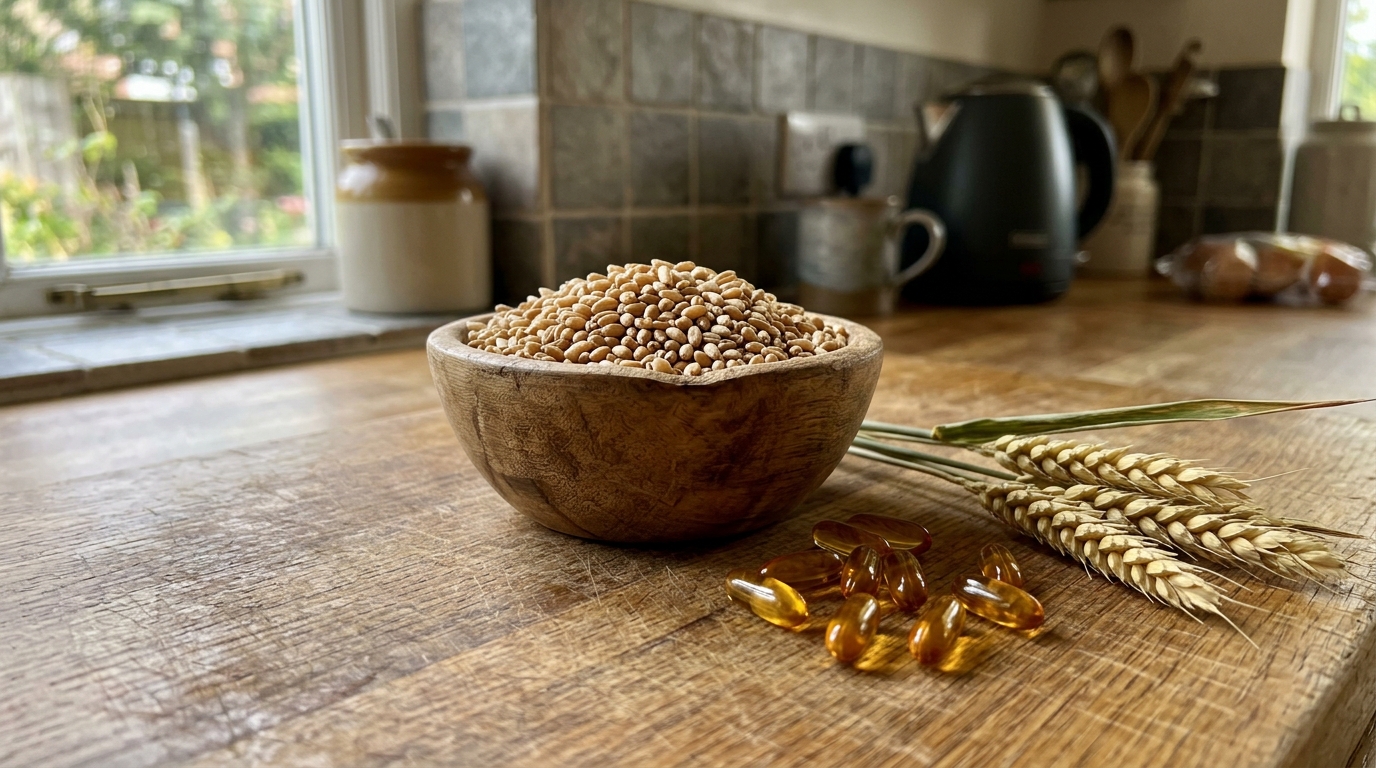
This is where the research gets interesting. Phytoceramides — ceramides derived from plants like wheat, rice, konjac, and sweet potato — appear to support skin hydration when ingested as supplements. The mechanism is still being worked out (one hypothesis is that absorbed sphingolipid building blocks reach skin cells and get incorporated into native ceramide synthesis), but the clinical results are documented.
A placebo-controlled trial published in Cosmetics studied 60 volunteers with dry, wrinkled skin who were supplemented for 60 days with a wheat polar lipid complex providing 1.7 mg of glucosylceramides per day. The supplemented groups showed statistically significant increases in skin hydration, elasticity, and smoothness, and statistically significant decreases in transepidermal water loss, roughness, and visible wrinkling, all compared with placebo [2]. The improvements were objective measurements (corneometer, cutometer, profilometry), not just subjective questionnaires.
A separate 2020 randomized study in BMC Complementary Medicine and Therapies tested oral konjac glucosylceramides at 100 mg/day over 6 weeks in 51 participants. The supplement group showed significant improvement in dryness, redness, hyperpigmentation, itching, and oiliness compared with placebo, with no adverse events reported [3]. Konjac is interesting because the ceramide structures it provides are slightly different from wheat-derived ones, which means the “phytoceramide” category isn’t a single ingredient — it’s a small family of related lipid sources, and the clinical benefits are showing up across multiple sources.
A few caveats are worth naming directly. Wheat-derived phytoceramides contain trace gluten-related proteins; if you have celiac disease or are gluten-sensitive, rice or konjac-derived versions are the safer choice. The doses studied are modest (typically 1–100 mg of ceramide-equivalent material per day), so megadosing is not the strategy — the trials are showing that a small consistent dose, taken daily for weeks, produces measurable change. And while these supplements are well-tolerated in healthy adults, anyone on regular medication should clear new supplements with a doctor.
Where Topical Phytoceramides Fit
Topical phytoceramides — used in creams and serums — function similarly to other topical ceramide formulations. They contribute to the surface lipid pool, support barrier repair, and reduce TEWL when applied consistently. The advantage of plant-derived ceramides for topical use is mostly formulation: they’re vegan-friendly, stable, and easier to source than animal-derived ceramides, which is why you’re seeing them more often on ingredient lists.
Retinol stimulates dermal collagen synthesis and accelerates keratinocyte turnover , which produces visible results on wrinkles, texture, and tone.
For topical efficacy, what matters is less whether the ceramide is plant or synthetic and more whether the formulation provides the full lipid trio (ceramide + cholesterol + free fatty acid) in approximately physiological ratios [1]. A ceramide-only cream is meaningfully less effective than one that respects the barrier’s actual lipid composition.
How Phytoceramides Pair with Retinol
Here’s the practical question most people land on: if I’m using retinol for collagen and texture, do I still need to think about ceramides?
The honest answer is yes, and the two work better together than either does alone. Retinol stimulates dermal collagen synthesis and accelerates keratinocyte turnover [4], which produces visible results on wrinkles, texture, and tone. But in the first weeks of retinoid use, increased turnover can stress the barrier — the flaking and irritation that drives so many people to abandon retinol is a transient barrier insufficiency, not a flaw in the active. Supporting the barrier with ceramides (topical at minimum, oral phytoceramides as a separate input) reduces that adjustment phase and lets the retinoid do its work without the user pulling out.
This is why dermatologists often counsel patients starting retinoids to “moisturize aggressively, especially with barrier-supporting ingredients.” Ceramides are the most direct version of that advice. If the barrier is robust, the retinoid can run.
The Delivery Problem That Conventional Retinol Has
While we’re on retinol — there’s a subtler interaction with the barrier that’s worth understanding. Most over-the-counter retinol formulations rely on chemicals and petroleum derivatives to push the active through the stratum corneum. Those vehicle ingredients work by disrupting the lipid mobility of the barrier — they pry the wall open to push the retinol through. The cost is exactly the kind of barrier insult that ceramide loss already makes worse.
If you’re starting from a ceramide-deficient barrier (which most people over 40 are), conventional retinol delivery can compound the problem. You’re taking an already-leaky wall and asking it to absorb a vehicle that pushes the leakiness further. The visible cost is the burn-and-peel response. The hidden cost is that less retinol actually reaches the dermal fibroblasts you want it to reach, because much of it is dispersed at the damaged surface.
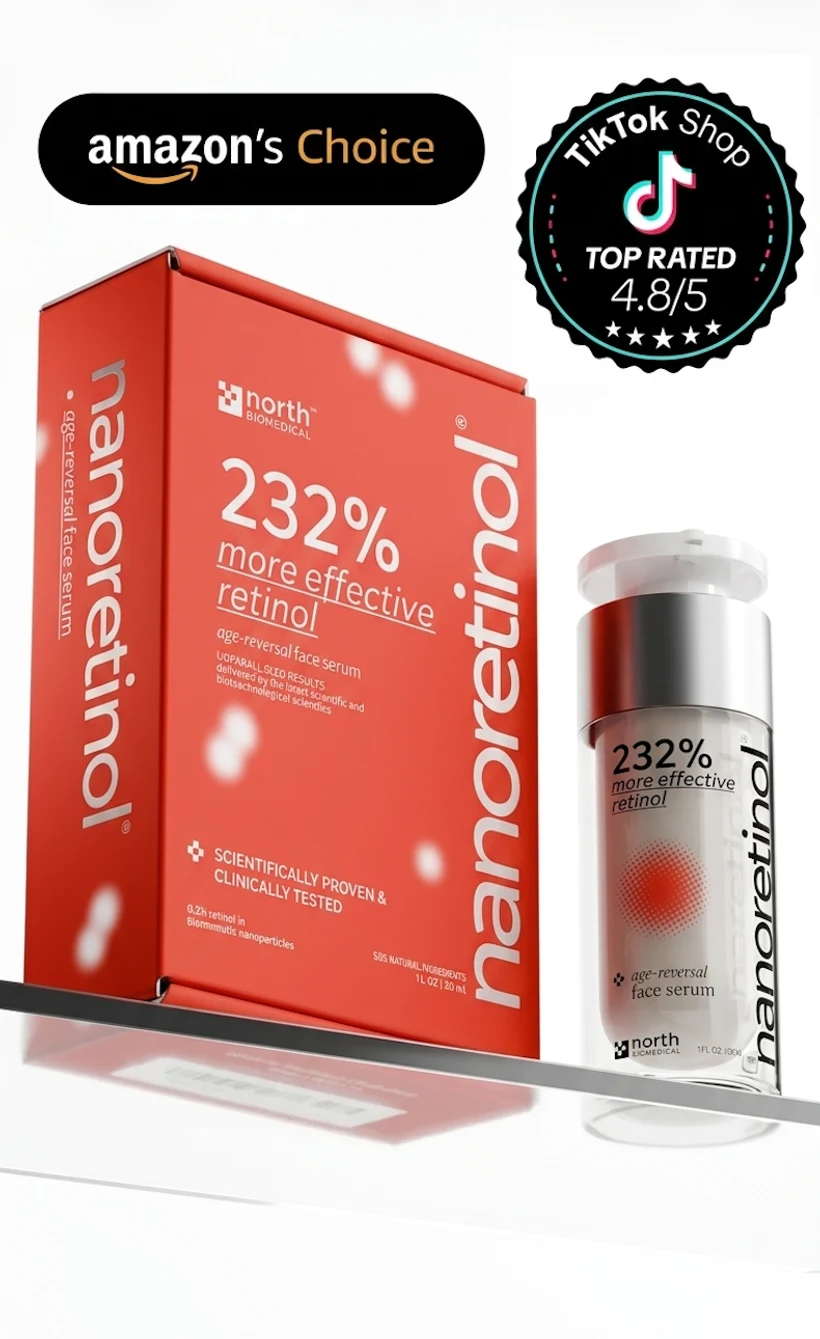
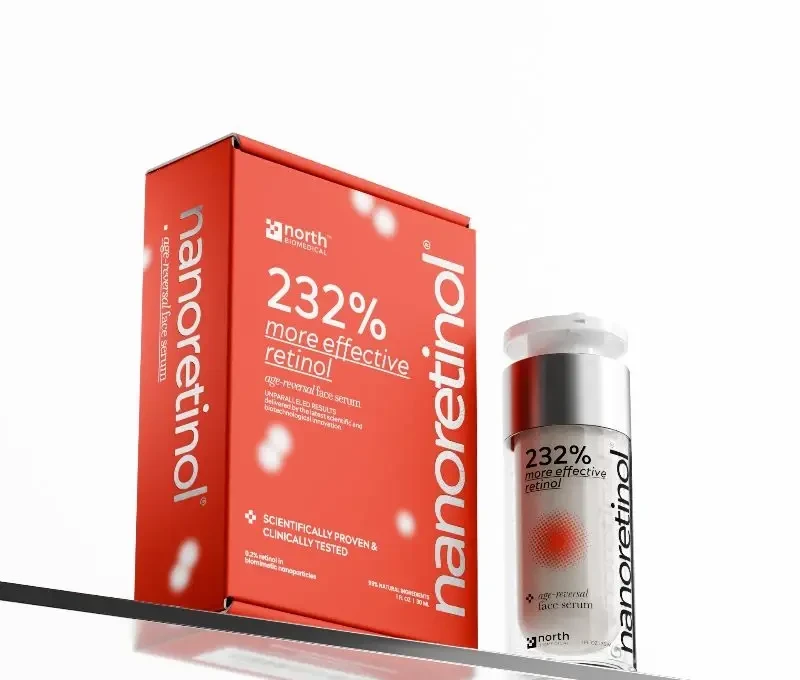
Nanoretinol was developed to skip this trade-off entirely. The retinol is encapsulated in biomimetic lipid nanoparticles whose outer surface mimics the lipid signature of skin cells. The epithelial barrier recognizes the nanoparticles as “self” and lets them through without being damaged. The active is released near the cells that need it, and the phospholipid components of the particle are absorbed by skin cells as nourishment rather than discarded as solvent. The barrier stays intact during the entire process.
In a controlled comparison, this delivery system produced 232% greater collagen recovery and 73% greater elastin recovery than conventional retinol, with significantly milder side effects [5]. For a barrier-conscious routine — which is exactly what someone managing ceramide deficit is building — that combination of efficacy and gentleness is the relevant data point.
Building a Ceramide-Aware Routine
A barrier-supportive routine looks roughly like this. Topically: a gentle non-stripping cleanser (skip foaming sulfates that strip lipids), a serum or moisturizer with ceramides plus cholesterol plus fatty acids in the morning, and a richer night cream with similar lipid profile in the evening, especially in dry climates or low-humidity indoor environments. As an ingestible support: consider a phytoceramide supplement (1–100 mg daily of glucosylceramides from wheat, rice, or konjac, depending on dietary preferences) over a 60–90 day window to see whether it changes how your skin holds water.
Pair this with whatever active treatment program you’re running. If retinol is in the rotation, the ceramide work is doing the structural maintenance that keeps the barrier robust enough to tolerate continued use. The two functions — barrier repair and dermal remodeling — are complementary rather than redundant.
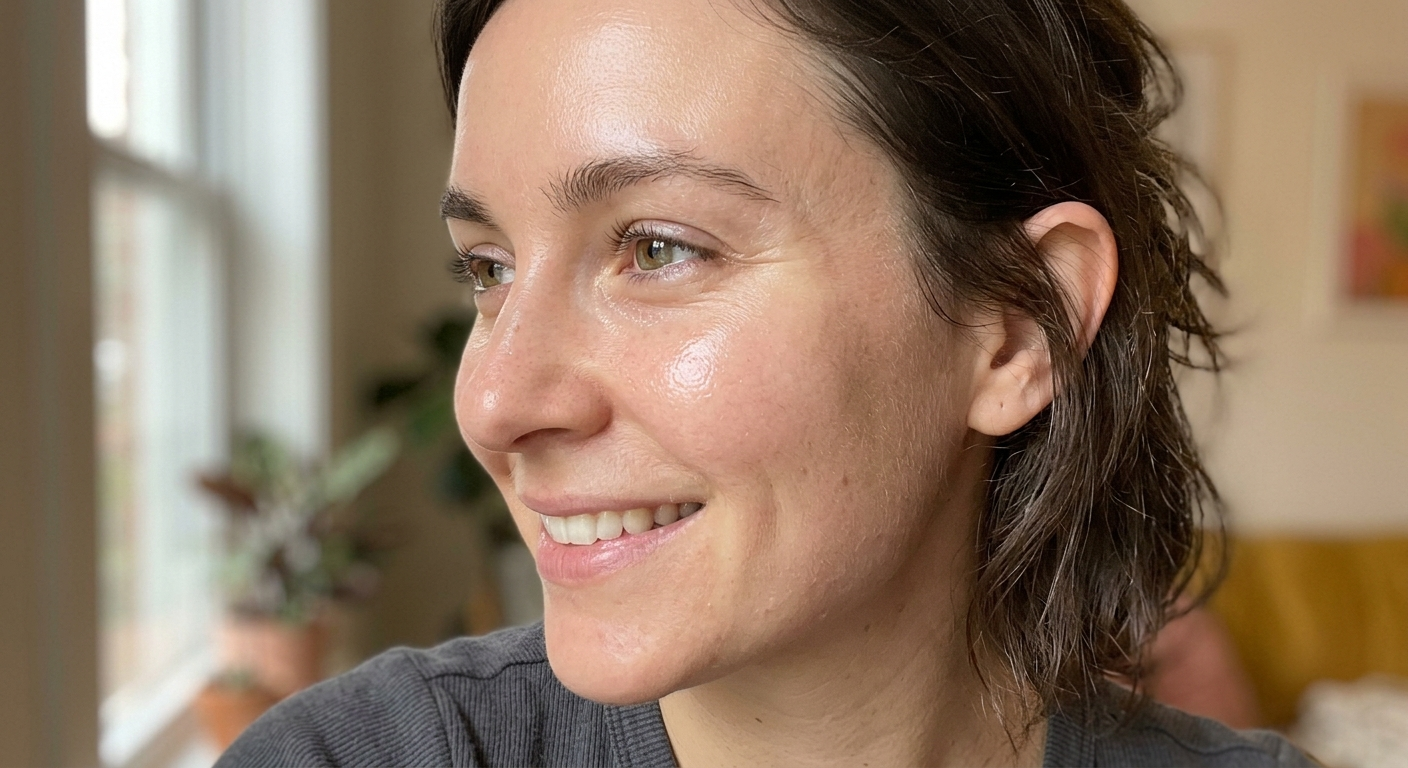
What you’re building is a skin that holds water again. It’s a less visible result than fading a dark spot or smoothing a wrinkle, but it underwrites everything else. A hydrated, intact barrier is the foundation that makes the rest of your routine actually work.
References
-
Rogers J, Harding C, Mayo A, Banks J, Rawlings A. “Stratum corneum lipids: the effect of ageing and the seasons.” Archives of Dermatological Research. 1996;288(12):765-770. doi:10.1007/BF02505294
-
Bizot V, Cestone E, Michelotti A, Nobile V. “Improving Skin Hydration and Age-related Symptoms by Oral Administration of Wheat Glucosylceramides and Digalactosyl Diglycerides: A Human Clinical Study.” Cosmetics. 2017;4(4):37. doi:10.3390/cosmetics4040037
-
Heggar Venkataramana S, Puttaswamy N, Kodimule S. “Potential benefits of oral administration of AMORPHOPHALLUS KONJAC glycosylceramides on skin health – a randomized clinical study.” BMC Complementary Medicine and Therapies. 2020;20(1):26. doi:10.1186/s12906-019-2721-3
-
Mukherjee S, Date A, Patravale V, Korting HC, Roeder A, Weindl G. “Retinoids in the treatment of skin aging: an overview of clinical efficacy and safety.” Clinical Interventions in Aging. 2006;1(4):327-348. doi:10.2147/ciia.2006.1.4.327
-
North Biomedical LLC. “Nanoretinol vs. Conventional Retinol: Efficacy in Collagen and Elastin Recovery.” Clinical Study Summary, 2024. Read the study