
Ergothioneine for Skin: The Mushroom-Derived Antioxidant That Reaches Cells Vitamin C Cannot
Most antioxidants get oxidized before they protect you — this one is engineered to reach the mitochondria
The standard antioxidant story in skincare is well-rehearsed at this point. Vitamin C, vitamin E, ferulic acid, glutathione, niacinamide — each is sold as a way to neutralize the free radicals that age the skin. What that story leaves out is that most antioxidants applied to the face never reach the cellular structures where the most consequential oxidative damage actually occurs.
The damage that drives lasting photoaging happens primarily inside mitochondria, the energy-producing organelles where reactive oxygen species (ROS) are generated as a byproduct of cellular metabolism. Vitamin C is water-soluble and concentrates in the cytoplasm; vitamin E is fat-soluble and concentrates in cell membranes. Neither reliably reaches the mitochondrial matrix. Free radicals produced inside the mitochondrion have an effective field of action measured in nanometers, and an antioxidant that cannot get there cannot protect against them.
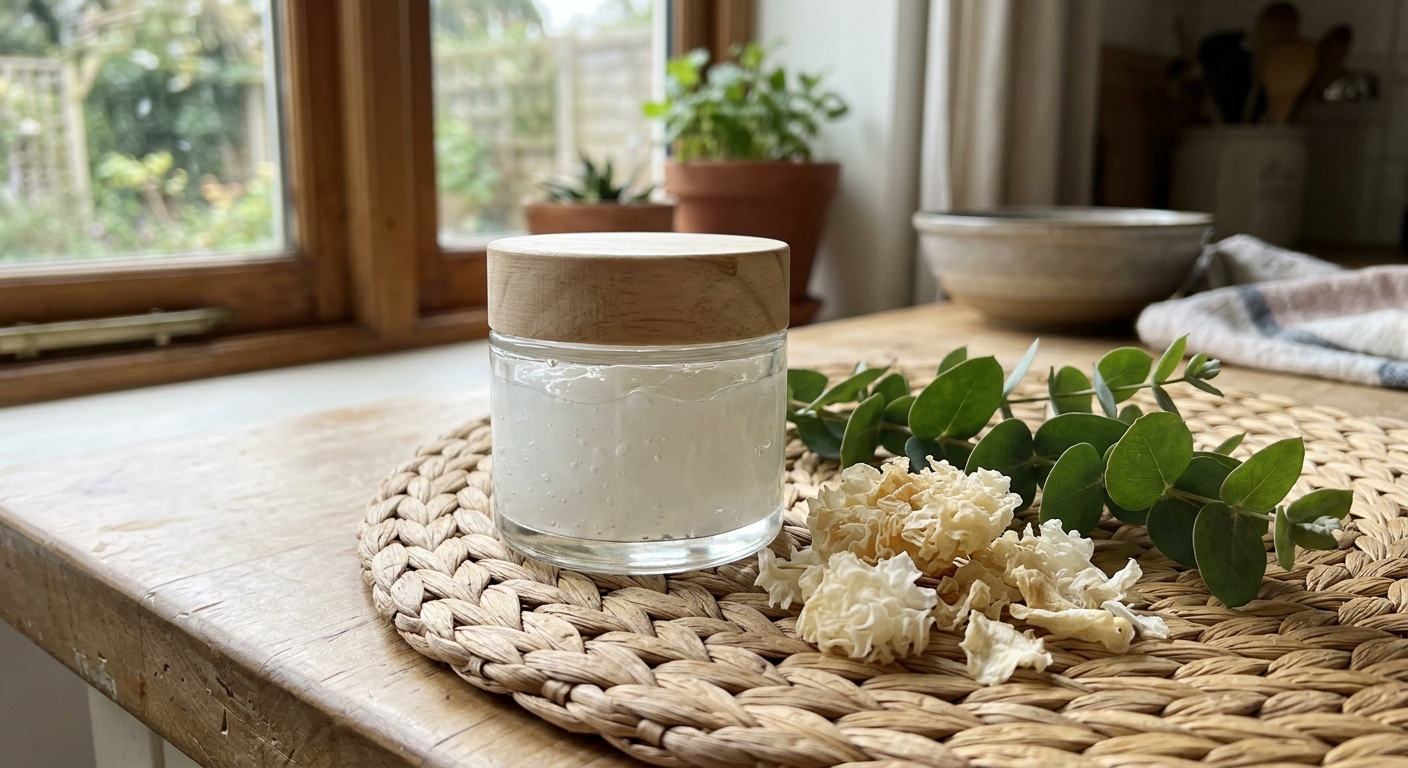
Ergothioneine — a sulfur-containing amino acid produced by mushrooms and certain bacteria — is one of the few topical or oral antioxidants the human body actively transports into mitochondria. That is not marketing language. It is the mechanism that distinguishes it from the vitamin C in your morning serum.
What Ergothioneine Is, and Why Your Body Pays Attention
Humans cannot synthesize ergothioneine. Every molecule of it in your bloodstream came from food — mushrooms, primarily, with smaller amounts in beans, grains, and some animal products that consumed mushrooms or fermented grains earlier in the food chain. Despite being a dietary-only compound, the body treats ergothioneine like a strategic resource: it expresses a dedicated transporter called OCTN1 that ferries the molecule preferentially into tissues exposed to high oxidative stress, including the eye, the liver, the brain, the bone marrow, and the skin.
A 2023 review in Molecules synthesized the mechanism in detail: OCTN1 transports ergothioneine at roughly 100 times the rate of other substrates, and cellular concentrations can rise approximately 600-fold above plasma levels in tissues that need it most [1]. Once inside, ergothioneine concentrates in the mitochondria and the nucleus — the two compartments where oxidative damage to DNA and energy machinery has the most lasting consequences for aging.
What that story leaves out is that most antioxidants applied to the face never reach the cellular structures where the most consequential oxidative damage actually occurs.
What the Evidence Shows for Skin
The clinical and laboratory record on ergothioneine and skin is more substantial than its low public profile suggests.
A 2020 study published in Oxidative Medicine and Cellular Longevity irradiated human dermal fibroblasts with UVA — the deeper-penetrating UV spectrum responsible for most photoaging — and tested whether ergothioneine could protect them. It did. The compound suppressed activation of the AP-1 pathway, which drives expression of MMP-1 (the enzyme that degrades collagen) and several inflammatory cytokines. It also activated Nrf2, the master transcription factor that switches on the cell’s own antioxidant defense genes [2]. Treated fibroblasts retained more collagen, expressed less MMP-1, and showed less DNA damage than UVA-irradiated controls.
A 2021 head-to-head comparison published in Processes tested ergothioneine alongside two well-known dermatology antioxidants — ferulic acid and glutathione — in human skin fibroblasts exposed to UVB. Ergothioneine showed better restoration of type 1 procollagen than either ferulic acid or glutathione, and a greater inhibitory effect on MMP-1 [3]. The study concluded that all three antioxidants protect against UVB-induced photoaging, but ergothioneine performed comparably or better than the more famous compounds it was tested against.
Clinical evidence is less abundant but moving in the same direction. A 2024 randomized, double-blind, placebo-controlled trial in Frontiers in Medicine gave 80 healthy women either an ergothioneine-rich Pleurotus mushroom tablet (25 mg ergothioneine daily) or placebo for 12 weeks. The supplemented group showed significantly higher skin moisture content at the temple and improvements in facial appearance compared to placebo [4]. Plasma ergothioneine concentrations rose roughly five-fold over the trial period.
Why Most Antioxidant Serums Underdeliver
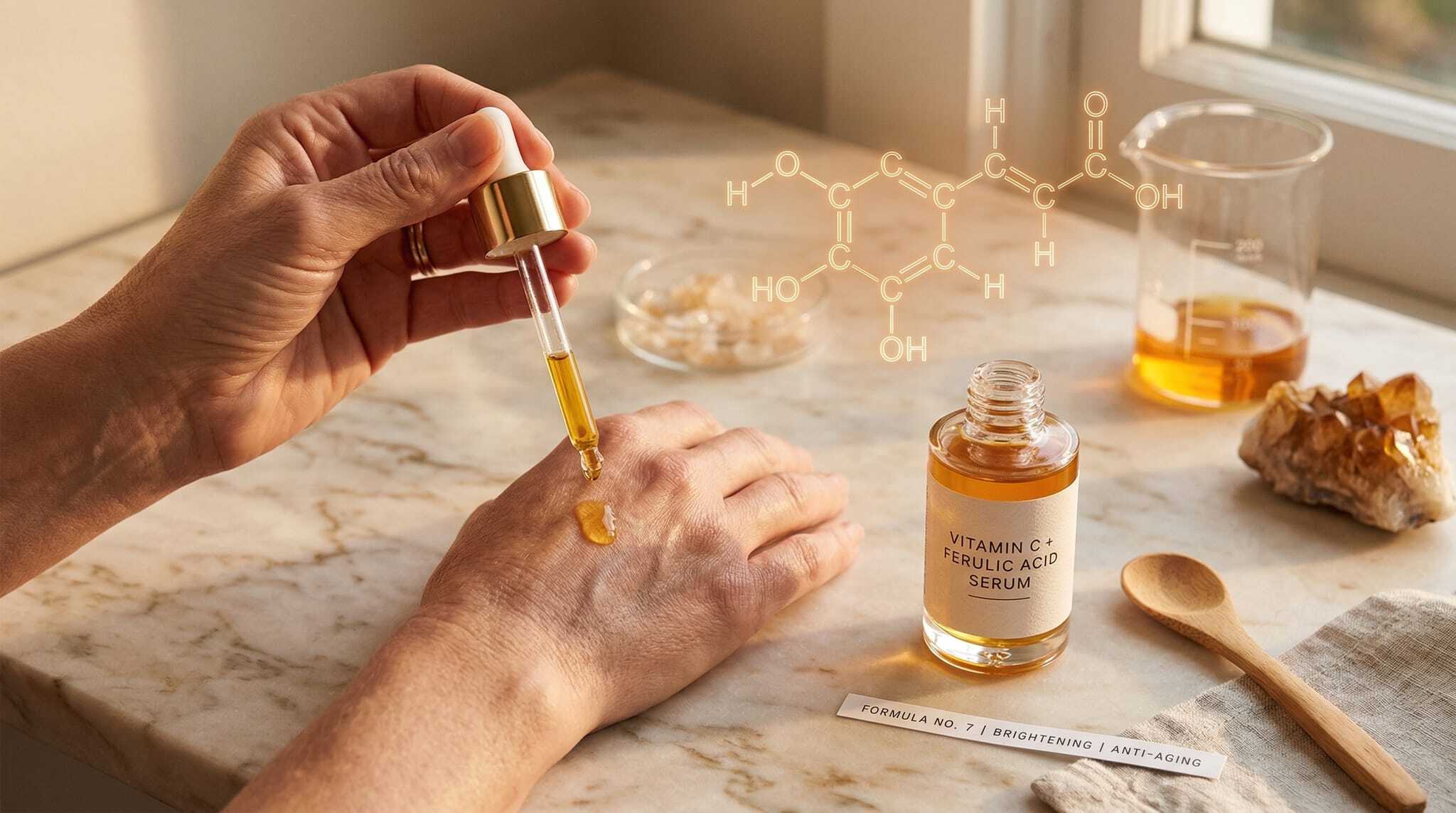
The mismatch between marketing and biology in the antioxidant skincare category is striking. A typical antioxidant serum is built around vitamin C — usually L-ascorbic acid at 10–20%, frequently combined with ferulic acid and vitamin E. The well-known limitation is stability: L-ascorbic acid oxidizes on contact with air, light, and water, and a serum that has turned orange-yellow has already lost much of its activity. The less-discussed limitation is delivery. Vitamin C is water-soluble, polar, and does not cross the lipid stratum corneum efficiently. The fraction that does penetrate concentrates in the cytoplasm, not the mitochondria. NAD+ serums face a more severe version of the same problem: at roughly 663 Daltons and strongly charged, the molecule struggles to cross intact skin at all.
A poorly delivered retinol can create the very damage the antioxidants in your routine are trying to prevent.
Ergothioneine is different on both counts. It is one of the most chemically stable thiol-class antioxidants known — its tautomeric structure means it does not auto-oxidize the way glutathione and cysteine do. And the body’s dedicated OCTN1 transporter pulls it into the cells and tissues where damage actually accumulates. A 2014 preliminary study showed that even at submicromolar concentrations, L-ergothioneine protected skin cells against UV-induced damage by scavenging singlet oxygen and superoxide and reducing tissue MMP-1 expression — concentrations far below where most other antioxidants are active [5].
For a fuller picture of how antioxidants fit into anti-aging strategy, see our overviews of antioxidant skin care and vitamin C serum benefits. For why oxidative damage matters specifically for skin aging see inflammaging skin.
The Ingredient That Solves Half the Problem
Ergothioneine is one of the most promising antioxidants in skincare, but on its own it is still a defensive ingredient — it protects what is there. The other half of anti-aging — actively rebuilding the collagen and elastin already lost — requires a different mechanism. The class with the strongest evidence for that is the retinoids, which signal fibroblasts to produce new dermal matrix proteins.
This is where formulation, not just ingredient choice, starts to matter. Conventional retinol disrupts the lipid barrier on its way through the skin, which causes the redness and peeling most users abandon their retinol over. The disruption also generates additional oxidative stress in the upper layers — exactly the kind of stress an antioxidant like ergothioneine is meant to defend against. A poorly delivered retinol can create the very damage the antioxidants in your routine are trying to prevent.
A Delivery That Doesn’t Generate Damage in Transit
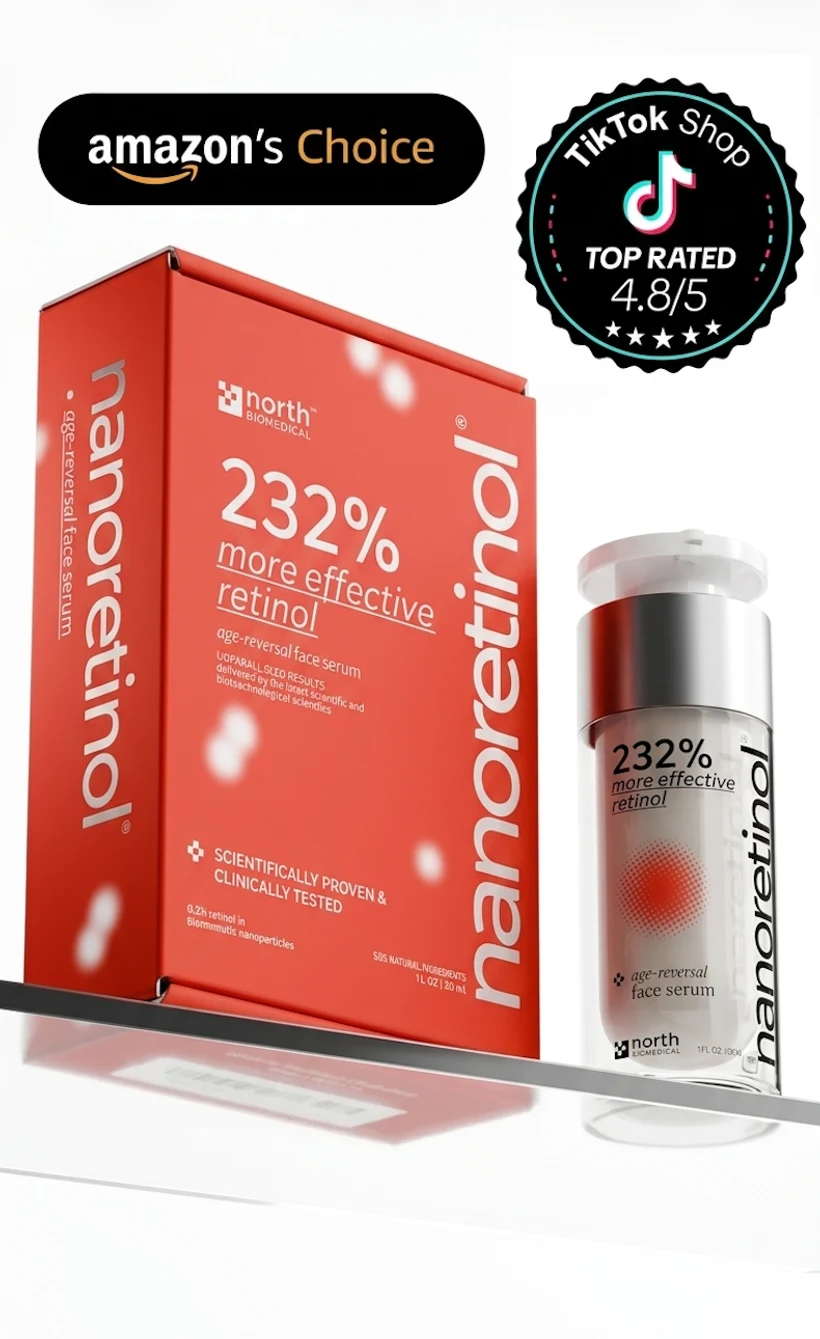
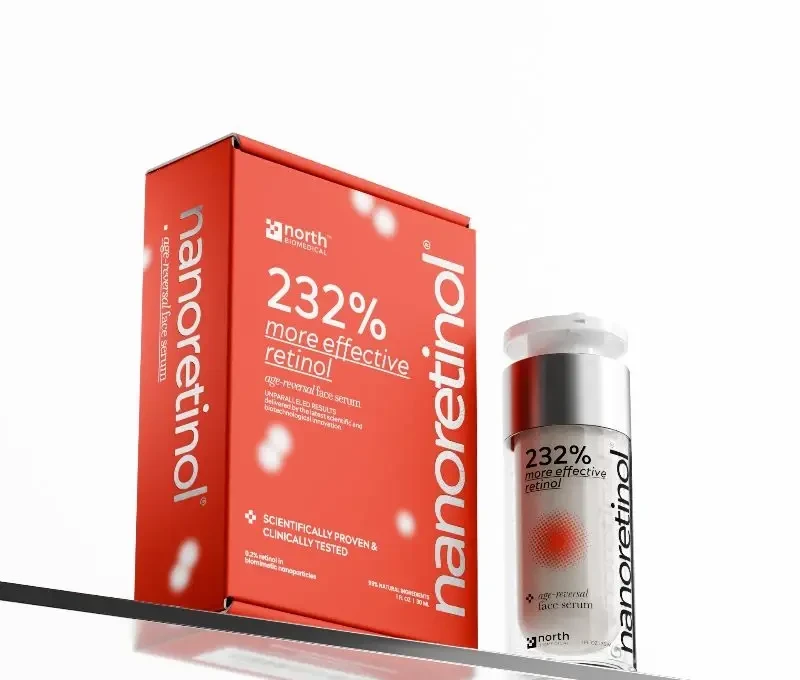
Nanoretinol bypasses the trade-off. Its 0.2% retinol is encapsulated in biomimetic lipid nanoparticles that the skin recognizes as “self” — the nanoparticle membrane mimics the structure of the cell membrane, so the body accepts the particle through the epithelial barrier without disruption. There is no lipid mobility, no petroleum-derived solvent breaking down the stratum corneum. The retinol releases inside the dermis where it is needed, while the surrounding skin barrier stays intact.
The clinical results — 232% greater collagen recovery and 73% greater elastin recovery compared to conventional retinol, with significantly milder side effects — come from a delivery system that does not require sacrificing barrier integrity to get retinol where it works [6]. After 56 days of use, participants showed a 61% increase in skin firmness and 56% increase in elasticity.
A practical anti-aging routine combines both halves of the problem. An ergothioneine-containing serum or a diet rich in mushrooms, oats, and beans supports the antioxidant defense the skin cannot synthesize on its own. A nanoparticle-delivered retinoid restores the dermal proteins age has already cost. The defense protects what is there. The retinoid rebuilds what is gone. Skincare strategy has spent a long time pretending one of those is enough on its own. The biology says otherwise.
References
- Liu HM, Tang W, Wang XY, Jiang JJ, Zhang W, Wang W. “Safe and Effective Antioxidant: The Biological Mechanism and Potential Pathways of Ergothioneine in the Skin.” Molecules. 2023;28(4):1648. doi:10.3390/molecules28041648
- Hseu YC, Vudhya Gowrisankar Y, Chen XZ, Yang YC, Yang HL. “The Antiaging Activity of Ergothioneine in UVA-Irradiated Human Dermal Fibroblasts via the Inhibition of the AP-1 Pathway and the Activation of Nrf2-Mediated Antioxidant Genes.” Oxidative Medicine and Cellular Longevity. 2020;2020:2576823. doi:10.1155/2020/2576823
- Tsay GJ, Lin SY, Li CY, Mau JL, Tsai SY. “Comparison of Single and Combined Use of Ergothioneine, Ferulic Acid, and Glutathione as Antioxidants for the Prevention of Ultraviolet B Radiation-Induced Photoaging Damage in Human Skin Fibroblasts.” Processes. 2021;9(7):1204. doi:10.3390/pr9071204
- Hanayama M, Mori K, Ishimoto T, Kato Y, Kawai J. “Effects of an ergothioneine-rich Pleurotus sp. on skin moisturizing functions and facial conditions: a randomized, double-blind, placebo-controlled trial.” Frontiers in Medicine. 2024;11:1396783. doi:10.3389/fmed.2024.1396783
- Markova NG, Karaman-Jurukovska N, Dong KK, Damaghi N, Smiles KA, Yarosh DB. “Skin cells and tissue are capable of using L-ergothioneine as an integral component of their antioxidant defense system.” Free Radical Biology and Medicine. 2009;46(8):1168-1176. doi:10.1016/j.freeradbiomed.2009.01.021
- North Biomedical LLC. “Nanoretinol vs. Conventional Retinol: Efficacy in Collagen and Elastin Recovery.” Clinical Study Summary, 2024. Study Summary