Post-Inflammatory Erythema: How to Fade Red Acne Marks
The pink and red marks a pimple leaves behind are not pigment and not scars. Here is why they linger, how to tell them apart from brown marks, and what actually helps them fade
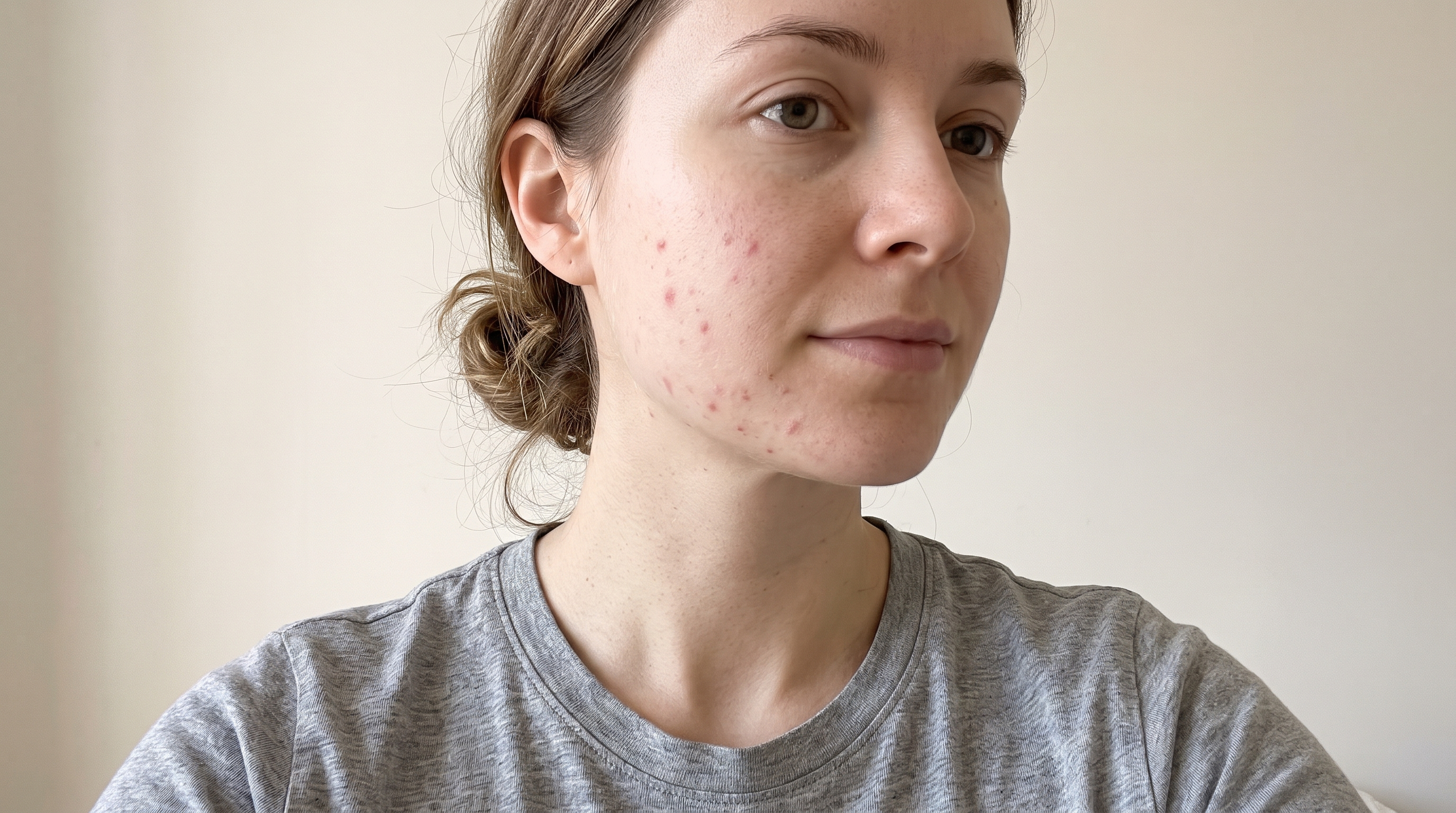
The pimple is gone, but a flat pink or red spot has taken its place, and weeks later it is still there. For many people with acne, these marks bother them more than the breakouts did, because they stay visible long after the spot itself has healed.
Dermatologists call this post-inflammatory erythema, or PIE. The term was introduced in 2013 to describe the pink-to-red discoloration that remains after an inflammatory acne lesion, because until then there was no accurate name for it [1]. This guide explains what PIE is, how to tell it apart from brown marks and true scars, and which treatments have evidence behind them.
Red marks are not the same as brown marks
After a pimple heals, it can leave three different kinds of mark, and each one needs a different approach:
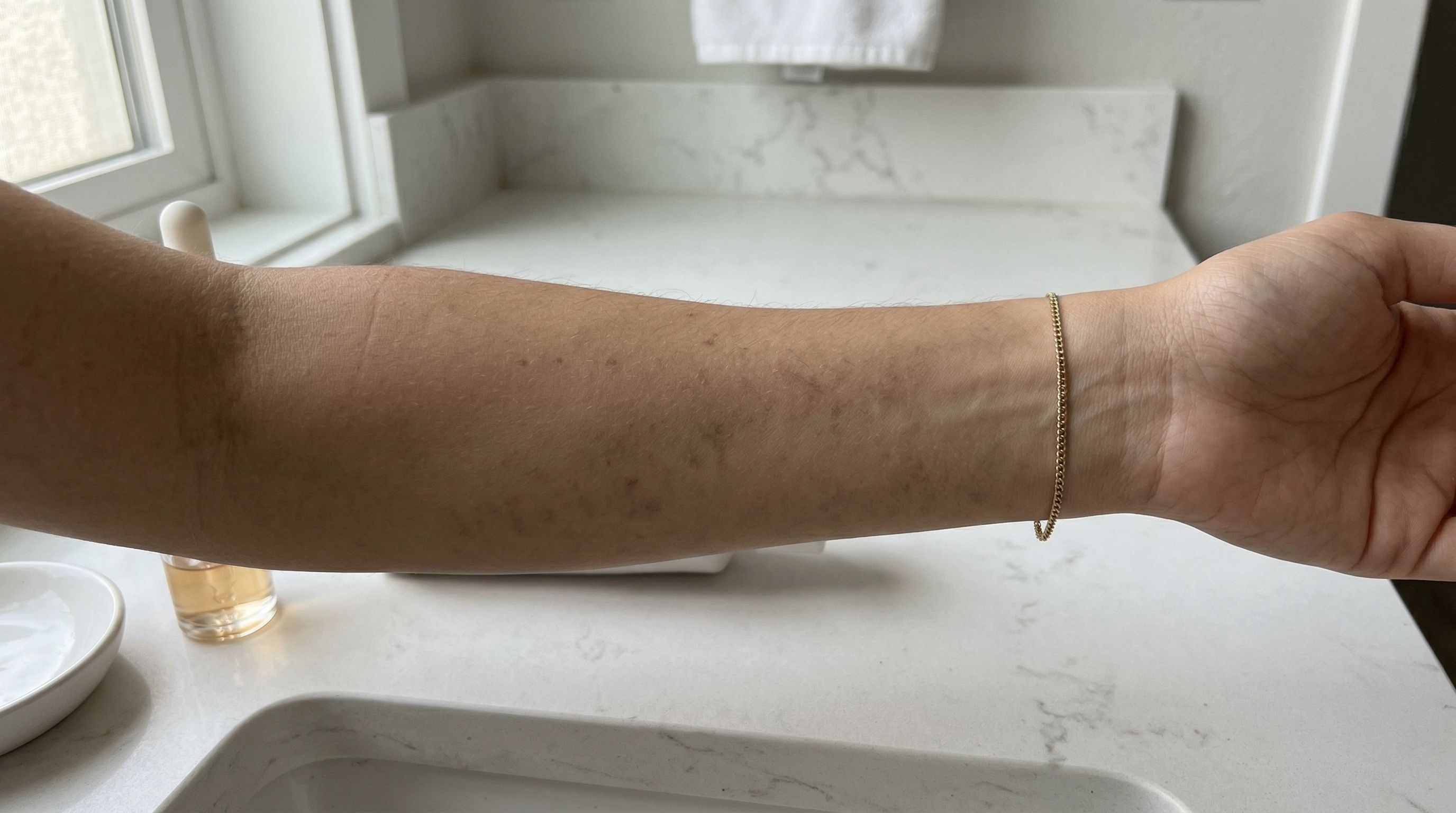
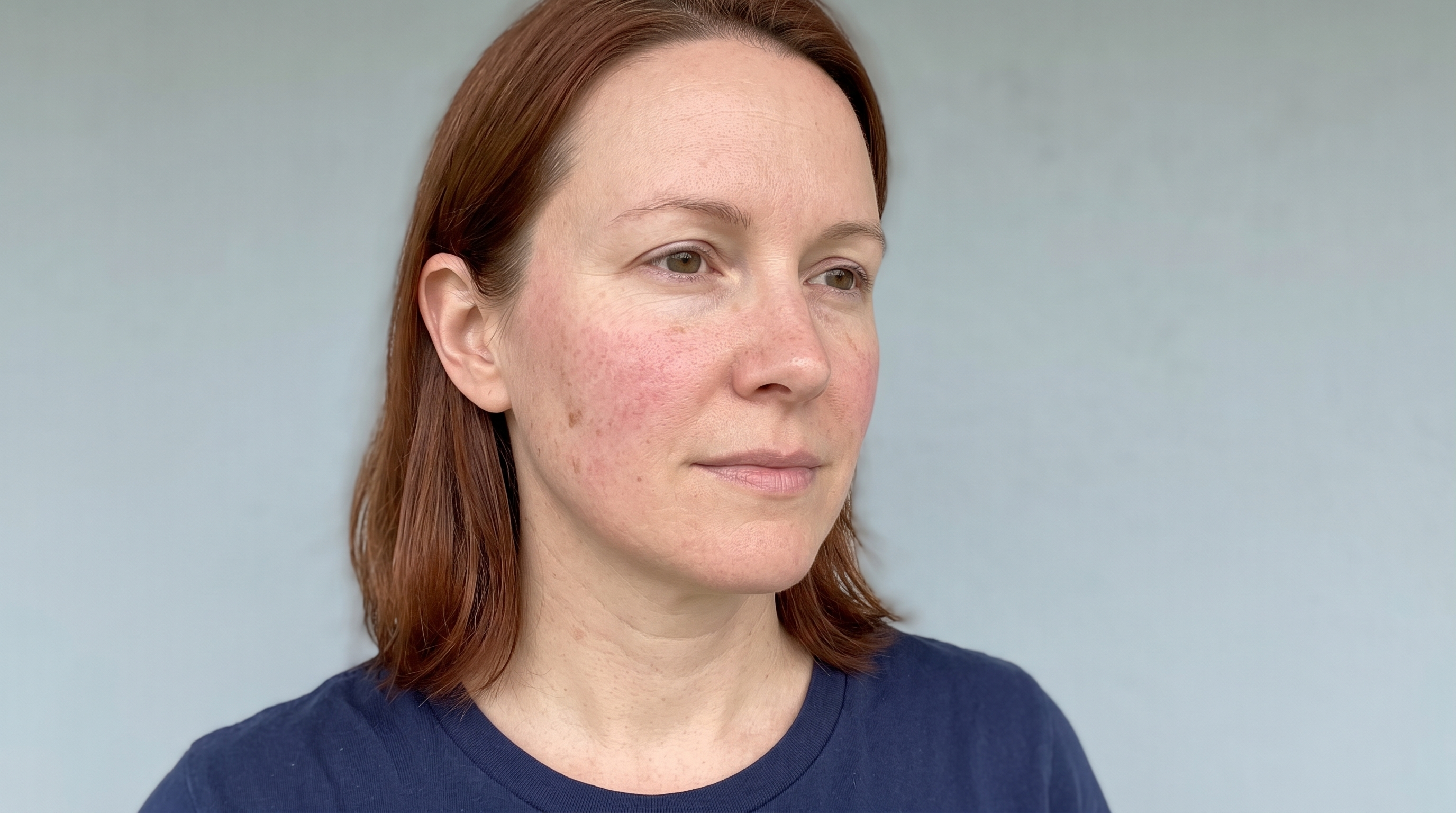
- Red or pink marks (PIE). These come from small blood vessels near the surface that stayed dilated or damaged after the inflammation. They are most noticeable on lighter skin.
- Brown or grey marks (PIH). These come from extra melanin laid down during the inflammation. They are most common on medium and deeper skin tones, and our guide to post-inflammatory hyperpigmentation covers them.
- Dents or raised bumps. These are scars, a change in the structure of the skin rather than its color. They need different tools, which are covered in our guide to acne scar treatment.
A simple check tells red and brown apart. Press a clear glass gently against the mark. If the color fades while you press and returns when you let go, the color is coming from blood in the vessels, which points to PIE. If it stays the same, the color is pigment.
Why the redness lingers
Acne inflammation does not stay inside the pore. It spreads into the surrounding dermis, where the body widens nearby capillaries and grows new ones to bring in immune cells and repair materials. Once the pimple resolves, some of those vessels stay enlarged near the surface. A systematic review describes post-acne erythema as the telangiectasia and erythematous lesions that remain after acne, which is a precise way of saying the color is vascular [2].
Your skin can keep a red mark for 3 months or more after the pimple is gone, much longer than the spot itself lasted.
Your skin can keep a red mark for 3 months or more after the pimple is gone, much longer than the spot itself lasted.
That persistence is why clinical trials usually enrol people whose marks have already lasted that long. Anything that keeps the area inflamed, such as picking, scrubbing or sunburn, keeps those vessels open for longer.
Will post-inflammatory erythema fade on its own?
Often, yes. The same review notes that some lesions improve over time without treatment [2]. The trouble is that the timeline is unpredictable, and new breakouts keep adding fresh marks. That is why most people get the best results from two things at once: controlling active acne so no new marks form, and using treatments that speed up how fast the existing ones settle.
Treatments with evidence behind them
No single treatment is the gold standard for PIE, and the review authors call for more randomized trials [2]. Still, several options have been tested.
Tranexamic acid
Best known for melasma, tranexamic acid also has anti-inflammatory and anti-angiogenic effects and helps the skin barrier recover, which is why researchers have tried it for redness disorders including post-acne erythema [3]. In a split-face study of 40 people whose marks had lasted at least 3 months, a liposomal cream combining 5% tranexamic acid with two vessel-narrowing drugs significantly reduced redness over 3 months compared with a placebo cream [4]. Over-the-counter serums usually contain tranexamic acid alone, at lower strengths, so expect gentler results.
Vessel-narrowing gels
Brimonidine and oxymetazoline are prescription gels originally approved for the persistent redness of rosacea. They work by constricting small blood vessels. In a randomized split-face trial of 60 people with post-acne erythema, brimonidine on its own clearly improved the marks, and pairing it with laser treatment worked best [5]. These are prescription medicines, so they are a conversation to have with a dermatologist.
Your skin showed 18% less redness after 8 weeks of a retinal and azelaic acid concentrate than the side given a plain base in one trial.
Azelaic acid and retinoids
Azelaic acid calms inflammation and helps control the breakouts that create new marks, and our guide to azelaic acid for skin explains how to use it. A recent review of cosmeceuticals for acne found the strongest human evidence for topical retinol, benzoyl peroxide and azelaic acid [6].
Retinoids add something the others do not: they act on the dermis where the redness lives. In aged skin, topical retinol increased procollagen and glycosaminoglycans, the building blocks the dermis uses to rebuild itself [7]. A small 2026 trial tested a combined retinal and azelaic acid concentrate on blemish-prone skin.
Your skin showed 18% less redness after 8 weeks of a retinal and azelaic acid concentrate than the side given a plain base in one trial.
The same 23-person study also measured smoother texture and fewer visible pores on the treated side [8]. The improvement was modest, but it came from a cosmetic routine rather than a clinic.
Vascular laser
When marks are numerous or stubborn, pulsed dye laser is the most studied option. Light and laser devices were the treatments used most often across the review, with pulsed dye lasers the most common [2]. The laser targets the hemoglobin inside the dilated vessels and shrinks them. It is the same approach used for broken capillaries on the face, and it usually takes a few sessions.
Habits that keep marks red for longer
Treatments work better when you stop re-injuring the area:
- Do not pick or squeeze. Every new wound restarts the inflammation that keeps vessels dilated.
- Skip harsh scrubs. Gritty exfoliants and rough cloths add friction to already reactive skin.
- Wear sunscreen daily. UV exposure adds inflammation and makes red marks look more obvious.
- Avoid heat when you can. Very hot showers, saunas and steaming dilate facial vessels further.
- Introduce actives slowly. A routine that stings or peels creates new redness on top of the old.
Where Nanoretinol fits
The catch with conventional retinol is that it can add redness of its own during the first weeks, which is the last thing a face full of PIE needs. Peeling, stinging and flushing make the marks look worse before they look better, and many people stop.
Nanoretinol was designed to get the benefits of retinol without that trade-off. It delivers 0.2% retinol inside biomimetic lipid nanoparticles that the skin recognizes as its own, so it passes through the barrier without the damage many conventional formulas cause. Its cytotoxicity on skin cells is drastically lower than conventional retinol’s, and in clinical testing side effects were minimal and milder than with conventional retinol. Its effect on the dermis is also strong: in North Biomedical’s study it was 232% more effective in collagen recovery and 73% more effective in elastin recovery than conventional retinol [9].
A simple routine for red marks is a gentle cleanser, Nanoretinol at night, a moisturizer, and a broad-spectrum sunscreen every morning. Add a tranexamic acid or azelaic acid serum once your skin is comfortable, and see a dermatologist about laser if the marks are still there after a few months.
References
- Bae-Harboe YS, Graber EM. “Easy as PIE (Postinflammatory Erythema).” Journal of Clinical and Aesthetic Dermatology. 2013;6(9):46-47. PubMed:24062874
- Kalantari Y, Dadkhahfar S, Etesami I. “Post-acne erythema treatment: A systematic review of the literature.” Journal of Cosmetic Dermatology. 2022;21(4):1379-1392. doi:10.1111/jocd.14804
- Chen T, Xue J, Wang Q. “Tranexamic Acid for the Treatment of Hyperpigmentation and Telangiectatic Disorders Other Than Melasma: An Update.” Clinical, Cosmetic and Investigational Dermatology. 2024;17:2151-2163. doi:10.2147/CCID.S479411
- Agamia N, El-Nagdy S, El-Ariny A. “A split face comparative study using a novel triple combination therapy for the treatment of persistent post acne erythema.” Dermatologic Therapy. 2022;35(4):e15327. doi:10.1111/dth.15327
- Omar SI, Al-Jarem YF, El Banaa AM, Essawy M. “A Split-face Randomized Comparative Study of Efficacy of Pulsed Dye Laser, Topical Brimonidine Tartrate, and Their Combination for Treatment of Post-acne Erythema.” Advances in Skin & Wound Care. 2025;38(8):E41-E49. doi:10.1097/ASW.0000000000000326
- Searle TN, Al-Niaimi F, Ali FR. “Cosmeceuticals in acne vulgaris: from mechanism of action to clinical application.” Skin Health and Disease. 2026;6(2):77-89. doi:10.1093/skinhd/vzaf104
- Kafi R, Kwak HS, Schumacher WE, Cho S, Hanft VN, Hamilton TA, King AL, Neal JD, Varani J, Fisher GJ, Voorhees JJ, Kang S. “Improvement of naturally aged skin with vitamin A (retinol).” Archives of Dermatology. 2007;143(5):606-612. doi:10.1001/archderm.143.5.606
- Gaudicheau C, Ahlström M, Gillbro JM, Åkerström U. “Efficacy and safety of a novel anhydrous 0.1% retinal and 10% azelaic acid concentrate for blemish-prone skin: An eight-week randomized prospective split-face, vehicle-controlled study.” International Journal of Cosmetic Science. 2026. doi:10.1111/ics.70131
- North Biomedical LLC. “Nanoretinol vs. Conventional Retinol: Efficacy in Collagen and Elastin Recovery.” Clinical Study Summary, 2024. Study summary