Rich Moisturizer: Who Needs One and How to Choose It
What makes a cream rich rather than just thick, which ingredients the barrier studies support, and how to layer one with retinol at night
There comes a point, often in your late forties or during the first cold snap of the year, when your usual moisturizer stops being enough. The face feels tight an hour after moisturizing, makeup clings to dry patches, and fine lines look deeper by the afternoon. The common advice is to switch to a rich moisturizer.
That advice is often right, but “rich” is one of the vaguest words on a skincare shelf. Some rich creams are full of barrier-repairing lipids. Others are simply thickened with wax and feel heavy without doing much more than a lotion. This guide explains what a rich moisturizer really is, who benefits from one, who should avoid it, and how to make it work with the rest of your routine.
What Makes a Moisturizer “Rich”?
Every moisturizer is a blend of three kinds of ingredients. Humectants such as glycerin pull water into the outer layer of skin. Emollients fill the gaps between dry, curling skin cells so the surface feels smooth. Occlusives sit on and within the surface to slow water loss [1].
A rich moisturizer is one where the oil phase, the share of the formula that is lipid rather than water, is large, and where it includes more of the heavier emollients and occlusives. Typical examples are shea butter, squalane, plant oils, lanolin, petrolatum, waxes and skin-identical lipids such as ceramides and cholesterol. A light lotion or a gel moisturizer leans the other way, built mostly on water and humectants.
Thick and rich are not the same. A cream can feel dense because of thickeners and still contain very little oil. To tell them apart, look at the first five or six ingredients: in a truly rich formula, butters, oils, petrolatum or lanolin appear there, not only at the bottom of the list.
Why Rich Creams Help Dry and Mature Skin
Older skin really does run short of lipids. Aged skin shows a global reduction in the fats of the outer layer and a marked drop in cholesterol production, which makes the barrier slower to recover when it is stressed [2]. After menopause, falling estrogen adds to the problem by lowering sebum output and the skin’s ability to hold water [3].
Your skin loses water faster in cold, dry winter air than in humid summer air, and a richer cream is the simplest way to slow that loss.
Your skin loses water faster in cold, dry winter air than in humid summer air, and a richer cream is the simplest way to slow that loss. A review of climate and skin found that low humidity and low temperatures weaken barrier function and make skin more reactive to irritants [4]. That is why a moisturizer that felt perfect in August can feel thin in January.
Some of the most common rich-cream ingredients do more than sit on top. In a classic study on human volunteers, petrolatum spread into the gaps between cells at every level of the outer layer and sped up barrier recovery after it was stripped, rather than slowing it [5]. And in barrier studies done mostly in mice, with early confirmation in human skin, mixtures of the skin’s own three key lipids, ceramides, cholesterol and fatty acids, repaired damage faster when one of them was raised to up to three times the others [6]. Our review of emollient creams covers those ingredients in more detail.
Who Benefits Most From a Rich Moisturizer
- Skin over 50, and especially after menopause. Lower oil output and slower barrier repair make a richer formula a better match.
- Anyone in a cold or dry climate, or in a centrally heated home for months at a time.
- People using retinol or acids. These can leave skin drier for the first weeks, and a rich layer at night makes the routine easier to stick with.
- Very dry, rough or flaking skin. If your skin feels tight within an hour of moisturizing, a lotion is probably not enough. Our guide to the best moisturizers for dry skin compares textures for this group.
Who Should Think Twice
Rich is not better for everyone. If you have oily or acne-prone skin, a very occlusive cream across your whole face can feel heavy and may worsen breakouts in some people. A lighter cream on the T-zone with a rich one on dry cheeks is a reasonable compromise.
Small, firm white bumps that appear under the eyes or on the cheeks after switching to a heavy cream are another sign to scale back, particularly around the eyes, where the skin is thin.
Your skin needs 2 to 4 weeks on a new rich cream before you can judge it fairly, far longer than the feel of the first night.
Lanolin deserves a mention, because it is one of the best rich-cream ingredients and also one of the more common allergens. Among almost 44,000 patients patch tested in North America between 2001 and 2018 for suspected allergy, 3.3% reacted to lanolin, and the rate was higher in people with a history of eczema [7]. That is a population already suspected of allergy, so the general rate is lower, but if you have reactive skin, test a lanolin cream on a small area first.
How to Choose a Good Rich Moisturizer
- Check the top of the list. Look for shea butter, squalane, petrolatum, ceramides, cholesterol or plant oils among the first ingredients.
- Look for a humectant too. Glycerin or hyaluronic acid draws water in; the oils then help hold it there.
- Skip heavy fragrance. Rich creams are often perfumed to feel luxurious, and fragrance is a common cause of irritation on dry skin.
- Prefer a tube or pump. It keeps the formula cleaner and stable for longer than an open jar.
- Match it to the season. Many people need a rich cream from late autumn to early spring and a lighter one the rest of the year.
Your skin needs 2 to 4 weeks on a new rich cream before you can judge it fairly, far longer than the feel of the first night.
How to Layer a Rich Moisturizer at Night
The usual rule is thinnest to thickest. Apply any water-based serums or treatments first, give them a minute to absorb, then seal everything in with the rich cream. Applying it to slightly damp skin helps it trap more water.
Night is when a rich cream works hardest, because there is no makeup to slide around and hours of uninterrupted contact. Our guide to the best night creams for aging skin covers what else to look for in an overnight formula.
Comfort Plus Firmness
A rich moisturizer solves the dryness side of aging skin. It softens fine lines by plumping the surface with water and lipids, but it cannot rebuild the collagen and elastin that keep skin firm. That takes an active such as retinol.
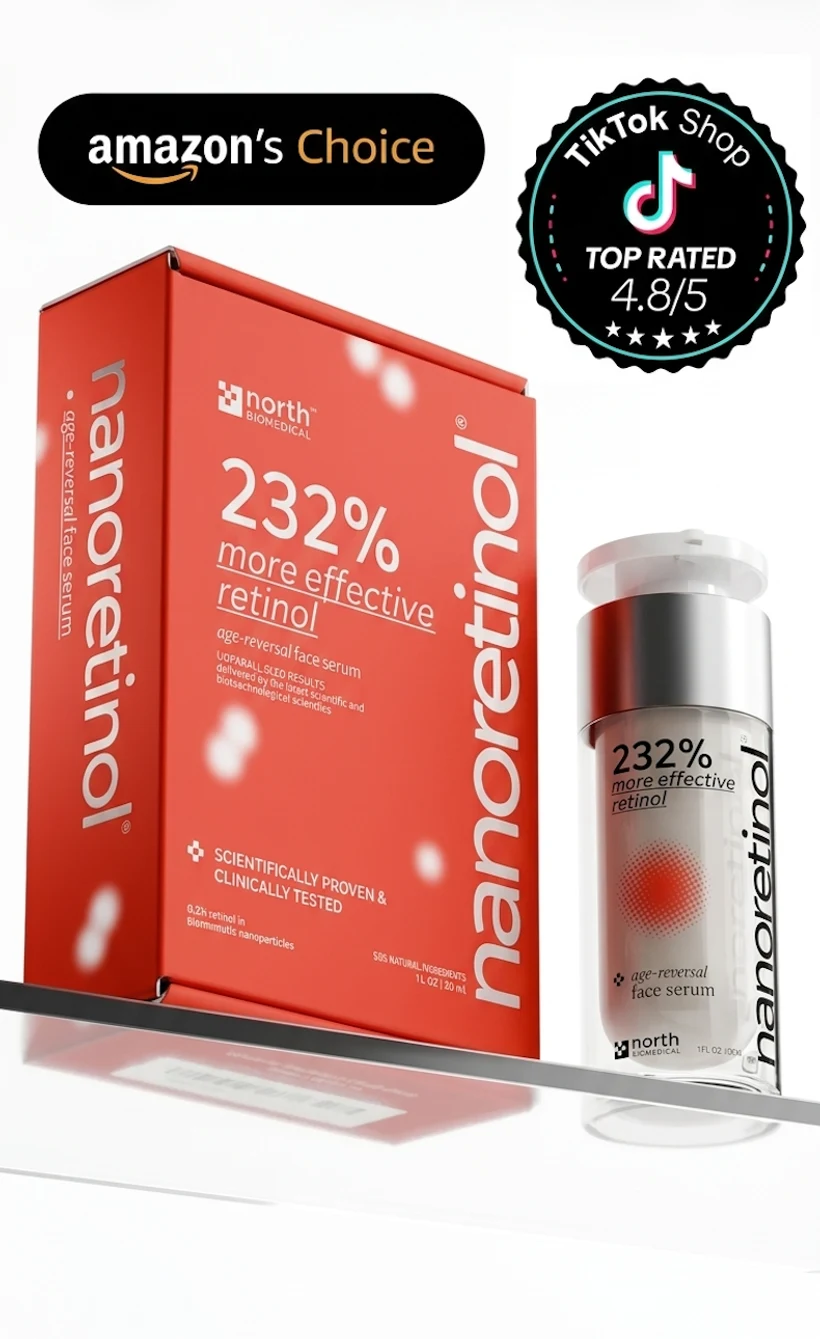
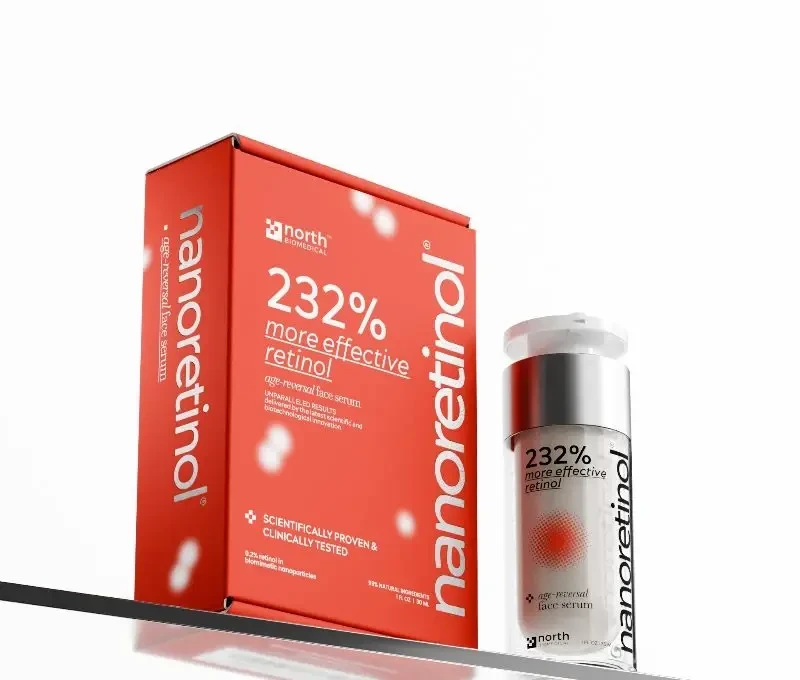
The catch is that conventional retinol often dries the skin further, because many formulas use chemicals and petroleum derivatives that loosen the barrier to push the retinol through. Nanoretinol works differently. Its 0.2% retinol is held inside biomimetic lipid nanoparticles that pass through the barrier without damaging it, in a light, water-based gel that absorbs completely. In North Biomedical’s study, it was 232% more effective in collagen recovery than conventional retinol, and users saw a 61% increase in firmness and a 56% increase in elasticity after 56 days [8].
At night, apply Nanoretinol first, let it absorb, then follow with your rich moisturizer. The gel delivers the retinol; the cream holds in the water. Use sunscreen the next morning.
Putting It Together
A rich moisturizer is a texture choice, not a magic formula. Choose one with real lipids near the top of the list, use it where and when your skin is driest, and pair it with an active that works on firmness. Your skin should feel comfortable all day, not greasy, and that is the simplest test that you have found the right one.
References
- Lodén M. “Role of topical emollients and moisturizers in the treatment of dry skin barrier disorders.” American Journal of Clinical Dermatology. 2003;4(11):771-788. doi:10.2165/00128071-200304110-00005
- Elias PM, Ghadially R. “The aged epidermal permeability barrier: basis for functional abnormalities.” Clinics in Geriatric Medicine. 2002;18(1):103-120. doi:10.1016/s0749-0690(03)00037-5
- Shu YY, Maibach HI. “Estrogen and skin: therapeutic options.” American Journal of Clinical Dermatology. 2011;12(5):297-311. doi:10.2165/11589180-000000000-00000
- Engebretsen KA, Johansen JD, Kezic S, Linneberg A, Thyssen JP. “The effect of environmental humidity and temperature on skin barrier function and dermatitis.” Journal of the European Academy of Dermatology and Venereology. 2016;30(2):223-249. doi:10.1111/jdv.13301
- Ghadially R, Halkier-Sorensen L, Elias PM. “Effects of petrolatum on stratum corneum structure and function.” Journal of the American Academy of Dermatology. 1992;26(3 Pt 2):387-396. PubMed 1564142
- Man MQ, Feingold KR, Thornfeldt CR, Elias PM. “Optimization of physiological lipid mixtures for barrier repair.” Journal of Investigative Dermatology. 1996;106(5):1096-1101. doi:10.1111/1523-1747.ep12340135
- Silverberg JI, Patel N, Warshaw EM, et al. “Lanolin Allergic Reactions: North American Contact Dermatitis Group Experience, 2001 to 2018.” Dermatitis. 2022;33(3):193-199. doi:10.1097/DER.0000000000000871
- North Biomedical LLC. “Nanoretinol vs. Conventional Retinol: Efficacy in Collagen and Elastin Recovery.” Clinical Study Summary, 2024. Study summary