Rosemary Oil for Skin: What the Research Actually Shows
The trial that made rosemary oil famous studied scalps, not faces — and the facial evidence points somewhere more specific
Rosemary oil went from spice rack to bathroom cabinet in about two years, and the journey was powered by a single study. It is worth being precise about what that study measured, because the answer explains most of the confusion around what rosemary can and cannot do for facial skin.
The trial was a randomized comparison of rosemary oil against topical minoxidil 2% in people with androgenetic alopecia. After six months, both groups showed a significant increase in hair count, with no meaningful difference between them, and the rosemary group reported less scalp itching [1]. It is a real, published, peer-reviewed result — and it is entirely about scalp hair. It says nothing about wrinkles, firmness, tone or texture on the face.
That does not mean rosemary is irrelevant to skin. It means the interesting evidence is somewhere else, in the plant’s chemistry rather than its hair-growth reputation.
What is actually in the plant
Rosemary contributes three well-studied molecules to a formula. Rosmarinic acid is a water-soluble polyphenol. Carnosic acid and carnosol are fat-soluble diterpenes, and they are the reason rosemary extract has been used as a food preservative for decades — they are unusually effective at interrupting the chain reactions that make fats go rancid.
Skin ages through a related process. Ultraviolet exposure generates reactive oxygen species faster than the skin’s own antioxidant systems can quench them, and the resulting oxidative signalling drives the enzymatic breakdown of collagen and elastin.
The trial was a randomized comparison of rosemary oil against topical minoxidil 2% in people with androgenetic alopecia.
Rosmarinic acid has been characterised as a photo-protective agent against UV and other ionizing radiation, acting as a free-radical scavenger in the models tested [2]. That places rosemary firmly in the same conceptual category as vitamin C, vitamin E and green tea polyphenols: a defensive ingredient rather than a corrective one.
The most relevant skin evidence is about collagenase
The finding that matters most for aging skin is narrower and more mechanistic. Carnosic acid, applied to human skin fibroblasts and keratinocytes, prevented the ultraviolet-induced expression of matrix metalloproteinases — the collagen-degrading enzymes that mediate photoaging [3]. A water-soluble rosemary leaf extract produced the same effect on MMP-1 specifically, both in cultured dermal fibroblasts and in a reconstructed three-dimensional skin model [4].
This is genuinely useful evidence, and it is also worth reading carefully. Both studies are laboratory work on cells and tissue constructs, not clinical trials on volunteers, and both used defined concentrations of purified extract rather than a few drops of essential oil in a carrier. What they establish is a plausible mechanism: rosemary compounds can blunt the enzymatic arm of UV damage. What they do not establish is a measurable wrinkle-depth outcome on a human face over twelve weeks.
Rosemary essential oil has also shown broad antibacterial and antifungal activity in vitro, characterised alongside its chemical composition [5]. That is real but modest news for skincare — sufficient to explain why rosemary shows up in scalp and body formulas, insufficient to make it a treatment for anything.
The safety half of the story
Essential oils are concentrated, and concentration cuts both ways. Rosemary essential oil is dominated by 1,8-cineole, camphor and α-pinene — volatile aromatic compounds that carry the smell and also carry the sensitising potential. This is not theoretical: allergic contact dermatitis to rosemary leaf extract in a cosmetic cleansing gel has been documented and confirmed by patch testing [6].
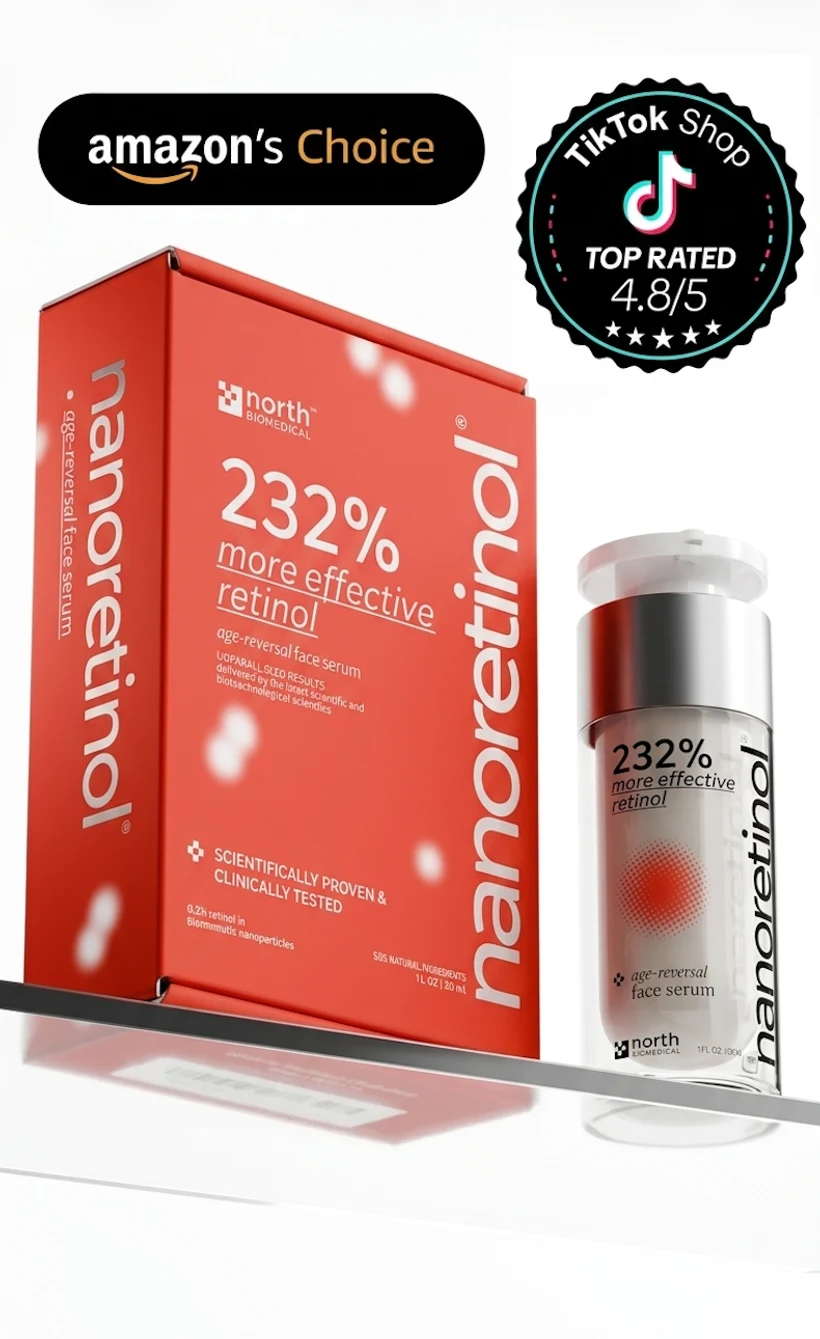
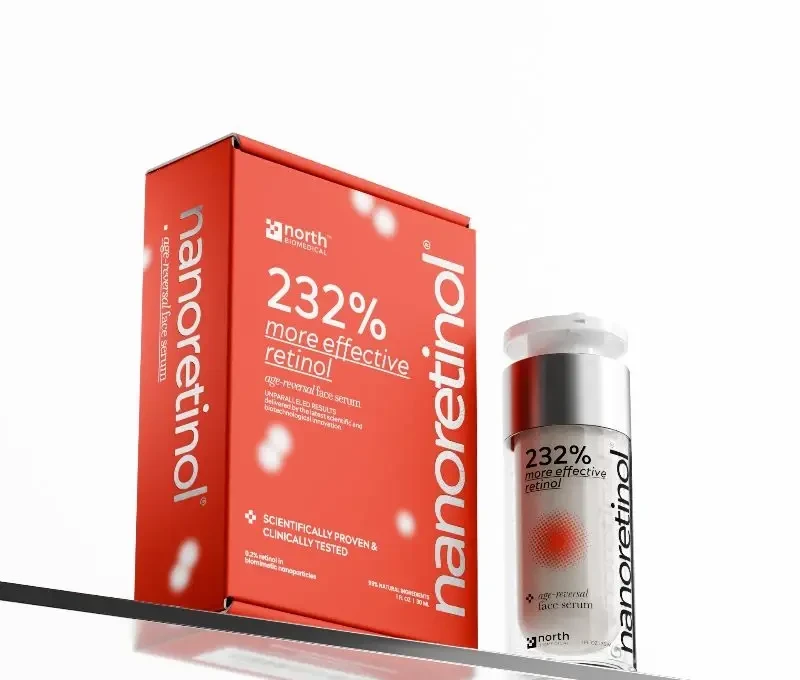
Nanoretinol was developed to remove that trade-off: 0.2% retinol encapsulated in biomimetic lipid nanoparticles which the skin reads as self and admits through the epithelial barrier without that barrier being forced open.
Three practical consequences follow. Undiluted essential oil does not belong on facial skin. Rosemary in a well-formulated product appears at a fraction of a percent, not as a headline dose. And if your skin already reacts to fragrance materials, a botanical framing does not lower the risk — the sensitising molecules are the same class of molecules whether they arrive from a laboratory or a shrub.
Protection is not repair
Here is the distinction that resolves the whole category. An antioxidant defends the collagen you still have by intercepting damage before it triggers the enzymes that dismantle it. It does not instruct your fibroblasts to build more. Those are two different jobs, and no amount of rosemary performs the second one.
For that second job, the evidence points in one direction and has for three decades. In the trial that established the principle, topical tretinoin restored collagen formation in photodamaged human skin, with measurable increases in collagen synthesis confirmed on biopsy [7]. Retinoids do not merely protect the dermal matrix; they signal for its reconstruction.
The historical problem is that this class has been hard to tolerate, and the reason is the vehicle rather than the molecule. Conventional retinol formulations lean on ingredients that destabilise the skin barrier in order to push retinol through it, which is exactly where the peeling, redness and burning originate. Nanoretinol was developed to remove that trade-off: 0.2% retinol encapsulated in biomimetic lipid nanoparticles which the skin reads as self and admits through the epithelial barrier without that barrier being forced open. In comparison against conventional retinol it proved 232% more effective in collagen recovery and 73% more effective in elastin recovery, with drastically reduced cytotoxicity in cellular assays. The formulation is water-based, 99% natural and suitable for sensitive skin.
If you like the botanical direction, it pairs rather than competes. Antioxidants work in the morning, under sunscreen, reducing the damage load — the logic is laid out in our guide to antioxidant skin care. A well-chosen plant oil such as jojoba handles barrier support without the sensitisation risk of a concentrated essential oil. And the actual rebuilding work is covered in how to boost collagen production.
A fair verdict on rosemary
Rosemary is a legitimate antioxidant with a documented anti-collagenase mechanism in the laboratory, a real but scalp-specific hair result, a modest antimicrobial profile, and a genuine sensitisation risk that its natural framing tends to obscure. As a supporting ingredient at low concentration in a well-built formula, it earns its place.
What it is not is an anti-aging active. The plant’s chemistry defends what your skin already has. Rebuilding what it has lost is a different mechanism entirely — and it is worth knowing which of the two you are buying.
References
- Panahi Y, Taghizadeh M, Marzony ET, Sahebkar A. “Rosemary oil vs minoxidil 2% for the treatment of androgenetic alopecia: a randomized comparative trial.” Skinmed. 2015;13(1):15-21. PMID: 25842469
- Sánchez-Campillo M, Gabaldon JA, Castillo J, et al. “Rosmarinic acid, a photo-protective agent against UV and other ionizing radiations.” Food and Chemical Toxicology. 2009;47(2):386-392. doi:10.1016/j.fct.2008.11.026
- Park M, Han J, Lee CS, et al. “Carnosic acid, a phenolic diterpene from rosemary, prevents UV-induced expression of matrix metalloproteinases in human skin fibroblasts and keratinocytes.” Experimental Dermatology. 2013;22(5):336-341. doi:10.1111/exd.12138
- Martin R, Pierrard C, Lejeune F, et al. “Photoprotective effect of a water-soluble extract of Rosmarinus officinalis L. against UV-induced matrix metalloproteinase-1 in human dermal fibroblasts and reconstructed skin.” European Journal of Dermatology. 2008;18(2):128-135. PMID: 18424370
- Jiang Y, Wu N, Fu YJ, et al. “Chemical composition and antimicrobial activity of the essential oil of Rosemary.” Environmental Toxicology and Pharmacology. 2011;32(1):63-68. doi:10.1016/j.etap.2011.03.011
- Inui S, Katayama I. “Allergic contact dermatitis induced by rosemary leaf extract in a cleansing gel.” The Journal of Dermatology. 2005;32(8):667-669. doi:10.1111/j.1346-8138.2005.tb00819.x
- Griffiths CE, Russman AN, Majmudar G, Singer RS, Hamilton TA, Voorhees JJ. “Restoration of collagen formation in photodamaged human skin by tretinoin (retinoic acid).” New England Journal of Medicine. 1993;329(8):530-535. doi:10.1056/NEJM199308193290803