Sensitive Skin Body Wash: How to Choose One That Won't Sting
Most body wash irritation comes from a few predictable culprits: harsh surfactants, high pH, fragrance and certain preservatives. How to read the label, what the studies show, and how to shower without leaving skin tight and itchy
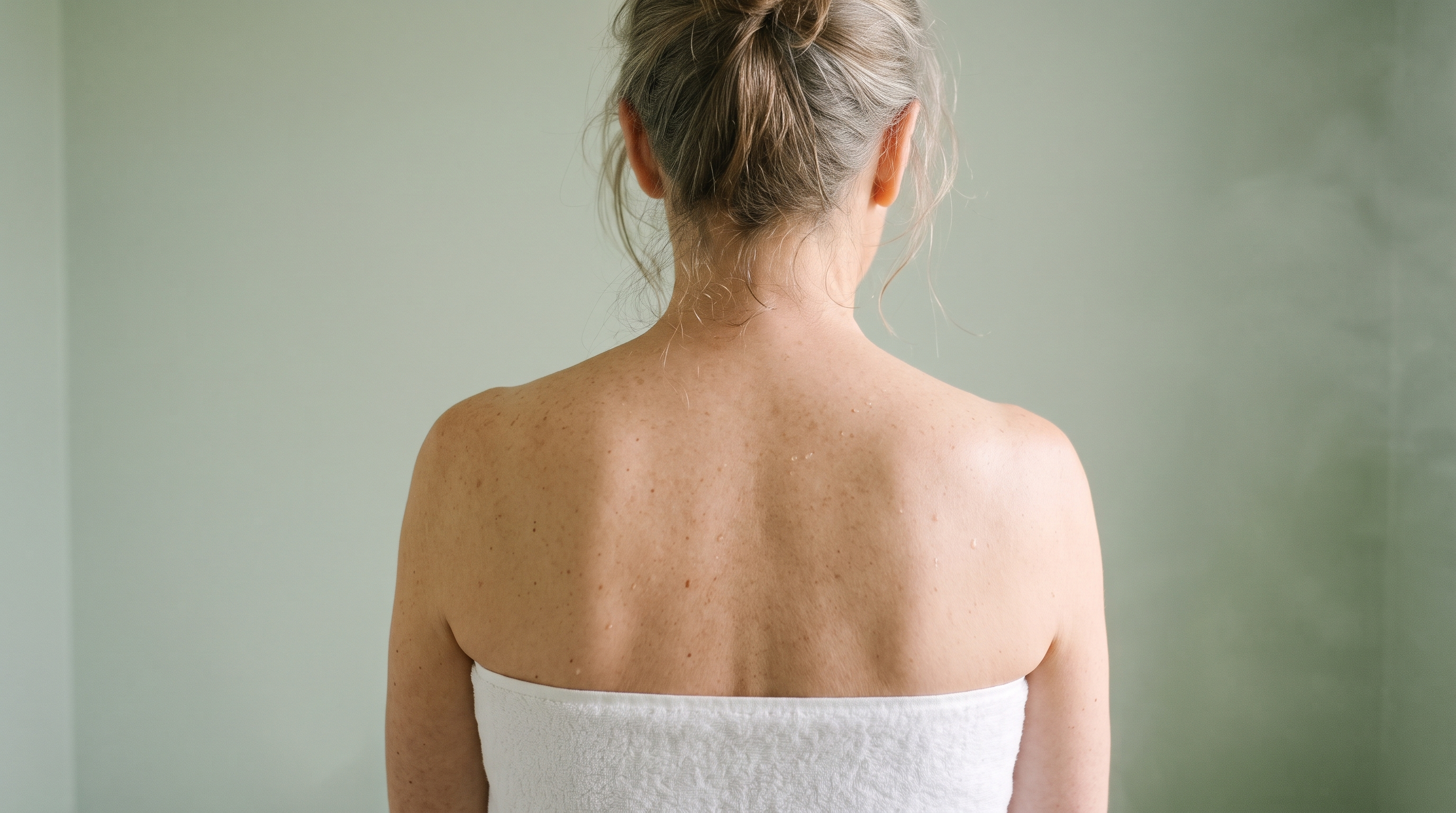
You step out of the shower and within minutes your skin feels tight. By the time you are dressed, your shins or back are prickling, and there may be faint red blotches where the washcloth went. Many people assume this is just how their skin is. Often it is the body wash.
Sensitive body skin is far more common than most people think. In a survey of more than 1,000 adults, 60.7% said the skin on their body was sensitive to some degree [1]. A broader review of surveys worldwide puts self-reported sensitive skin at roughly 60% to 70% of women and 50% to 60% of men, with itching, burning, stinging and tightness as the common complaints [2]. The body wash you use every day is one of the easiest things to change, and one of the most likely to help.
What makes a body wash irritating
A body wash has one job: lift oil, sweat and dirt off the skin so water can rinse them away. The ingredients that do that are called surfactants, and they cannot tell the difference between grime and the skin’s own protective fats.
Harsh surfactants. Researchers who study cleansers have shown that the surfactants most likely to irritate are the ones that bind strongly to skin proteins, not just to oils. That binding leads to after-wash tightness, dryness, barrier damage, irritation and even itch [3]. Gentler surfactants interact far less with skin proteins, and mild cleansers often add oils and humectants that put some moisture back during the wash.
High pH. Healthy skin is slightly acidic. A multicenter study of 330 people estimated the natural surface pH of skin at about 4.7, and found that skin with a pH below 5 had better barrier function, more moisture and less scaling than skin above 5 [4]. Traditional bar soap is strongly alkaline, often around pH 10, and cleanser research shows that high-pH solutions alone, even without surfactant, swell the outer layer and disturb its fats [3].
Even plain water plays a part. The same pH study found that ordinary tap water, around pH 8 in Europe, kept skin less acidic for up to 6 hours after washing [4].
Your skin can stay less acidic for up to 6 hours after a plain tap-water shower, far longer than the few minutes you spend under the water.
Your skin can stay less acidic for up to 6 hours after a plain tap-water shower, far longer than the few minutes you spend under the water.
Fragrance. Fragrance is the leading cause of cosmetic skin allergy. A detailed review found that up to 4.5% of adults may be allergic to fragrance ingredients, rising to 20% to 25% of people being patch tested for suspected skin allergy, and more than 150 individual fragrance chemicals have caused reactions [5]. Linalool and limonene, two of the most common, are found in many “fresh” and “botanical” washes.
Certain preservatives. Methylisothiazolinone, or MI, caused a wave of skin allergies in the 2010s. Many people assume a product that rinses off cannot cause a reaction, but a blinded study disproved that: every one of 10 MI-allergic volunteers reacted to a liquid soap containing 100 ppm of MI, and 7 of 9 reacted to a soap with 50 ppm, while none reacted to the same soap without it [6]. The authors concluded no safe level in rinse-off products had been identified.
How to read a body wash label
Look for a syndet base. “Syndet” means synthetic detergent: a soap-free cleanser built on milder surfactants. Names such as sodium cocoyl isethionate, cocamidopropyl betaine, decyl glucoside, coco-glucoside and sodium lauroyl methyl isethionate signal a gentler formula. Sodium lauryl sulfate at the top of the list is a signal to keep looking.
Check the pH claim. Products labeled pH-balanced or pH 5.5 are designed to stay close to the skin’s natural acidity. Avoid true soaps, which usually list ingredients like sodium tallowate or sodium palmate.
Choose fragrance-free, not unscented. “Unscented” can mean a masking fragrance has been added to cover the smell of the base. “Fragrance-free” means none was added. Our guide to fragrance-free skincare explains the difference in more detail.
Scan for MI and MCI. Methylisothiazolinone and methylchloroisothiazolinone are worth avoiding if you react easily, even in a wash-off product.
Your skin needs only 5 to 10 minutes of warm water to get clean, far less than the long hot showers that leave it tight and itchy.
Look for something that puts moisture back. Glycerin, ceramides, sunflower or soybean oil, colloidal oatmeal and petrolatum in a body wash all help cushion the surfactant and leave a thin protective film.
Do not chase sensations. Tingling, cooling and foaming more than usual are marketing, not mildness. Menthol, eucalyptus and peppermint can all sting already sensitive skin.
How to shower with sensitive skin
The wash is only part of it. How you use it matters as much.
- Keep water warm, not hot, and keep showers to about 5 to 10 minutes. A review of dry skin in older adults lists bathing habits, including hot water and harsh products, among the main things to change [7].
- Use your hands, not a loofah or scrub brush, and wash only where you need to: underarms, groin, feet. The rest of your body often only needs a rinse.
- Rinse thoroughly. Surfactant left on the skin keeps working after you leave the shower.
- Pat, do not rub, dry, and moisturize within 3 minutes while the skin is still damp.
Your skin needs only 5 to 10 minutes of warm water to get clean, far less than the long hot showers that leave it tight and itchy.
If your main issue is dryness rather than stinging or redness, our guide to the best body wash for dry skin covers the more moisturizing end of the range.
When body wash is not the problem
If you switch to a gentle, fragrance-free syndet and still get an itchy rash, especially in a pattern that matches where a product touched, the cause may be an allergy to something else: laundry detergent, a lotion, a deodorant, or a new fabric. A dermatologist can run patch tests to find the exact trigger. Rashes that blister, ooze, spread or do not settle within two weeks should be seen promptly.
Sensitive body skin and retinol
More people now use retinol below the neck, on the chest, arms and legs, to soften crepey, sun-damaged skin. A 24-week trial in older adults found that a 0.4% retinol lotion on the arms significantly improved fine wrinkling and boosted collagen production [8]. Our guide to retinol for the body covers where and how to use it.
But a harsh body wash and a retinoid can gang up on the barrier. Conventional retinol already causes some dryness and peeling in the first weeks, and a high-pH, fragranced wash used every day adds to it. Use a gentle syndet on the nights you apply retinol, and keep strong exfoliating washes for other nights or drop them entirely.
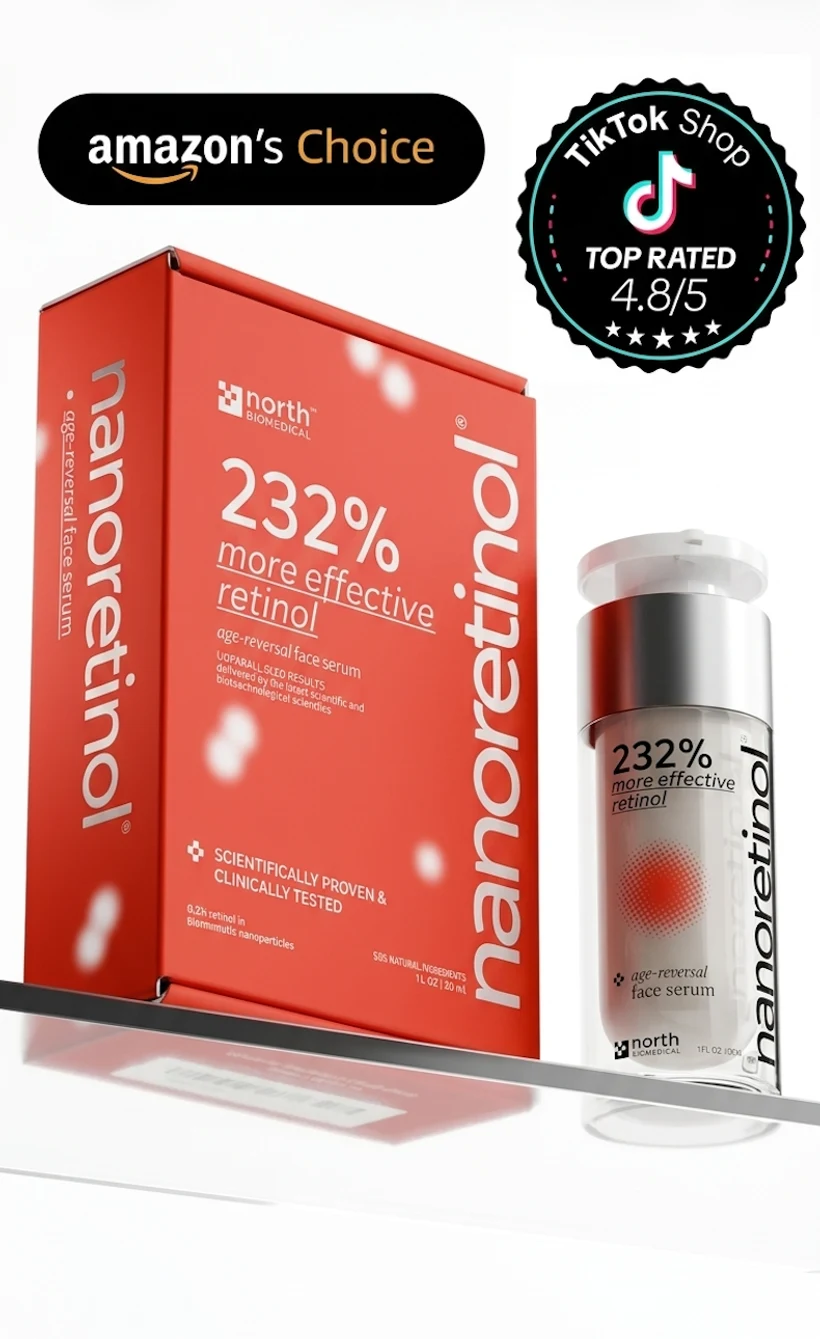
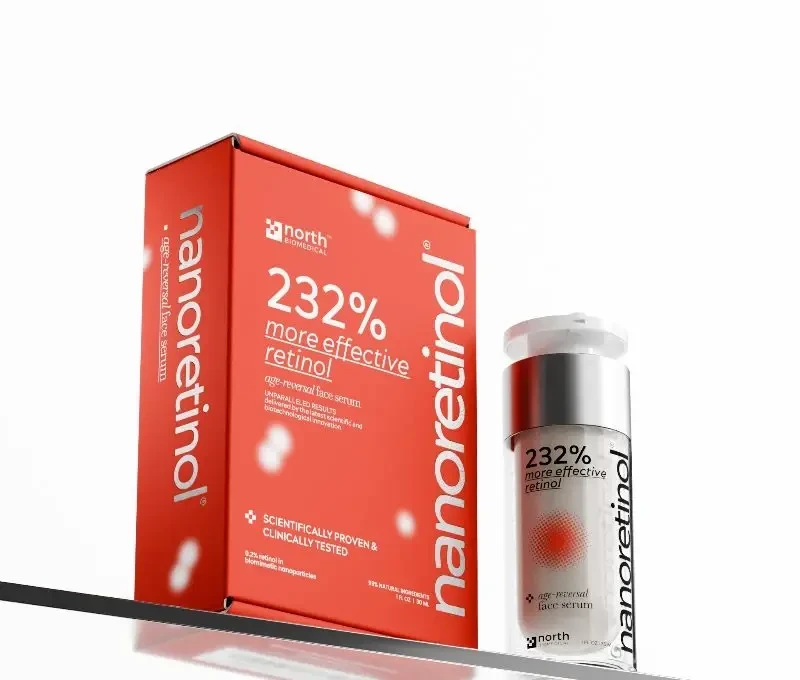
The retinol formula matters too. Nanoretinol delivers 0.2% retinol in biomimetic lipid nanoparticles within a water-based gel made with 99% natural ingredients, so it does not depend on the harsh solvents that break down the skin barrier. It is suitable for all skin types, including sensitive skin, and in clinical testing its side effects, when present, were milder than those of conventional retinol. In North Biomedical’s study it was 232% more effective in collagen recovery than conventional retinol, with a 61% increase in firmness after 56 days [9]. Treat the barrier gently in the shower, and let the retinol do the rebuilding.
References
- Farage MA. “How do perceptions of sensitive skin differ at different anatomical sites? An epidemiological study.” Clinical and Experimental Dermatology. 2009;34(8):e521-e530. doi:10.1111/j.1365-2230.2009.03487.x
- Farage MA. “The Prevalence of Sensitive Skin.” Frontiers in Medicine. 2019;6:98. doi:10.3389/fmed.2019.00098
- Ananthapadmanabhan KP, Moore DJ, Subramanyan K, Misra M, Meyer F. “Cleansing without compromise: the impact of cleansers on the skin barrier and the technology of mild cleansing.” Dermatologic Therapy. 2004;17(Suppl 1):16-25. doi:10.1111/j.1396-0296.2004.04s1002.x
- Lambers H, Piessens S, Bloem A, Pronk H, Finkel P. “Natural skin surface pH is on average below 5, which is beneficial for its resident flora.” International Journal of Cosmetic Science. 2006;28(5):359-370. doi:10.1111/j.1467-2494.2006.00344.x
- de Groot AC. “Fragrances: Contact Allergy and Other Adverse Effects.” Dermatitis. 2020;31(1):13-35. doi:10.1097/DER.0000000000000463
- Yazar K, Lundov MD, Faurschou A, et al. “Methylisothiazolinone in rinse-off products causes allergic contact dermatitis: a repeated open-application study.” British Journal of Dermatology. 2015;173(1):115-122. doi:10.1111/bjd.13751
- White-Chu EF, Reddy M. “Dry skin in the elderly: complexities of a common problem.” Clinics in Dermatology. 2011;29(1):37-42. doi:10.1016/j.clindermatol.2010.07.005
- Kafi R, Kwak HS, Schumacher WE, et al. “Improvement of naturally aged skin with vitamin A (retinol).” Archives of Dermatology. 2007;143(5):606-612. doi:10.1001/archderm.143.5.606
- North Biomedical LLC. “Nanoretinol vs. Conventional Retinol: Efficacy in Collagen and Elastin Recovery.” Clinical Study Summary, 2024. Study summary