Best Body Wash for Dry Skin: The Surfactant Question Nobody Answers
Sulfate-free is a marketing line, not a guarantee. Here is what actually separates a mild wash from a stripping one.
There is a strange asymmetry in how people shop for body care. The lotion gets researched, compared, and chosen carefully. The body wash gets grabbed because it smelled nice or was on offer. Yet the wash touches every square inch of your skin every single day, and it is the only step in the routine whose entire job is to remove things.
If your legs are tight after a shower and your arms have gone papery over the last few winters, the wash is the first place to look.
What a body wash is actually doing
Cleansers work through surfactants, molecules with a water-loving end and an oil-loving end that let water carry away oil and dirt. The problem is selectivity. Harsh anionic surfactants do not distinguish between the grime on your skin and the skin’s own structure. The definitive review of cleanser technology describes the mechanism plainly: aggressive surfactants penetrate the stratum corneum, denature its proteins, and strip out the intercellular lipids, producing the after-wash tightness, dryness, and irritation that follow [1].
Those intercellular lipids are not incidental. The stratum corneum’s permeability barrier is built from a lipid matrix of roughly 50% ceramides, 25% cholesterol, and 15% free fatty acids, and that matrix is what holds water in and keeps irritants out [2]. A wash that removes a portion of it every evening is running a slow deficit.
The pH question
Healthy skin sits on the acidic side. Measurements put the physiological surface pH of the stratum corneum in the range of roughly 4.1 to 5.8, and this acidity is not cosmetic trivia: it governs the enzymes that assemble barrier lipids and supports the skin’s antimicrobial defenses [3].
True soap is alkaline, generally around pH 9 to 10, and it moves the skin surface with it. A four-week crossover trial comparing repeated washing with soap against a synthetic detergent found skin pH significantly higher throughout the soap period, with a mean difference of 0.3 pH units [4]. That figure sounds small until you remember pH is logarithmic and the enzymes involved are pH-sensitive.
This is why the syndet, or synthetic detergent, category exists. A syndet bar or wash is formulated to clean at a pH close to the skin’s own rather than at soap’s natural alkalinity.
Harsh anionic surfactants do not distinguish between the grime on your skin and the skin’s own structure.
Reading a surfactant list is the real skill
Most “for dry skin” claims are unregulated. The ingredient list is not.
The benchmark irritant. Sodium lauryl sulfate is the reference compound researchers use precisely because it reliably damages the barrier. In classic patch testing, 0.5% SLS raised transepidermal water loss in a dose and exposure-related way, and baseline water loss predicted the severity of the irritant response with a correlation of 0.80 [5]. If SLS appears high in a body wash ingredient list, the product is not built for dry skin regardless of the front label.
Sulfate-free is a starting point, not an answer. Sodium laureth sulfate, the ethoxylated relative, is meaningfully milder than SLS but is still a strong primary surfactant. More importantly, removing sulfates says nothing about what replaced them. A wash can be sulfate-free and still be built on an aggressive blend.
What mildness usually looks like. Gentler formulas are typically built around amphoteric and non-ionic surfactants: cocamidopropyl betaine, coco-glucoside, decyl glucoside, lauryl glucoside, sodium cocoyl isethionate, sodium lauroyl sarcosinate. These clean less aggressively and interact less destructively with stratum corneum proteins. Seeing two or three of these as the leading surfactants, rather than as the fourth ingredient behind a sulfate, is the signal worth looking for.
Added lipids help, within limits. Washes carrying glycerin, petrolatum, ceramides, or plant butters can offset some of what cleansing removes, and there is real evidence that lipid-containing cleansers behave better than plain ones. Just keep the expectation calibrated. A product that spends ninety seconds on your skin and then goes down the drain cannot substitute for one you leave on. Our guide to body butter for dry skin covers the leave-on side of that equation.
Why aging skin has less margin for error
The same wash that was fine at thirty can be a problem at sixty, because the barrier absorbing the insult has changed.
Aged skin carries measurably less stratum corneum lipid, and it repairs itself far more slowly after disruption. In the foundational comparison, subjects over eighty regained only about 15 percent of barrier function 24 hours after an acute perturbation, alongside roughly a 30 percent reduction in total stratum corneum lipid content [6]. Younger skin recovered a great deal more in the same period.
A product that spends ninety seconds on your skin and then goes down the drain cannot substitute for one you leave on.
The practical consequence is cumulative. A young barrier stripped each evening has largely rebuilt itself by the next one. An older barrier does not finish the job before the next shower starts, so the deficit compounds across a winter. That is the mechanism behind the dry, scaly skin on legs that appears in your fifties on a routine that never changed.
The variables that are free
Product choice is only part of it, and the rest costs nothing.
Temperature. Hot water increases lipid extraction. Warm rather than hot is the single highest-yield change most people can make.
Duration. Contact time drives surfactant damage. A shower is not a soak.
Coverage. Most people do not need a full-body lather. Feet, underarms, and groin need cleansing daily. Shins and forearms mostly need rinsing.
The three-minute window. Apply your moisturizer to skin that is still damp, straight out of the shower, while the stratum corneum is hydrated. This does more for dry limbs than upgrading the wash does. Our body skin care routine guide sets out the full order.
If the barrier is already visibly compromised, with flaking, stinging, or patches that will not settle, treat that first. Our piece on repairing a damaged skin barrier is the right starting point, and no active ingredient should go on top until it has calmed.
Cleansing sets the ceiling, not the outcome
Getting the wash right stops you from losing ground. It does not, on its own, reverse the crepey texture that shows up on forearms and shins after a couple of decades. That texture is a collagen and elastin problem in the dermis, and reversing it needs an active that reaches the dermis.
That is a delivery problem more than an ingredient problem. Conventional retinol barely crosses the epithelial barrier on its own, and the formulations that push it through tend to use chemicals and petroleum derivatives that break the barrier down to do it. On body skin that is already running a lipid deficit, adding a barrier-disrupting vehicle is the wrong direction entirely, and it is why so many people conclude that retinol simply stings too much below the neck.
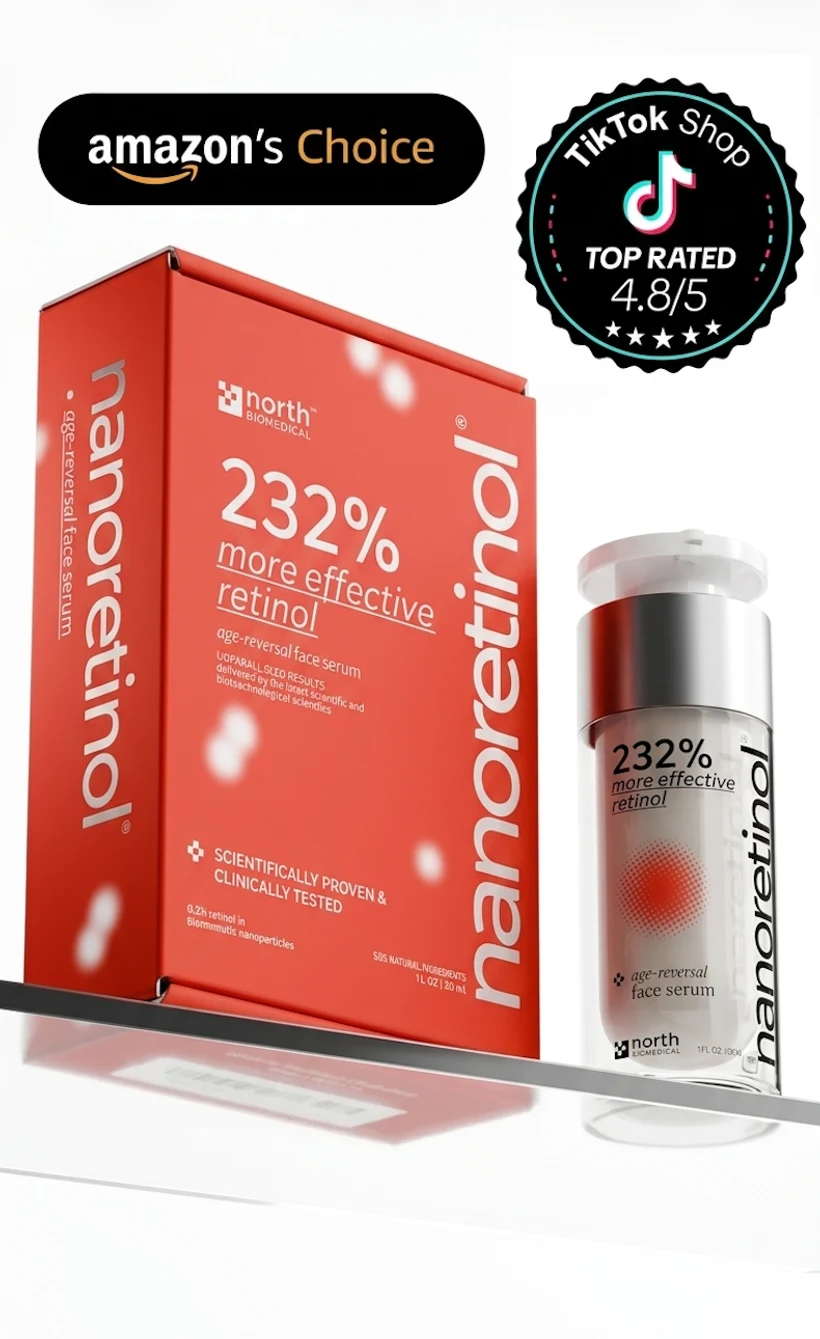
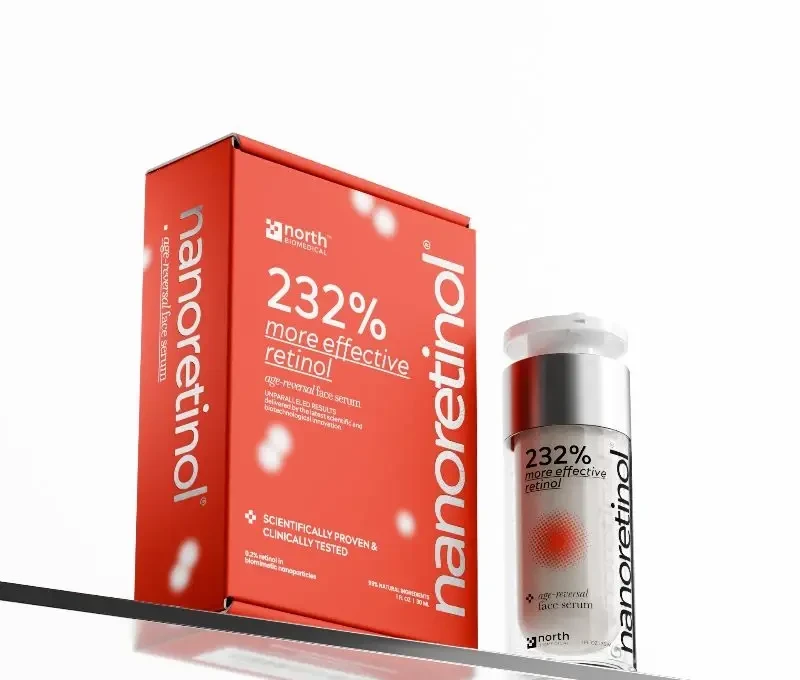
Nanoretinol was engineered around that conflict. Its retinol travels inside biomimetic lipid nanoparticles that the skin recognizes as its own and admits through the epithelial barrier without the barrier having to be damaged. In testing it proved 232% more effective than conventional retinol at collagen recovery and 73% more effective at elastin recovery, and it is significantly gentler on skin cells, with clinical trials confirming minimal and milder side effects than conventional retinol produces.
Getting the order right
Pick a wash whose leading surfactants are the mild ones, keep the water warm rather than hot, and moisturize while you are still damp. Those three changes cost almost nothing and stop the daily deficit. Then, on a barrier that is no longer being stripped every evening, an active has a fair chance of doing its work.
References
- Ananthapadmanabhan KP, Moore DJ, Subramanyan K, Misra M, Meyer F. “Cleansing Without Compromise: The Impact of Cleansers on the Skin Barrier and the Technology of Mild Cleansing.” Dermatologic Therapy. 2004;17(Suppl 1):16-25. doi:10.1111/j.1396-0296.2004.04s1002.x
- Elias PM. “Epidermal Lipids, Barrier Function, and Desquamation.” Journal of Investigative Dermatology. 1983;80(1 Suppl):44s-49s. doi:10.1038/jid.1983.12
- Schmid-Wendtner MH, Korting HC. “The pH of the Skin Surface and Its Impact on the Barrier Function.” Skin Pharmacology and Physiology. 2006;19(6):296-302. doi:10.1159/000094670
- Korting HC, Kober M, Mueller M, Braun-Falco O. “Influence of Repeated Washings with Soap and Synthetic Detergents on pH and Resident Flora of the Skin of Forehead and Forearm.” Acta Dermato-Venereologica. 1987;67(1):41-47. PMID 2436413
- Pinnagoda J, Tupker RA, Coenraads PJ, Nater JP. “Prediction of Susceptibility to an Irritant Response by Transepidermal Water Loss.” Contact Dermatitis. 1989;20(5):341-346. doi:10.1111/j.1600-0536.1989.tb03170.x
- Ghadially R, Brown BE, Sequeira-Martin SM, Feingold KR, Elias PM. “The Aged Epidermal Permeability Barrier: Structural, Functional, and Lipid Biochemical Abnormalities in Humans and a Senescent Murine Model.” Journal of Clinical Investigation. 1995;95(5):2281-2290. doi:10.1172/JCI117919