Colloidal Oatmeal Lotion: What It Does for Dry, Itchy Body Skin and How to Choose One
Colloidal oatmeal lotion calms itch, holds water and helps a dry barrier recover. Here is what the research shows, how to read the label and how it fits with body retinol
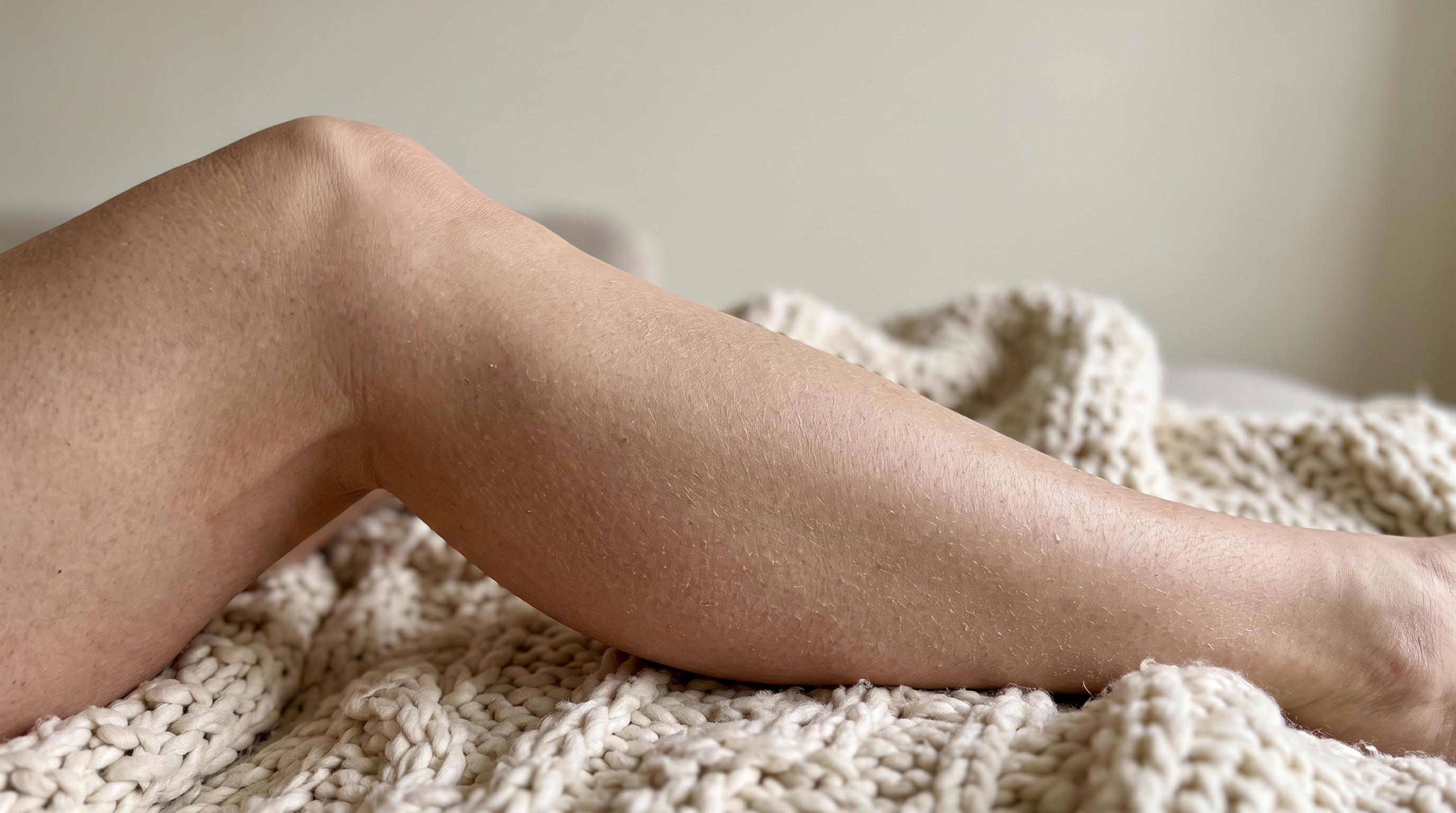
Dry body skin has a way of announcing itself. The shins turn dull and flaky by midwinter, the backs of the arms feel rough, and an itch starts that gets worse the more you scratch. Plenty of lotions add a little slip for an hour. Fewer actually calm the skin and help it hold on to water.
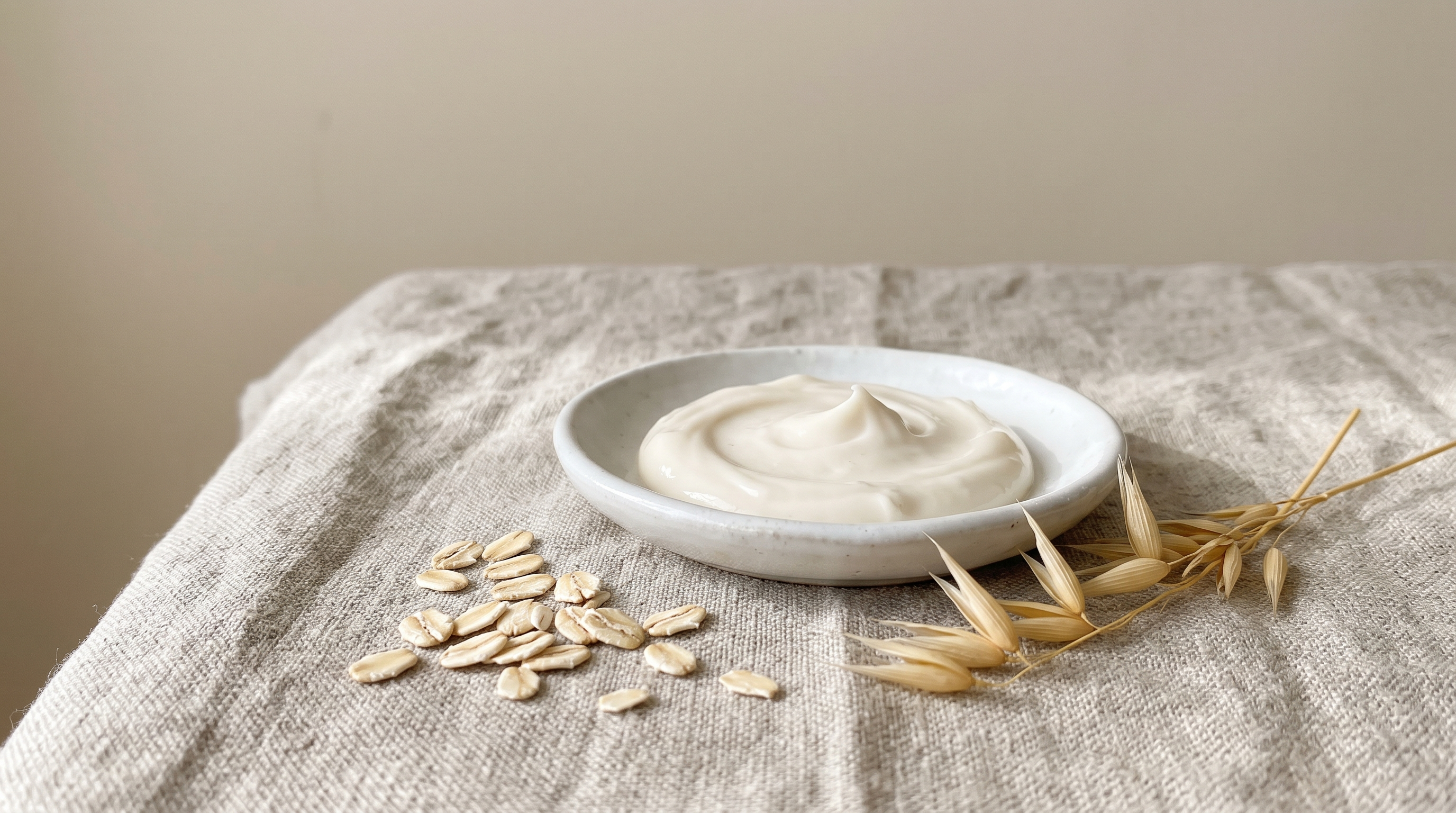
Colloidal oatmeal lotion is one of the products that does both. Oats have been used on irritated skin for centuries, but colloidal oatmeal is a standardized, finely milled ingredient with a defined place in US skincare regulation and a growing body of research. This guide explains how it works, what the trials found, how to read the label and where it fits in a body routine that also aims to firm aging skin.
What colloidal oatmeal is
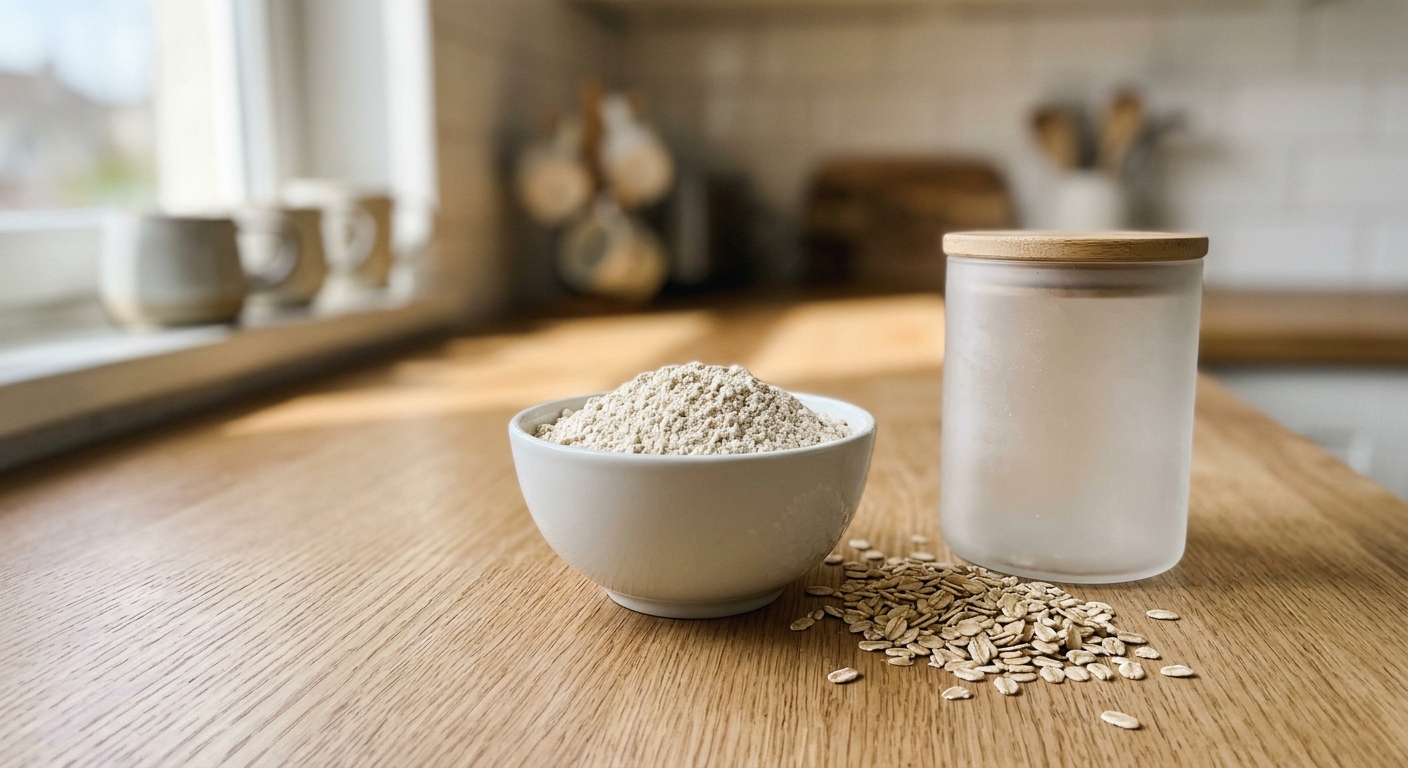
Colloidal oatmeal is whole oat ground so finely that it disperses in water instead of sinking. It became available as a ready-to-use ingredient in 1945, its preparation is standardized by the United States Pharmacopeia, and the US Food and Drug Administration regulates it as an over-the-counter skin protectant [1]. That is why many oatmeal lotions carry a Drug Facts panel listing colloidal oatmeal as the active ingredient.
The oat does several jobs at once [1]:
- Starches and beta-glucan form a film that protects the skin and holds water.
- Phenols act as antioxidants and calm inflammation.
- Saponins give it a mild cleansing effect.
- Its buffering capacity helps keep skin near its normal, slightly acidic pH.
Our guide to colloidal oatmeal for skin covers the ingredient in more depth. Here, the focus is the lotion and how to choose one.
How oatmeal calms itch
The most interesting compounds in oats are the avenanthramides, a family of polyphenols present in oats at around 300 parts per million. In laboratory work, they blocked a key inflammatory switch inside skin cells called NF-kappaB and reduced the release of inflammatory signals, even at very low concentrations. In animal models, small amounts applied to the skin reduced inflammation and cut scratching triggered by an itch-causing substance [2].
Your skin on the shins has fewer oil glands than most of the body, which is why it is often the first place to flake and itch in winter.
A review for dermatologists concluded that these effects explain much of oatmeal’s long reputation for soothing irritated skin, and that colloidal oatmeal has an excellent safety record [3].
Your skin on the shins has fewer oil glands than most of the body, which is why it is often the first place to flake and itch in winter.
Why body skin gets drier with age
Dry skin is common in older adults, but it is not an inevitable part of aging. A review of the problem points to several causes working together: the outer layer renews itself less efficiently and holds fewer lipids, some medicines such as diuretics dry the skin, and heating and air conditioning pull moisture from the air. Dryness leads to itch, itch leads to scratching, and scratching damages the barrier further [7].
The same review recommends gentler bathing, more humidity and regular emollients, and warns that some common lotion ingredients, such as lanolin and certain preservatives, can trigger allergic reactions in older skin [7]. That is a strong argument for a simple, fragrance-free oatmeal lotion over a heavily perfumed one.
What the lotion trials found
Three clinical studies tested colloidal oatmeal products on people, and two of them focused on exactly the problem most buyers have: dry, itchy lower legs.
- Itch and dryness: 29 women with mild to moderate itch and moderate to severe dryness on their lower legs used a colloidal oatmeal skin protectant lotion. Dryness, scaling, roughness and itch all improved significantly [4].
- Barrier strength: in 50 women with moderate to severe dry skin on their lower legs, the same type of lotion significantly improved dryness, moisturization and barrier function. Lab work in the same paper showed oat extracts switched on genes involved in building and sealing the skin barrier [5].
- Against a standard moisturizer: in 61 people with mild to moderate eczema, a 1% colloidal oat cream improved skin pH, barrier function and hydration over 14 days, while a standard fragrance-free moisturizer improved hydration only [6].
Your skin barrier recovered more in 14 days with a 1% oat cream than with a standard moisturizer, which only raised hydration.
Your skin barrier recovered more in 14 days with a 1% oat cream than with a standard moisturizer, which only raised hydration.
One caveat is worth knowing. Most of these studies were run by scientists working for a company that makes colloidal oatmeal products, so larger independent trials would strengthen the case. The direction of the evidence, though, is consistent with decades of clinical use.
How to choose a colloidal oatmeal lotion
- Check the Drug Facts panel. Many lotions list colloidal oatmeal 1% as the active ingredient. If oat appears only as an “extract” near the end of the list, it is there for the label, not for results.
- Go fragrance-free. Fragrance is one of the most common causes of irritation on dry, itchy skin.
- Pick the right texture. A lotion suits everyday dryness on the arms and torso. A thicker cream suits very dry shins, elbows and hands.
- Look for barrier partners. Glycerin, ceramides, shea butter and dimethicone all strengthen the effect.
- Patch test if you have an oat allergy. Reactions are uncommon, but a known food allergy to oats is a reason to try a small area first.
Oatmeal, urea or ceramide lotion?
These three solve slightly different problems. Colloidal oatmeal is the best fit when the main complaint is itch and irritation. Urea suits skin that is rough, thick or scaly, and our guide to urea lotion explains which strength to choose. Ceramide lotions replace lost barrier lipids and suit chronically dry skin. Many people do well alternating oatmeal and urea on different areas.
How to use it
- Keep showers short and lukewarm, since hot water strips the skin’s oils.
- Apply within a few minutes of drying off, while the skin is still slightly damp.
- Use it twice a day on itchy areas for the first two weeks, then once a day to maintain.
- Run a humidifier in the bedroom during heating season.
- See a doctor if itch is severe, keeps you awake, or comes with a rash that does not settle, since persistent itch can have medical causes.
Calm skin first, then firmer skin
A colloidal oatmeal lotion restores comfort and helps the barrier recover, but it does not rebuild the collagen that keeps skin thick and smooth. The fine, crinkled texture on aging arms, legs and chest comes from thinning in the deeper layer of the skin, which our guide to crepey skin on the arms explains in detail.
Retinol is the ingredient with the strongest evidence for that deeper change, and our guide to retinol for the body covers how to use it on larger areas. The difficulty is that dry, itchy skin is exactly the skin that reacts badly to conventional retinol, whose formulas often rely on chemicals that break down the barrier to push retinol in.
Nanoretinol takes a gentler route. Its 0.2% stabilized retinol is carried in biomimetic lipid nanoparticles that the skin recognizes as its own, so it crosses the barrier without damaging it, in a light water-based gel that absorbs completely. In North Biomedical’s study summary, Nanoretinol was 232% more effective in collagen recovery and 73% more effective in elastin recovery than conventional retinol, and after 56 days of use, skin firmness rose by 61% and elasticity by 56% [8].
A practical routine is to calm dry, itchy areas with an oatmeal lotion for two weeks, then add Nanoretinol at night on crepey areas, keeping the oatmeal lotion in the morning and on any spot that feels irritated.
References
- Kurtz ES, Wallo W. “Colloidal oatmeal: history, chemistry and clinical properties.” Journal of Drugs in Dermatology. 2007;6(2):167-170. PubMed:17373175
- Sur R, Nigam A, Grote D, Liebel F, Southall MD. “Avenanthramides, polyphenols from oats, exhibit anti-inflammatory and anti-itch activity.” Archives of Dermatological Research. 2008;300(10):569-574. doi:10.1007/s00403-008-0858-x
- Cerio R, Dohil M, Jeanine D, et al. “Mechanism of action and clinical benefits of colloidal oatmeal for dermatologic practice.” Journal of Drugs in Dermatology. 2010;9(9):1116-1120. PubMed:20865844
- Reynertson KA, Garay M, Nebus J, et al. “Anti-inflammatory activities of colloidal oatmeal (Avena sativa) contribute to the effectiveness of oats in treatment of itch associated with dry, irritated skin.” Journal of Drugs in Dermatology. 2015;14(1):43-48. PubMed:25607907
- Ilnytska O, Kaur S, Chon S, et al. “Colloidal oatmeal (Avena sativa) improves skin barrier through multi-therapy activity.” Journal of Drugs in Dermatology. 2016;15(6):684-690. PubMed:27272074
- Capone K, Kirchner F, Klein SL, Tierney NK. “Effects of colloidal oatmeal topical atopic dermatitis cream on skin microbiome and skin barrier properties.” Journal of Drugs in Dermatology. 2020;19(5):524-531. PubMed:32484623
- White-Chu EF, Reddy M. “Dry skin in the elderly: complexities of a common problem.” Clinics in Dermatology. 2011;29(1):37-42. doi:10.1016/j.clindermatol.2010.07.005
- North Biomedical LLC. “Nanoretinol vs. Conventional Retinol: Efficacy in Collagen and Elastin Recovery.” Clinical Study Summary, 2024. Study summary