Tranexamic Acid Cream: What the Trials Found and How to Use It for Dark Spots
Most tranexamic acid studies tested solutions, not creams. Here is what the cream trials add, how tranexamic acid differs from other brighteners, and how to pair it with retinol
Tranexamic acid started life as a hospital drug that helps blood clot. Doctors noticed that some patients taking it for unrelated conditions saw their dark facial patches fade, and the ingredient has since moved from tablets into serums, solutions and creams sold for dark spots.
The cream is the format most people find on the shelf, but it is not the format most studies tested. This guide explains how tranexamic acid works on pigment, what the topical trials found, what the newer cream trials add, and how to use a tranexamic acid cream alongside retinol.
How tranexamic acid works on pigment
Most brighteners go straight for tyrosinase, the enzyme that makes melanin. Tranexamic acid works further upstream. It blocks plasmin, an enzyme that becomes more active in skin after sun exposure. Plasmin helps release the inflammatory messengers that tell pigment cells to make more melanin, so blocking it quiets the signal before the pigment factory gets going [1].
The first evidence for that idea came from animal work. When guinea pigs were exposed to UV light, 2% and 3% tranexamic acid solutions applied afterwards prevented or reduced the darkening, and the treated skin held less melanin in its base layer [2].
Human biopsies added a second mechanism. In 23 people with melasma who applied a 2% tranexamic acid formulation to the whole face for 12 weeks, 22 improved. Their biopsies showed less melanin, the number of small blood vessels in the patches tended to fall, and levels of endothelin-1, a messenger that stimulates pigment cells, went down [3].
Your skin usually needs about 12 weeks of daily tranexamic acid, the length of most trials, before a dark patch looks clearly lighter than it did on day one.
Your skin usually needs about 12 weeks of daily tranexamic acid, the length of most trials, before a dark patch looks clearly lighter than it did on day one.
What the topical trials found
The headline from the research is that tranexamic acid tends to match hydroquinone, the long-standing prescription benchmark, with fewer side effects. The detail matters, though, because the products tested varied a lot.
- 3% solution against a hydroquinone mix. In a 12-week split-face trial in 50 women, a 3% tranexamic acid solution was applied to one side of the face and a 3% hydroquinone plus dexamethasone solution to the other, twice daily. Both sides improved by similar amounts, but the hydroquinone side had significantly more side effects [4].
- 5% liposomal preparation against 4% hydroquinone cream. Thirty women with melasma used each product on one side of the face for 12 weeks, with sunscreen every morning. Both sides improved, the tranexamic acid side slightly more, and three people developed irritation on the hydroquinone side while none had serious problems with tranexamic acid [5].
- 5% solution against 3% hydroquinone cream. In 100 patients over 12 weeks, severity scores fell by 27% with tranexamic acid and 26.7% with hydroquinone. Satisfaction was higher in the tranexamic acid group because it caused fewer side effects [6].
A comprehensive review of the clinical studies was more cautious. Its authors concluded that tranexamic acid is promising but that its effectiveness is not yet firmly established, and that larger trials are still needed [1]. That is a fair reading: the results are consistent, but the studies are small and short.
What the cream trials add
The newer studies tested creams directly, and they also show how the ingredient is now formulated. In a 2025 randomized, double-blind trial, 99 people with melasma used one of three creams for three months: a 2% tranexamic acid and 2% niacinamide cream in tiny lipid vesicles called niosomes, a conventional 5% tranexamic acid and 4% niacinamide cream, or 4% hydroquinone cream. All three groups improved on both pigment measurements and quality of life. Both tranexamic acid creams were as effective as hydroquinone, while adverse reactions and relapse were seen in the hydroquinone group [7].
Your skin can fade as much in 12 weeks on a tranexamic acid cream as on 4% hydroquinone, with fewer side effects than the prescription cream.
Your skin can fade as much in 12 weeks on a tranexamic acid cream as on 4% hydroquinone, with fewer side effects than the prescription cream.
Two things follow. First, a cream base works. Second, many of the best-performing products pair tranexamic acid with a partner such as niacinamide, or package it in a carrier that helps it travel into the skin. If you prefer a lighter texture for oily skin, our guide to tranexamic acid serum covers the serum format.
How to choose a tranexamic acid cream
Use the trials as your shopping list.
- Look for 2% to 5%. That is the range the human studies tested. Higher numbers on a label are not proven to work better.
- Value a good partner. Niacinamide is the best-studied companion in cream form. Our guide to kojic acid cream explains how a tyrosinase blocker can complement tranexamic acid’s upstream action, if you want to rotate the two.
- Prefer fragrance-free. Fragrance adds irritation, and irritated skin can make more pigment.
- Pick the texture for the area. A cream suits dry and mature skin, and it spreads more easily over the cheeks, the upper lip, the chest and the backs of the hands.
How to use it
Apply a thin layer to clean, dry skin once or twice a day, as most trials did, over the whole area rather than dabbing only the darkest spots. Tranexamic acid is gentle enough for most people to use in the morning and evening, though anyone with very reactive skin should patch test on the inner arm first.
Sunscreen is not optional. UV exposure switches plasmin back on, which is why trials such as the liposomal study paired treatment with sunscreen every morning [2, 5]. Our guide to sunscreen for hyperpigmentation explains which filters also block the visible light that drives stubborn patches.
Dark patches tend to drift back once treatment and sun protection stop, so think of tranexamic acid cream as maintenance rather than a short course.
Where retinol adds what tranexamic acid cannot
Tranexamic acid quiets the signals that switch pigment cells on. It does not move pigment that is already sitting in the upper skin. That is where retinoids help, by speeding the turnover that carries pigmented cells up and out. In a 40-week vehicle-controlled trial in women with melasma, 68% of those using 0.1% tretinoin improved, compared with 5% on the plain cream, but 88% had redness and peeling along the way [8]. Our guide to retinol for dark spots explains how over-the-counter retinol uses the same pathway more gently.
The irritation matters, because inflamed skin can darken rather than clear.
A dark-spot routine that stays calm
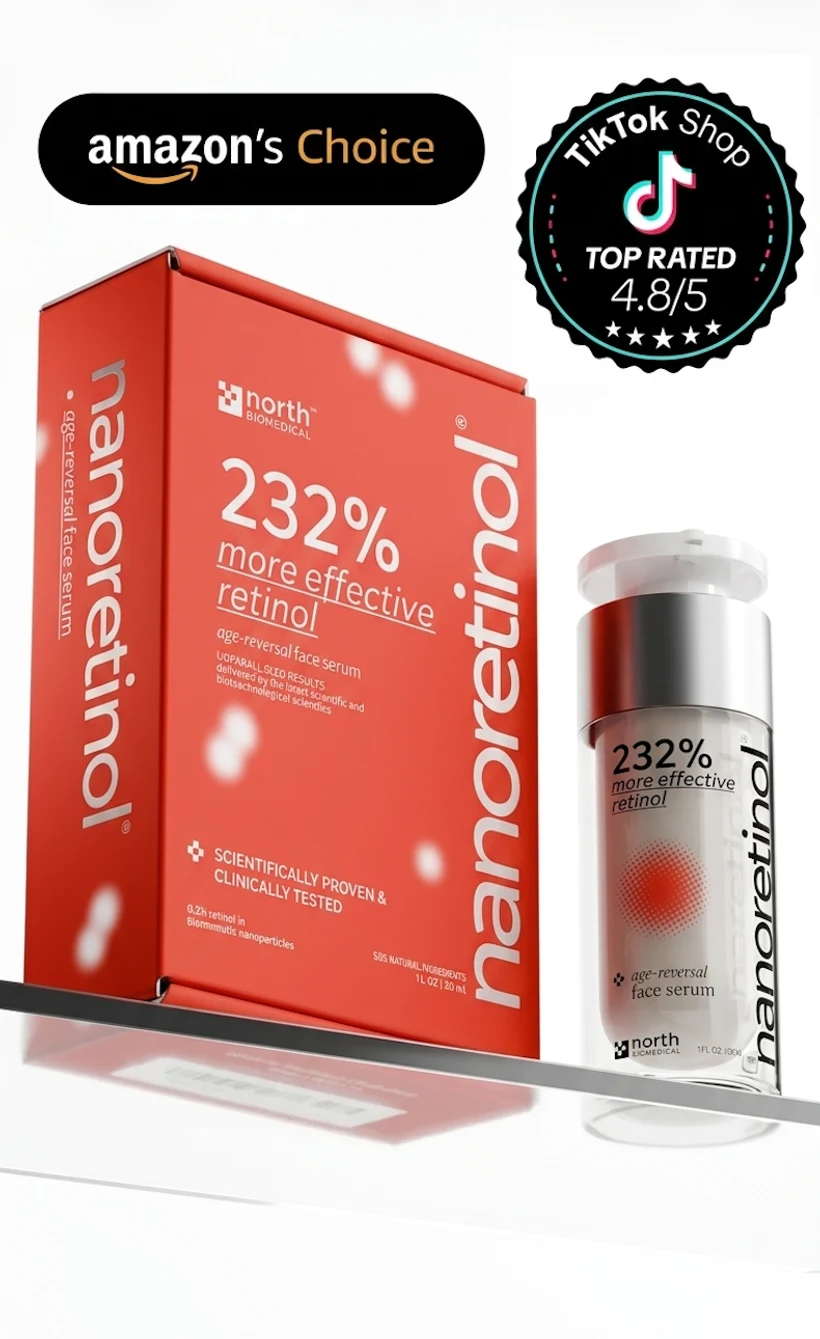
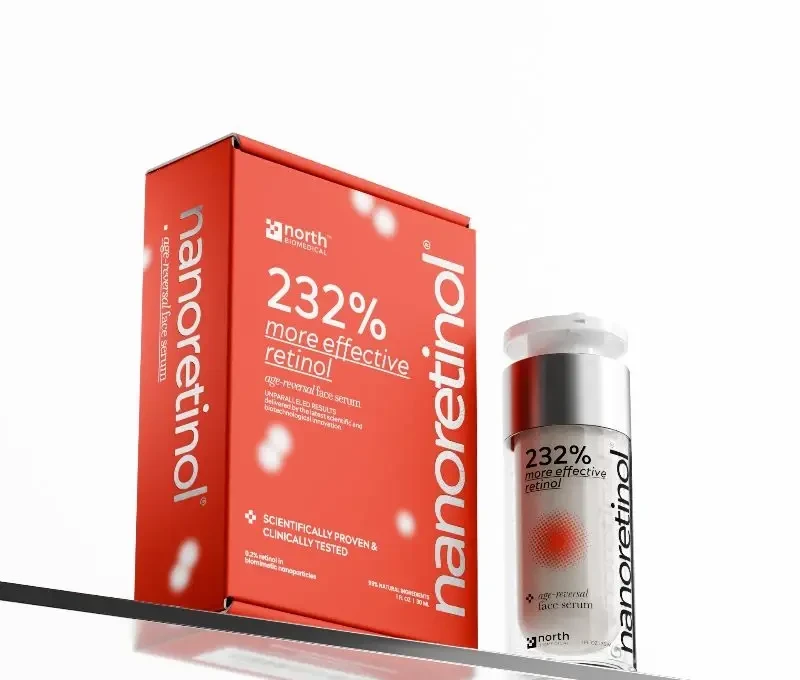
Nanoretinol was designed to remove that trade-off. It delivers 0.2% stabilized retinol inside biomimetic lipid nanoparticles that the skin recognizes as its own, so the retinol reaches skin cells without breaking down the barrier the way conventional formulations can. In North Biomedical’s study summary, Nanoretinol was 232% more effective in collagen recovery than conventional retinol, and its side effects were minimal and milder than those of conventional retinol [9].
A simple routine looks like this: tranexamic acid cream in the morning under broad-spectrum sunscreen, and Nanoretinol at night. Tranexamic acid keeps new pigment signals quiet, retinol clears what has already formed, and sunscreen stops the cycle from restarting. Give the routine three months before judging it.
References
- Taraz M, Niknam S, Ehsani AH. “Tranexamic acid in treatment of melasma: A comprehensive review of clinical studies.” Dermatologic Therapy. 2017;30(3):e12465. doi:10.1111/dth.12465
- Maeda K, Naganuma M. “Topical trans-4-aminomethylcyclohexanecarboxylic acid prevents ultraviolet radiation-induced pigmentation.” Journal of Photochemistry and Photobiology B: Biology. 1998;47(2-3):136-141. PubMed 10093913
- Kim SJ, Park JY, Shibata T, Fujiwara R, Kang HY. “Efficacy and possible mechanisms of topical tranexamic acid in melasma.” Clinical and Experimental Dermatology. 2016;41(5):480-485. doi:10.1111/ced.12835
- Ebrahimi B, Naeini FF. “Topical tranexamic acid as a promising treatment for melasma.” Journal of Research in Medical Sciences. 2014;19(8):753-757. PubMed 25422661
- Banihashemi M, Zabolinejad N, Jaafari MR, Salehi M, Jabari A. “Comparison of therapeutic effects of liposomal Tranexamic Acid and conventional Hydroquinone on melasma.” Journal of Cosmetic Dermatology. 2015;14(3):174-177. doi:10.1111/jocd.12152
- Janney MS, Subramaniyan R, Dabas R, Lal S, Das NM, Godara SK. “A Randomized Controlled Study Comparing the Efficacy of Topical 5% Tranexamic Acid Solution versus 3% Hydroquinone Cream in Melasma.” Journal of Cutaneous and Aesthetic Surgery. 2019;12(1):63-67. doi:10.4103/JCAS.JCAS_40_18
- Ghasemiyeh P, Haghighi NF, Dastgheib L, Ranjbar S, Mohammadi-Samani S. “Safety and efficacy of niosomal and conventional tranexamic acid/niacinamide vs. hydroquinone creams in melasma: A randomized, double-blind, case-controlled clinical trial.” Scientific Reports. 2025;15(1):42739. doi:10.1038/s41598-025-26693-8
- Griffiths CE, Finkel LJ, Ditre CM, Hamilton TA, Ellis CN, Voorhees JJ. “Topical tretinoin (retinoic acid) improves melasma. A vehicle-controlled, clinical trial.” British Journal of Dermatology. 1993;129(4):415-421. doi:10.1111/j.1365-2133.1993.tb03169.x
- North Biomedical LLC. “Nanoretinol vs. Conventional Retinol: Efficacy in Collagen and Elastin Recovery.” Clinical Study Summary, 2024. Study summary