
Ultherapy: How Ultrasound Skin Tightening Works — and Who It's Really For
The science behind microfocused ultrasound, what to expect from a non-surgical lift, and the nightly habit that helps results last.
When the Jawline Goes Soft
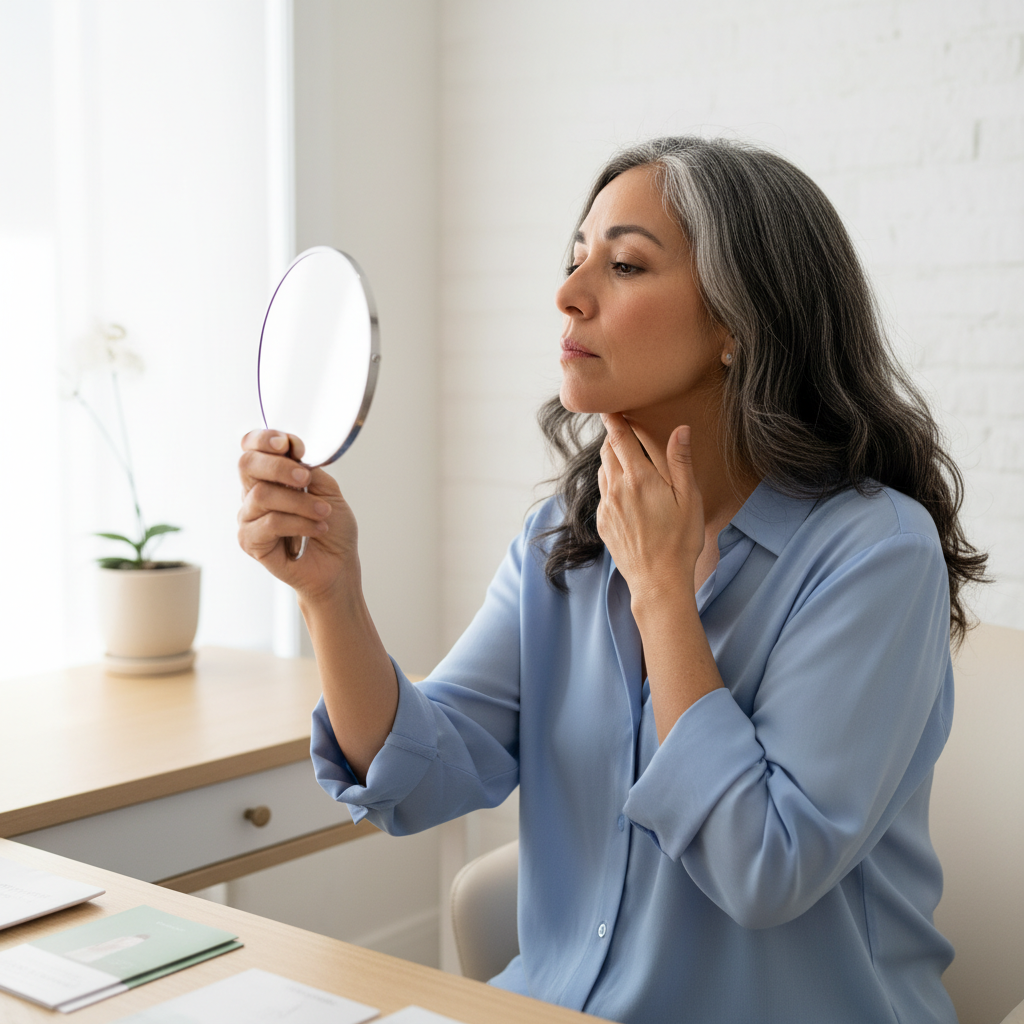
By the mid-forties, many women notice the same thing in photos: the clean line that once separated jaw from neck has gone fuzzy. The skin under the chin feels looser. The corners of the mouth pull down a fraction. None of this is imagination — it is the predictable result of a dermis that is running low on its main structural protein.
Collagen production falls steadily with age. When scientists compared collagen-making fibroblasts from young and elderly skin, the older cells produced significantly less type I procollagen, and the surrounding collagen network was thinner and more frayed [1]. As that scaffold weakens, the deeper support layer of the face — including the fibrous sheet called the SMAS that surgeons tighten in a facelift — loses tension, and the skin above it begins to settle.
Ultherapy is one of the few non-surgical treatments designed to reach that deep layer without a single incision.
What Ultherapy Actually Is
Ultherapy is the best-known brand of microfocused ultrasound with visualization, usually shortened to MFU-V. Two ideas are packed into that name.
“Microfocused ultrasound” means the device concentrates sound-wave energy to a precise point beneath the skin, the way a magnifying glass focuses sunlight to a hot dot. It bypasses the surface entirely and deposits heat at set depths — typically 1.5, 3.0, and 4.5 millimeters down. “With visualization” means the practitioner can see an ultrasound image of those layers in real time and aim the energy at the right tissue rather than guessing.
In a landmark rater-blinded cohort study, 86% of subjects were judged by masked clinicians to have a clinically significant brow lift 90 days after a single ultrasound treatment.
The result is a grid of tiny thermal coagulation points deep in the dermis and the SMAS, with the surface left untouched.
How Deep Heat Tightens Skin
The mechanism is thermal. Focused ultrasound heats those deep points to roughly 60–70°C, hot enough to cause controlled thermal coagulation. That micro-injury does two things: existing collagen fibers contract immediately, giving a subtle early tightening, and the wound-healing cascade switches on, driving weeks of fresh collagen and elastin production — a process called neocollagenesis. A systematic review of microfocused ultrasound for skin tightening concluded that this heat-and-repair sequence produces measurable improvements in skin distensibility, elasticity, and firmness across multiple studies [2].
What the Studies Found
The clinical evidence is strongest for the lower face and neck. In a study evaluating microfocused ultrasound on lower-face laxity, treated patients showed objective tightening and improvement in the jawline and submental area, with histology confirming new dermal collagen [3]. In a landmark rater-blinded cohort study, 86% of subjects were judged by masked clinicians to have a clinically significant brow lift 90 days after a single ultrasound treatment [4]. Results are not instant — they build over two to three months and can continue improving for up to six.
The Experience, the Cost, and the Honest Limits
Ultherapy is delivered in a single session for most areas. Sensation varies from warmth to brief, deep prickling as energy is deposited; many clinics offer pain relief because the deeper lines can be uncomfortable. There is essentially no downtime — occasional redness, swelling, or tenderness that resolves within days.
Its gentle, water-based 0.2% formula is easy to keep using long after the clinic visit fades from memory.
It works best for people with mild to moderate laxity: a softening jawline, early jowls, loose skin under the chin or on the neck — the same concerns covered in our guides to turkey neck and sagging jowls. It is not a substitute for a facelift; if skin is heavily sagging, a procedure that removes tissue will outperform any energy device. Costs commonly run from roughly one to several thousand dollars depending on the area and provider, and because it is cosmetic, you pay out of pocket. For an overview of where it fits among other options, see our primer on non-surgical skin tightening.
Why a Lift Isn’t a Stop Sign for Aging
Here is the part worth sitting with before booking. Ultherapy provokes a one-time surge of collagen, but it does not change the biology that drained your collagen to begin with. Your fibroblasts keep slowing down. Sun, inflammation, and time keep degrading the scaffold. That is why the lift gradually relaxes over a year or two and why maintenance sessions exist.
The people who get the most from an expensive treatment are the ones who treat it as a reset and then defend the result every single day.
Keeping the Collagen Coming
If the entire point of Ultherapy is to stimulate collagen, the natural follow-up question is what keeps that stimulus going at home. Decades of dermatology research point to one answer above the rest: a topical retinoid. In a vehicle-controlled trial, retinol applied to the naturally aged skin of older adults significantly raised collagen production and softened fine wrinkles compared with an inactive control [5]. Retinol acts on the very fibroblasts that ultrasound wakes up, which makes it the logical nightly partner to any collagen-stimulating procedure.
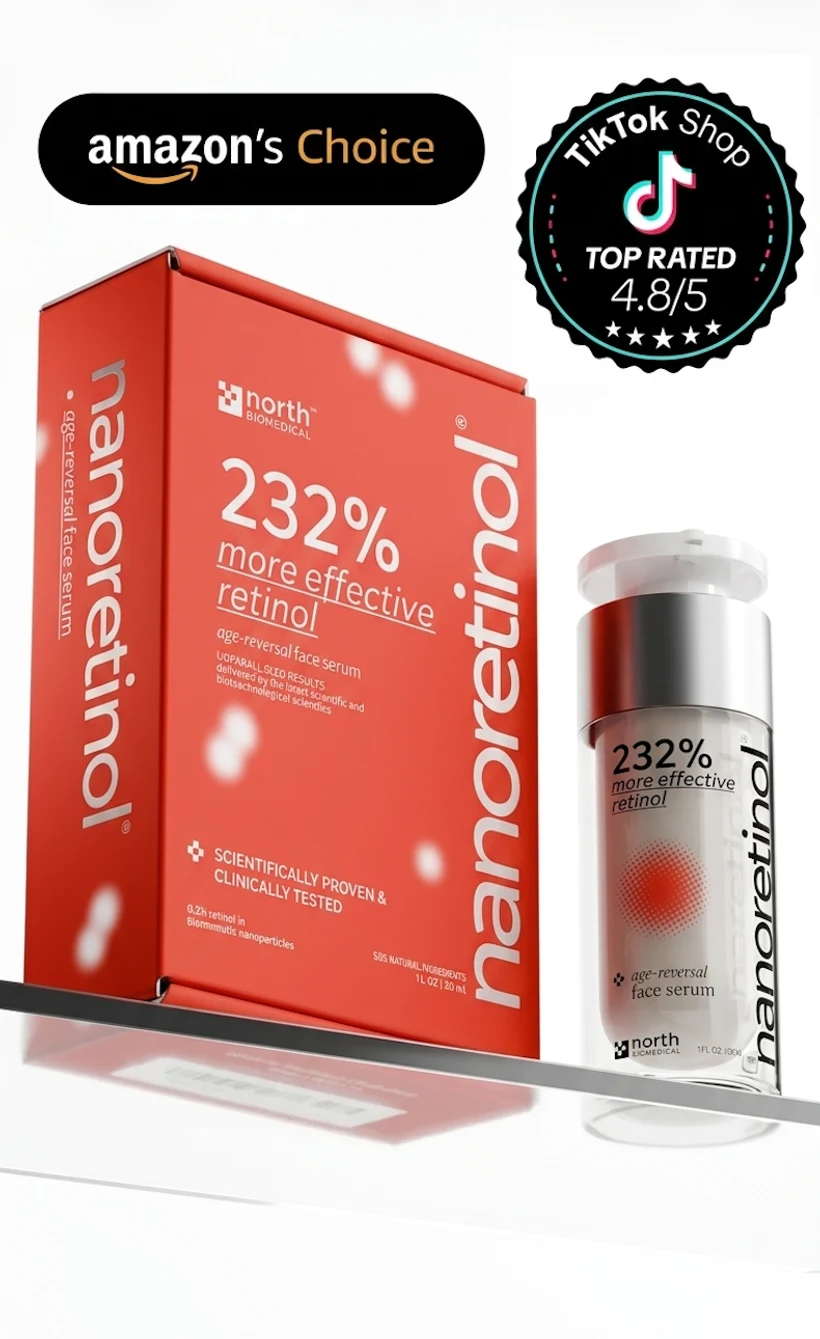
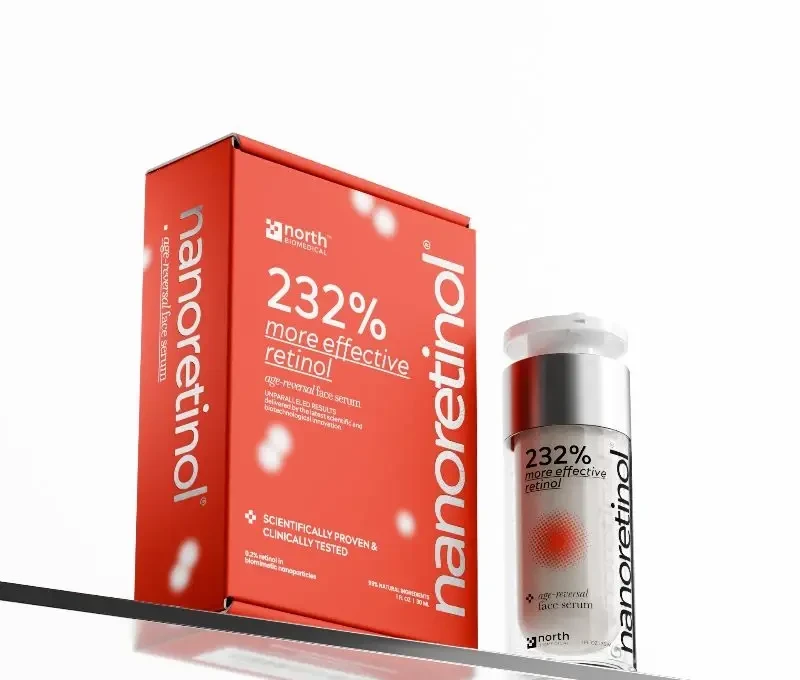
The weak point of traditional retinol is getting it through the skin barrier without irritation. Nanoretinol was engineered around exactly that problem: it encloses retinol in biomimetic lipid nanoparticles the skin accepts as its own, ferrying the active into the dermis without stripping the barrier. In North Biomedical’s clinical comparison, that delivery approach was 232% more effective at collagen recovery and 73% more effective at elastin recovery than conventional retinol, with users seeing a 61% rise in firmness and a 56% rise in elasticity over 56 days [6]. Its gentle, water-based 0.2% formula is easy to keep using long after the clinic visit fades from memory.
Ultherapy can buy back years of lost tension in a single afternoon. What you do on the ordinary nights in between is what decides how long you keep them.
References
- Varani J, Dame MK, Rittié L, Fligiel SEG, Kang S, Fisher GJ, Voorhees JJ. “Decreased Collagen Production in Chronologically Aged Skin: Roles of Age-Dependent Alteration in Fibroblast Function and Defective Mechanical Stimulation.” American Journal of Pathology. 2006;168(6):1861-1868. doi:10.2353/ajpath.2006.051302
- Khan U, Khalid N. “A Systematic Review of the Clinical Efficacy of Micro-Focused Ultrasound Treatment for Skin Rejuvenation and Tightening.” Cureus. 2021;13(12):e20163. doi:10.7759/cureus.20163
- Oni G, Hoxworth R, Teotia S, Brown S, Kenkel JM. “Evaluation of a Microfocused Ultrasound System for Improving Skin Laxity and Tightening in the Lower Face.” Aesthetic Surgery Journal. 2014;34(7):1099-1110. doi:10.1177/1090820X14541956
- Alam M, White LE, Martin N, Witherspoon J, Yoo S, West DP. “Ultrasound tightening of facial and neck skin: a rater-blinded prospective cohort study.” Journal of the American Academy of Dermatology. 2010;62(2):262-269. doi:10.1016/j.jaad.2009.06.039
- Kafi R, Kwak HS, Schumacher WE, Cho S, Hanft VN, Hamilton TA, King AL, Neal JD, Varani J, Fisher GJ, Voorhees JJ, Kang S. “Improvement of Naturally Aged Skin With Vitamin A (Retinol).” Archives of Dermatology. 2007;143(5):606-612. doi:10.1001/archderm.143.5.606
- North Biomedical LLC. “Nanoretinol vs. Conventional Retinol: Efficacy in Collagen and Elastin Recovery.” Clinical Study Summary, 2024. Study summary