Wrinkles Around the Mouth: What Causes Them and How to Actually Smooth Them
A science-backed look at why perioral lines form earlier than the rest of your face
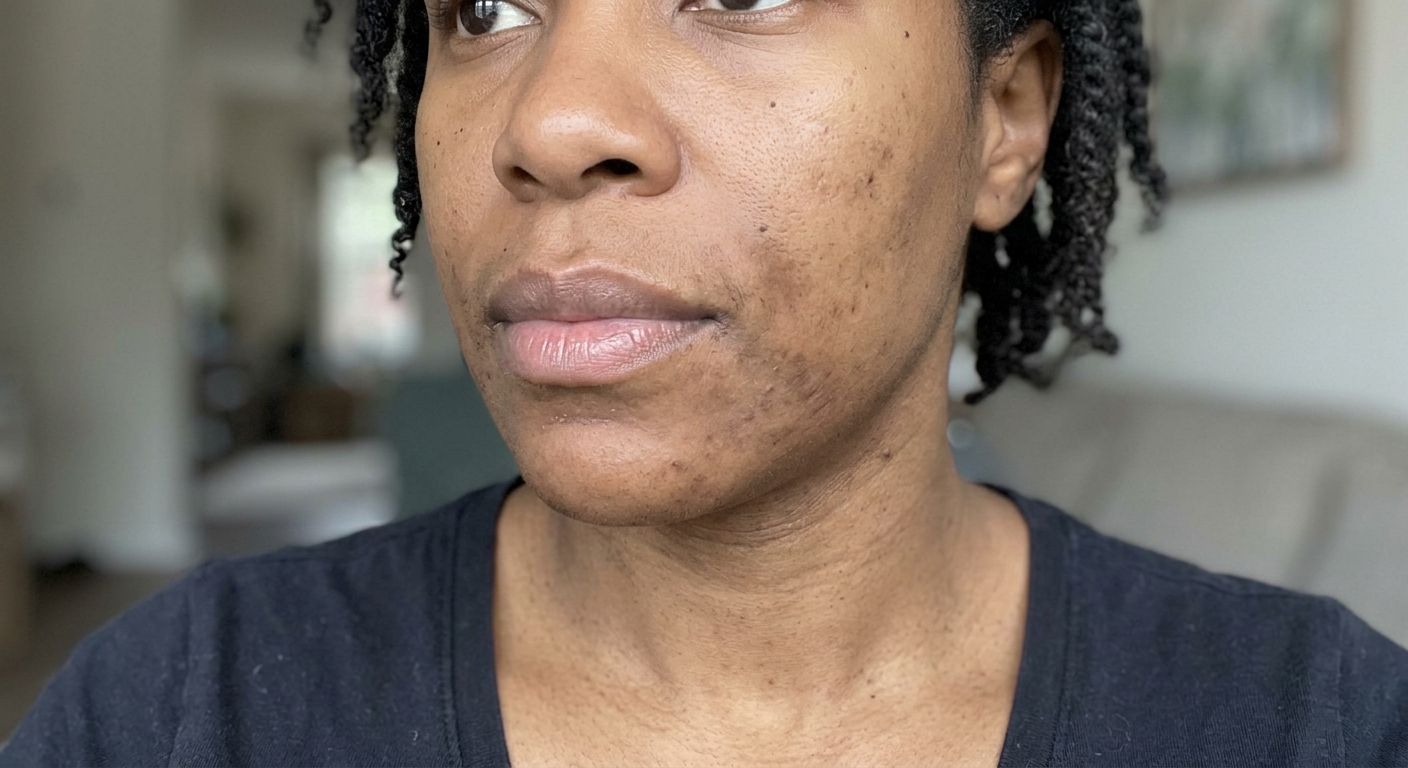
The lines that radiate up from your upper lip, fan out at the corners of your mouth, and crease the smile fold are some of the earliest visible signs of facial aging — and some of the hardest to treat with over-the-counter products. They’re called perioral wrinkles, and the reason they form earlier and deeper than wrinkles elsewhere on the face has nothing to do with smoking, drinking through straws, or sleeping on your side, despite what social media will tell you.
The honest answer is structural. The skin around the mouth is thinner, gets pulled by far more muscles, and loses underlying support faster than any other area on the lower face. Here is what the dermatology research actually says about why those lines appear and what genuinely smooths them.
Why the Mouth Ages Earlier Than the Rest of Your Face
A 2025 review in the Journal of Cosmetic Dermatology documented exactly how the upper lip changes with age: the vermilion (the colored part of the lip) thins, hyaluronic acid synthesis (HAS1) drops while hyaluronic acid degradation (CEMIP) increases, and dermal blood vessels supporting the area decrease in number [1]. A landmark 2004 study in Dermatology established that the upper lip shows visible perioral wrinkling starting in the fifth decade of life, with women showing earlier and deeper lines than men [2].
There are four overlapping reasons:
Constant muscular pull. The orbicularis oris is the only completely circular muscle in the body. Every smile, every word, every sip pulls the surrounding skin inward in dozens of tiny vectors. Over decades of repeated movement, those vectors etch lines into the dermis.
Bone resorption. The maxilla — the upper jaw — slowly thins and recedes with age, especially after the loss of estrogen at menopause. This pulls the soft tissue of the upper lip backward and downward, deepening the folds [3].
Decreased fat pad volume. The malar and buccal fat pads that prop up the lower face thin and migrate downward, deepening the nasolabial folds (smile lines) and pulling skin tight against the perioral lines.
A 2006 review in Clinical Interventions in Aging found significant improvements in fine and moderate wrinkles after 12–24 weeks of retinoid use across multiple controlled trials.
Sun damage. The bow of the upper lip and the chin both face slightly upward, getting more cumulative UV than vertical surfaces. UV-driven matrix metalloproteinases (MMPs) chew through dermal collagen — the support that would otherwise smooth the area.
The Different Kinds of Mouth Wrinkles
The treatments that work depend partly on which kind of line you’re dealing with:
- Vertical lip lines (“lipstick bleed lines” or “smoker’s lines”) run perpendicular to the lip border, mostly on the upper lip. They are the most common and tend to appear earliest.
- Marionette lines drop from the corners of the mouth toward the chin. These are deepening folds, not wrinkles, and they reflect underlying volume loss as much as skin texture.
- Smile lines (nasolabial folds) extend from the wings of the nose to the corners of the mouth.
- Cobblestoning of the chin — small dimpling caused by a hyperactive mentalis muscle — often gets grouped with mouth wrinkles but is distinct.
For deeper coverage of related concerns, see our guides on lip lines, smile lines, and marionette lines.
What Actually Smooths Perioral Wrinkles — Ranked by Evidence
Topical retinoids (strongest evidence, slowest visible change)
Retinoids are the most studied topical treatment for any photoaged facial wrinkle, including perioral. The Griffiths et al. 1993 study in the New England Journal of Medicine showed an 80% increase in dermal collagen formation after consistent tretinoin use [4]. A 2006 review in Clinical Interventions in Aging found significant improvements in fine and moderate wrinkles after 12–24 weeks of retinoid use across multiple controlled trials [5].
The catch for the perioral area is the same as for the eyelids: the skin is thin, the muscles pull constantly, and conventional retinol formulations cause irritation, peeling, and short-term redness that make the lines look worse before they look better. Most women either give up within a month or reduce frequency to once a week — at which point they don’t get the collagen-building benefit either.
For deeper coverage of related concerns, see our guides on lip lines, smile lines, and marionette lines.
Hyaluronic acid serums and fillers
Topical hyaluronic acid hydrates and plumps the surface, making fine vertical lip lines temporarily less visible. The deeper smoothing comes from injectable fillers, which restore the volume the bone and fat pad changes have removed.
Peptides
Peptide formulations — particularly signal peptides like Matrixyl and neurotransmitter-mimicking peptides like argireline — show modest but measurable reductions in wrinkle depth in clinical trials. They are far better tolerated on perioral skin than retinoids and pair well with them.
Energy-based treatments
Laser resurfacing (especially fractional CO2 and erbium), radiofrequency microneedling, and chemical peels at trichloroacetic acid (TCA) concentrations all produce documented reductions in perioral wrinkle depth. They require downtime and a board-certified provider but produce changes topical actives alone can’t match.
Botulinum toxin
Small doses of Botox in the orbicularis oris (“lip flip”) soften vertical lip lines by reducing muscle pull. Done by an experienced injector it’s effective; over-treated, it can affect speech and the ability to drink from a cup.
What Doesn’t Work as Well as Marketing Suggests
- “Smoker’s lines exercises.” Physically pursing or stretching the lip area more than necessary is unlikely to reduce dynamic wrinkles and may worsen them.
- Lip-plumping glosses. Mild capsaicin-based irritation creates short-term swelling. It does not address underlying lines and can dehydrate the lip border over time.
- DIY needling kits. The perioral area is densely vascular and prone to post-inflammatory hyperpigmentation. Microneedling here belongs in a clinical setting.
- Most “anti-wrinkle straws” and silicone patches. Patches can flatten lines briefly while they’re worn — overnight smoothing for an event — but the effect resets within hours.
A Realistic Daily Routine for Mouth Wrinkles
A pragmatic, evidence-led plan:
- Sunscreen on the perioral area daily. This is the single most cost-effective wrinkle prevention available. SPF 30+ on the upper lip and chin, reapplied if you’re outdoors.
- A nightly retinoid in a tolerable delivery system. Consistency matters more than potency.
- A peptide moisturizer or serum on the perioral region morning and night. Layer over the retinoid at night.
- A hydrating barrier balm at the lip border to reduce the tugging and licking that worsens vertical lines. Our guide to the best lip balm for dry lips explains which balm chemistry actually holds.
- Address the bigger picture for women in perimenopause — the underlying collagen and bone changes that drive perioral aging are systemic. See our piece on perimenopause skin changes for the broader context.
Those same perioral lines are what make lipstick travel, and the guide to the best lipstick for older women explains which formulas hold at the border.
The Tolerability Problem — and Why Delivery Matters Most Here
The orbicularis oris contracts thousands of times a day. The skin overlying it is constantly stretched, folded, and rehydrated by saliva and food. Anything that compromises the barrier — including most conventional retinol formulations — produces redness and peeling exactly where the skin is hardest to disguise.
Nanoretinol was developed to solve this delivery problem. Encapsulating retinol in biomimetic lipid nanoparticles allows the active to cross the epithelial barrier without dissolving the lipid layer that protects it [6]. The Nanoretinol clinical study showed 232% more effective collagen recovery and 73% more effective elastin recovery than conventional retinol, with a 61% improvement in skin firmness and a 56% improvement in elasticity over 56 days — and significantly milder side effects [6]. For a high-tolerability area like the upper lip and corners of the mouth, the difference between “irritating but powerful” and “actually wearable every night” is what separates a routine that works from a tube that sits unused on the bathroom shelf.
Wrinkles around the mouth are the slowest-fading and most under-addressed of the common facial concerns, partly because the structural drivers are deep and partly because the most effective topical category is also the hardest to tolerate there. Realistic expectations matter: visible softening of perioral lines from a topical retinoid takes 12 to 24 weeks of consistent nightly use. Add daily UV protection and a peptide layer, and you’re working with the protocol the dermatology literature actually supports.
References
- Sun F, Liu Y, Zhang T. “Aging of the Human Lip: Current Knowledge and Clinical Implications.” Journal of Cosmetic Dermatology. 2025;24(8):e70310. doi:10.1111/jocd.70310
- Lévêque JL, Goubanova E. “Influence of age on the lips and perioral skin.” Dermatology. 2004;208(4):307-313. doi:10.1159/000077838
- Morera Serna E, Serna Benbassat M, Terré Falcón R, Murillo Martín J. “Anatomy and Aging of the Perioral Region.” Facial Plastic Surgery. 2021;37(2):176-193. doi:10.1055/s-0041-1725104
- Griffiths CE, Russman AN, Majmudar G, Singer RS, Hamilton TA, Voorhees JJ. “Restoration of Collagen Formation in Photodamaged Human Skin by Tretinoin (Retinoic Acid).” New England Journal of Medicine. 1993;329(8):530-535. doi:10.1056/NEJM199308193290803
- Mukherjee S, Date A, Patravale V, Korting HC, Roeder A, Weindl G. “Retinoids in the treatment of skin aging: an overview of clinical efficacy and safety.” Clinical Interventions in Aging. 2006;1(4):327-348. doi:10.2147/ciia.2006.1.4.327
- North Biomedical LLC. “Nanoretinol vs. Conventional Retinol: Efficacy in Collagen and Elastin Recovery.” Clinical Study Summary, 2024. Nanoretinol Study Summary