Hyperpigmentation Around the Mouth: Causes and How to Fade It
Dark patches framing the lips are common, stubborn, and very treatable once you know what's driving the pigment.
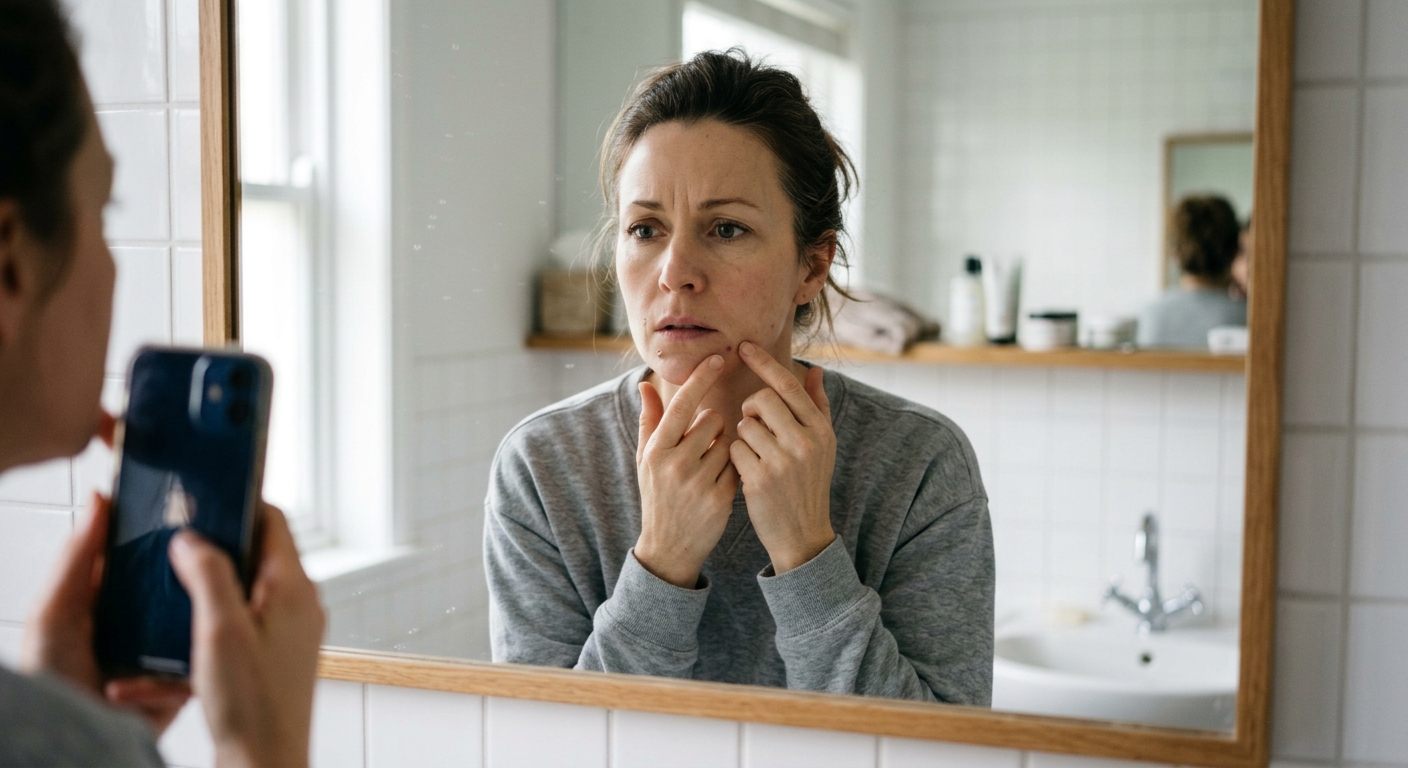
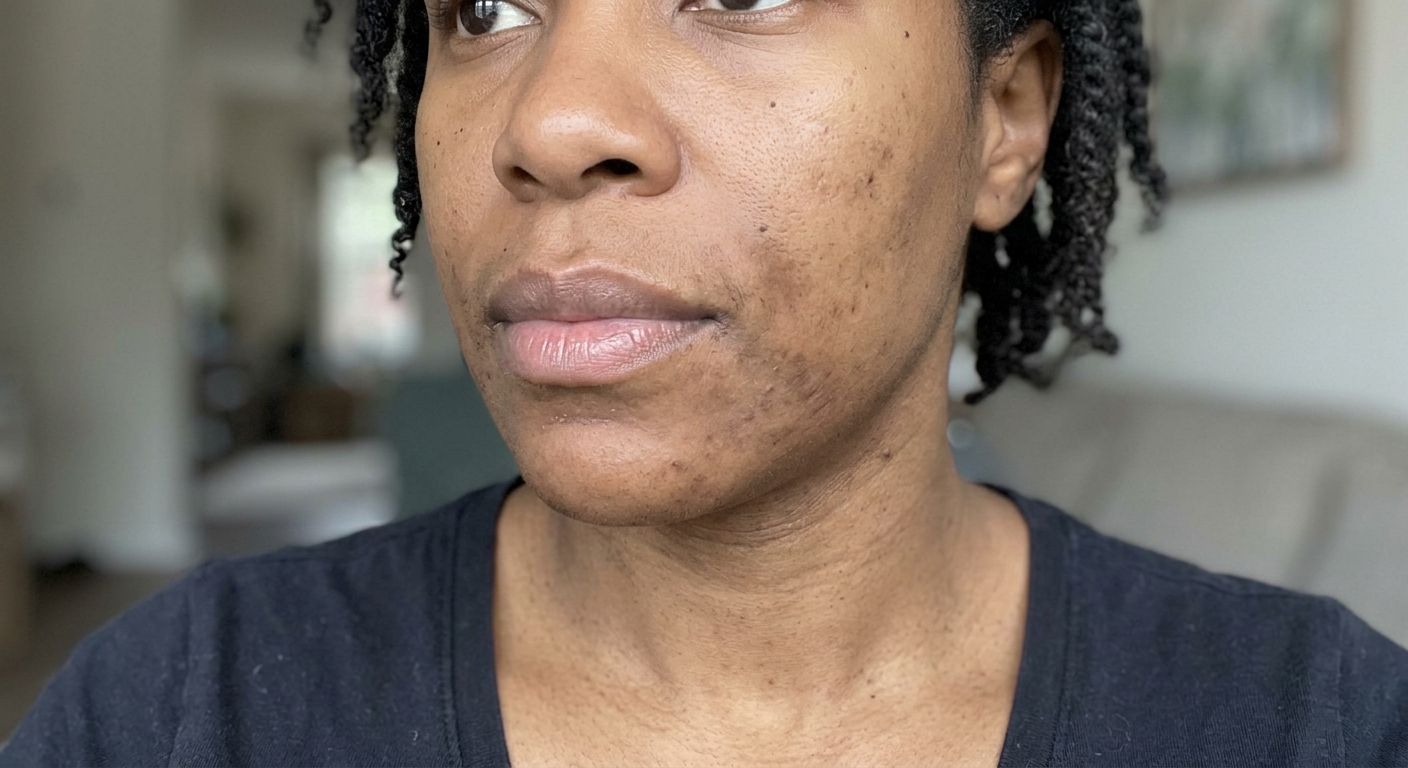
The skin framing your lips has a tendency to darken. For many people it shows up as shadowy corners of the mouth, a dusky ring along the lip line, or diffuse brown patches across the upper lip and chin. It is one of the most common pigment complaints there is — and one of the most frustrating, because it sits in the center of the face where it is impossible to ignore.
The good news: hyperpigmentation around the mouth is almost always treatable. The key is understanding that “dark skin around the mouth” is not one condition but a final common result of several different triggers — and matching your approach to the cause.
What Hyperpigmentation Actually Is
All skin color comes from melanin, a pigment made by specialized cells called melanocytes and packaged into little parcels called melanosomes, which are then handed off to surrounding skin cells. Hyperpigmentation is simply melanin overproduction: the melanocytes go into overdrive and deposit more pigment than normal into the skin around them.
Where that pigment lands matters. When it sits high, in the upper layers, it looks brown and responds relatively well to treatment. When it settles deeper in the dermis, it looks grayish-blue and is far more stubborn [1]. Most perioral — around-the-mouth — pigmentation is a mix of both.
Why the Skin Around Your Mouth Darkens
Several triggers converge on this exact zone:
Post-inflammatory hyperpigmentation (PIH). This is the big one. Any inflammation — a breakout along the chin, an irritated reaction to a toothpaste or lip product, eczema, even aggressive exfoliation — leaves behind a brown stain as it heals. The mouth area is a hotspot for small, repeated irritations, so PIH accumulates there [1][4].
Sun exposure. The upper lip and the skin just above it catch a great deal of UV, and UV is a direct command to melanocytes to make more pigment. Sun also darkens existing pigmentation and makes it harder to clear.
The key is understanding that “dark skin around the mouth” is not one condition but a final common result of several different triggers — and matching your approach to the cause.
Friction and habit. Chronic lip-licking, rubbing, harsh wiping, and even waxing or threading the upper lip create low-grade, repeated trauma — and repeated trauma means repeated PIH.
Hormones. Hormonal shifts from pregnancy, oral contraceptives, or perimenopause can drive a melasma-type pattern that often includes the upper lip.
It is also worth a quick honesty check: darkness around the mouth can occasionally point to something other than ordinary pigment — a nutritional gap, or a reaction to a specific product. If the change was sudden, itchy, scaly, or rapidly spreading, it is worth a professional look. But for the slow, painless brown patches most people are dealing with, this is a skincare problem with a skincare solution.
Why It Is So Stubborn Here
The perioral zone fights back harder than most. It is a high-movement area — talking, eating, expression — so it is constantly flexing. It is hard to keep sunscreen on through meals and drinks. And it tends to be irritated again before the last round of pigment has fully cleared, so you are treating a moving target. This is why “I tried a brightening cream and it didn’t work” is so common: the pigment was still being actively re-triggered.
The Strategy That Actually Fades It
Effective treatment runs on three tracks at once.
1. Stop the trigger. No fading ingredient can outrun an active cause. Switch to a bland, fragrance-free toothpaste and lip balm if you suspect a reaction, stop licking and rubbing, and be gentle with hair removal. This step alone resolves a surprising share of cases.
Clinical testing describes side effects as minimal and milder than conventional retinol, and the water-based, 99% natural formula is gentle enough for delicate perioral skin and safe near the eye contour.
2. Block the sun. Daily broad-spectrum SPF on the lower face is non-negotiable. Without it, you are refilling the sink while trying to drain it.
3. Treat the pigment with a cell-turnover active. This is where retinol earns its reputation.
Why Retinol Works on Pigmentation
Retinol — and its prescription cousin tretinoin — does something uniquely useful for hyperpigmentation. It accelerates the turnover of skin cells, which physically moves pigment-laden cells up and out faster, and it appears to disperse clustered melanin so it no longer reads as a concentrated dark patch [2].
The clinical evidence is solid. A vehicle-controlled trial showed topical tretinoin significantly improved melasma, with measurable drops in epidermal melanin content [3]. Another controlled study found tretinoin markedly faded post-inflammatory hyperpigmentation — the exact mechanism behind most perioral darkening [4]. And the 2025 network meta-analysis of topical anti-aging agents singled out retinol and tretinoin as superior performers specifically for hyperpigmentation [5]. If you also want to layer in vitamin C or niacinamide, they pair well — but retinol is the backbone. For the bigger picture on fading pigment across the face, see our guides to dark spots and post-inflammatory hyperpigmentation.
The Catch With Conventional Retinol — and a Better Delivery
There is a real tension here. The skin around the mouth is thin, mobile, and easily irritated — and conventional retinol is irritating, because it penetrates by partially disrupting the skin barrier. Irritation in an area already prone to PIH can actually cause more pigmentation. That is the worst-case loop: the treatment feeds the problem.
This is exactly the problem Nanoretinol was built to solve. It encapsulates retinol in biomimetic lipid nanoparticles that the skin accepts as “self” and lets through the barrier without damaging it. The retinol gets where it needs to go, but the barrier disruption — and the irritation-driven pigment risk — is largely removed. Clinical testing describes side effects as minimal and milder than conventional retinol, and the water-based, 99% natural formula is gentle enough for delicate perioral skin and safe near the eye contour. For a stubborn, irritation-prone zone, gentle delivery is not a luxury — it is the difference between fading the pigment and feeding it.
What Realistic Progress Looks Like
Pigment fades slowly. Even in clinical trials, meaningful improvement in hyperpigmentation typically takes a few months of consistent use, and deeper pigment takes longer than surface pigment [1][3]. The trajectory, though, is reliable when all three tracks are running: remove the trigger, block the sun, and treat with a well-delivered retinol. For a fuller routine on uneven tone generally, the same principles apply across the face.
Clearing the Frame
Dark skin around the mouth is common, multi-causal, and genuinely fixable. It is rarely about one product and almost always about stopping the trigger while a cell-turnover active does the fading. Be patient, be gentle, and choose a retinol that treats the pigment without inflaming the very skin you are trying to even out.
References
- Sarkar R, Ranjan R, Garg S, Garg VK, Sonthalia S, Bansal S. “Periorbital Hyperpigmentation: A Comprehensive Review.” Journal of Clinical and Aesthetic Dermatology. 2016;9(1):49-55. PMID: 26962392
- Kang HY, Valerio L, Bahadoran P, Ortonne JP. “The role of topical retinoids in the treatment of pigmentary disorders: an evidence-based review.” American Journal of Clinical Dermatology. 2009;10(4):251-260. doi:10.2165/00128071-200910040-00005
- Griffiths CE, Finkel LJ, Ditre CM, Hamilton TA, Ellis CN, Voorhees JJ. “Topical tretinoin (retinoic acid) improves melasma. A vehicle-controlled, clinical trial.” British Journal of Dermatology. 1993;129(4):415-421. doi:10.1111/j.1365-2133.1993.tb03169.x
- Bulengo-Ransby SM, Griffiths CE, Kimbrough-Green CK, Finkel LJ, Hamilton TA, Ellis CN, Voorhees JJ. “Topical tretinoin (retinoic acid) therapy for hyperpigmented lesions caused by inflammation of the skin in black patients.” New England Journal of Medicine. 1993;328(20):1438-1443. doi:10.1056/NEJM199305203282002
- Lin L, Chen X, Liu C, et al. “Comparative efficacy of topical interventions for facial photoaging: a network meta-analysis.” Scientific Reports. 2025;15:26889. doi:10.1038/s41598-025-12597-0