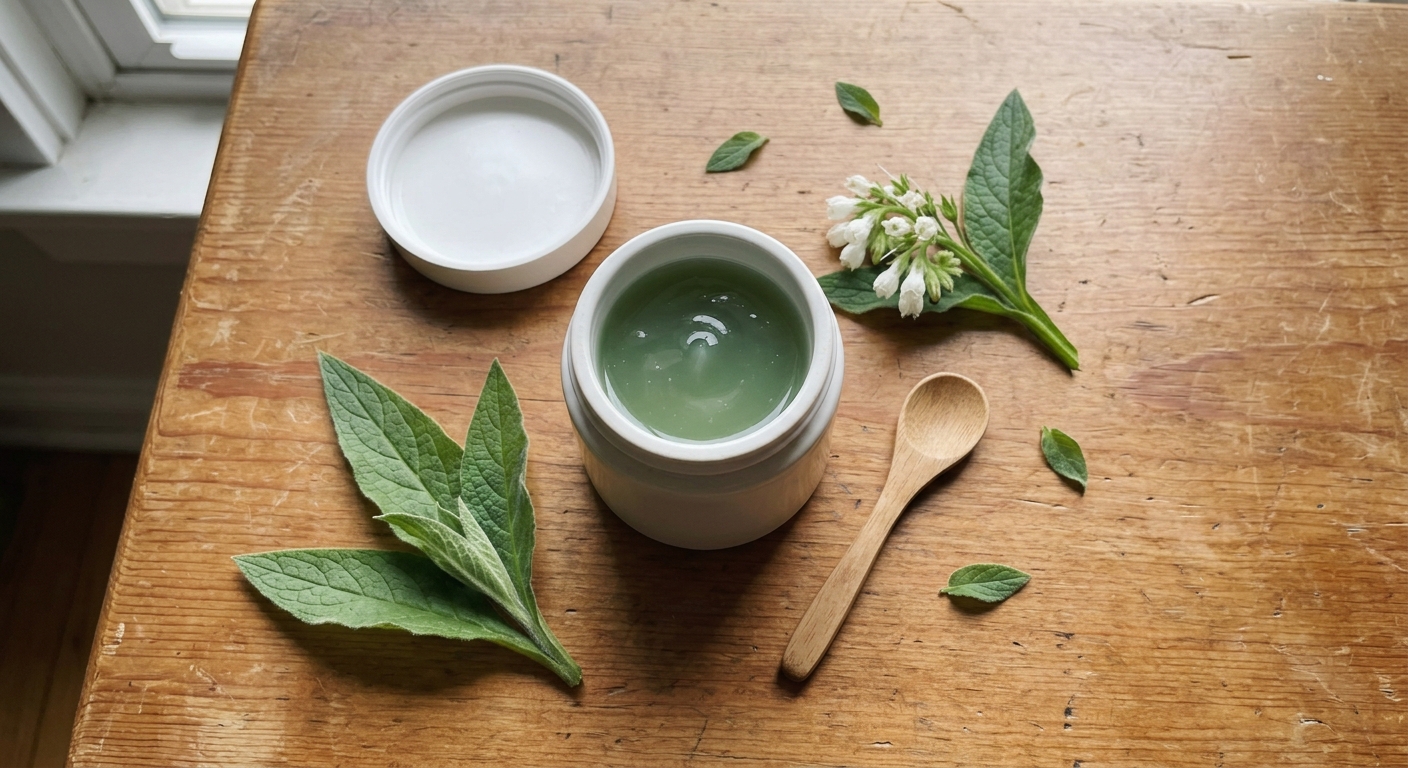
What Is Allantoin? The Calming Ingredient Behind Sensitive-Skin Routines
Why this quiet soothing agent shows up in everything — and what it can and can't do for aging skin
Flip over almost any moisturizer, soothing serum, or after-sun gel and you will likely find allantoin near the middle of the ingredient list. It rarely gets advertised on the front of the bottle, it has no celebrity following, and most people could not tell you what it does. Yet it quietly appears in thousands of products — which raises a fair question: if allantoin is so common, why does nobody talk about it, and is it actually doing anything for your skin?
The short answer is yes, but in a specific and limited way. Allantoin is one of skincare’s great supporting actors. Understanding its real job — and its real limits — explains a lot about why some routines feel comfortable and others leave your face red and peeling.
What Allantoin Is and Where It Comes From
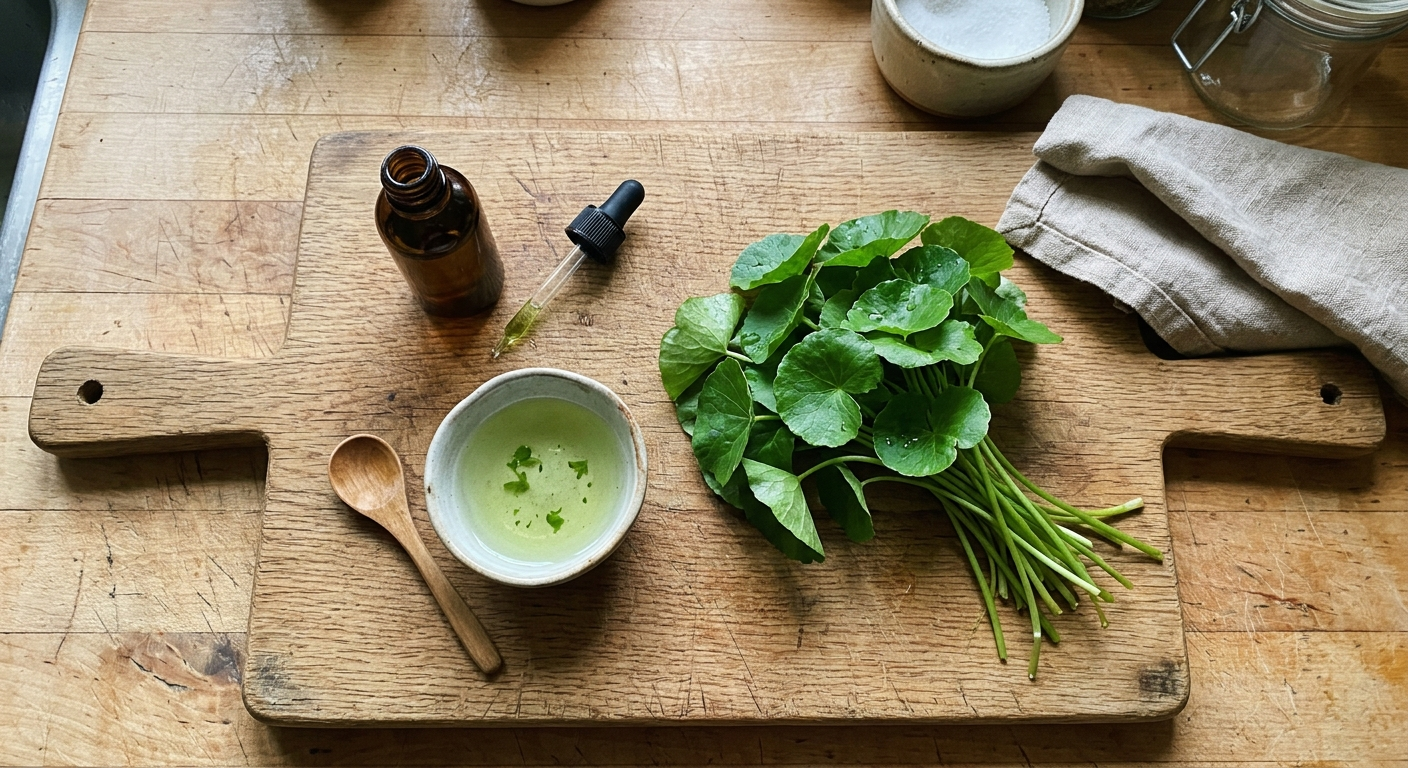
Allantoin is a small, water-soluble compound found naturally in many plants — comfrey root is the classic source — and it is also produced in the bodies of most mammals. In skincare it is typically made synthetically for purity and consistency, and it has a long, well-established safety record. It is recognized as an over-the-counter skin protectant, the same regulatory category as ingredients like glycerin and petrolatum, and it is used at low concentrations, generally between 0.5% and 2%.
What makes it useful is a cluster of gentle, overlapping actions: it soothes irritation, supports wound healing, helps the skin hold moisture, and modestly smooths rough texture. None of these is dramatic on its own. Together, they make skin feel calmer and more comfortable.
It rarely gets advertised on the front of the bottle, it has no celebrity following, and most people could not tell you what it does.
What the Science Actually Shows
Allantoin’s reputation as a healing agent is not just folklore. In a controlled animal study examining the wound-healing process, allantoin accelerated tissue repair by promoting fibroblast proliferation and the early deposition of extracellular matrix — the structural groundwork the skin lays down when it rebuilds itself [1]. That is the mechanism behind its appearance in scar gels, after-procedure creams, and post-sun products.
On the comfort side, allantoin is a workhorse in formulas aimed at sensitive and compromised skin. In a clinical study of patients with mild-to-moderate atopic (easily irritated) skin, a moisturizer containing allantoin alongside other anti-inflammatory agents significantly improved skin hydration [2]. It is the kind of ingredient you do not notice when it is working — you only notice its absence when a product stings.
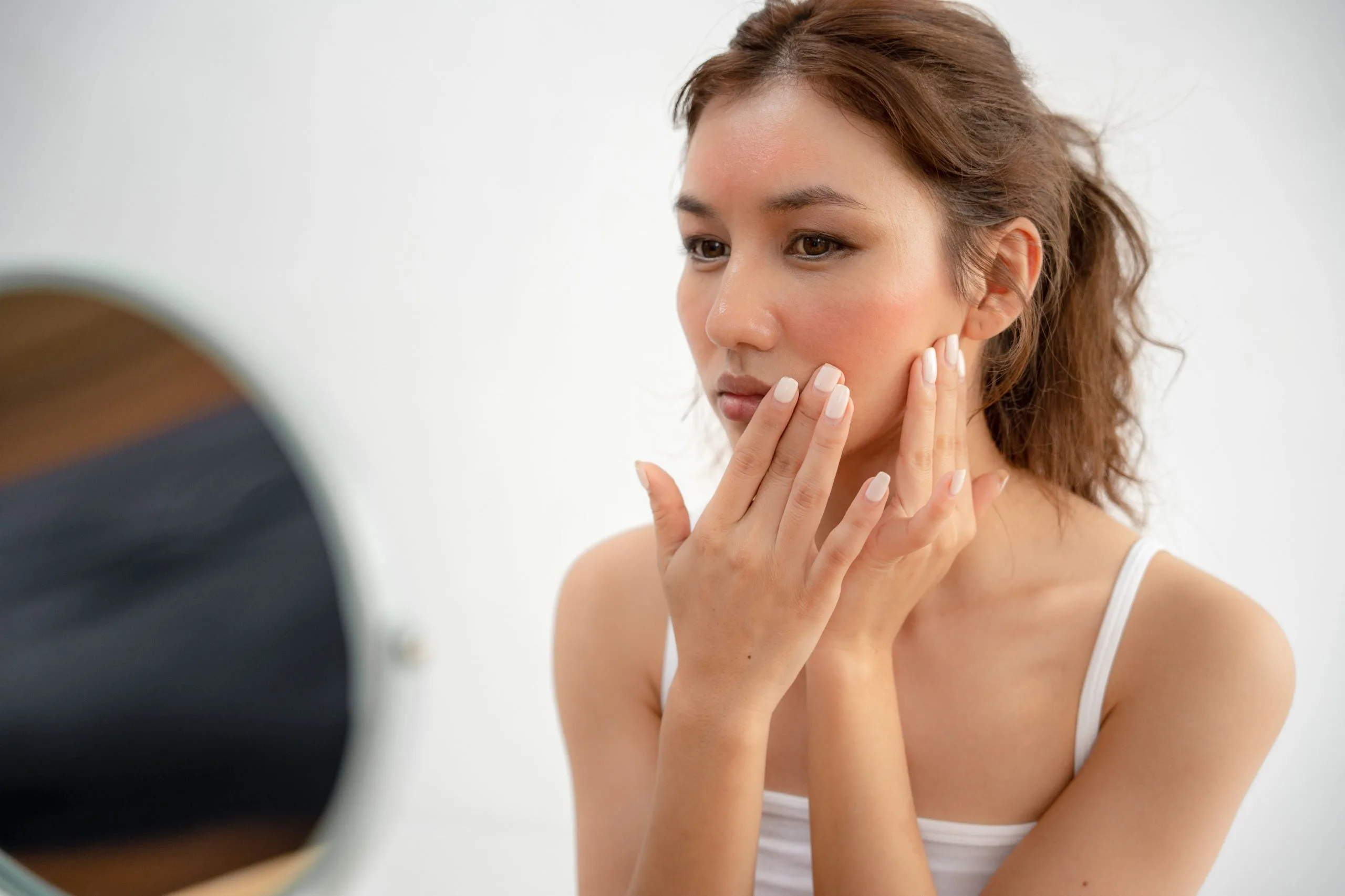
That soothing role connects directly to the skin’s most important and most fragile asset: its barrier. The stratum corneum, the outermost layer, is what keeps water in and irritants out, and when it is disrupted, skin becomes reactive, dehydrated, and inflamed [3]. Allantoin does not rebuild the barrier the way ceramides do, but its calming, moisture-supporting action helps an irritated barrier settle down. If yours is already struggling, our guides to a damaged skin barrier and skin barrier repair are worth a read.
The Real Reason Allantoin Matters for Anti-Aging
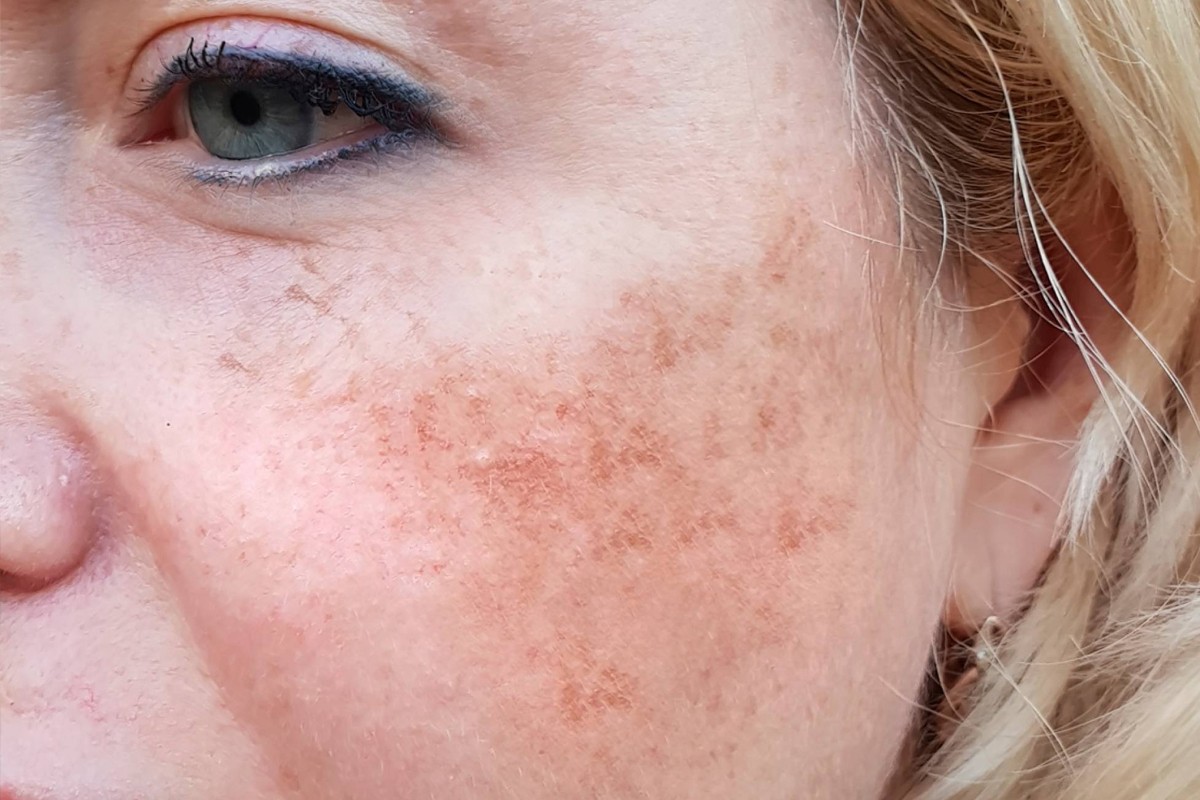
Here is where allantoin becomes quietly important for anyone over 40. The most effective anti-aging actives — retinoids above all — are also the most irritating. A huge number of people start retinol, get red, flaky, and uncomfortable within two weeks, and quit before it ever has a chance to work. That irritation, sometimes called retinoid dermatitis, is the single biggest reason retinol routines fail [4].
If you are easing into retinoids, our primer on retinol for sensitive skin explains how to layer this kind of support.
Soothing ingredients like allantoin exist largely to keep that from happening. Research on reducing retinol-induced irritation shows that supportive, barrier-friendly ingredients can measurably calm the redness and discomfort that actives provoke [5]. In practice, allantoin is the cushion that lets you keep using the ingredient that actually delivers results. If you are easing into retinoids, our primer on retinol for sensitive skin explains how to layer this kind of support.
But this is also allantoin’s ceiling, and it is important to be honest about it. Allantoin calms, comforts, and helps skin heal. It does not stimulate meaningful new collagen, fade pigment, or reverse the structural changes of aging. Treating it as an anti-aging hero is a category error — it is the supporting cast, not the lead. The lead role still belongs to a proven active.
A Smarter Way Around the Irritation Problem
If the whole point of allantoin is to make a harsh retinol tolerable, it is worth asking a better question: what if the retinol did not have to be harsh in the first place?
That is precisely the thinking behind Nanoretinol. Conventional retinol irritates because the formulas rely on chemicals and barrier-disrupting penetration enhancers to force the active through the skin — and that disruption is what causes the burning, redness, and peeling. Nanoretinol takes a different route entirely, encapsulating stabilized retinol inside biomimetic lipid nanoparticles that the skin recognizes as “self” and allows to pass through the barrier intact. Nothing has to be forced, and nothing has to be broken down.
The result is a retinol that is significantly gentler on skin cells — with drastically reduced cytotoxicity and a restorative effect at the cellular level — while still delivering the collagen and elasticity benefits a soothing agent like allantoin can never provide. In other words, instead of using one ingredient to bandage the damage caused by another, Nanoretinol sidesteps the damage from the start.
Allantoin earns its place in your routine as a calming, healing, comfort ingredient — and on that count, the science backs it up. Just keep its job description straight. It is the friend who holds your coat while the real work gets done, and choosing an active that does not require so much hand-holding is the smarter long game.
References
- Araújo LU, Grabe-Guimarães A, Mosqueira VCF, Carneiro CM, Silva-Barcellos NM. “Profile of wound healing process induced by allantoin.” Acta Cirúrgica Brasileira. 2010;25(5):460-466. doi:10.1590/S0102-86502010000500014
- Prakoeswa CRS, Damayanti, Anggraeni S, et al. “The role of moisturizer containing anti-inflammatory on skin hydration in mild-moderate atopic dermatitis patients.” Dermatology Research and Practice. 2024;2024:3586393. doi:10.1155/drp/3586393
- Baker P, Huang C, Radi R, Moll SB, Jules E, Arbiser JL. “Skin barrier function: the interplay of physical, chemical, and immunologic properties.” Cells. 2023;12(23):2745. doi:10.3390/cells12232745
- Narsa AC, Suhandi C, Afidika J, Ghaliya S, Elamin KM, Wathoni N. “A comprehensive review of the strategies to reduce retinoid-induced skin irritation in topical formulation.” Dermatology Research and Practice. 2024;2024:5551774. doi:10.1155/2024/5551774
- Fang Y, Ying Y, Xiaolan W, et al. “Mitigation of retinol-induced skin irritation by physiologic lipids: evidence from patch testing.” Journal of Cosmetic Dermatology. 2024;23(8):2743-2749. doi:10.1111/jocd.16330