
Apple Cider Vinegar for Skin: What the Evidence Says Before You Try It
Vinegar toners promise to balance pH, clear breakouts and fade dark spots. Here is what acetic acid really does on skin, what the only controlled trials found, and safer acids that do the job
Apple cider vinegar has a reputation as a do-everything home remedy, and skin is no exception. Online, it is sold as a toner that balances pH, a spot treatment for acne, a fader for dark spots and even a way to remove moles at home.
The appeal is easy to see. Vinegar is cheap, it is acidic like many exfoliating products, and it kills bacteria in a lab dish. But the jump from a kitchen bottle to a facial treatment skips over a lot of chemistry and very little evidence. This guide explains what is in apple cider vinegar, what the only controlled skin trials found, where the real risks lie, and which tested acids do what people hope vinegar will do.
What is in a bottle of apple cider vinegar
Apple cider vinegar is apple juice fermented twice: first by yeast into alcohol, then by bacteria into acetic acid. Supermarket vinegar is typically about 5% acetic acid, with a pH somewhere around 2.5 to 3. The rest is water plus small amounts of other organic acids, polyphenols and minerals from the apples. The cloudy “mother” is a mat of bacteria and cellulose; it has no proven skin benefit.
That pH matters. Healthy skin sits at a mildly acidic pH, on average just below 5 [1]. A product at pH 3 is roughly a hundred times more acidic than that. Skincare acids can work at low pH too, but they are formulated, buffered and tested at a known strength. Kitchen vinegar is not, and its strength varies from bottle to bottle. Our explainer on skin pH covers why that acid mantle matters for barrier repair [2].
What the vinegar trials found
The idea that vinegar could help the skin barrier is not silly. Skin in eczema tends to be less acidic and more colonized by staphylococcus bacteria, so researchers at the University of Virginia tested whether dilute vinegar soaks could help.
In a split-arm pilot trial, 22 people soaked one forearm in apple cider vinegar diluted to 0.5% acetic acid and the other in plain water for 10 minutes a day [3]. Right after soaking, skin pH dropped, as expected, but water loss through the skin went up rather than down. By an hour later, both effects had faded. Most troubling, 16 of the 22 participants reported irritation from the vinegar.
Your skin drifted back to its usual pH within 60 minutes of a vinegar soak in one trial, a far shorter effect than “pH balancing” claims imply.
Your skin drifted back to its usual pH within 60 minutes of a vinegar soak in one trial, a far shorter effect than “pH balancing” claims imply.
A follow-up analysis of the same volunteers looked at the skin’s bacteria. After two weeks of daily soaks, vinegar did not change the overall microbiome or the amount of staphylococcus compared with water [4]. That is two strikes against the main theories behind vinegar toners.
The antibacterial claim
Acetic acid does kill bacteria. Burn surgeons have studied 3% acetic acid as a wound antiseptic and found strong effects against a wide range of bacteria in lab tests [5]. But a sterile dilution used on infected wounds under medical supervision is a very different thing from swiping vinegar on a breakout. The bacteria involved in acne live deep inside the pore, and the vinegar trials above showed no meaningful change in the skin’s bacteria from repeated use.
The real risk: chemical burns
Undiluted vinegar can burn skin, especially when left on under a bandage or applied repeatedly. Dermatologists have reported chemical burns in people following internet protocols to remove moles with apple cider vinegar [6]. Never use vinegar to remove a mole: a changing mole needs a dermatologist, not a home remedy.
Your skin was tested only on the forearms in the vinegar trials, for 10 minutes a day over 2 weeks, far gentler conditions than leaving vinegar on your face overnight.
Your skin was tested only on the forearms in the vinegar trials, for 10 minutes a day over 2 weeks, far gentler conditions than leaving vinegar on your face overnight.
The risk is higher on the face, where skin is thinner, and on skin that is already irritated, sunburned or being treated with retinoids or exfoliating acids. If your skin feels raw after any home remedy, our guide to a damaged skin barrier explains how to calm it down.
If you still want to try it
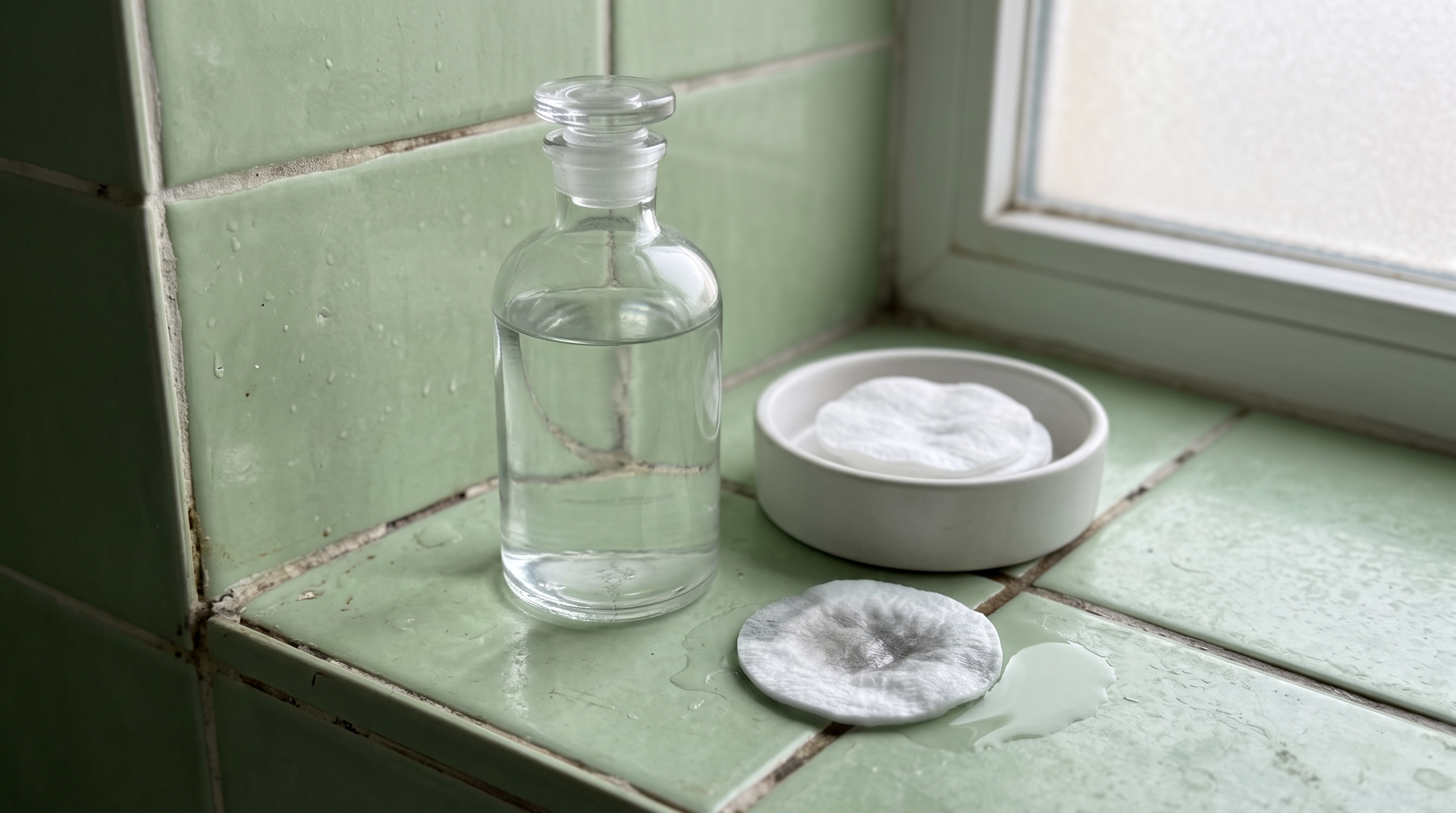
Some people like a very dilute vinegar rinse, and on robust skin it is unlikely to cause harm if you are careful:
- Dilute heavily. Mix one part vinegar with about nine parts water, roughly the 0.5% strength used in the trials. Even that irritated most volunteers.
- Patch test first. Apply to a small area of the jaw for three days before going further.
- Rinse it off. Treat it as a rinse, not a leave-on toner, and never cover it with a bandage.
- Skip it entirely if you have sensitive skin, eczema, rosacea, a broken barrier, or are using a retinoid.
If you want a gentle, soothing toner instead, witch hazel has a better track record and a far less aggressive pH.
Acids that do what vinegar promises
What people really want from vinegar, brighter, smoother, clearer skin, is what well-formulated acids already deliver.
- Glycolic and lactic acid loosen dead surface cells for smoother texture and more even tone. Used consistently, they do more: in a six-month study, a 25% fruit acid lotion made sun-damaged skin about 25% thicker, with denser collagen [7]. A daily glycolic acid toner is the simplest swap for a vinegar toner.
- Salicylic acid dissolves in oil and works inside the pore, which makes it the better choice for blackheads and breakouts.
- Azelaic acid and niacinamide help with redness and uneven tone with little irritation.
Beyond the acid aisle
Acids improve the surface. For lines, firmness and long-term tone, retinol is the most studied topical ingredient: in one trial, retinol smoothed fine wrinkles and boosted collagen production in aged skin within 24 weeks [8].
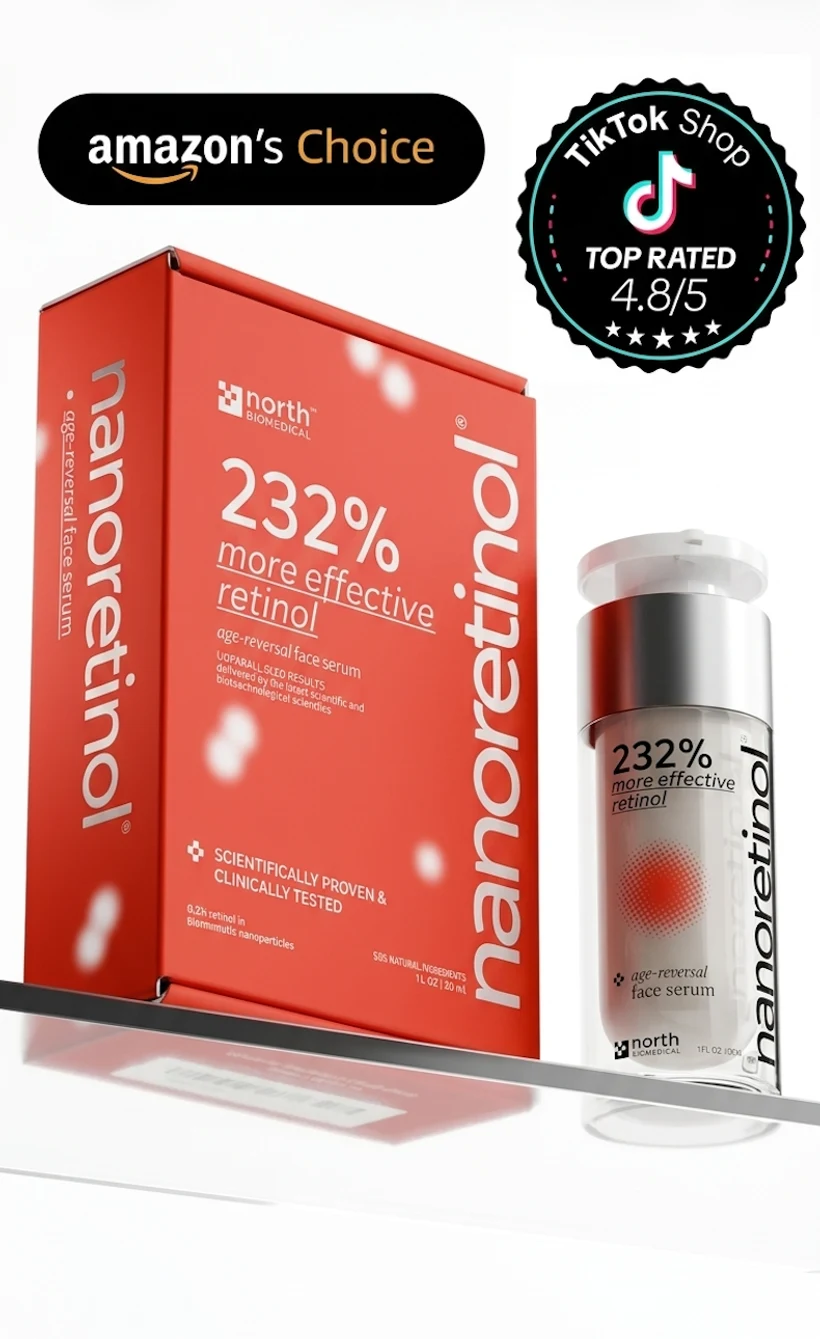
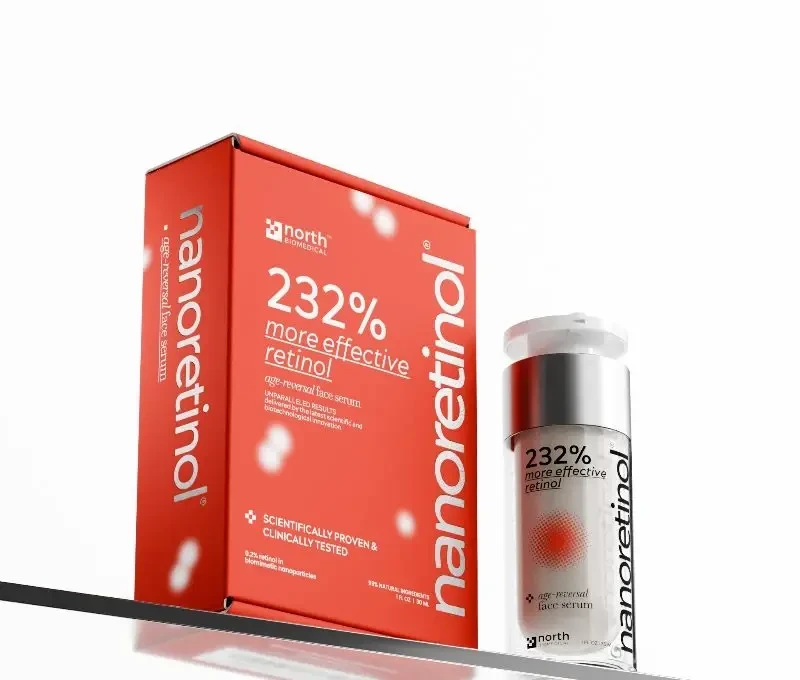
The usual trade-off is irritation, which is exactly what people are trying to avoid when they turn to a “natural” remedy. Nanoretinol was designed around that problem. It delivers 0.2% retinol inside biomimetic lipid nanoparticles, in a water-based gel made with 99% natural ingredients, without breaking down the skin barrier. North Biomedical’s clinical study found it 232% more effective in collagen recovery than conventional retinol, with milder side effects [9]. Leave the vinegar in the kitchen, use a gentle acid in the morning, and let a well-tolerated retinol do the deeper work at night.
References
- Lambers H, Piessens S, Bloem A, Pronk H, Finkel P. “Natural Skin Surface pH Is on Average Below 5, Which Is Beneficial for Its Resident Flora.” International Journal of Cosmetic Science. 2006;28(5):359-370. doi:10.1111/j.1467-2494.2006.00344.x
- Ali SM, Yosipovitch G. “Skin pH: From Basic Science to Basic Skin Care.” Acta Dermato-Venereologica. 2013;93(3):261-267. doi:10.2340/00015555-1531
- Luu LA, Flowers RH, Kellams AL, Zeichner S, Preston DC, Zlotoff BJ, Wisniewski JA. “Apple Cider Vinegar Soaks [0.5%] as a Treatment for Atopic Dermatitis Do Not Improve Skin Barrier Integrity.” Pediatric Dermatology. 2019;36(5):634-639. doi:10.1111/pde.13888
- Luu LA, Flowers RH, Gao Y, Wu M, Gasperino S, Kellams AL, et al. “Apple Cider Vinegar Soaks Do Not Alter the Skin Bacterial Microbiome in Atopic Dermatitis.” PLoS One. 2021;16(6):e0252272. doi:10.1371/journal.pone.0252272
- Ryssel H, Kloeters O, Germann G, Schäfer T, Wiedemann G, Oehlbauer M. “The Antimicrobial Effect of Acetic Acid: An Alternative to Common Local Antiseptics?” Burns. 2009;35(5):695-700. doi:10.1016/j.burns.2008.11.009
- Feldstein S, Afshar M, Krakowski AC. “Chemical Burn from Vinegar Following an Internet-based Protocol for Self-removal of Nevi.” Journal of Clinical and Aesthetic Dermatology. 2015;8(6):50. PubMed:26155328
- Ditre CM, Griffin TD, Murphy GF, Sueki H, Telegan B, Johnson WC, Yu RJ, Van Scott EJ. “Effects of Alpha-Hydroxy Acids on Photoaged Skin: A Pilot Clinical, Histologic, and Ultrastructural Study.” Journal of the American Academy of Dermatology. 1996;34(2 Pt 1):187-195. PubMed:8642081
- Kafi R, Kwak HS, Schumacher WE, Cho S, Hanft VN, Hamilton TA, et al. “Improvement of Naturally Aged Skin with Vitamin A (Retinol).” Archives of Dermatology. 2007;143(5):606-612. doi:10.1001/archderm.143.5.606
- North Biomedical LLC. “Nanoretinol vs. Conventional Retinol: Efficacy in Collagen and Elastin Recovery.” Clinical Study Summary, 2024. Study summary