Best Body Sunscreen: The Dose Problem the Label Never Mentions
Why the right choice for your body is decided by volume rather than by filters
Almost every guide to choosing a body sunscreen is a guide to choosing filters. Mineral or chemical, this UVA rating or that one, water resistant or not.
Those distinctions are real, and on a body they are second-order. The variable that decides how protected your arms, chest and legs actually are is a boring one: how many millilitres come out of the bottle. Get that wrong and no filter system rescues you.
The number the label was tested at
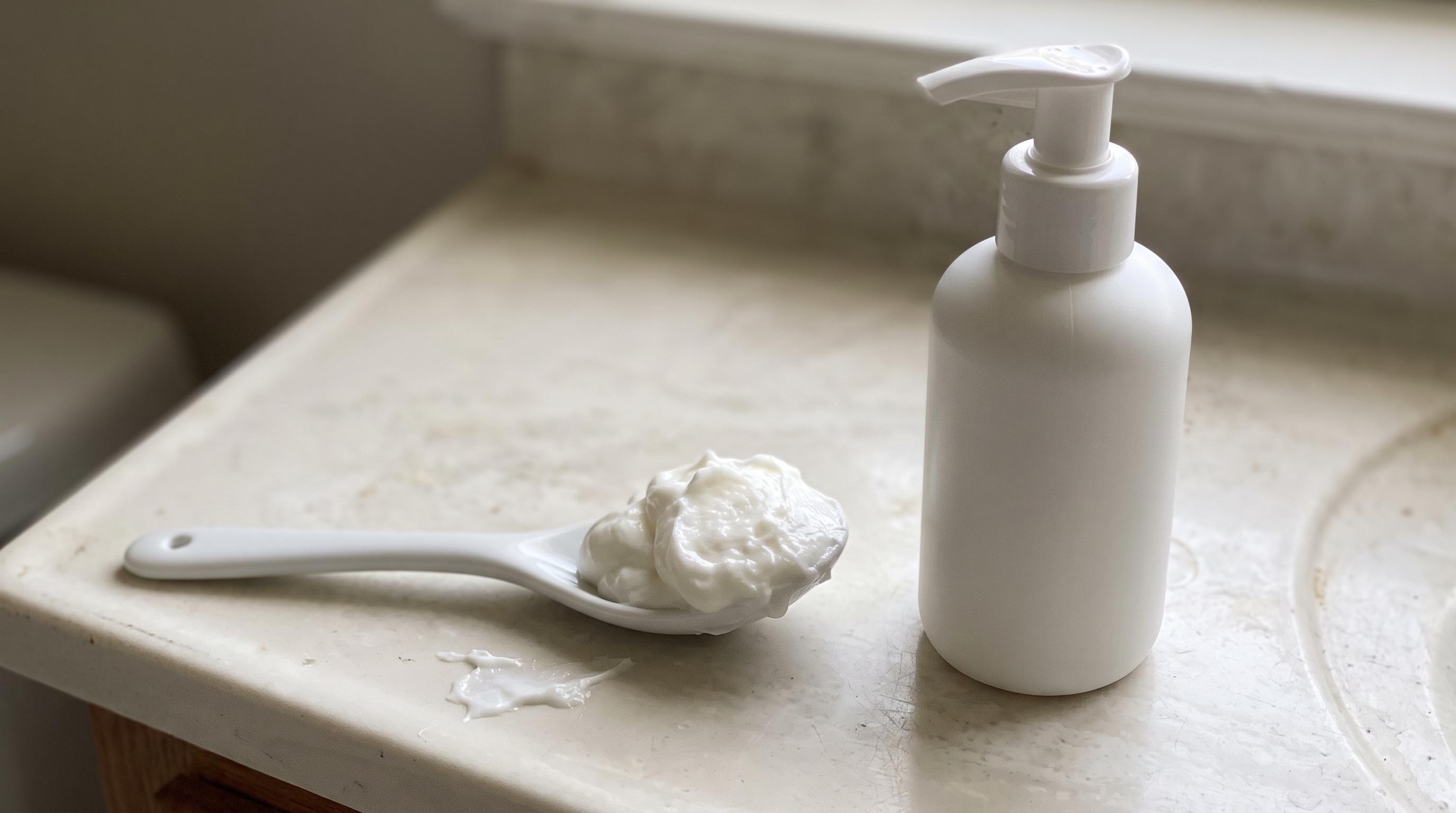
Every SPF figure on every sunscreen is generated with the product applied at 2 milligrams per square centimetre of skin. Across an adult body that works out to roughly 30 to 35 millilitres per application, near enough a shot glass, and it is far more than it sounds when you are spreading it.
Measurements of what people actually apply land between 0.39 and 1.0 milligrams per square centimetre, somewhere between a fifth and a half of the tested dose, which considerably reduces the protection achieved [1].
The relationship between the two is not forgiving. Protection does not fall in proportion to the shortfall, so applying half of what was tested does not leave you with half your SPF. It leaves you well below that, which is how an SPF 50 becomes something closer to a low teens number on a real beach.
There is one honest conclusion here. A bottle you feel able to empty is worth more than a superior formula you ration, and that single fact should drive the purchase.
Buying for volume rather than for prestige
This is the part that inverts the usual advice. On the face, spending more on a sunscreen is often justified, because the amount involved is a quarter of a teaspoon and the cosmetic finish decides whether it gets used at all.
If your sunscreen costs enough that you find yourself spreading it thin, the price has quietly converted itself into UV exposure.
On the body, the cosmetic finish matters less and the arithmetic matters more. A family applying properly on a summer weekend can move through a bottle in two days. If your sunscreen costs enough that you find yourself spreading it thin, the price has quietly converted itself into UV exposure.
Buy the largest bottle of a broad-spectrum SPF 30 or higher that you find pleasant enough to reapply, and buy two. Choose between mineral and chemical filters on how your skin tolerates each rather than on hierarchy: our comparison of mineral and chemical sunscreens covers where that choice genuinely matters.
Then check the one specification that does change outcomes on a body: water resistance, which is tested at either 40 or 80 minutes of immersion. Anything involving swimming or sustained sweating needs the 80-minute rating, and needs reapplying at the end of that window regardless of what the bottle promises.
Body skin is not a smaller face
There is a tendency to treat body skin as facial skin with lower stakes. Histologically it is a different problem. When facial and arm skin were compared under the microscope, the photoaging process differed in measurable ways between the two sites rather than simply appearing milder on the arm [4].
The visible consequence is familiar. Mottled pigmentation, thinning and crepiness show up on the backs of the hands, the outer forearms and the V of the chest years before anyone considers them a skincare concern, largely because those sites have received decades of sun with a fraction of the protection the face gets.
Two habits close most of that gap. Sunscreen goes on the hands after the last hand wash of the morning, not before. And the chest gets treated as an extension of the face every single day, not only on days that involve sunshine as a plan. Our pages on sun damage on the chest and age spots on the hands cover what accumulates at those two sites and how far it can be walked back.
What daily use actually prevents
The evidence for all of this is not observational hand-waving. It comes from a randomised trial in Nambour, Australia, that assigned adults either to daily sunscreen use or to using it at their own discretion, and then followed them for four and a half years.
The same cohort, assessed for skin aging rather than cancer, showed 24% less photoaging by objective microtopography measurement in the daily group.
The daily group had substantially lower rates of squamous cell carcinoma, with a rate ratio of 0.61 against discretionary use [2]. The same cohort, assessed for skin aging rather than cancer, showed 24% less photoaging by objective microtopography measurement in the daily group [3].
Four and a half years is a short window in the life of a skin. That is what routine, unremarkable, daily application bought.
The reapplication window
Reapplication is where most body protection collapses, and the conventional two-hour rule is probably the wrong instruction.
Modelling of cumulative exposure found that reapplying around twenty minutes after the initial application, rather than waiting two hours, reduced total UV dose received to between 60 and 85% of the two-hour scenario [5]. The early top-up works because it corrects for the thin first layer rather than because the sunscreen has worn off.
In practice: apply before you go out, apply again once you have been out for twenty minutes, then every two hours, and immediately after towelling dry. The second application is the one nobody does and the one that changes the numbers most.
Prevention has a ceiling, and it is behind you
Everything above concerns the damage you have not yet accumulated. It does nothing for the damage already sitting on your forearms, which is usually what prompted the search in the first place.
Repair is a different job with different evidence. In a double-blind, vehicle-controlled trial, topical tretinoin applied to photoaged skin produced significant clinical improvement against the vehicle-treated control [6]. Retinoids do not merely slow further decline. They rebuild.
The persistent obstacle is tolerance rather than efficacy. Conventional retinol crosses the skin barrier by chemically disrupting it, which is why the burning, redness and peeling arrive alongside the results, and why most attempts stop within a few weeks.
Nanoretinol solves the delivery instead of raising the dose. Its 0.2% retinol travels inside biomimetic lipid nanoparticles that the skin recognises as self and admits intact, in a water-based, 99% natural formulation suitable for all skin types including sensitive. Compared with conventional retinol it achieved 232% greater collagen recovery and 73% greater elastin recovery with drastically reduced cytotoxicity, and over 56 days delivered a 61% increase in firmness and a 56% increase in elasticity.
The two halves work together rather than in competition. Retinoids increase photosensitivity, which makes the daytime filter more important, not less. If you want to understand what is already there before you start, sun damaged skin sets out what each type of change responds to.
Buying for the season, not for the bottle
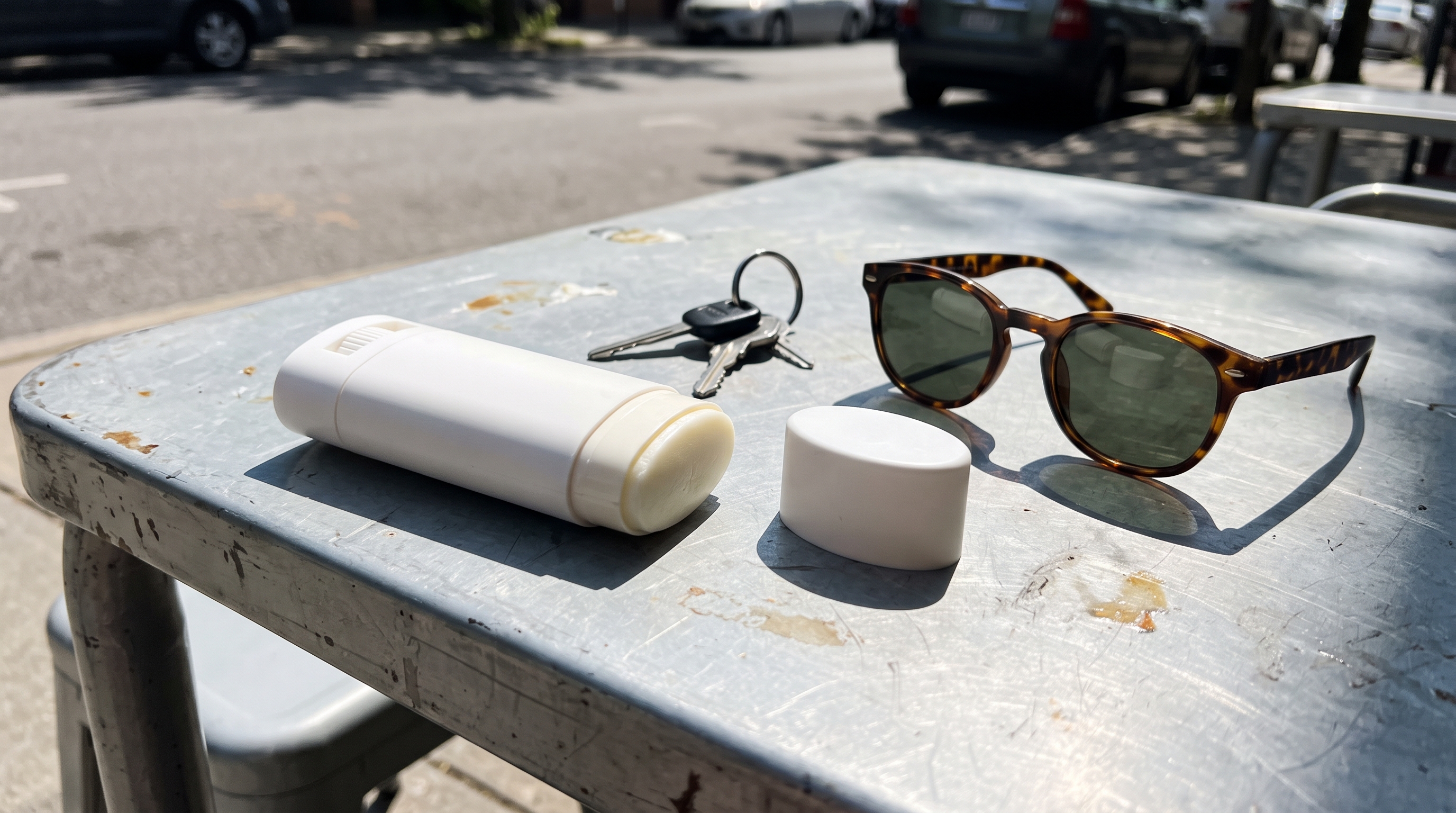
Pick a broad-spectrum SPF 30 or higher with an 80-minute water resistance rating, in the biggest size you can find, at a price that does not make you cautious with it. Put one in the car and one by the door.
Then measure once, just to calibrate. Squeeze a shot glass of it into your palm and see how far it really goes. Most people only need to do that a single time before their idea of enough changes permanently.
References
- Petersen B, Wulf HC. “Application of Sunscreen: Theory and Reality.” Photodermatology, Photoimmunology & Photomedicine. 2014;30(2-3):96-101. PMID: 24313722
- Green A, Williams G, Neale R, Hart V, Leslie D, Parsons P, Marks GC, Gaffney P, Battistutta D, Frost C, Lang C, Russell A. “Daily Sunscreen Application and Betacarotene Supplementation in Prevention of Basal-Cell and Squamous-Cell Carcinomas of the Skin: A Randomised Controlled Trial.” The Lancet. 1999;354(9180):723-729. PMID: 10475183
- Hughes MC, Williams GM, Baker P, Green AC. “Sunscreen and Prevention of Skin Aging: A Randomized Trial.” Annals of Internal Medicine. 2013;158(11):781-790. PMID: 23732711
- Bhawan J, Oh CH, Lew R, Nehal KS, Labadie RR, Tsay A, Gilchrest BA. “Histopathologic Differences in the Photoaging Process in Facial Versus Arm Skin.” The American Journal of Dermatopathology. 1992;14(3):224-230. PMID: 1510219
- Diffey BL. “When Should Sunscreen Be Reapplied?” Journal of the American Academy of Dermatology. 2001;45(6):882-885. PMID: 11712033
- Weiss JS, Ellis CN, Headington JT, Tincoff T, Hamilton TA, Voorhees JJ. “Topical Tretinoin Improves Photoaged Skin: A Double-Blind Vehicle-Controlled Study.” JAMA. 1988;259(4):527-532. PMID: 3336176