Best Cream for Forehead Lines: What Separates Blur From Actual Repair
Horizontal forehead lines are tethered to muscle, which changes what a topical cream can and cannot do about them
Every wrinkle cream on the shelf will show you a before-and-after of a forehead. Very few of them tell you which of two completely different mechanisms produced it — and that is the only thing worth knowing before you spend money.
One mechanism swells the skin so the line looks shallower. It works in hours and reverses when you stop. The other rebuilds the dermal tissue the line is carved into. It takes months and it persists. Both are real. They are not the same purchase.
Why forehead lines behave differently
Horizontal forehead lines are not simply wrinkles that happen to be on your forehead. They have a distinct anatomy.
A cadaver study using nano-CT imaging and histology examined the structures under forehead creases and found that at the crease itself, the dermis is tethered directly to the frontalis muscle by a dense three-dimensional network of fibrous septa — a network that is notably sparse in the skin immediately either side of the line [1]. The crease is not a fold that formed by accident. It is a place where the skin is physically anchored to the muscle that moves it.
That anatomy explains the frustration. Every time the frontalis contracts, the tethered dermis is pulled down at exactly the same coordinate. Over decades, with the dermal collagen underneath progressively thinning, the fold stops springing back.
Your forehead line is not sitting on the muscle — it is stitched to it, which is why it stays visible after your face relaxes.
It also sets an honest ceiling. No topical cream relaxes the frontalis. What a cream can do is thicken and reorganise the dermis the fold is pressed into, so that the same muscular pull produces a shallower crease. For the movement half of the problem, our overview of forehead wrinkles covers the non-topical options.
The two things a cream can actually do
Mechanism one: hydration-driven plumping. In a placebo-controlled randomised trial of 40 women, a topical multi-molecular-weight hyaluronic acid treatment reduced wrinkle depth by 8.4% at day 7, 14.5% at day 14 and 21.8% at day 30, with wrinkle volume down 26.3% — and measurable effects as early as three hours after a single application [2].
Three hours. That is not collagen synthesis; nothing biological rebuilds that fast. It is water drawn into the upper dermis, swelling tissue against the crease. It is genuinely useful, and it is genuinely temporary.
Mechanism two: dermal remodelling. In a 16-week double-blind vehicle-controlled trial, 14 of 15 patients treated with topical tretinoin improved in photoaging grading, against zero of the vehicle-treated faces, with confirmatory histological change in the treated skin [3]. Histological change means the tissue itself was different under a microscope — not the water content of it.
A cream that works in three hours and a cream that works in twelve weeks are doing completely different things to your skin.
Most forehead creams sold as “instant” are mechanism one with mechanism two’s marketing. Read the timeline in the claim: anything promising visible results in days is plumping.
What has actual evidence for remodelling
Three ingredient classes have controlled human trial data for reducing wrinkle depth over a realistic timeframe.
Retinoids are the strongest. Beyond the tretinoin work above, the effect is measurable on the skin surface itself, not just in expert grading — which matters because forehead lines are graded visually far too often.
Peptides have a smaller but real effect. In a 12-week double-blind, placebo-controlled, split-face trial in 93 women aged 35 to 55, a moisturiser containing just 3 ppm of palmitoyl pentapeptide (pal-KTTKS, sold as Matrixyl) significantly reduced wrinkles and fine lines compared with the identical moisturiser without it, on both image analysis and expert grading [4].
Niacinamide at cosmetic strength earns its place. Fifty women with facial photoaging used 5% niacinamide on one half of the face and vehicle on the other, twice daily for 12 weeks, double-blind. The niacinamide side showed significant reductions in fine lines and wrinkles plus improved cutometer-measured elasticity [5].
Note the concentrations: 3 ppm for the peptide, 5% for niacinamide. The active percentage on a label tells you almost nothing on its own.
Judge the cream on delivery, not percentage
This is where most forehead-line creams are chosen badly. Shoppers compare the retinol percentage on the front of two jars and buy the higher one.
The dermis sits under the epidermis, and the epithelial barrier exists specifically to stop things crossing it. An active that does not reach the dermal fibroblasts cannot remodel anything, regardless of how much of it is in the jar. A well-formulated 0.2% can outperform a poorly formulated 1% — and the higher percentage brings the irritation that makes people quit in week three.
So the ranking criteria that actually predict results:
- A remodelling active with trial data, not just humectants.
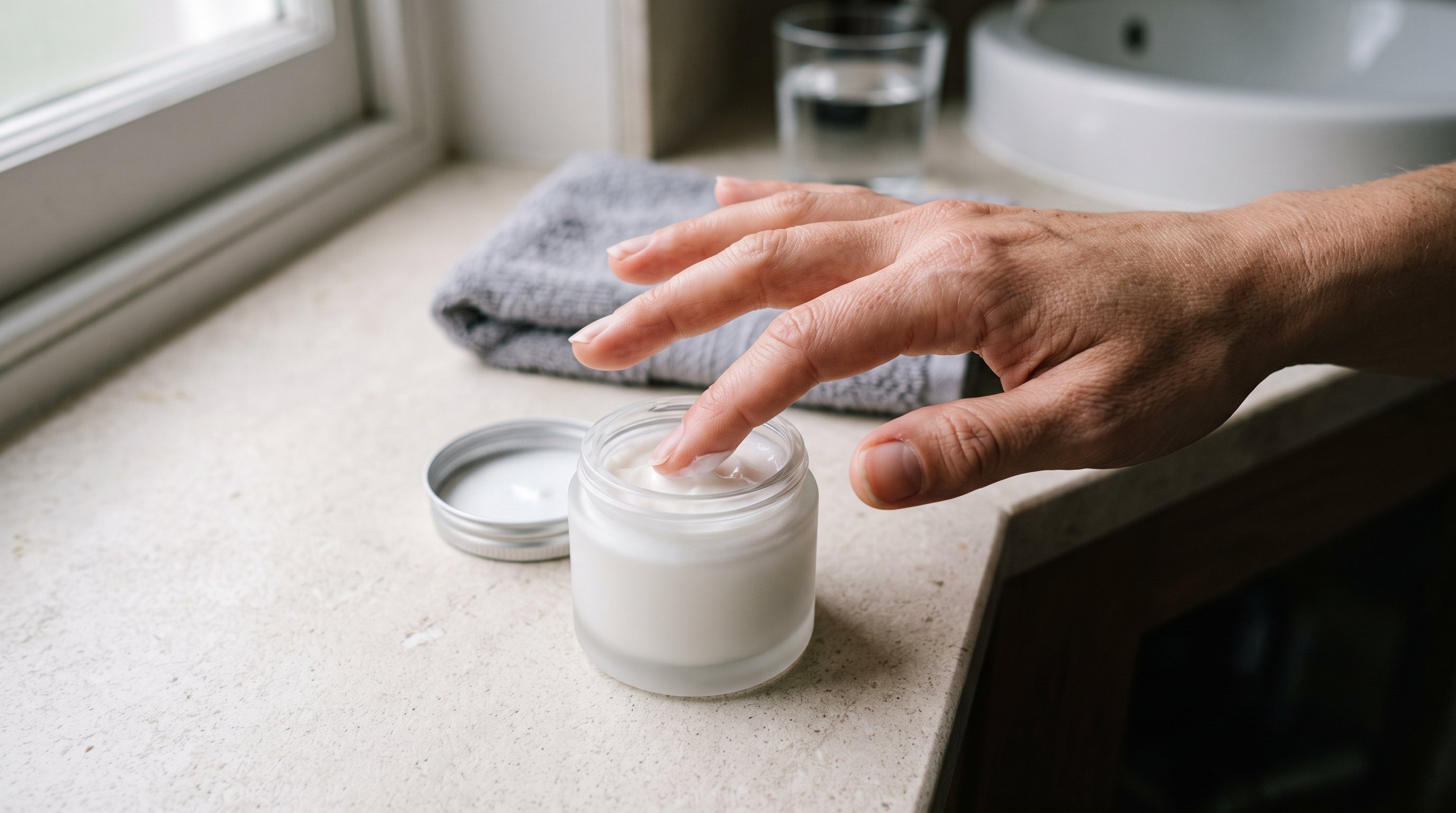
- Opaque, airless packaging. Retinoids and vitamin C degrade in light and air. A clear jar with a screw lid is a formulation decision that tells you what the brand prioritises.
- A delivery claim you can interrogate — encapsulation, liposomal, nanoparticle — rather than a percentage headline.
- A tolerability profile you will still be using in month three. The cream you abandon has an efficacy of zero.
If your lines are deeply set rather than fine, the expectations are different again; we cover that in deep forehead wrinkles. And if the lines between your brows concern you more than the horizontal ones, frown lines is the relevant guide — they have a different muscle and a different answer.
The half of the job a cream cannot do alone
Protecting what you rebuild is not optional. In a randomised trial of 903 adults followed for four and a half years, skin ageing graded by surface microtopography was 24% lower in the daily broad-spectrum sunscreen group than in the discretionary-use group, with no detectable increase in photoaging in the daily group at all [6].
The forehead is one of the most UV-exposed areas on the body and one of the most commonly missed at the hairline. Daily sunscreen is doing more for your forehead lines than most of the creams competing for the same shelf space.
Where Nanoretinol fits
If delivery is the real bottleneck, that is the problem to solve rather than work around.
Conventional retinol formulations face a genuine dilemma: the epithelial barrier blocks passage, and the usual workaround is chemicals and petroleum derivatives that disrupt the barrier through lipid mobility — getting the active in by damaging the wall, which is where the burning, redness and peeling come from.
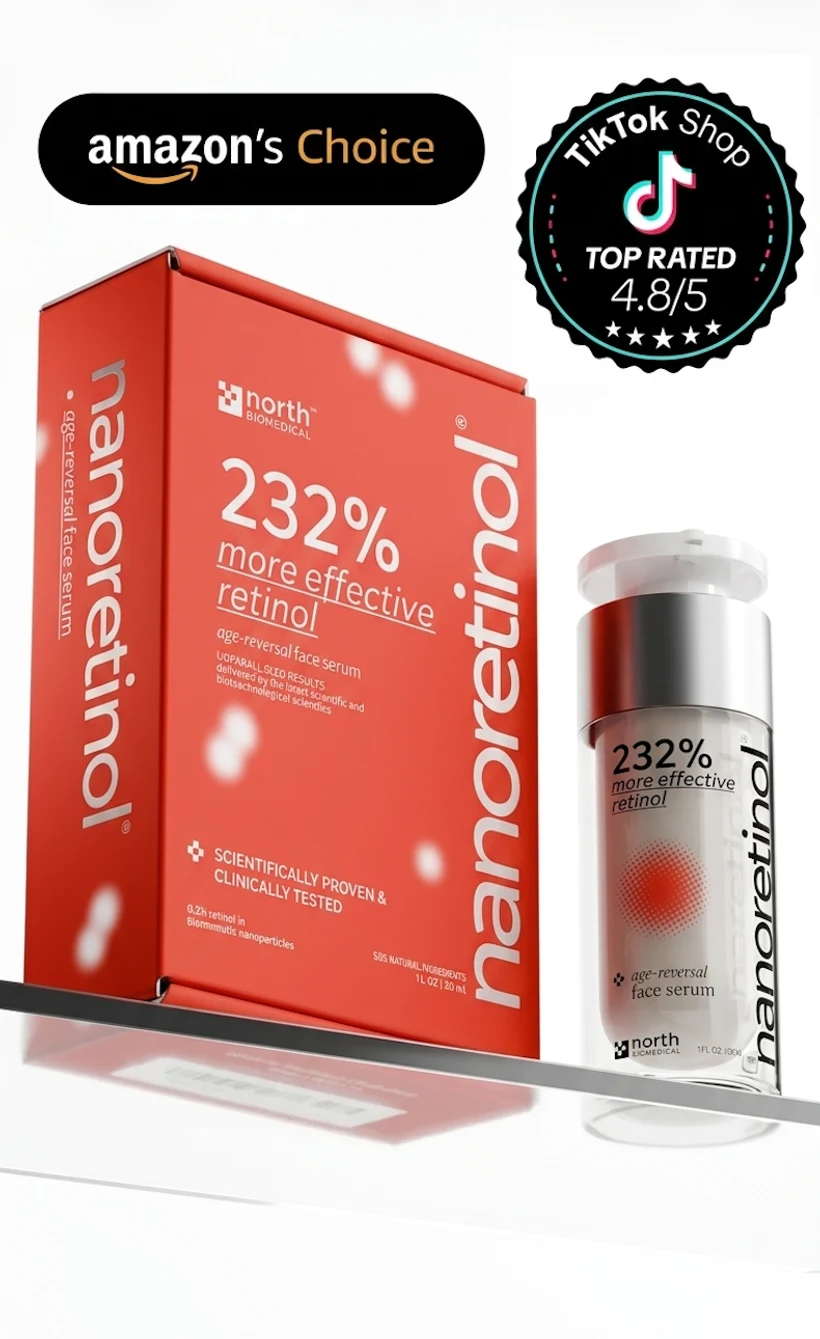
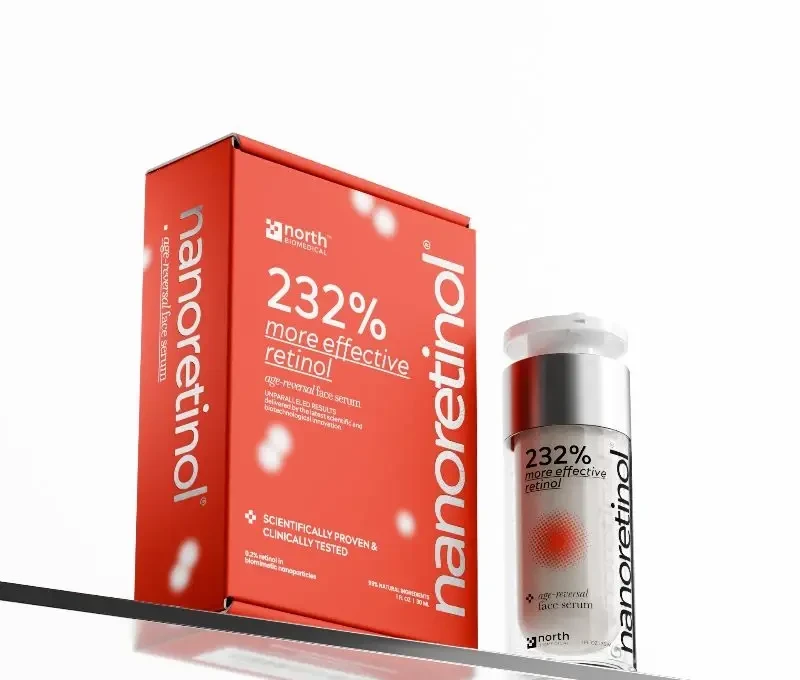
Nanoretinol takes the other route. Its retinol is encapsulated in biomimetic lipid nanoparticles that are externally identical to skin cells, so the body recognises them as “self” and allows them through the epithelial barrier intact. No barrier damage is needed. In North Biomedical’s clinical study it was 232% more effective than conventional retinol in collagen recovery and 73% more effective in elastin recovery, with a 61% increase in skin firmness and a 56% increase in elasticity over 56 days — from 0.2% retinol in a water-based, 99% natural formulation gentle enough for sensitive skin and safe around the eye contour.
For a tethered crease, collagen recovery in the dermis underneath is precisely the variable that moves. More on that mechanism in how to boost collagen production.
Setting your expectations before you buy
Decide which mechanism you are buying. If you need a smoother forehead for Saturday, buy hydration and accept that it resets. If you want the line to be shallower next spring, buy a remodelling active with credible delivery, apply it nightly, wear sunscreen every morning, and judge it at twelve weeks rather than twelve days.
The creams that disappoint are usually not the wrong product. They are the right product measured on the wrong timeline.
References
- Takaya K, Sakamoto Y, Noji S, Imanishi N, Kishi K. “Three-dimensional adipofascial and dermal structures involved in forehead crease formation.” Clinical Anatomy. 2024;37(3):321-328. doi:10.1002/ca.24118
- Nobile V, Buonocore D, Michelotti A, Marzatico F. “Anti-aging and filling efficacy of six types hyaluronic acid based dermo-cosmetic treatment: double blind, randomized clinical trial of efficacy and safety.” Journal of Cosmetic Dermatology. 2014;13(4):277-287. doi:10.1111/jocd.12120
- Weiss JS, Ellis CN, Headington JT, Tincoff T, Hamilton TA, Voorhees JJ. “Topical tretinoin improves photoaged skin. A double-blind vehicle-controlled study.” JAMA. 1988;259(4):527-532. doi:10.1001/jama.1988.03720040019020
- Robinson LR, Fitzgerald NC, Doughty DG, Dawes NC, Berge CA, Bissett DL. “Topical palmitoyl pentapeptide provides improvement in photoaged human facial skin.” International Journal of Cosmetic Science. 2005;27(3):155-160. doi:10.1111/j.1467-2494.2005.00261.x
- Bissett DL, Oblong JE, Berge CA. “Niacinamide: A B Vitamin that Improves Aging Facial Skin Appearance.” Dermatologic Surgery. 2005;31(7 Pt 2):860-865. doi:10.1111/j.1524-4725.2005.31732
- Hughes MC, Williams GM, Baker P, Green AC. “Sunscreen and prevention of skin aging: a randomized trial.” Annals of Internal Medicine. 2013;158(11):781-790. doi:10.7326/0003-4819-158-11-201306040-00002