
Best Niacinamide Serum: How to Pick One Using the Actual Clinical Evidence
The trials that made this ingredient famous used a narrower concentration range than the shelf suggests, and that changes what you should buy
Niacinamide occupies an unusual position in skincare. It is one of the few ingredients with genuine, repeated, vehicle-controlled clinical evidence behind it, and it is also one of the most oversold. Walk down any aisle and you will find it at 2 percent, at 5 percent, at 10 percent, and occasionally at 20 percent, with the strong implication that the bigger number is the better product.
The clinical literature does not support that implication. Knowing where the evidence actually sits makes this a much easier purchase.
Where the Evidence Actually Sits
The trials that built niacinamide’s reputation clustered tightly. The foundational aging study applied 5 percent niacinamide against its own vehicle on opposite sides of the face, twice daily, for twelve weeks, in fifty women [1]. The companion analysis of that same trial reported significant improvements against vehicle in fine lines and wrinkles, hyperpigmented spots, skin texture, red blotchiness, and yellowing [4].
The pigmentation work used 5 percent over four weeks in eighteen subjects, with a separate facial tanning study running 2 percent alongside sunscreen in 120 subjects [2]. The largest combination trial paired 4 percent niacinamide with 2 percent N-acetyl glucosamine in 101 treated and 101 vehicle-control women aged 40 to 60, over ten weeks [6].
That is the whole range. Two to five percent, repeatedly, across independent endpoints. Nothing in this literature demonstrates that doubling to 10 percent doubles anything, and higher concentrations are widely associated anecdotally with flushing and stinging. A serum in the 4 to 5 percent band is buying you the studied dose. Anything above it is buying you a marketing number.
The Melanosome Trick
Niacinamide’s effect on dark spots works through a mechanism that is genuinely different from most brightening ingredients, and understanding it tells you what to expect.
Hydroquinone, kojic acid, and arbutin interfere with tyrosinase, the enzyme that manufactures melanin. Niacinamide leaves that machinery alone entirely. In coculture experiments it produced 35 to 68 percent inhibition of melanosome transfer, the handoff of finished pigment packets from melanocytes to the surrounding keratinocytes, with no measurable effect on tyrosinase activity or on melanogenesis itself [2].
A serum in the 4 to 5 percent band is buying you the studied dose.
Two practical consequences follow. First, niacinamide stacks cleanly with tyrosinase inhibitors because they act at different points in the same pathway, which is why it appears so often alongside other actives in hyperpigmentation treatment protocols. Second, it works gradually, since existing pigment still has to clear through normal turnover. The 5 percent pigmentation trial needed four weeks to show significant lightening [2]; the combination trial ran ten [6].
The Barrier Job Most Buyers Overlook
The most underrated niacinamide finding has nothing to do with brightness. In cultured keratinocytes, nicotinamide at 1 to 30 micromoles per litre over six days increased ceramide biosynthesis 4.1-fold to 5.5-fold in a dose-dependent manner, alongside a 2.3-fold rise in free fatty acid synthesis and a 1.5-fold rise in cholesterol synthesis [3]. Applied topically, it raised stratum corneum ceramide and free fatty acid levels and reduced transepidermal water loss in dry skin [3].
Those three lipid classes are the exact components of a functioning barrier. A separate four-week study in fifty rosacea patients using a niacinamide-containing moisturizer found improved barrier function and hydration, a marked decrease in erythema severity, and reduced dryness, scaling, and flaking [5].
This is why niacinamide belongs in a routine that includes strong actives. It is not competing with your retinoid for the same job. It is making the skin more able to tolerate one. Our fuller breakdown of niacinamide benefits traces each of these mechanisms in more detail.
Reading a Niacinamide Label
A few things separate a well-built serum from a filled bottle.
Concentration stated, not implied. If the percentage does not appear anywhere, assume it is low. Reputable formulas print it.
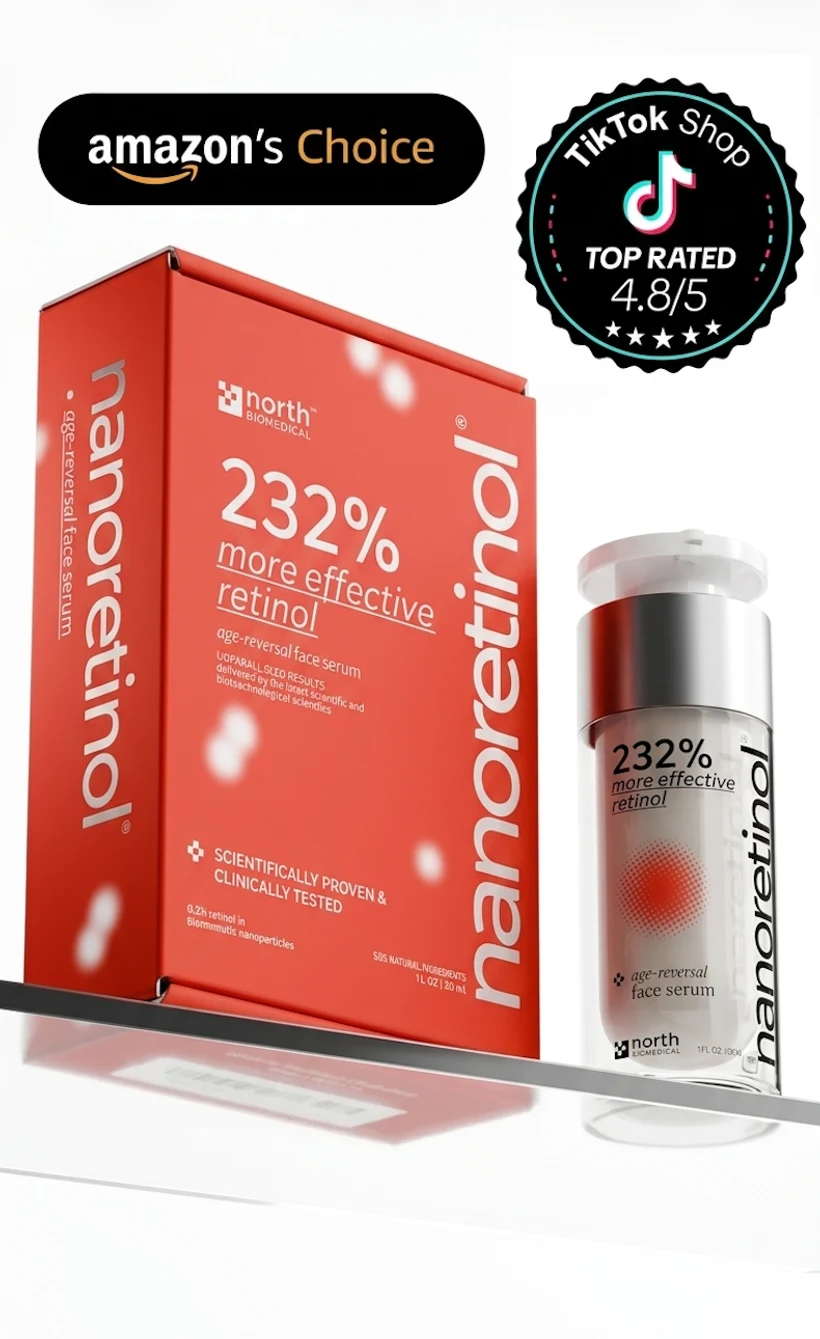
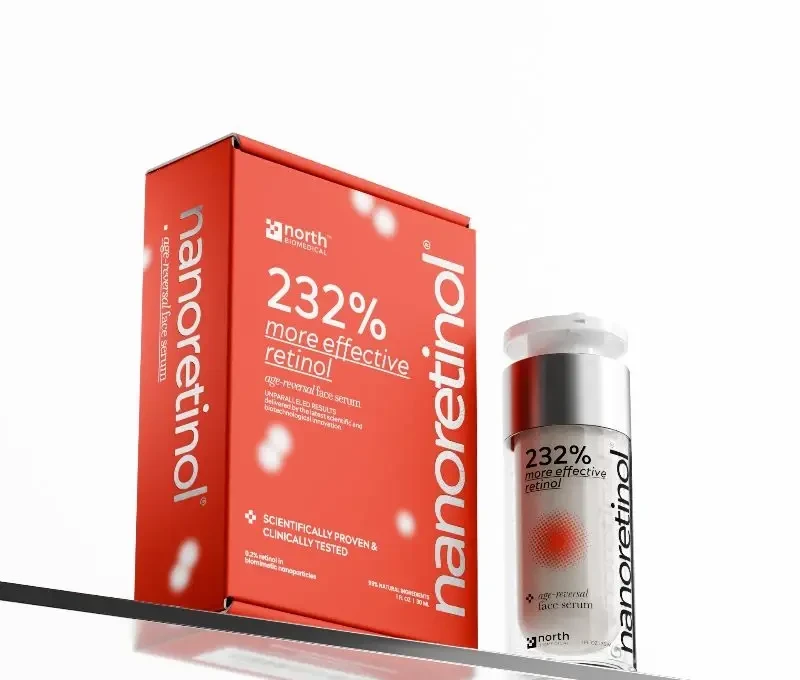
Nanoretinol was developed to avoid that tradeoff, encapsulating 0.2% retinol inside biomimetic lipid nanoparticles the body reads as self and permits through an intact barrier.
Simple, water-based vehicles. Niacinamide is water-soluble and does not need an elaborate delivery system. Long ingredient lists here usually signal a product doing several things adequately rather than one thing well.
Sensible pairings. Zinc for oil control, or an amino acid blend, or the N-acetyl glucosamine combination that outperformed vehicle in the 40-to-60 age group [6]. These have rationale behind them.
Skepticism about mega-stacks. A serum promising niacinamide plus vitamin C plus retinol plus acids in one bottle is making formulation compromises you cannot see. If you want vitamin C, our guide to the best vitamin C serums treats it as its own decision, which is how it should be treated.
The old warning that niacinamide and vitamin C cannot be used together has been substantially overstated; it derived from high-heat conditions that do not resemble a bathroom shelf. Layering them, or separating them morning and evening, are both fine.
What Niacinamide Will Not Do
Here is the honest limit. Across twelve weeks at 5 percent, niacinamide improved the appearance of fine lines and skin texture [1][4]. Those are real results, and they are surface results. Niacinamide does not meaningfully rebuild the collagen scaffold underneath, and no trial claims it does.
Discoloration and structure are two different problems. Niacinamide is excellent at the first one and modest at the second, which is why it works best as part of a routine rather than as the whole routine. That division of labour is worth understanding before you shop, and it is the core of the niacinamide versus retinol comparison.
For the structural half, retinoids remain the most validated option, and their historical weakness has been delivery rather than potency. Conventional retinol has to cross the epithelial barrier, and many formulations manage it only by disrupting that barrier with petroleum derivatives, which produces the familiar burning and peeling. Nanoretinol was developed to avoid that tradeoff, encapsulating 0.2% retinol inside biomimetic lipid nanoparticles the body reads as self and permits through an intact barrier. In North Biomedical’s clinical study it was 232% more effective than conventional retinol in collagen recovery and 73% more effective in elastin recovery, with a 56-day increase of 61% in skin firmness and 56% in elasticity, and drastically reduced cytotoxicity compared with conventional retinol.
Niacinamide in the morning to even tone and support the barrier, a well-delivered retinoid at night to rebuild structure, is a routine where each ingredient does what the evidence says it can.
Making the Call
Buy in the 4 to 5 percent range. Check that the percentage is printed. Prefer a short, water-based formula over a kitchen-sink one. Give it eight to twelve weeks before judging pigment results, because that is how long the trials ran.
And set expectations at the right target. Niacinamide is one of the safest, best-evidenced, least expensive ingredients you can put on aging skin, and it earns its place in almost every routine. It simply earns that place by fixing tone and barrier, not by fixing structure.
References
- Bissett DL, Oblong JE, Berge CA. “Niacinamide: A B Vitamin that Improves Aging Facial Skin Appearance.” Dermatologic Surgery. 2005;31(7 Pt 2):860-865. doi:10.1111/j.1524-4725.2005.31732
- Hakozaki T, Minwalla L, Zhuang J, Chhoa M, Matsubara A, Miyamoto K, Greatens A, Hillebrand GG, Bissett DL, Boissy RE. “The Effect of Niacinamide on Reducing Cutaneous Pigmentation and Suppression of Melanosome Transfer.” British Journal of Dermatology. 2002;147(1):20-31. doi:10.1046/j.1365-2133.2002.04834.x
- Tanno O, Ota Y, Kitamura N, Katsube T, Inoue S. “Nicotinamide Increases Biosynthesis of Ceramides as Well as Other Stratum Corneum Lipids to Improve the Epidermal Permeability Barrier.” British Journal of Dermatology. 2000;143(3):524-531. doi:10.1046/j.1365-2133.2000.03705.x
- Bissett DL, Miyamoto K, Sun P, Li J, Berge CA. “Topical Niacinamide Reduces Yellowing, Wrinkling, Red Blotchiness, and Hyperpigmented Spots in Aging Facial Skin.” International Journal of Cosmetic Science. 2004;26(5):231-238. doi:10.1111/j.1467-2494.2004.00228.x
- Draelos ZD, Ertel K, Berge C. “Niacinamide-Containing Facial Moisturizer Improves Skin Barrier and Benefits Subjects With Rosacea.” Cutis. 2005;76(2):135-141. PMID 16209160
- Kimball AB, Kaczvinsky JR, Li J, Robinson LR, Matts PJ, Berge CA, Miyamoto K, Bissett DL. “Reduction in the Appearance of Facial Hyperpigmentation after Use of Moisturizers with a Combination of Topical Niacinamide and N-Acetyl Glucosamine: Results of a Randomized, Double-Blind, Vehicle-Controlled Trial.” British Journal of Dermatology. 2010;162(2):435-441. doi:10.1111/j.1365-2133.2009.09477.x