
Best Eye Cream for Dark Circles and Under-Eye Bags: What Actually Works
Why most eye creams disappoint — and the ingredients with real evidence behind them
Few things age a face — or announce exhaustion — faster than dark circles and puffy under-eye bags. They’re also the skincare concern people throw the most money at with the least to show for it. Drawer full of eye creams, and the shadows are still there at 7 a.m.
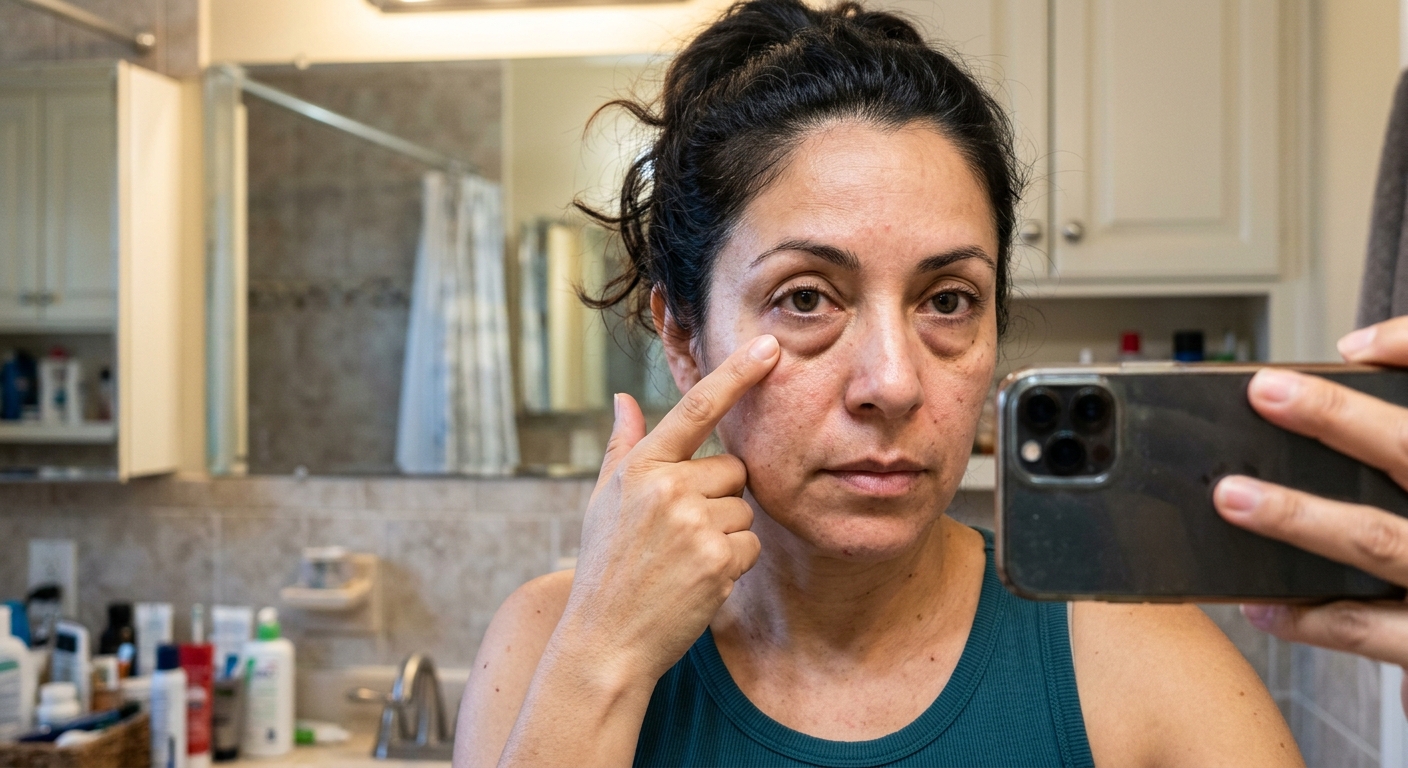
The reason isn’t that eye creams don’t work. It’s that most people are buying the wrong one for their dark circles — because dark circles aren’t one problem. They’re at least three, often layered together, and the ingredient that fixes one does nothing for another. Match the cream to the cause and the results can be genuinely surprising. Buy by the prettiest packaging and you’ll keep restocking the drawer.
First, figure out what’s actually causing yours
In a clinical study that examined dark circles with a Wood’s lamp and ultrasound, researchers sorted them into four types: pigmented (excess melanin), vascular (blood pooling in the thin skin), structural (shadows from tear-trough hollowing), and mixed. The striking finding: 78% of cases were the mixed type, combining two or more causes, while only 5% were purely pigment and 14% purely vascular [1]. That same classification is the starting point for choosing the best eye cream for men.
That single statistic explains why no single “miracle” ingredient ever lives up to the hype — and why the best eye creams for mature skin tend to be multi-mechanism formulas. It also explains why under-eye skin shows everything: it’s the thinnest skin on the body, so as it thins further with age and loses collagen, both the bluish underlying blood vessels and any excess pigment become more visible. For the full breakdown of causes, see our guide to dark circles under eyes.
It’s that most people are buying the wrong one for their dark circles — because dark circles aren’t one problem.
Caffeine — for the vascular, puffy type
If your circles are bluish or purplish and your eyes look puffy in the morning, the cause is largely vascular: sluggish circulation and fluid pooling in that thin skin. Caffeine constricts blood vessels and reduces that congestion. In a 12-week trial of women aged 35 to 60, a caffeine-containing eye cream significantly improved infraorbital dark circles, working mainly by reducing microvascular congestion and pigment from blood-breakdown products [2]. It’s also the ingredient most likely to visibly de-puff bags under the eyes. Caffeine is water-soluble and performs best in a light, fast-absorbing base, which makes puffiness one of the clearest cases where format genuinely matters — see eye serum vs eye cream.
Vitamin K and retinol — the vascular-pigment combination
Vitamin K helps the body clear the iron-rich pigment (hemosiderin) left behind when blood leaks from fragile under-eye capillaries — the brownish staining of vascular circles. In an 8-week study, a gel combining 2% vitamin K with retinol and vitamins C and E reduced dark circles in nearly half of patients, with the clearest benefit in the vascular, blood-pooling type [3]. Pairing vitamin K with retinol is smart: one addresses the staining while the other thickens the skin hiding it.
Retinol — for thin, crepey, shadowed under-eyes
Retinol is the structural fix. By stimulating collagen and thickening the dermis, it makes thin under-eye skin more opaque, so less of the underlying darkness shows through — and it smooths fine lines at the same time. In a 12-week study, a nightly retinoid eye cream improved periorbital lines by 33%, under-eye darkness by 41%, and puffiness by 55%, with no related adverse events [4]. That’s a remarkable result for skin this delicate — but the word “delicate” is also the catch, because conventional retinol is precisely what irritates this fragile zone. Our guide to retinol around the eyes covers safe use.
Niacinamide and vitamin C — for true pigment
If your circles are genuinely brown and don’t fade when you stretch the skin, you’re dealing with melanin. Niacinamide blocks pigment transfer into skin cells, and in a 6-week study a niacinamide-based under-eye serum reduced objectively measured hyperpigmentation by about 48% [5]. Vitamin C complements it by interrupting melanin production and brightening overall — the same brightening logic behind a good vitamin C serum.
It’s the closest thing to a multi-mechanism answer for the mixed circles that 78% of people actually have.
Peptides and hyaluronic acid — firming and filling
For the structural, hollow-shadow type, peptides and hyaluronic acid help by firming and hydrating thin skin. In a 12-week study, a peptide eye formulation raised under-eye hydration by about 32%, firmness by 10%, and elasticity by 26%, with graders noting reduced fine lines, puffiness, and darkness [6]. These won’t erase a deep tear trough — that’s tear-trough hollows territory — but they meaningfully improve the surrounding skin quality.
What an eye cream can’t fix — and the habits that help
Honesty matters here, because some under-eye darkness has little to do with skincare. Genetics set your baseline pigment and the depth of your tear troughs. Poor sleep, dehydration, high salt intake, and allergies all worsen puffiness and shadowing by promoting fluid retention and dilating under-eye vessels — and chronic eye-rubbing from allergies can drive both vascular leakage and pigment. No cream overrides a bad night’s sleep or untreated hay fever. Sleeping with your head slightly elevated, managing allergies, cutting late-night sodium, and staying hydrated all measurably reduce morning puffiness. Think of the eye cream as the part of the equation you control topically — most powerful when the lifestyle inputs aren’t working against it.
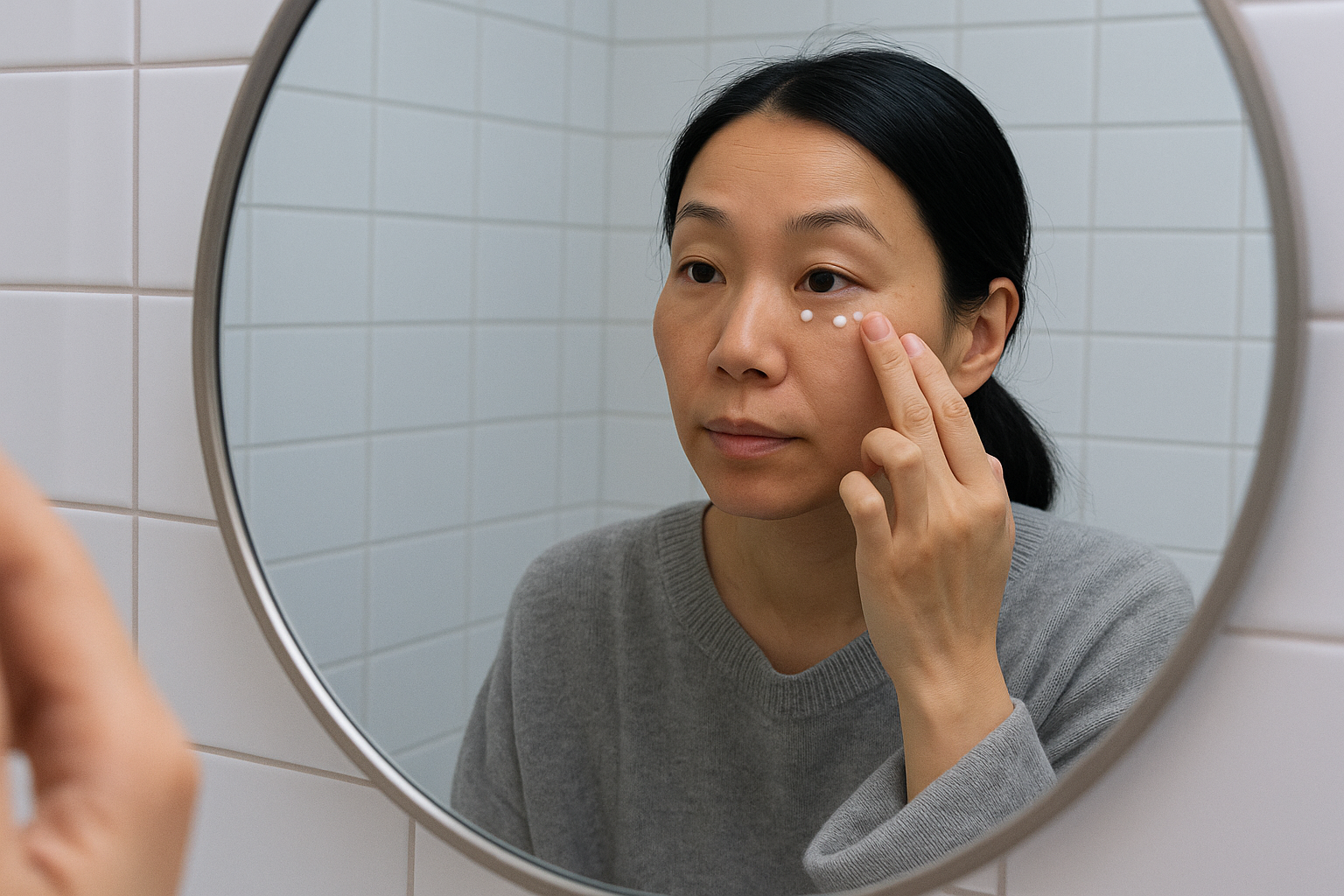
Application technique matters too: the under-eye skin is fragile, so pat product in gently with your ring finger rather than dragging it, and extend a pea-sized amount from the inner corner along the orbital bone. More isn’t better here, and tugging only stresses already-thin skin.
Where Nanoretinol fits the under-eye puzzle
Notice how often retinol appears above: it thickens thin skin, fades pigment, smooths lines, and even pairs with vitamin K for the vascular type. It’s the closest thing to a multi-mechanism answer for the mixed circles that 78% of people actually have. The problem is that the under-eye area is the worst possible place for conventional retinol’s stinging and flaking.
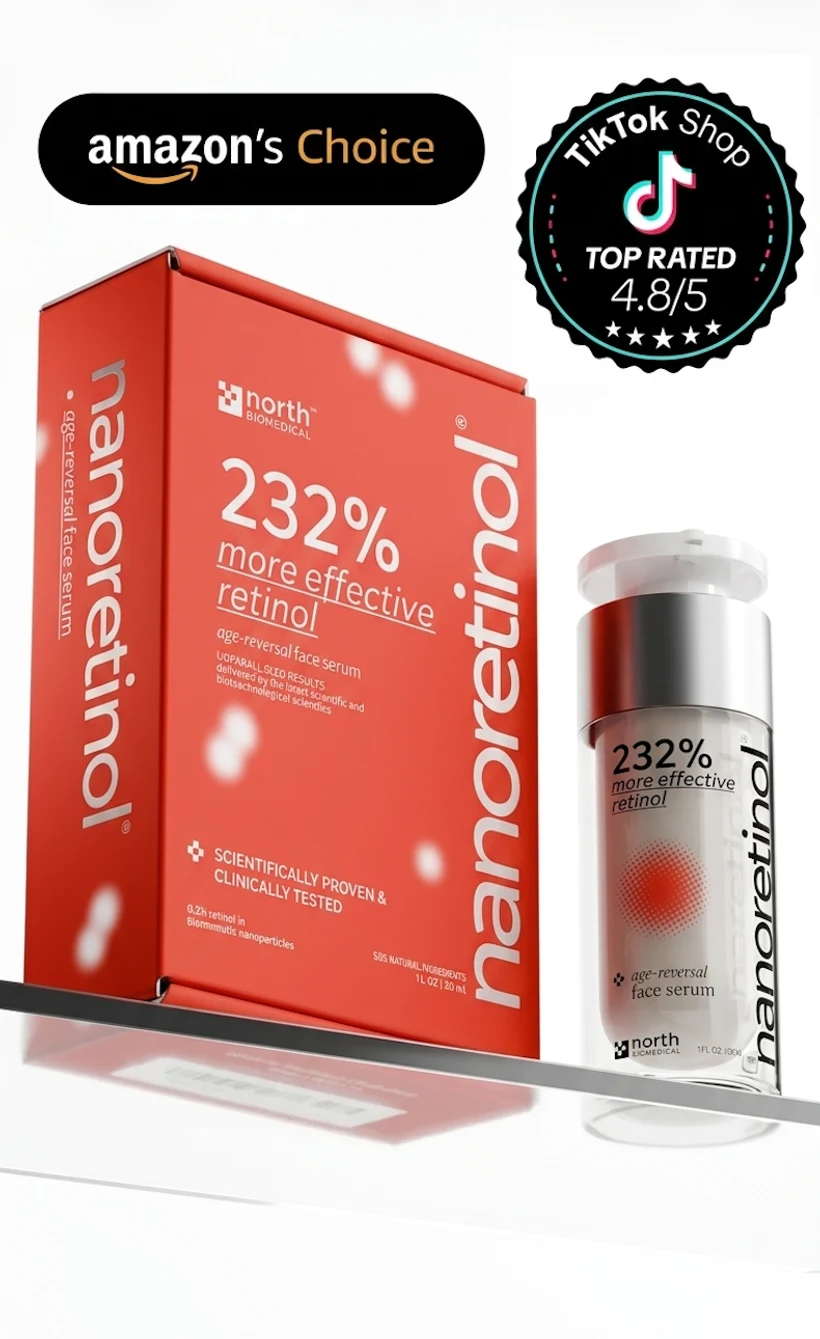
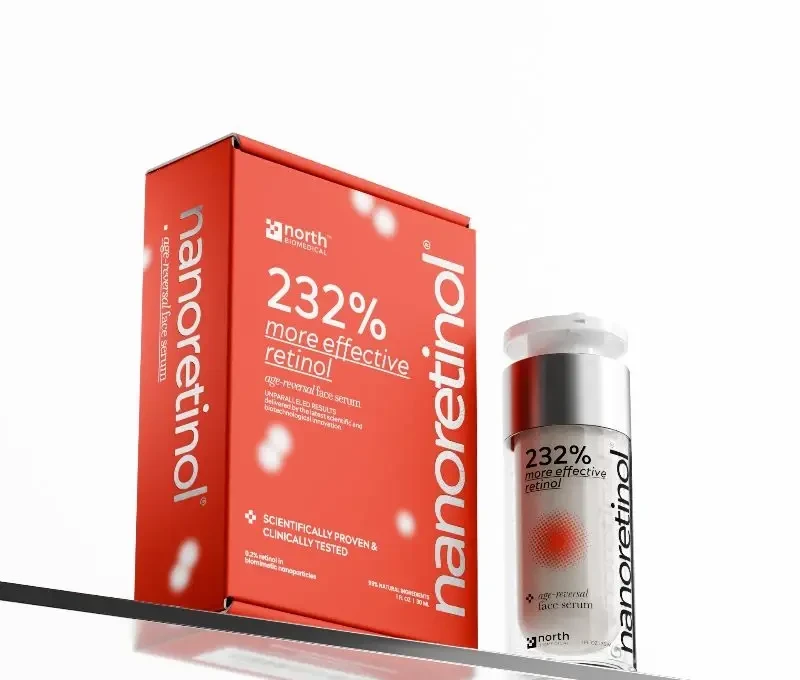
Nanoretinol resolves that conflict by changing how retinol is delivered. It encapsulates a stabilized 0.2% retinol inside biomimetic lipid nanoparticles the skin accepts as “self,” so the retinol penetrates efficiently without the barrier disruption that causes irritation — which is why it’s formulated to be safe for the eye contour. In clinical testing it proved 232% more effective than conventional retinol for collagen recovery, with a 61% increase in firmness and 56% increase in elasticity over 56 days [7]: exactly the thickening-and-firming action that makes thin, shadowed under-eye skin look brighter and more rested.
What to remember
The best eye cream for you starts with honestly identifying your dark-circle type — and since most circles are mixed, a formula that works on several fronts (a gentle retinoid, plus caffeine, vitamin K, niacinamide, and hydrators) beats any single-ingredient hero. Be patient and be consistent: the under-eye area is thin and slow, but it does respond when you finally give it the right tools instead of another jar of hope.
References
- Huang YL, Chang SL, Ma L, Lee MC, Hu S. “Clinical analysis and classification of dark eye circle.” International Journal of Dermatology. 2014;53(2):164-170. PubMed: 23879616
- Rajabi-Estarabadi A, Hartman CL, Iglesia S, Kononov T, Zahr AS. “Effectiveness and tolerance of a multicorrective topical treatment for infraorbital dark circles and puffiness.” Journal of Cosmetic Dermatology. 2024;23(2):486-495. PubMed: 38112168
- Mitsuishi T, Shimoda T, Mitsui Y, Kuriyama Y, Kawana S. “The effects of topical application of phytonadione, retinol and vitamins C and E on infraorbital dark circles and wrinkles of the lower eyelids.” Journal of Cosmetic Dermatology. 2004;3(2):73-75. PubMed: 17147559
- Kaufman J, Callender V, Young C, Jones P, Wortzman M, Nelson D. “Efficacy and Tolerability of a Retinoid Eye Cream for Fine to Moderate Wrinkles of the Periorbital Region.” Journal of Drugs in Dermatology. 2022;21(9):932-937. PubMed: 36074511
- Brady RT, Shah-Desai S. “Clinical Efficacy of a Novel Topical Formulation on Periorbital Dark Circles: An Objective Analysis.” Journal of Cosmetic Dermatology. 2025;24(7):e70326. PubMed: 40626342
- Zonari A, Brace LE, Li F, Harder NHO, Harker C, Jacob C, Kaufman J, Chilukuri S, Oliveira CR, Boroni M, Carvalho JL. “Clinical efficacy of OS-01 peptide formulation in reducing the signs of periorbital skin aging.” International Journal of Cosmetic Science. 2025;47(3):455-465. PubMed: 39788697
- North Biomedical LLC. “Nanoretinol vs. Conventional Retinol: Efficacy in Collagen and Elastin Recovery.” Clinical Study Summary, 2024. northbiomedical.com/nanoretinol