PRP Under Eyes: What Platelet-Rich Plasma Really Does for Dark Circles and Crepey Skin
The science behind the 'vampire' under-eye treatment — and the gentler route to the same collagen.
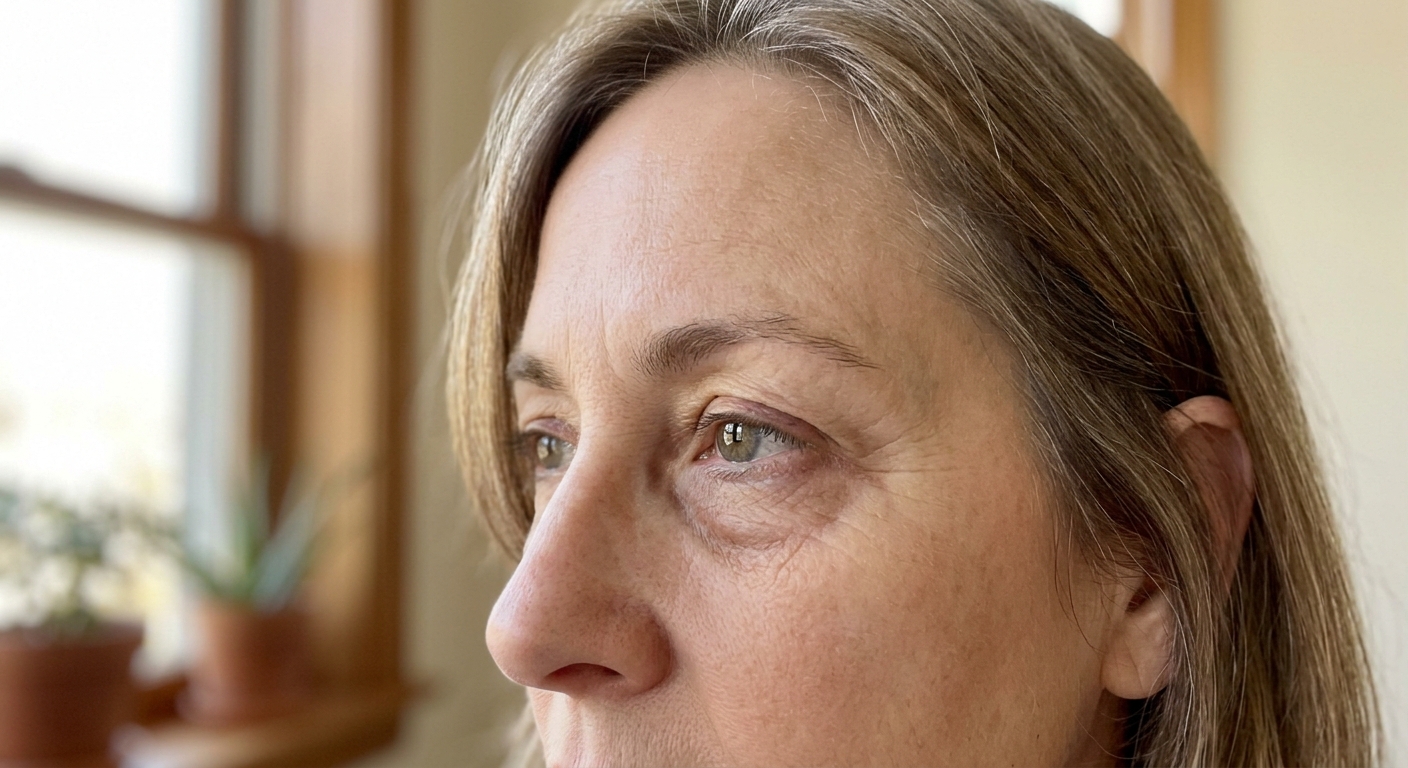
The skin under your eyes is the thinnest on your entire body — roughly half the thickness of the skin on your cheek. That single fact explains almost everything you dislike about the under-eye area. As the years pass and the dermis loses collagen, that already-delicate tissue becomes more translucent, the bluish vascular bed beneath shows through more readily, and fine creases settle into what once looked smooth. It is no surprise, then, that “PRP under eyes” has become one of the most-searched aesthetic treatments of the decade. People want to know whether injecting their own blood-derived platelets can genuinely turn back the clock on dark circles and crepey under-eye skin.
The short answer is: there is real science here, but it is more modest — and more nuanced — than the before-and-after photos suggest. Let’s walk through what platelet-rich plasma actually does, what the clinical trials show, and why the mechanism it relies on is one you can also recruit at home.
What PRP Actually Is
Platelet-rich plasma is made from your own blood. A clinician draws a small vial, spins it in a centrifuge to separate the components, and concentrates the platelets into a golden plasma layer. Platelets are best known for clotting, but they are also tiny reservoirs of growth factors — signaling proteins such as PDGF, TGF-β, and VEGF. When that concentrate is injected into the under-eye dermis, those growth factors are released into the tissue, where they signal fibroblasts (the skin’s collagen-producing cells) to wake up and get to work.
In other words, PRP does not “fill” the hollow the way a hyaluronic acid filler does, and it does not bleach pigment the way a brightening cream might. It is a biostimulator: it nudges your own skin to rebuild itself. The goal is thicker, better-quality dermis that scatters light differently, so the vasculature shows through less and the surface looks smoother.
The goal is thicker, better-quality dermis that scatters light differently, so the vasculature shows through less and the surface looks smoother.
What the Research Really Shows
This is where honesty matters. A 2021 systematic review and meta-analysis of periorbital PRP pooled the available controlled trials and concluded that patients treated with PRP reported greater satisfaction than those given saline or platelet-poor plasma, with improvements in skin texture and a reduction in the appearance of dark circles — but the authors were careful to note that effect sizes were modest and study quality was variable [1]. A frequently cited clinical trial of thirty participants found that roughly 60% reported moderate-to-excellent improvement in their infraorbital dark circles at the six-month mark, a statistically significant result, though the same researchers stressed that the benefit was strongest for color homogeneity rather than dramatic lightening [2].
When PRP has been compared head-to-head with other in-office options, it tends to hold its own without clearly winning. A split-face study pitting PRP against carboxytherapy for periorbital dark circles found both treatments produced meaningful improvement, with neither emerging as definitively superior [3]. The picture that emerges from the literature is consistent: PRP is a legitimate biostimulatory treatment that modestly improves under-eye quality over several sessions — not an eraser for genetics, pigment, or deep tear-trough hollows.
It is also worth being clear-eyed about the practical side. PRP under the eyes typically requires three or more sessions spaced weeks apart, each involving needles in one of the most sensitive areas of the face, with bruising and swelling as common short-term side effects — and the results are temporary, fading as the newly stimulated collagen naturally turns over.
Why Collagen Is the Real Target
Step back and the logic becomes clear. Dark circles have several causes — true pigmentation, visible vasculature, and volume loss all play a role — but the thread that runs through under-eye aging is dermal thinning. Decades of research on skin aging show that collagen production falls steadily over time; one landmark study documented that fibroblasts in chronologically aged skin both produce less collagen and actively break down more of it, a double hit that leaves the dermis thinner and more fragile [4]. Restore some of that collagen and you address the root structural problem that makes the area look tired, hollow, and crepey.
Nanoretinol encapsulates a fully stabilized 0.2% retinol inside biomimetic lipid nanoparticles that the skin recognizes as “self” and allows through the barrier without breaking it down.
PRP is one way to send that “build collagen” signal. But it is not the only way, and for most people it is not the most practical one. The single most studied at-home collagen-building ingredient is a retinoid — and the evidence there is genuinely strong.
The At-Home Route to the Same Goal
Retinoids work upstream of the same fibroblasts that PRP targets. In a well-known controlled study, topical retinol applied to naturally aged skin significantly increased the production of collagen and glycosaminoglycans while reducing the appearance of fine lines — exactly the structural improvements you want around the eyes [5]. The mechanism is no mystery: retinoids bind to nuclear receptors in skin cells and switch on the genes responsible for new collagen synthesis, while dialing down the enzymes that degrade it. It is, in effect, a daily, low-cost biostimulator you apply yourself.
The catch has always been tolerability. Conventional retinol around the eyes is a notorious recipe for redness, flaking, and stinging, because traditional formulations disrupt the skin barrier to push the active through — and the under-eye barrier is the most delicate on the face. That is precisely the problem Nanoretinol was engineered to solve.
Nanoretinol encapsulates a fully stabilized 0.2% retinol inside biomimetic lipid nanoparticles that the skin recognizes as “self” and allows through the barrier without breaking it down. Because delivery efficiency — not raw concentration — is what gets retinol to the fibroblasts, this low-percentage, water-based gel delivers its active where it counts while remaining gentle enough for the eye contour. In North Biomedical’s own clinical study, the encapsulated form proved +232% more effective at collagen recovery and +73% more effective at elastin recovery than conventional retinol, with significantly reduced cytotoxicity — gentler on the very cells PRP is trying to stimulate. For the thin, reactive skin under the eyes, that combination of potency and tolerability is the whole point.
None of this means PRP is worthless. If you have the budget, the tolerance for needles, and realistic expectations, it can be a reasonable part of an under-eye plan. But it helps to understand that the prize everyone is chasing — denser, healthier dermis — is the same prize a consistent topical routine pursues night after night, for a tiny fraction of the cost. If your concern is crepey texture and faint shadowing rather than a deep structural hollow, starting with diligent sun protection and a gentle retinoid often delivers more than people expect.
The Bigger Picture
The under-eye area rewards patience over drama. Whether the collagen signal comes from an injection or a nightly serum, your fibroblasts rebuild on their own timeline — measured in months, not days. PRP can give that process a push in the clinic; a well-tolerated retinoid keeps the push going at home, every single night. Pair either approach with daily sunscreen — the single biggest protector of the collagen you already have — and address the related concerns of under-eye wrinkles, dark circles, and crepey eyelids as part of one consistent strategy rather than a string of one-off fixes. For most people, the quiet, daily route is the one that actually compounds. For more on safely using a retinoid in this delicate zone, see our guide to retinol around the eyes.
References
- Evans AG, Ivanic MG, Botros MA, Pope RW, Halle BR, Glassman GE, Genova R, Al Kassis S. “Rejuvenating the periorbital area using platelet-rich plasma: a systematic review and meta-analysis.” Archives of Dermatological Research. 2021;313(9):711-727. doi:10.1007/s00403-020-02173-z
- Mehryan P, Zartab H, Rajabi A, Pazhoohi N, Firooz A. “Assessment of efficacy of platelet-rich plasma (PRP) on infraorbital dark circles and crow’s feet wrinkles.” Journal of Cosmetic Dermatology. 2014;13(1):72-78. PubMed: 24641609
- El-Tahlawi SM, Fawzy MM, El Maadawi Z, Yasen SM, Aboraia NM. “Platelet-rich plasma versus carboxytherapy in the treatment of periorbital dark circles: A split-face study.” Journal of Cosmetic Dermatology. 2022;21(10):4332-4338. PubMed: 35514239
- Varani J, Dame MK, Rittié L, Fligiel SE, Kang S, Fisher GJ, Voorhees JJ. “Decreased collagen production in chronologically aged skin: roles of age-dependent alteration in fibroblast function and defective mechanical stimulation.” The American Journal of Pathology. 2006;168(6):1861-1868. doi:10.2353/ajpath.2006.051302
- Kafi R, Kwak HS, Schumacher WE, Cho S, Hanft VN, Hamilton TA, King AL, Neal JD, Varani J, Fisher GJ, Voorhees JJ, Kang S. “Improvement of naturally aged skin with vitamin A (retinol).” Archives of Dermatology. 2007;143(5):606-612. doi:10.1001/archderm.143.5.606