Dark Circles Under Eyes: What Actually Causes Them and How to Treat Them
The science behind periorbital hyperpigmentation — and the evidence-based ingredients that work
Why Dark Circles Under Eyes Are So Hard to Treat
If you’ve ever tried to conceal dark circles under your eyes with makeup — only to have them peek through by noon — you already know this: under-eye darkness is one of the most stubborn cosmetic concerns in dermatology. If concealer is your main tool, our guide to the best concealer for mature skin explains which formulas hold up on thin under-eye skin. Taking it off matters just as much, and the best eye makeup remover is the one that needs the fewest passes over skin this thin.
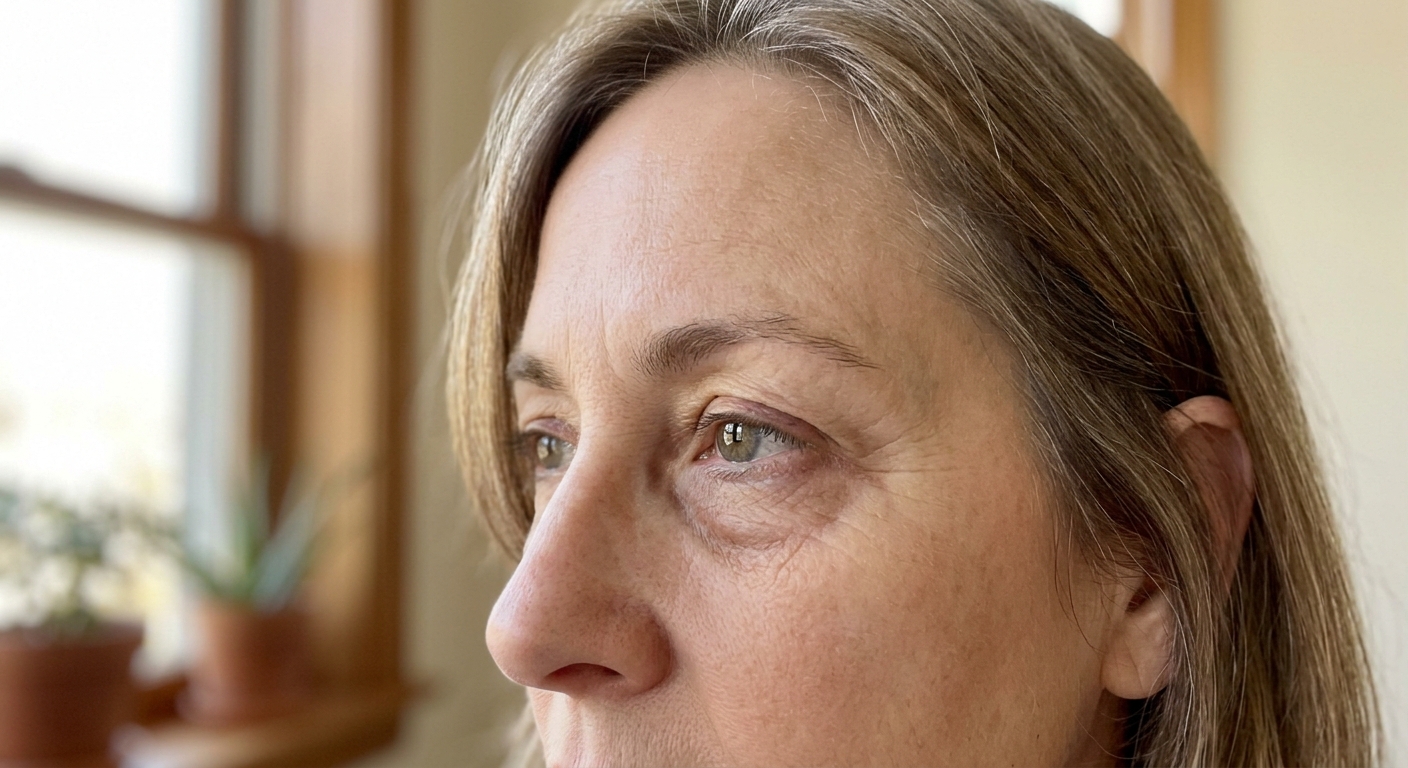
The clinical term is periorbital hyperpigmentation (POH), and it affects people of every age, ethnicity, and gender. One study found that 63% of participants with dark circles had a strong family history of the condition, suggesting genetics play a significant role [1]. But genetics are only part of the story.
The real reason dark circles are so difficult to treat is that they don’t have a single cause. Multiple factors — from skin anatomy to blood vessel visibility to melanin overproduction — can all create the appearance of under-eye darkness. And the specific cause determines which treatment will actually help.
The Four Types of Dark Circles
Dermatologists now classify periorbital dark circles into distinct subtypes, each with different underlying mechanisms [2]:
1. Pigmented Dark Circles (Brown Tones)
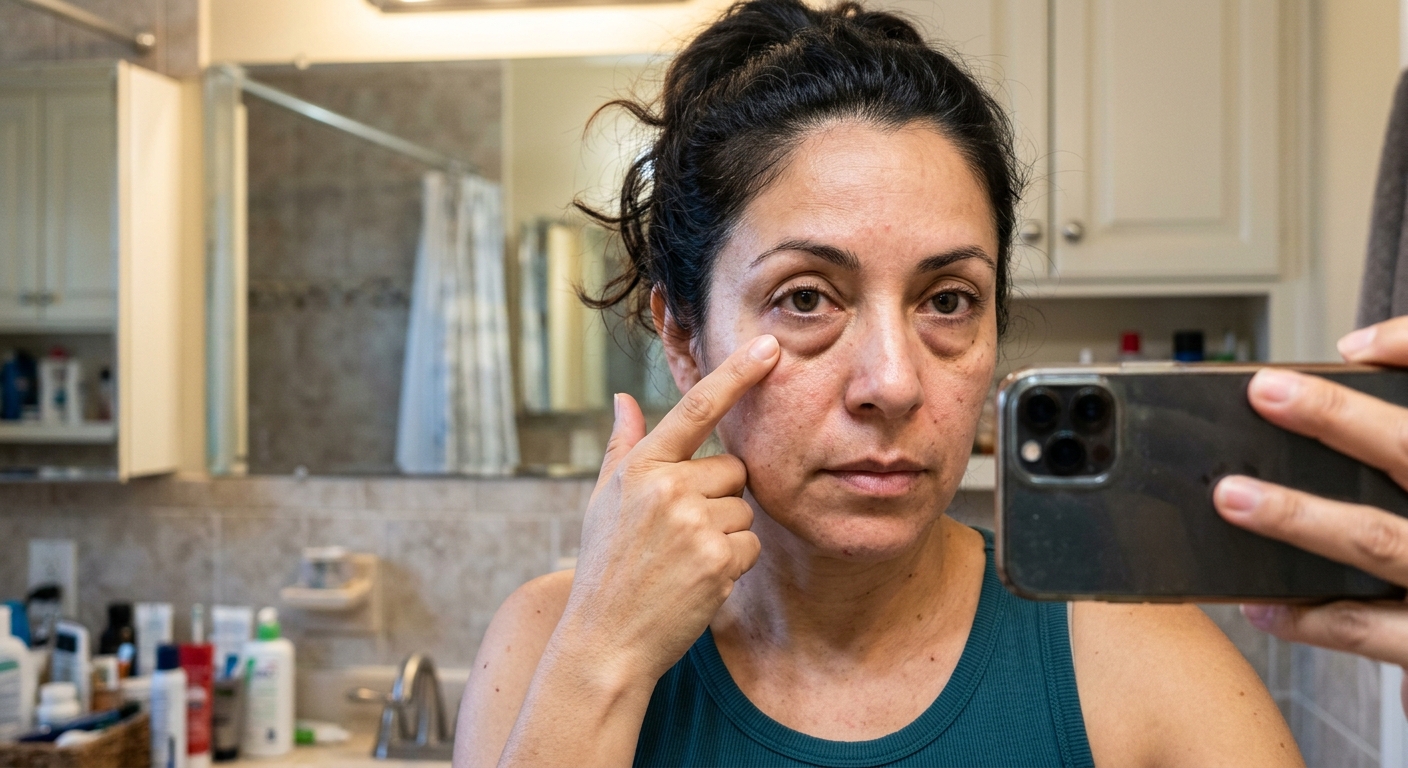
These are caused by excess melanin deposition in the periorbital skin. They’re more common in darker skin tones and are often worsened by sun exposure, post-inflammatory hyperpigmentation, or hormonal changes. When you stretch the skin gently and the color remains, you’re likely dealing with true pigmentation.
2. Vascular Dark Circles (Blue-Purple Tones)
The skin under your eyes is roughly 0.5 mm thick — compared to about 2 mm elsewhere on the face. This extreme thinness allows the underlying blood vessels and orbicularis oculi muscle to show through, creating a blue or purple cast. Poor circulation, lack of sleep, and allergies can dilate these vessels and make the darkness more prominent.
3. Structural Dark Circles (Shadow Effect)
As we age, we lose volume in the tear trough — the hollow groove between the lower eyelid and cheek. The resulting shadow creates the appearance of dark circles even when the skin itself isn’t pigmented. This type becomes increasingly common after 40 as fat pads atrophy and bone remodeling occurs [2]. Separating shadow from pigment from texture is exactly the triage in our guide to the best eye cream for men.
4. Mixed-Type Dark Circles
Most people over 40 have a combination of all three factors. And that’s why no single ingredient fixes dark circles for everyone. The key is understanding your specific subtype — or more likely, your specific combination.
What Causes Dark Circles to Get Worse With Age
Several age-related changes converge around the eye area to intensify dark circles:
Collagen loss. After 40, collagen production drops by roughly 1% per year. The periorbital skin — already the thinnest skin on your body — becomes even more translucent, revealing the vascular network beneath [3].
Volume loss. The malar fat pad descends and the orbital fat pad shifts, deepening the tear trough and creating shadows that weren’t there a decade ago.
One study found that 63% of participants with dark circles had a strong family history of the condition, suggesting genetics play a significant role.
Cumulative sun damage. Years of UV exposure stimulate melanocytes in the under-eye area, leading to hyperpigmentation that compounds over time.
Hormonal shifts. Menopause accelerates collagen loss and can alter melanin distribution patterns, making dark circles more noticeable in women over 45.
Sleep and lifestyle factors. While fatigue doesn’t directly cause dark circles, sleep deprivation dilates blood vessels and increases fluid retention, making existing circles appear worse [4].
Evidence-Based Treatments That Actually Work
Caffeine: The Vascular Solution
If your dark circles have a blue or purple cast, caffeine may be your best topical option. A randomized study demonstrated that a 3% caffeine formulation applied daily for four weeks significantly reduced periorbital pigmentation and improved local blood circulation [5]. Caffeine works by constricting blood vessels, reducing fluid retention, and strengthening the vascular wall — addressing the root causes of vascular dark circles.
Vitamin C: Brightening From Within
A clinical study found that a 10% vitamin C lotion applied to the under-eye area for six months significantly reduced periorbital darkness [6]. Vitamin C inhibits tyrosinase (the enzyme that drives melanin production), boosts collagen synthesis to thicken the thin under-eye skin, and provides antioxidant protection against further UV-induced pigmentation.
For pigmented dark circles specifically, the combination of vitamin C with other brightening agents appears more effective than vitamin C alone. One formulation combining THD ascorbate with caffeine and botanical extracts achieved a 12.5% reduction at four weeks and 20% after twelve weeks [7].
Retinol: Building Thickness and Reducing Pigment
Retinol addresses dark circles through multiple mechanisms. It stimulates collagen I synthesis in the dermal extracellular matrix, which can gradually thicken the paper-thin periorbital skin and make underlying vessels less visible [8]. It also regulates melanogenesis, helping to reduce the hyperpigmentation component.
Clinical trials show that retinol improves skin texture and fine lines in the periorbital area — benefits that compound over time as the skin’s structural integrity improves [9]. The challenge with retinol around the eyes is that the delicate periorbital skin is more prone to irritation. This is where delivery technology matters: nanoparticle-encapsulated retinol can deliver the active ingredient more gradually, reducing irritation while maintaining efficacy.
Niacinamide: The Barrier Builder
Niacinamide (vitamin B3) has been shown to decrease periocular hyperpigmentation through its ability to inhibit melanosome transfer from melanocytes to keratinocytes [10]. It also strengthens the skin barrier, which is particularly important in the fragile eye area. When used alongside retinol, niacinamide creates a complementary effect — one builds collagen while the other protects the barrier.
Vitamin K: Targeting Vascular Leaking
Vitamin K has gained attention for its ability to reduce the appearance of dark circles caused by vascular leaking and blood pooling. In a clinical evaluation, a formulation containing caffeine and vitamin K in an emulsified base produced a 16% improvement in dark circle appearance after 28 days [5]. Vitamin K supports blood coagulation at the capillary level, potentially reducing the leakage that creates visible darkness under thin periorbital skin.
One formulation combining THD ascorbate with caffeine and botanical extracts achieved a 12.5% reduction at four weeks and 20% after twelve weeks.
What About Professional Treatments?
For those with moderate to severe dark circles, topical treatments can be enhanced with professional interventions:
- Chemical peels with glycolic or lactic acid can help reduce pigmented dark circles by accelerating cell turnover in the superficial epidermis [11]
- Hyaluronic acid fillers in the tear trough can address structural shadows by restoring lost volume
- Laser therapy (particularly Q-switched lasers) can target excess melanin in pigmented types
However, these treatments work best when combined with a consistent topical regimen — not as standalone solutions.
A Practical Dark Circle Routine
Based on the clinical evidence, here’s a science-backed approach for women over 40:
Morning:
- Gentle cleanser (no rubbing or pulling the eye area)
- Vitamin C serum — applied with ring finger, tapping gently
- Caffeine-containing eye cream — targets puffiness and vascular darkness, on the same fluid-compartment logic behind our best eye cream for puffy eyes criteria
- Broad-spectrum sunscreen — critical to prevent further pigmentation
Evening:
- Gentle cleanse
- Retinol product — start with a low concentration and build tolerance. Nanoretinol® technology uses nanoparticle encapsulation to deliver retinol more gently to the delicate periorbital area, minimizing irritation while supporting collagen production
- Hyaluronic acid for hydration
- Nourishing eye cream or ceramide-based moisturizer to seal everything in
Weekly: Consider gentle exfoliation with a mild AHA to address surface pigmentation. Avoid harsh scrubs near the eyes.
The Patience Factor
One thing the research makes clear: dark circles didn’t appear overnight, and they won’t disappear overnight. Most clinical studies showing significant improvement ran for 4–12 weeks of consistent use. Topical vitamin C needed six months to show measurable brightening [6]. Retinol-based approaches typically show meaningful collagen improvements at the 8–12 week mark [9].
The ingredients that work for dark circles are the same ones that work for overall skin aging — they just need to be formulated appropriately for the delicate eye area. Nanoparticle delivery systems, like those used in Nanoretinol®, represent an important advance in making potent actives safe and effective for this uniquely thin, sensitive skin.
References
-
Sheth PB, Shah HA, Dave JN. Periorbital hyperpigmentation: a study of its prevalence, common causative factors and its association with personal habits and other disorders. Indian Journal of Dermatology. 2014;59(2):151-157. doi:10.4103/0019-5154.127675
-
Vrcek I, Ozgur O, Nakra T. Infraorbital dark circles: a review of the pathogenesis, evaluation and treatment. Journal of Cutaneous and Aesthetic Surgery. 2016;9(2):65-72. doi:10.4103/0974-2077.184046
-
Varani J, Dame MK, Rittie L, et al. Decreased collagen production in chronologically aged skin: roles of age-dependent alteration in fibroblast function and defective mechanical stimulation. American Journal of Pathology. 2006;168(6):1861-1868. doi:10.2353/ajpath.2006.051302
-
Sarkar R, Ranjan R, Garg S, et al. Periorbital hyperpigmentation: a comprehensive review. Journal of Clinical and Aesthetic Dermatology. 2016;9(1):49-55. PMC4756872
-
Ahmadraji F, Shatalebi MA. Evaluation of the clinical efficacy and safety of an eye counter pad containing caffeine and vitamin K in emulsified Emu oil base. Advanced Biomedical Research. 2015;4:10. doi:10.4103/2277-9175.148292
-
Ohshima H, Mizukoshi K, Oyobikawa M, et al. Effects of vitamin C on dark circles of the lower eyelids: quantitative evaluation using image analysis and echogram. Skin Research and Technology. 2009;15(2):214-217. doi:10.1111/j.1600-0846.2009.00356.x
-
Rajabi-Estarabadi A, Hartman CL, Iglesia S, et al. Effectiveness and tolerance of multicorrective topical treatment for infraorbital dark circles and puffiness. Journal of Cosmetic Dermatology. 2024;23(2):486-495. doi:10.1111/jocd.16054
-
Kong R, Cui Y, Fisher GJ, et al. A comparative study of the effects of retinol and retinoic acid on histological, molecular, and clinical properties of human skin. Journal of Cosmetic Dermatology. 2016;15(1):49-57. doi:10.1111/jocd.12193
-
Zasada M, Budzisz E. Retinoids: active molecules influencing skin structure formation in cosmetic and dermatological treatments. Advances in Dermatology and Allergology. 2019;36(4):392-397. doi:10.5114/ada.2019.87443
-
Wohlrab J, Kreft D. Niacinamide — mechanisms of action and its topical use in dermatology. Skin Pharmacology and Physiology. 2014;27(6):311-315. doi:10.1159/000359974
-
Michelle L, Foulad DP, Ekelem C, et al. Treatments of periorbital hyperpigmentation: a systematic review. Dermatologic Surgery. 2021;47(1):70-74. doi:10.1097/DSS.0000000000002484