Best Hand Cream for Aging Hands: What Actually Firms Crepey Skin and Fades Age Spots
Why hands give away your age first — and the ingredients that genuinely turn back the clock
You can have a flawless face and still be betrayed by your hands. They’re often the first place people notice age — and the last place anyone thinks to treat. While we layer serums and SPF on our faces every morning, our hands get a quick rub of whatever drugstore lotion is nearest the sink, if that.
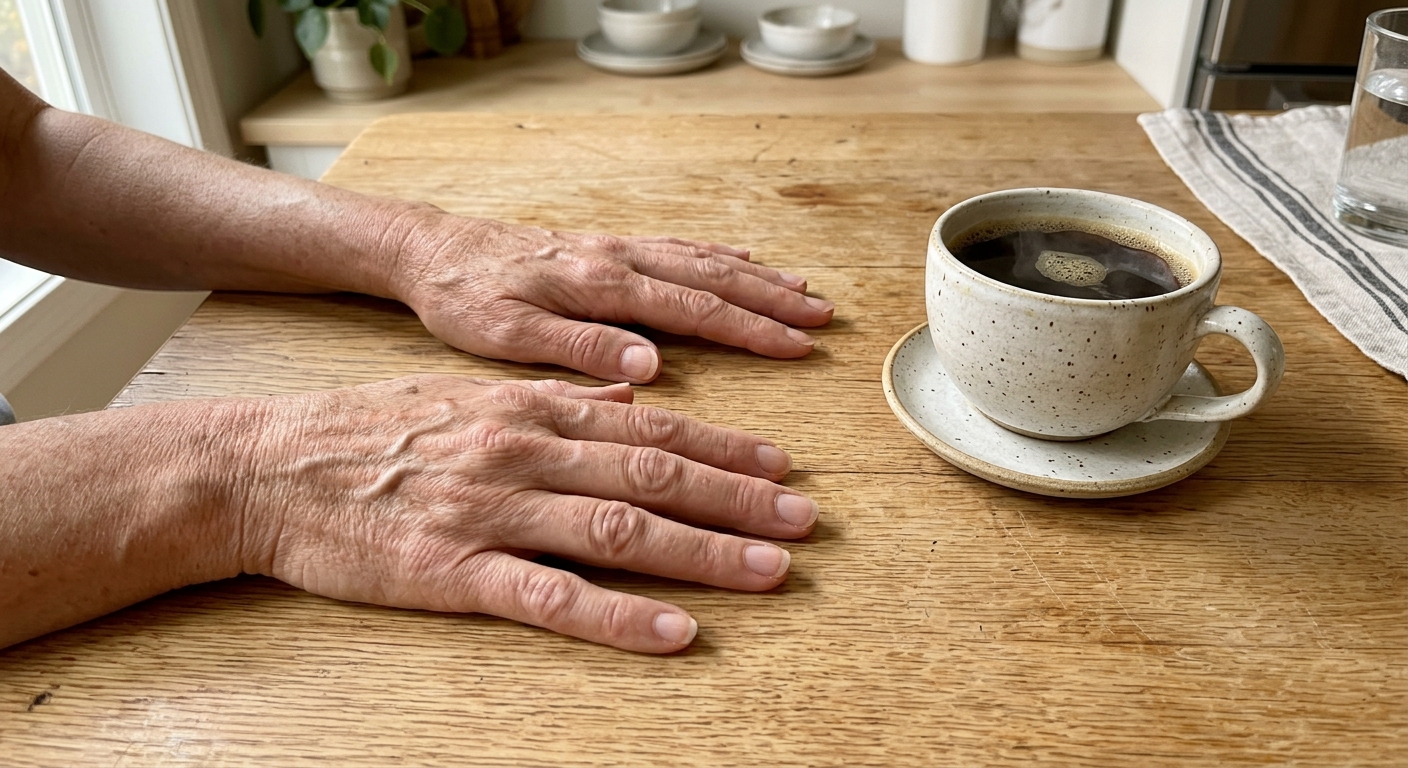
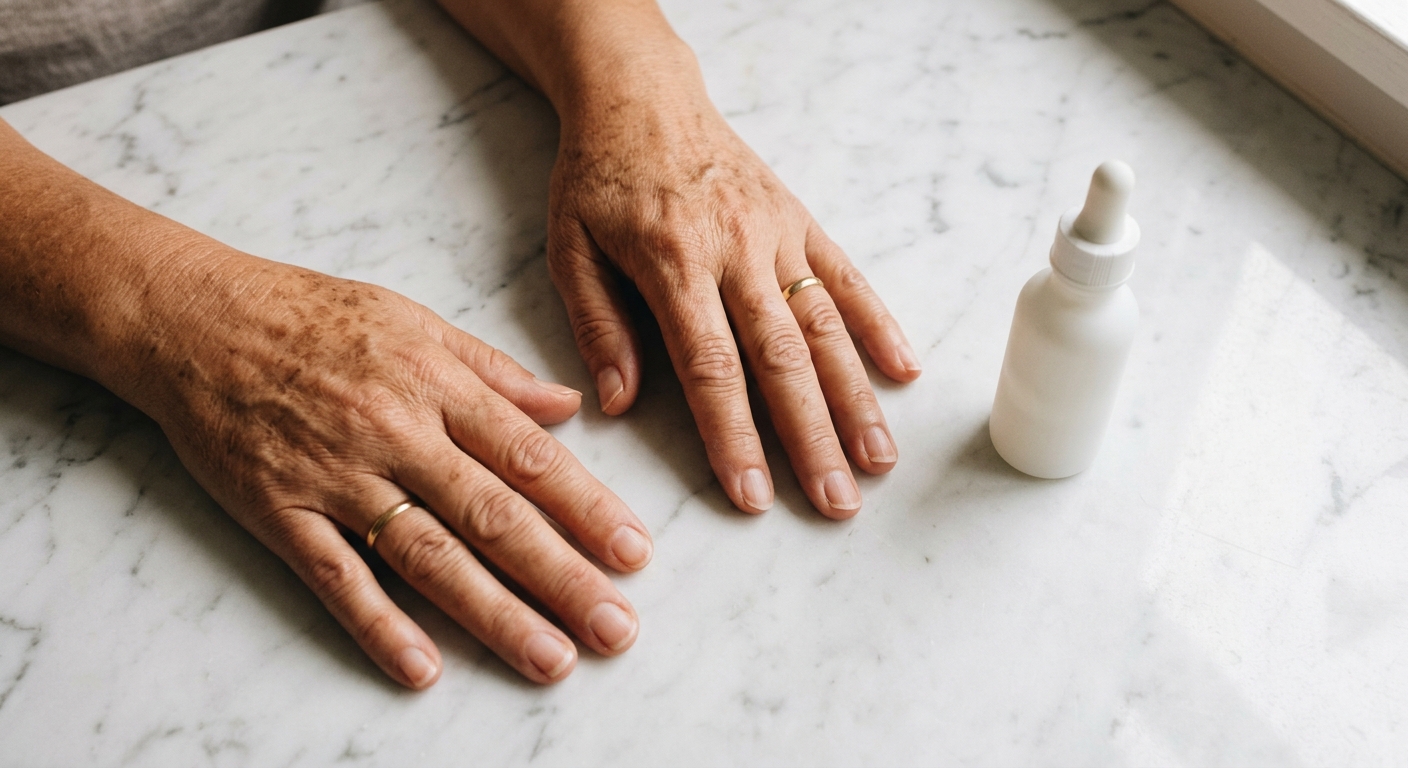
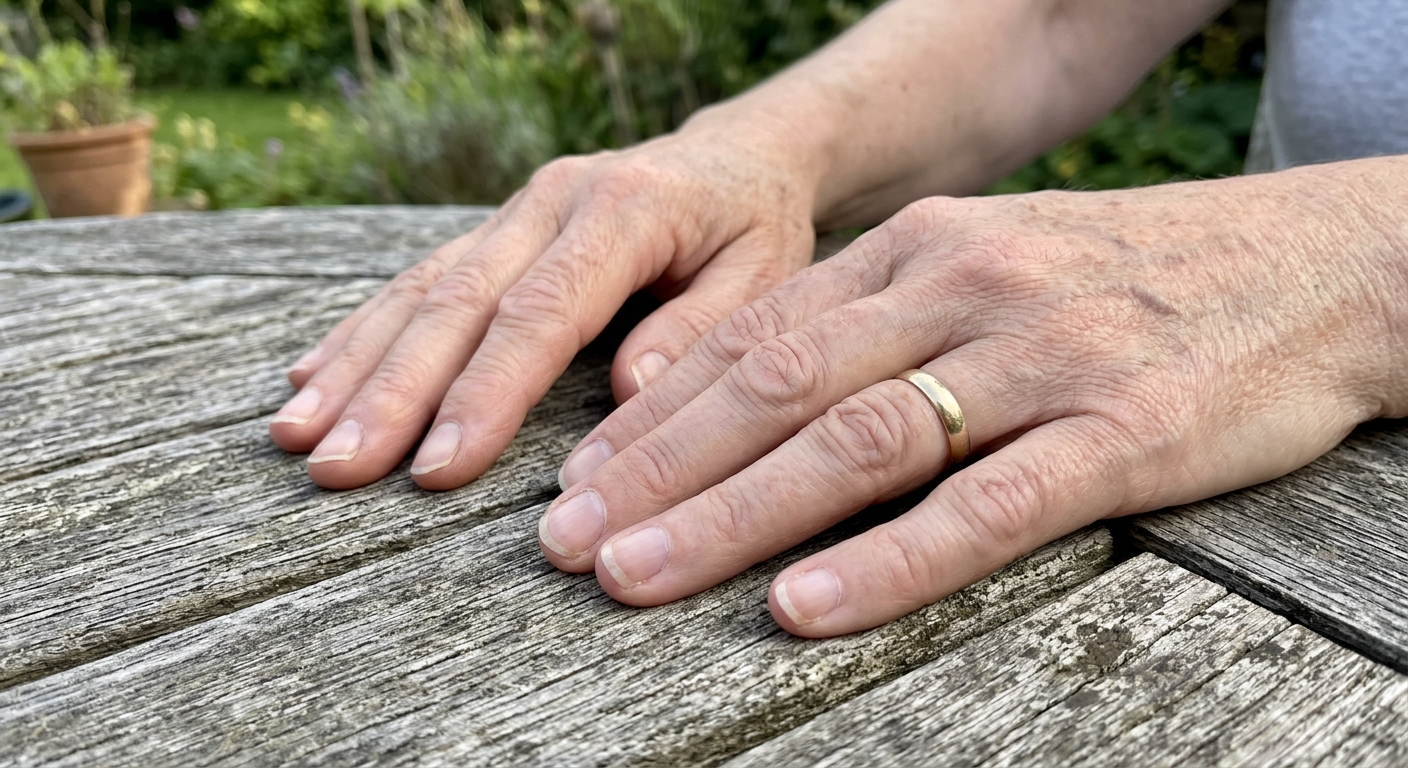
The result is predictable. By your fifties, the backs of the hands can look a decade older than the face above them: thin, crepey skin that tents when you pinch it, prominent tendons and veins from lost volume, and a scatter of brown “age spots.” A rich hand cream can mask the dryness for an hour. Reversing the actual aging takes more — and most hand creams simply don’t contain the ingredients that do it.
Here’s what’s really happening on the back of your hands, and what to look for in a cream that does more than moisturize.
Why hands age faster than you expect
Hand aging is overwhelmingly photoaging — sun damage. The backs of the hands are among the most chronically UV-exposed skin on the body, soaking up light on the steering wheel, the desk, the garden, year after year. UV radiation is the primary driver of extrinsic skin aging, and it works by switching on matrix metalloproteinases (MMPs), enzymes that break down the dermal collagen that keeps skin thick and springy [1].
Here’s what’s really happening on the back of your hands, and what to look for in a cream that does more than moisturize.
That collagen loss is dramatic. Researchers have found that collagen formation in photodamaged skin runs about 56% lower than in sun-protected skin [2]. Combine thinning collagen with the natural loss of fat padding under the skin, and you get the hallmark crepey, papery texture — the same crepiness we cover for the face in our guide to crepey hands. The good news is that the same study showed this damage is partly reversible with the right active.
The ingredient that does the heavy lifting: retinol
If your hand cream contains one proven anti-ager, it should be a retinoid. In the landmark study above, topical tretinoin increased collagen-I formation by 80% in photodamaged skin, compared to a 14% decrease with the placebo cream [2]. That’s the mechanism behind firmer, less crepey skin — actually rebuilding the dermal scaffolding rather than temporarily swelling it with water. Retinol also speeds cell turnover, which helps fade the surface pigment of age spots over time.
The reason “hand cream with retinol” is one of the most-searched hand-care terms — and why so many women still don’t stick with it — is the familiar retinol problem: irritation. On already-thin hand skin, conventional retinol can sting and flake, and people quit. We cover how to use it safely on the body in retinol for body.
Alpha-hydroxy acids for texture
Glycolic and lactic acids (AHAs) are the supporting players. In a double-blind, vehicle-controlled trial, an 8% glycolic acid cream significantly outperformed placebo for overall photodamage and sallowness, and it’s available without a prescription [3]. AHAs dissolve the “glue” between dead surface cells, smoothing the rough, dull layer that makes aging hands look weathered — and they help other actives penetrate.
Daily sunscreen isn’t just prevention in theory — in a 4.5-year randomized trial, people who used sunscreen daily showed 24% less skin aging than those who used it only occasionally.
Fading the age spots
Those flat brown spots — solar lentigines — are clusters of sun-triggered pigment, and they respond to topical treatment, not just lasers. In a hand-specific controlled trial, a topical applied to the backs of the hands for 12 weeks cut measured pigmentation by about 40%, versus roughly 2% for the placebo [4]. Niacinamide is the gentlest reliable option here: it fades spots by blocking 35-68% of pigment transfer into surface skin cells, while also strengthening the skin barrier [5]. If spots are your main concern, our dedicated guide to age spots on hands goes deeper.
Don’t skip hydration and barrier repair
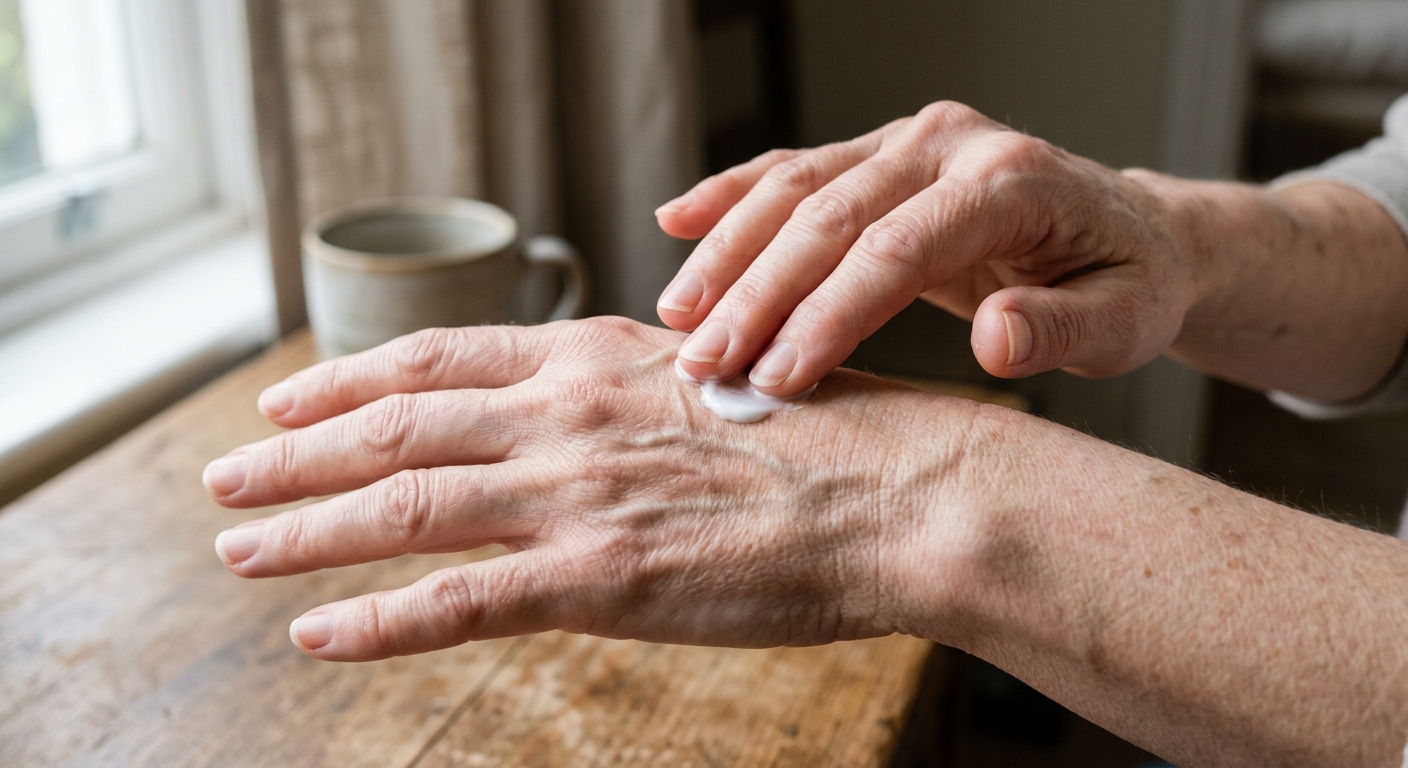
The actives do the rebuilding, but they work better — and irritate less — on a well-hydrated, intact barrier. This is where the “cream” part of hand cream earns its keep. Ceramides replenish the lipids that hold the skin barrier together, and they’re depleted in aging, sun-damaged skin. Hyaluronic acid and glycerin draw water into the upper layers, so skin looks immediately plumper and feels less papery. Because hands are washed constantly — stripping oils and lipids with every rinse — a hand cream needs enough emollient richness to repair that repeated damage, not just a thin lotion that evaporates. Reapply after every hand wash, and keep a tube by the kitchen sink, the bathroom, and your bag.
The step no hand cream can replace: SPF
You can apply the best actives in the world and still lose ground if your hands keep collecting UV. Daily sunscreen isn’t just prevention in theory — in a 4.5-year randomized trial, people who used sunscreen daily showed 24% less skin aging than those who used it only occasionally [6]. Since hands are constantly exposed and rarely protected, a hand cream with built-in SPF (or a habit of extending your face sunscreen down to your hands) is one of the highest-leverage moves you can make. More on this in sunscreen for aging skin.
Where Nanoretinol comes in
The dilemma with aging hands is clear: retinol is the most effective ingredient, but thin, sun-thinned hand skin is exactly where conventional retinol is most likely to burn and peel. That’s the problem Nanoretinol was engineered to solve.
Rather than forcing raw retinol through the skin barrier — a process that relies on chemically disrupting that barrier and causes the irritation — Nanoretinol encapsulates a stabilized 0.2% retinol inside biomimetic lipid nanoparticles. The skin recognizes these particles as “self” and lets them pass without damage, delivering retinol efficiently while staying gentle. In clinical testing it proved 232% more effective than conventional retinol for collagen recovery and 73% more effective for elastin recovery, with a 61% gain in firmness over 56 days [7] — the exact combination of firming and elasticity that crepey, lax hand skin needs. Because it’s water-based, 99% natural, and gentle enough for sensitive skin, it’s well suited to the delicate skin on the back of the hands.
Bottom line for your hands
Treat your hands like the extension of your face that they are. Look for a cream that pairs a retinoid with AHAs for texture, niacinamide to fade spots, and ceramides or hyaluronic acid for hydration — then guard the whole investment with daily SPF. Moisture alone buys you an hour of softness. The right actives, used consistently, buy back years.
References
- Fisher GJ, Kang S, Varani J, Bata-Csorgo Z, Wan Y, Datta S, Voorhees JJ. “Mechanisms of photoaging and chronological skin aging.” Archives of Dermatology. 2002;138(11):1462-1470. PubMed: 12437452
- Griffiths CE, Russman AN, Majmudar G, Singer RS, Hamilton TA, Voorhees JJ. “Restoration of collagen formation in photodamaged human skin by tretinoin (retinoic acid).” New England Journal of Medicine. 1993;329(8):530-535. PubMed: 8336752
- Stiller MJ, Bartolone J, Stern R, Smith S, Kollias N, Gillies R, Drake LA. “Topical 8% glycolic acid and 8% L-lactic acid creams for the treatment of photodamaged skin: a double-blind vehicle-controlled clinical trial.” Archives of Dermatology. 1996;132(6):631-636. PubMed: 8651713
- Saki N, Modabber V, Kasraei H, Kasraee B. “Successful treatment of solar lentigines by topical application of stabilized cysteamine: A vehicle-controlled, double-blind randomized study.” Health Science Reports. 2024;7(2):e1930. PubMed: 38410492
- Hakozaki T, Minwalla L, Zhuang J, Chhoa M, Matsubara A, Miyamoto K, Greatens A, Hillebrand GG, Bissett DL, Boissy RE. “The effect of niacinamide on reducing cutaneous pigmentation and suppression of melanosome transfer.” British Journal of Dermatology. 2002;147(1):20-31. PubMed: 12100180
- Hughes MC, Williams GM, Baker P, Green AC. “Sunscreen and prevention of skin aging: a randomized trial.” Annals of Internal Medicine. 2013;158(11):781-790. PubMed: 23732711
- North Biomedical LLC. “Nanoretinol vs. Conventional Retinol: Efficacy in Collagen and Elastin Recovery.” Clinical Study Summary, 2024. northbiomedical.com/nanoretinol