Best Self Tanner: How to Choose One That Doesn't Go Patchy
The result depends far more on the surface you apply it to than on the brand you buy.
Most self tanner disasters follow the same script. The color comes up beautifully across the thighs and shoulders, then collects in dark commas around the ankles, knuckles, and elbows, and four days later it starts flaking off in a pattern that looks like a badly peeling wall. People blame the product. The product is usually innocent.
What is actually happening on your skin
Almost every sunless tanner sold today works on dihydroxyacetone, a simple three-carbon sugar. When DHA meets the amino groups on proteins in the stratum corneum, it triggers a Maillard reaction, the same broad class of chemistry that browns a seared steak or a loaf of bread [1]. The reaction produces melanoidins, brown pigmented polymers, and those polymers sit in the dead surface cells where they formed.
That single fact explains nearly everything about how self tanner behaves.
Color takes two to four hours to become visible and continues deepening for up to a day, because the reaction is slow at skin temperature. It cannot be rinsed off once it has developed, since the pigment is chemically bound inside cells. And it fades on exactly the schedule at which you shed those cells, no faster and no slower.
Why your skin, not the bottle, decides the result
If DHA colors the stratum corneum, then the condition of your stratum corneum is the variable that matters most.
Two things change with age. First, epidermal renewal slows. Cell transit through the epidermis takes roughly 20 days in young adults and stretches past 30 days in older adults [2]. A tan that lasted five days at 25 can hang around unevenly for over a week at 55, shedding in patches as different regions turn over at different rates.
If you are pale, new to this, or working on a face rather than legs, start at the bottom of that range regardless of what the marketing promises.
Second, the surface itself gets rougher. Xerosis is very common in older adults, and dry, thickened, poorly organized stratum corneum has more absorbent surface area in some spots than others [3]. DHA grabs hardest wherever the dead layer is thickest, which is precisely why crepey, dry skin on the legs and the perpetually thickened skin over knees, elbows, ankles, and knuckles goes darkest.
The practical consequence: preparation matters more than product selection. Exfoliate two days before, not the same day, because freshly exfoliated skin is slightly irritated and takes color unpredictably. Moisturize the dry landmarks (knees, elbows, ankles, wrists, knuckles) about an hour before you apply, so those areas are hydrated enough to stop over-absorbing. A good body lotion for aging skin used consistently in the week beforehand does more for the final result than upgrading to a more expensive tanner.
Reading the label
DHA percentage is the one number worth finding. Products generally run between 3% and 15%. Lower concentrations build gradually and forgive mistakes; higher concentrations develop fast and punish them. If you are pale, new to this, or working on a face rather than legs, start at the bottom of that range regardless of what the marketing promises.
Erythrulose appears in many formulas alongside DHA. It is a related sugar that reacts more slowly and tends to produce a slightly different, less orange tone, so blends of the two often read more naturally and fade more evenly [4].
Format follows the body part. Mousses and foams carry a guide color and suit large areas because you can see where you have been. Drops mixed into your own moisturizer give the most control for the face and neck. Gradual tanning lotions are the most forgiving option for anyone whose skin is uneven, since each pass adds very little.
Skin treated with DHA generates substantially more free radicals during subsequent sun exposure than untreated skin does.
Face formulas are worth buying separately. Facial skin is thinner, turns over faster, and is usually the area where an obviously artificial tone gets noticed.
The sun protection myth
A developed DHA tan does provide a small amount of measurable protection, and the number is genuinely tiny. In a controlled study, the sun protection factor from DHA measured about 3.0 on the first day and had dropped to roughly 1.7 by day seven [5].
There is a second wrinkle. Skin treated with DHA generates substantially more free radicals during subsequent sun exposure than untreated skin does [6]. This is not a reason to avoid self tanner, but it is a solid reason to treat sunscreen as non-negotiable while you are wearing one, and to let the color develop indoors rather than in the sun.
Why this is still the better option
None of the above changes the basic calculation. A randomized beach trial found that promoting sunless tanning as a substitute reduced sunbathing and sunburns and increased protective behavior among participants [7]. Every photoaging outcome people spend money reversing later, the mottled pigment, the leathery texture, the collagen loss, comes from UV exposure. A bottle of DHA delivers the appearance without any of the damage.
The surface underneath is the real product
Here is the uncomfortable part of all this. Self tanner is a cosmetic layer applied to dead cells, and its appearance is capped by the quality of the skin underneath. Smooth, evenly renewing, well-hydrated skin takes color evenly. Rough, slow-turning, dehydrated skin never will, no matter what you spend.
That makes cell turnover the thing actually worth investing in, and retinoids remain the best-evidenced way to influence it. Worth knowing: because retinoids speed renewal, a tan will typically fade a little faster once you are using one consistently. That trade is usually worth taking, since it also means the surface taking the color keeps improving.
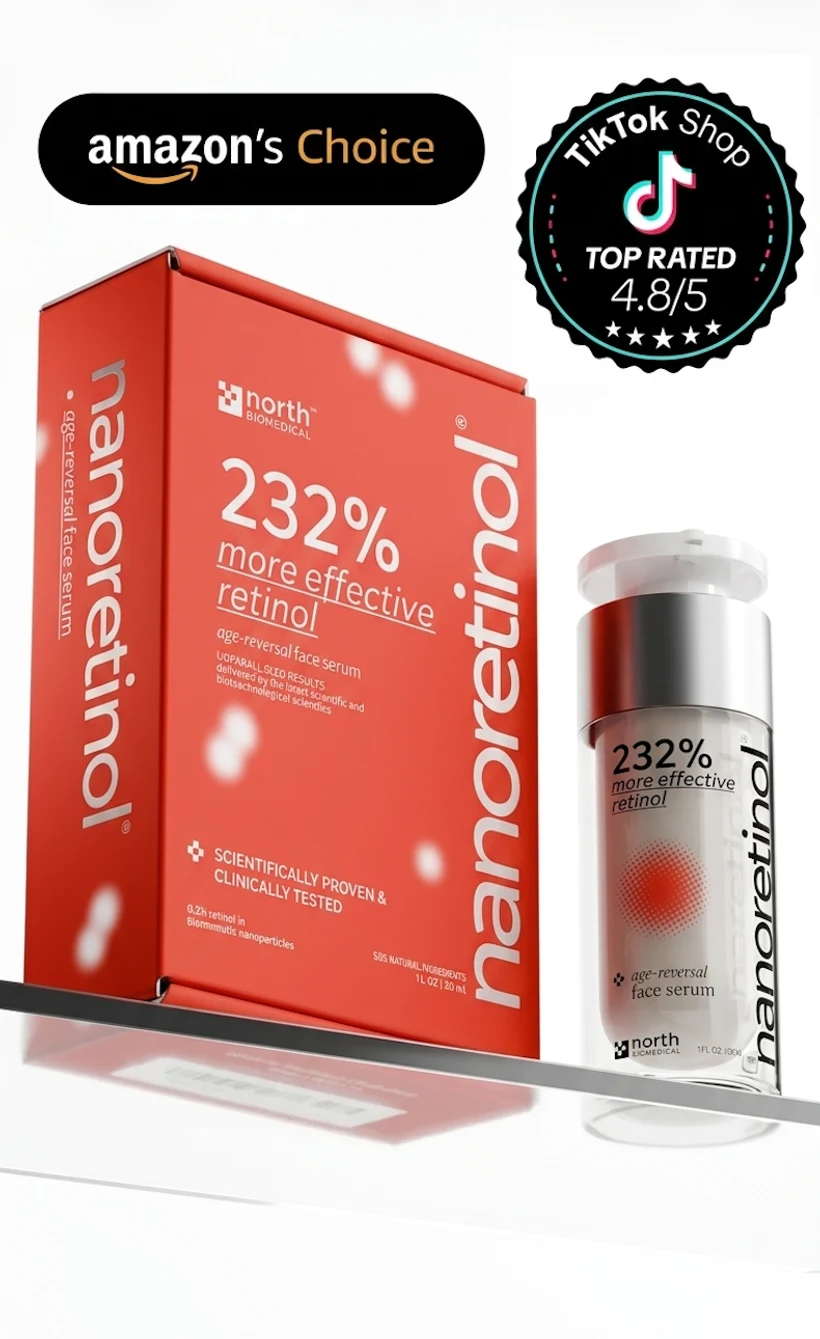
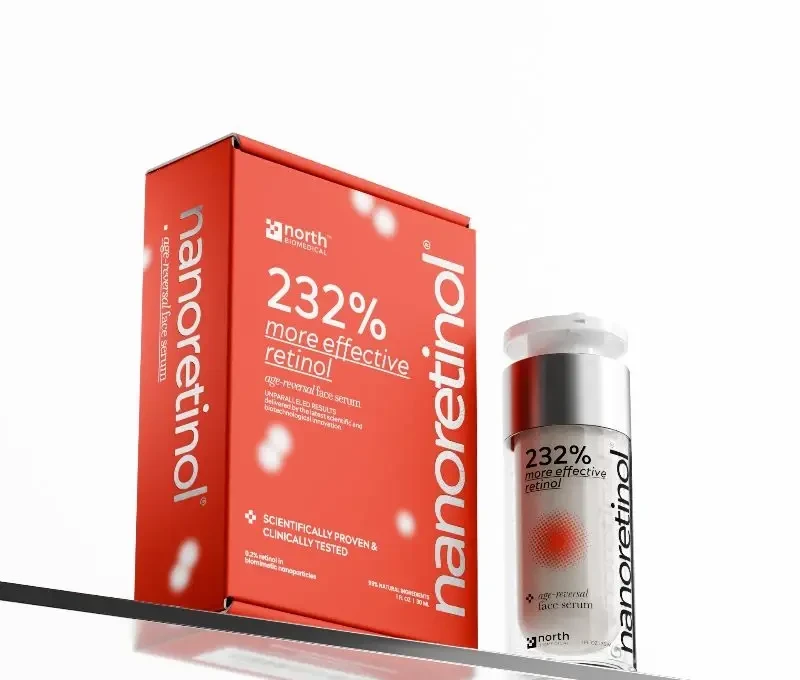
The obstacle has always been tolerability. Conventional retinol relies on formulations that disrupt the epithelial barrier in order to get the molecule through it, which is where the redness and peeling come from, and peeling skin is the last thing you want under a self tan. Nanoretinol takes a different route: retinol encapsulated in biomimetic lipid nanoparticles that the body recognizes as “self” and lets through the barrier intact. North Biomedical’s clinical study found this delivery system 232% more effective than conventional retinol in collagen recovery and 73% more effective in elastin recovery, at just 0.2% retinol, with drastically reduced cytotoxicity compared with conventional formulations [8]. Its water-based gel texture absorbs completely, which matters when anything greasy left on the skin will interfere with the next tan.
One timing note regardless of which retinoid you use: apply self tanner on a night you skip your retinoid, and give freshly retinized skin a day before tanning over it.
Getting a result you would leave the house in
Exfoliate two days ahead. Moisturize the dry spots an hour before. Choose the lowest DHA percentage that will get you where you want to go, apply it in thin layers with a mitt, wash your palms immediately, and let it develop somewhere out of the sun. Then wear sunscreen the next day like the tan is not there, because as far as your skin is concerned, it barely is.
References
- Sun Y, Lee S, Lin L. “Comparison of Color Development Kinetics of Tanning Reactions of Dihydroxyacetone with Free and Protected Basic Amino Acids.” ACS Omega. 2022;7(49):45510-45517. doi:10.1021/acsomega.2c06124
- Grove GL, Kligman AM. “Age-associated changes in human epidermal cell renewal.” Journal of Gerontology. 1983;38(2):137-142. doi:10.1093/geronj/38.2.137
- White-Chu EF, Reddy M. “Dry skin in the elderly: complexities of a common problem.” Clinics in Dermatology. 2011;29(1):37-42. doi:10.1016/j.clindermatol.2010.07.005
- Turner J, O’Loughlin DA, Green P, McDonald TO, Hamill KJ. “In search of the perfect tan: Chemical activity, biological effects, business considerations, and consumer implications of dihydroxyacetone sunless tanning products.” Journal of Cosmetic Dermatology. 2023;22(1):79-88. doi:10.1111/jocd.14968
- Faurschou A, Wulf HC. “Durability of the sun protection factor provided by dihydroxyacetone.” Photodermatology, Photoimmunology & Photomedicine. 2004;20(5):239-242. doi:10.1111/j.1600-0781.2004.00118.x
- Jung K, Seifert M, Herrling T, Fuchs J. “UV-generated free radicals (FR) in skin: their prevention by sunscreens and their induction by self-tanning agents.” Spectrochimica Acta Part A: Molecular and Biomolecular Spectroscopy. 2008;69(5):1423-1428. doi:10.1016/j.saa.2007.09.029
- Pagoto SL, Schneider KL, Oleski J, Bodenlos JS, Ma Y. “The sunless study: a beach randomized trial of a skin cancer prevention intervention promoting sunless tanning.” Archives of Dermatology. 2010;146(9):979-984. doi:10.1001/archdermatol.2010.203
- North Biomedical LLC. “Nanoretinol vs. Conventional Retinol: Efficacy in Collagen and Elastin Recovery.” Clinical Study Summary, 2024. Study summary