Face Cleansing Brush: What It Really Does to Mature Skin, and How to Choose One
The device took the blame for a decade of over-cleansed faces, and the controlled data points somewhere else entirely
The facial cleansing brush had a spectacular decade and then a spectacular fall. It arrived as the device that would finally get your face properly clean, sold in the millions, and then the backlash arrived: dermatologists warning about over-exfoliation, users reporting stripped and reactive skin, and a broad consensus forming that the brush had been a mistake.
The controlled evidence tells a more awkward story, and it does not put the blame where the backlash put it.
The Trial That Went the Other Way
In a split-face study, twelve subjects cleansed one side of the face manually and the other with an electric sonic device. The expectation would be that the powered side came off worse.
It did not. The manually cleansed side showed a statistically significant 17.19 percent drop in stratum corneum hydration measured by corneometry against baseline, while the side cleansed with the sonic device stayed close to baseline. Transepidermal water loss did not differ significantly between the two methods [1]. The study was funded by Brazilian public research agencies rather than by a device manufacturer, which is worth noting in a category where most trials are not.
Twelve subjects is a small study and one result does not settle a field. But it points at something the backlash narrative missed: the aggressive part of cleansing your face is usually not the thing touching your face.
The Cleanser Was Doing the Damage
Surfactants are what strip skin, and they do it whether a brush is involved or not.
Testing seven surfactant types on twenty subjects, researchers found that loss of stratum corneum hydration tracked irritation-driven study discontinuation with correlation coefficients of 0.942 for single exposure and 0.934 for chronic exposure, both highly significant [2]. Hydration loss, more than any other measured parameter, is what predicts a cleanser actually hurting someone.
The mechanism is lipid extraction, and it is selective. Cleanser surfactants preferentially strip stratum corneum free fatty acids over ceramides and cholesterol, degrading the lipid bilayer that holds the barrier together [3]. That review comes from industry-affiliated authors, which is worth knowing, though the underlying chemistry is not controversial.
Hydration loss, more than any other measured parameter, is what predicts a cleanser actually hurting someone.
Water and washing alone contribute too. Transepidermal water loss rose after every wash tested and increased further with repeated washing, and soap raised skin pH and erythema significantly more than water alone [7]. Cleanser chemistry, not mechanical contact, carried the larger effect.
That pH shift matters more than it sounds. The acidic pH of the upper stratum corneum is required for normal activity of the lipid-processing and desquamation enzymes that maintain the barrier, and alkaline exposure measurably disrupts both barrier integrity and microbiome regulation [8]. A brush used with a high-pH bar soap is delivering an alkaline insult more thoroughly. The brush is the delivery mechanism for the problem rather than the problem, which is a real distinction when you are deciding what to change. Our guide to the best face wash for aging skin treats the cleanser as the decision it actually is.
Where the Brush Genuinely Can Hurt You
None of this makes bristles harmless. Mechanical removal of stratum corneum is a real injury with a real recovery curve.
Work measuring barrier recovery after microdermabrasion stripped the stratum corneum found barrier properties recovering substantially within twelve hours and the layer reforming within roughly twenty-four hours in the model tested, with the authors noting that humans likely need longer given slower healing rates [4]. That is the honest frame for any physical exfoliation: it works by causing damage the skin then repairs, and the question is whether you are allowing the repair to finish.
This is where age changes the calculation. Across four age groups of women, stratum corneum lipid-to-protein ratio and lipid compactness declined with age, with some thickening partly compensating [5]. The structural cushion that absorbs a barrier insult is thinner in older skin even when baseline measurements look unremarkable. A stiff nylon bristle head used daily on skin with less lipid reserve is a different proposition from the same head used on a twenty-five-year-old.
Frequency Is Not the Villain Either
The standard advice is to cut back to once or twice a week, and the evidence for that specific prescription is thinner than the confidence behind it.
Volunteers washing five times versus eleven times over four hours with modern mild cleansers showed only comparable, mild effects on transepidermal water loss, hydration, redness, pH, and inflammatory markers [6]. Frequency, with a gentle enough cleanser, did far less than the tone of most advice suggests.
If you are pressing, you have converted a sonic oscillation into a scrub.
The practical reading is that harshness and pressure dominate frequency. A soft head with a mild low-pH cleanser used most evenings is a gentler routine than a stiff head with a foaming soap used twice a week. Our piece on how often to exfoliate your face works through the same logic for acids and scrubs.
Choosing One
Four things separate a brush that helps from one that causes the problem it was blamed for.
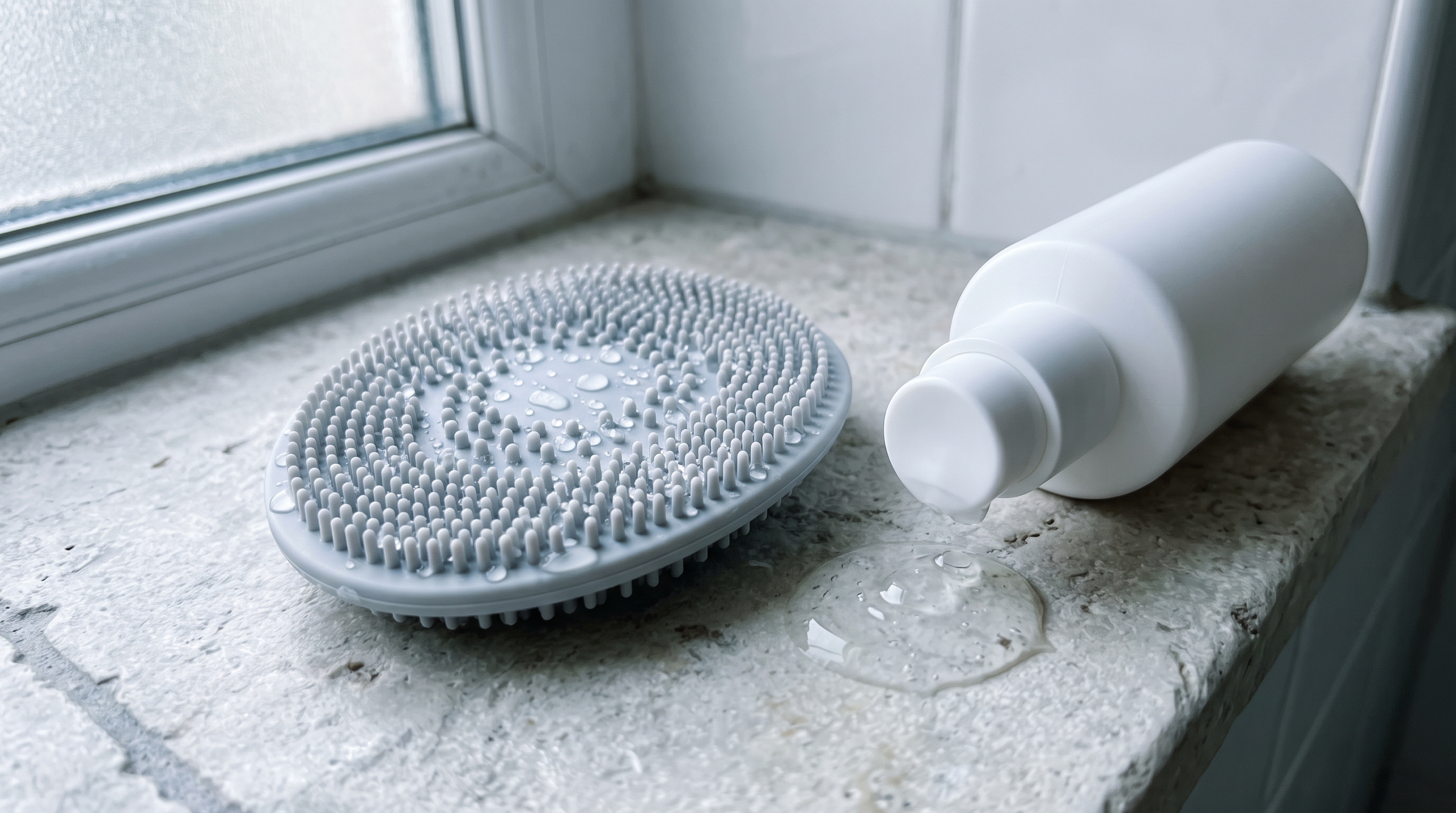
Head material. Silicone heads flex, apply less point pressure, do not harbour material between bristles, and are the sensible default for skin past forty. Nylon bristle heads exfoliate more aggressively, which is occasionally what you want and usually not.
Pressure control. The device should do the work. If you are pressing, you have converted a sonic oscillation into a scrub. Better units either signal or stall under load.
Head hygiene. A damp textured surface left in a warm bathroom is a growth substrate. There is no published work specifically on cleansing brush head contamination, so this rests on general hygiene reasoning rather than on evidence, but rinsing thoroughly, drying outside the shower, and replacing heads on schedule costs nothing.
The cleanser you pair it with. This is the decision that actually determines your outcome. A mild, low-pH, non-soap cleanser makes almost any reasonable brush fine. A high-pH foaming cleanser makes almost any brush a problem.
If your skin is already reactive, flaking, or stinging when products go on, the brush is not your starting point at all. Fixing a damaged skin barrier comes first, and mechanical cleansing goes back in once the skin is calm.
The Same Problem, One Layer Down
There is a reason barrier integrity keeps surfacing here, and it extends past cleansing.
The most effective anti-aging molecule available without a prescription is retinol, and the reason most people abandon it is the same reason the brush got its reputation. Conventional retinol formulations rely on chemistries and petroleum derivatives that break down the skin barrier in order to push the molecule through it. That is a destructive delivery mechanism by design, and the burning, redness, and peeling are the mechanism working as intended.
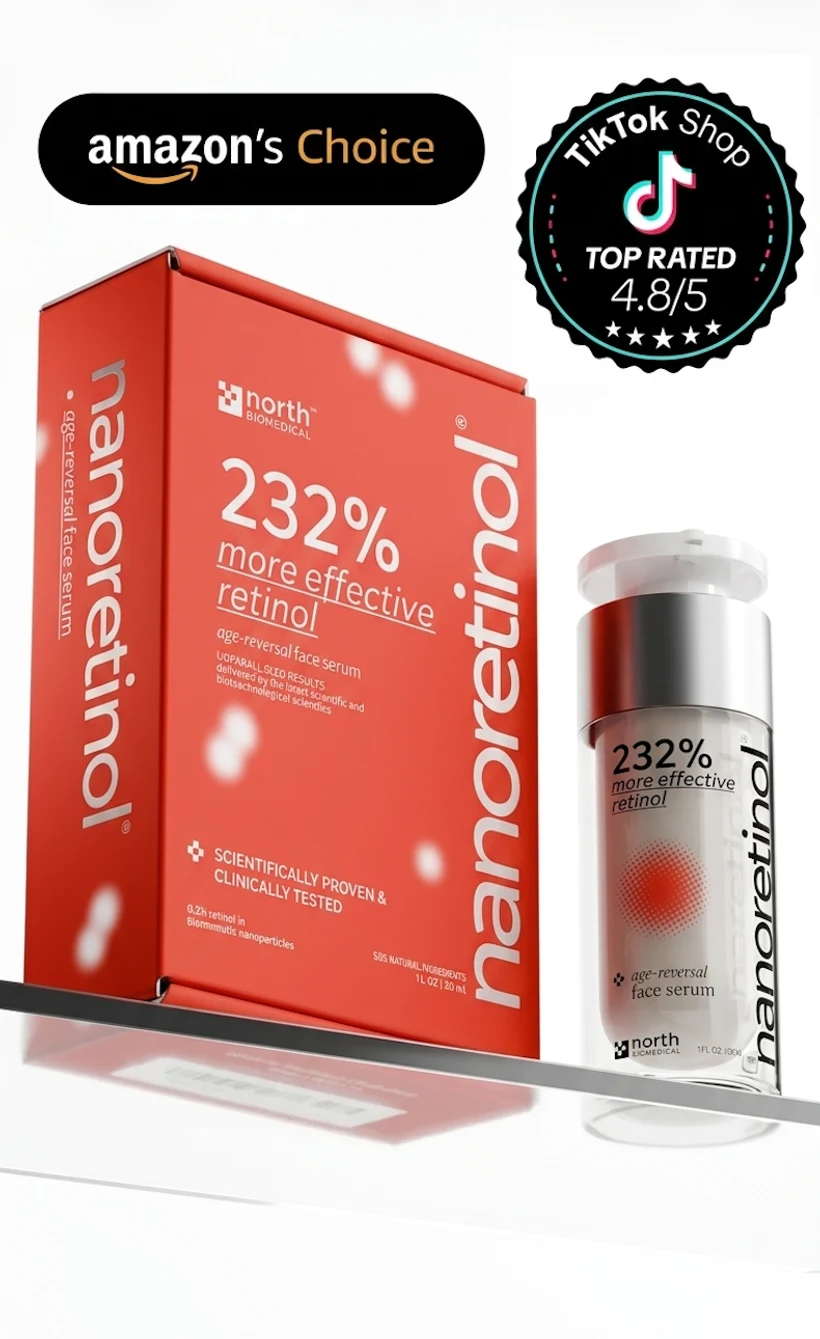
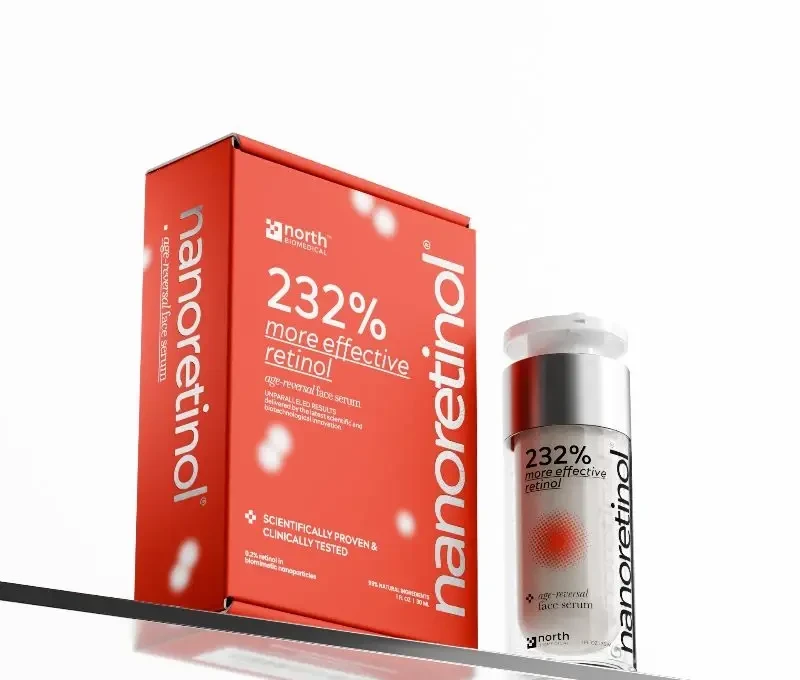
Nanoretinol takes the opposite approach. It encapsulates 0.2 percent retinol in biomimetic lipid nanoparticles that are externally similar enough to the body’s own cells that the skin admits them through the epithelial barrier rather than being forced open, and the phospholipids in the nanoparticle membranes are absorbed as nourishment as the retinol is released. North Biomedical’s clinical study summary reports 232 percent greater collagen recovery than conventional retinol along with drastically reduced cytotoxicity [9]. For anyone whose skin has been through a decade of over-cleansing, a retinol that does not require a compromised barrier to function is the version worth trying.
The Short Answer
The brush was never the main variable. Cleanser harshness, pH, and pressure were, and a soft silicone head paired with a mild low-pH cleanser is a defensible part of a routine for mature skin rather than a hazard.
If you bought one, put it away, and blamed it for a bad year of skin, the more likely culprit is still sitting on your shelf in a pump bottle.
References
- Aiello LM, Vergilio MM, Monteiro e Silva SA, Anselmo T, Leonardi GR. “Skin effect of facial cleansing combined with an electric sonic device.” Journal of Cosmetic Dermatology. 2021;20(11):3537-3544. doi:10.1111/jocd.14017
- Fujimura T, Shimotoyodome Y, Nishijima T, Sugata K, Taguchi H, Moriwaki S. “Changes in hydration of the stratum corneum are the most suitable indicator to evaluate the irritation of surfactants on the skin.” Skin Research and Technology. 2017;23(1):97-103. doi:10.1111/srt.12307
- Ananthapadmanabhan KP, Mukherjee S, Chandar P. “Stratum corneum fatty acids: their critical role in preserving barrier integrity during cleansing.” International Journal of Cosmetic Science. 2013;35(4):337-345. doi:10.1111/ics.12042
- Andrews S, Lee JW, Prausnitz M. “Recovery of skin barrier after stratum corneum removal by microdermabrasion.” AAPS PharmSciTech. 2011;12(4):1393-1400. doi:10.1208/s12249-011-9715-x
- Boireau-Adamezyk E, Baillet-Guffroy A, Stamatas GN. “Age-dependent changes in stratum corneum barrier function.” Skin Research and Technology. 2014;20(4):409-415. doi:10.1111/srt.12132
- Symanzik C, Kezic S, Jakasa I, et al. “Effects of skin washing frequency on the epidermal barrier function and inflammatory processes of the epidermis: An experimental study.” Contact Dermatitis. 2022;87(3):241-246. doi:10.1111/cod.14119
- Voegeli D. “The effect of washing and drying practices on skin barrier function.” Journal of Wound, Ostomy and Continence Nursing. 2008;35(1):84-90. doi:10.1097/01.WON.0000308623.68582.d7
- Brooks SG, Mahmoud RH, Lin RR, Fluhr JW, Yosipovitch G. “The skin acid mantle: an update on skin pH.” Journal of Investigative Dermatology. 2025;145(3):509-521. doi:10.1016/j.jid.2024.07.009
- North Biomedical LLC. “Nanoretinol vs. Conventional Retinol: Efficacy in Collagen and Elastin Recovery.” Clinical Study Summary, 2024. Study summary