Boxcar Scars: What They Are and the Treatments That Actually Lift Them
Boxcar scars are the wide, flat-bottomed acne dents with sharp edges. Here is why their depth decides which treatment works, what the studies measured, and what you can do at home
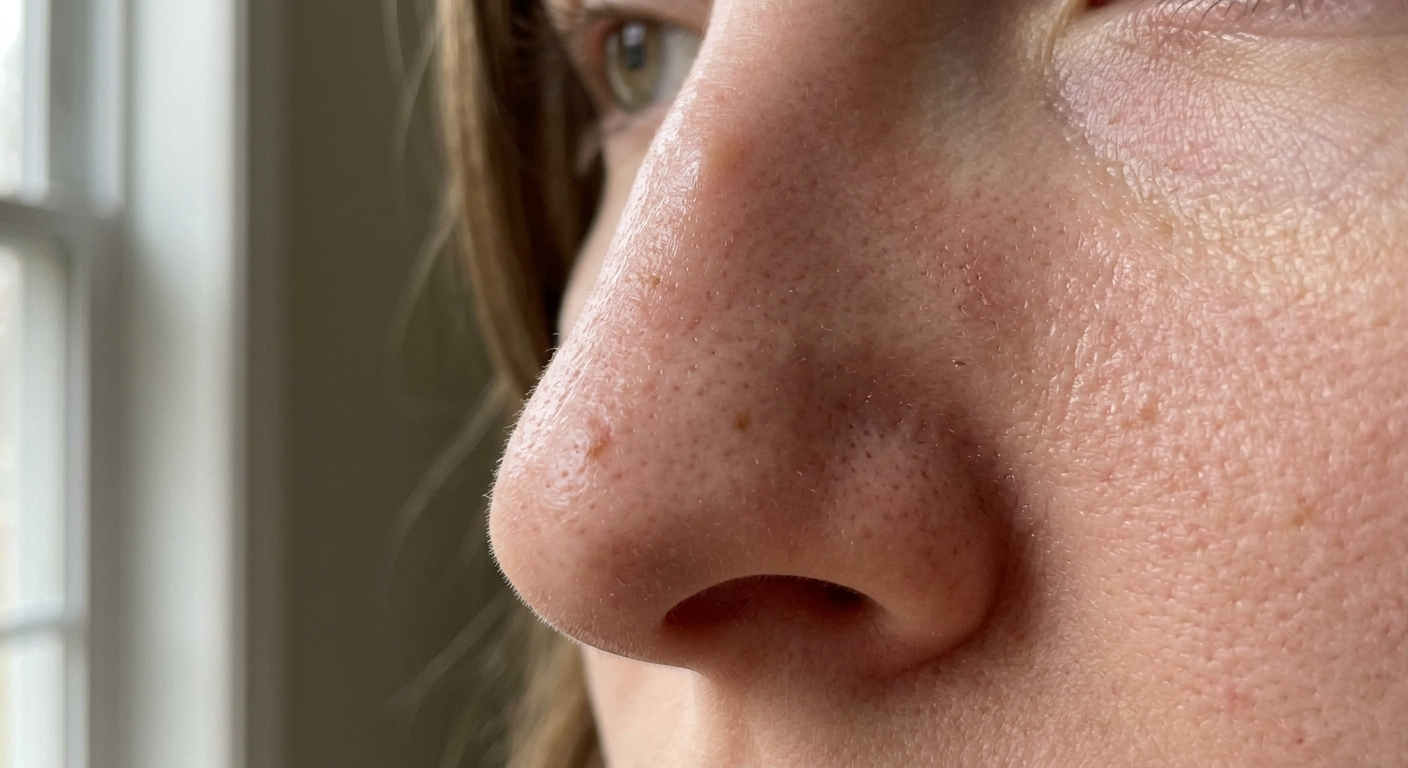
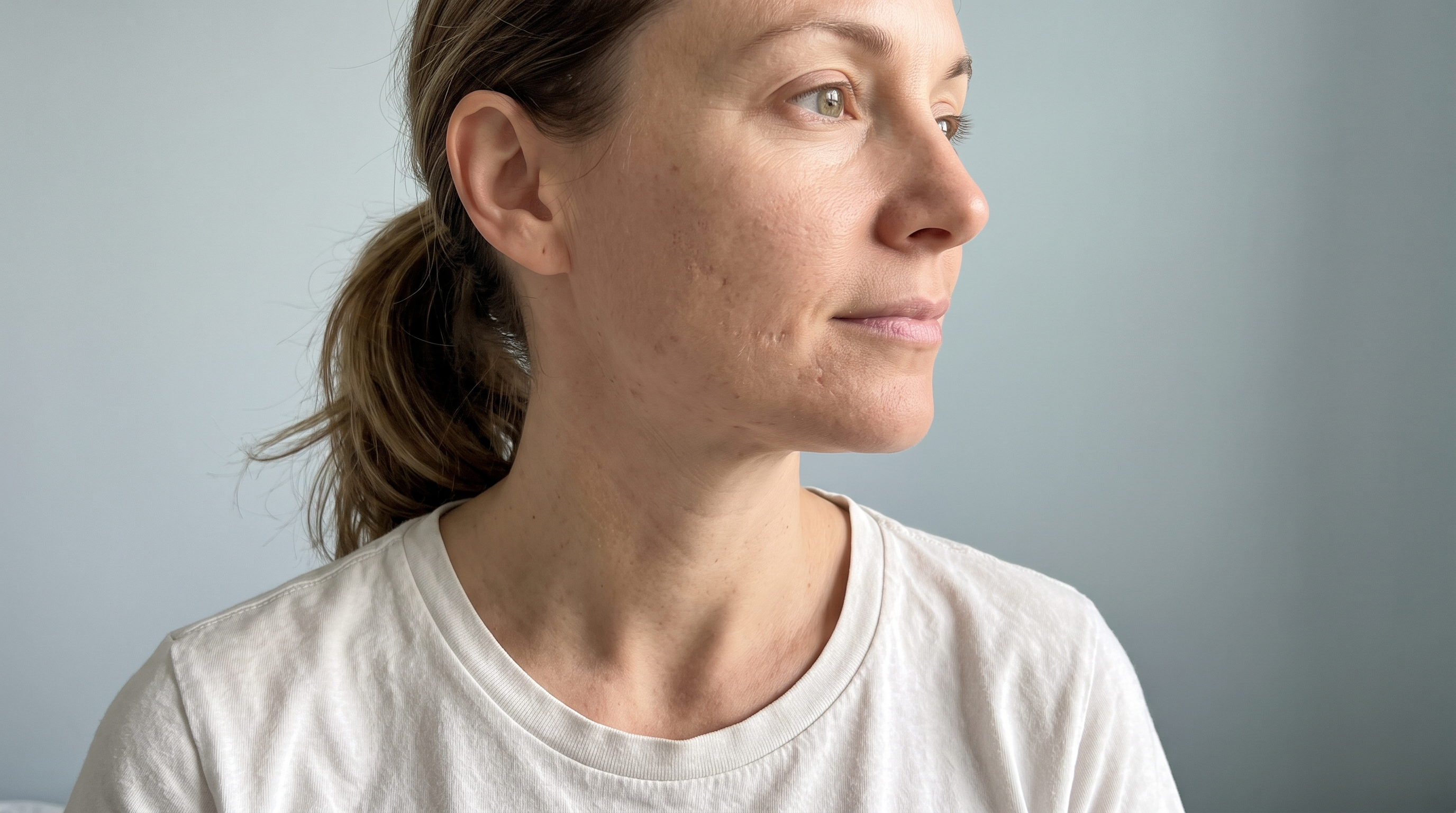
Boxcar scars are the acne scars that look like someone pressed the end of a pencil into the skin: round or oval dents with a flat floor and steep, sharp edges. In side lighting they cast small shadows, which is why they can look worse in a bathroom mirror than in daylight.
They are also one of the more treatable acne scar types, as long as the treatment matches how deep they go. Here is how to tell what you have and which options have evidence behind them.
How a boxcar scar forms
When an acne lesion is deeply inflamed, the immune response breaks down collagen in the dermis faster than the skin can rebuild it. The surface heals over a gap in the scaffolding beneath it, and the skin settles into a dent. Scars that sit below the surface like this are called atrophic scars, one of the two main families of acne scar [2].
Your skin forms a boxcar scar when an inflamed breakout destroys collagen underneath, leaving a flat-bottomed dent 1.5 to 4 mm wide, much wider than an ice pick scar.
The classification most dermatologists use describes three atrophic types [1]:
Your skin forms a boxcar scar when an inflamed breakout destroys collagen underneath, leaving a flat-bottomed dent 1.5 to 4 mm wide, much wider than an ice pick scar.
- Boxcar scars: round to oval, with sharp vertical edges and a flat base. They are usually 1.5 to 4 mm across.
- Ice pick scars: narrow, under 2 mm, and deep, tapering to a point. Our guide to ice pick scars explains why they need a different approach.
- Rolling scars: wider, soft-edged undulations caused by fibrous bands that tether the skin to the tissue below.
Shallow or deep: why it decides everything
The same classification divides boxcar scars by depth. Shallow boxcars are roughly 0.1 to 0.5 mm deep, while deep ones go beyond 0.5 mm [1]. That half a millimetre matters, because resurfacing treatments work by removing or remodelling the top layers of skin. A shallow scar can be levelled that way. A deep one has walls too tall to smooth out without lifting the base itself [1].
A simple home check: stretch the skin gently between two fingers. Scars that soften or almost disappear when stretched tend to respond to resurfacing. Scars that keep a sharp edge under tension are usually deeper and may need a procedure aimed at the base. A dermatologist can confirm this under angled light. Most people have a mix of scar types, so a combination plan is common. For an overview of every scar type and treatment, see our guide to acne scar treatment.
Treatments with evidence
Microneedling
Microneedling creates thousands of tiny channels that trigger a wound-healing response and new collagen. A review of 18 studies found that every one reported improvement in acne scarring after needling, with 12 reporting statistically significant results [3]. When needling was used alone, the median course was 3 sessions, about 4 weeks apart, with a 1.5 mm needle length [3]. Side effects were uncommon but included temporary pigment changes and, rarely, track-like marks from aggressive technique [3]. Our guide to microneedling benefits covers what to expect from a session.
Fractional lasers
A systematic review of 59 studies on energy-based acne scar treatments found that ablative lasers, such as fractional CO2, achieved the greatest improvement, but with significant pain, downtime and a risk of long-term pigment changes [5]. Non-ablative fractional lasers were safer but less effective, and radiofrequency microneedling was slightly less effective again, with the gentlest side-effect profile [5]. For shallow boxcar scars, a series of non-ablative sessions is often a reasonable middle ground, especially for darker skin tones.
Your skin may not need a clinic for every acne dent: a nightly retinoid gel matched 4 rounds of microneedling in one 6-month trial.
TCA CROSS and peels
For narrow, deep scars, dermatologists can press a high-strength trichloroacetic acid solution into the scar itself, a method called chemical reconstruction of skin scars (CROSS). In 65 patients with darker skin and atrophic acne scars, 82% of those treated with 65% acid and 94% of those treated with 100% acid had a good response, with no significant complications [6]. It suits narrow boxcars and ice pick scars better than wide, shallow ones. Our guide to the TCA peel explains how the full-face version differs.
Subcision and punch techniques
When a scar is tethered from below, as rolling scars and some boxcars are, a needle can be passed under the skin to cut the fibrous bands. The dent lifts as the tether is released, and new connective tissue forms during healing [7]. Deep boxcar scars with a healthy-looking floor can also be treated by punch elevation, where the base is cut free and raised to the level of the surrounding skin [1].
What a retinoid can do at home
Topical retinoids are not just for active acne. In a randomised split-face trial of 36 adults with moderate to severe atrophic acne scars, one side of the face received four microneedling sessions over 3 months, and the other side received a nightly 0.1% tazarotene gel [4]. Six months later, both sides had improved by a similar amount on a blinded scar-severity score [4].
Your skin may not need a clinic for every acne dent: a nightly retinoid gel matched 4 rounds of microneedling in one 6-month trial.
The improvement was measured in overall scar severity, not in the shape of individual deep scars, and the participants were young adults [4]. A retinoid will not lift a deep boxcar. It is a realistic tool for shallow scars, for the texture around them, and for the months between procedures.
Building a plan
- Get acne under control first. Every new inflamed breakout can leave a new scar, so treating active acne comes before treating scars.
- Match the tool to the depth. Shallow boxcars: microneedling, non-ablative fractional laser and a nightly retinoid. Deep or narrow boxcars: CROSS, punch elevation or subcision first, then resurfacing.
- Plan for several sessions. Most procedures need 3 or more treatments spaced about a month apart [3].
- Protect against pigment. Daily broad-spectrum sunscreen lowers the risk of dark marks after procedures, especially on deeper skin tones.
- Pause retinoids around procedures. Ask your clinician when to stop and restart; many advise a break of a few days before and after a laser or peel.
The daily partner to treatment
Procedures do the heavy lifting on boxcar scars, but collagen rebuilding continues for months afterwards, and the skin around the scars ages like the rest of your face. A nightly retinoid supports both. In a 24-week trial on aged skin, retinol increased procollagen production compared with the vehicle [8].
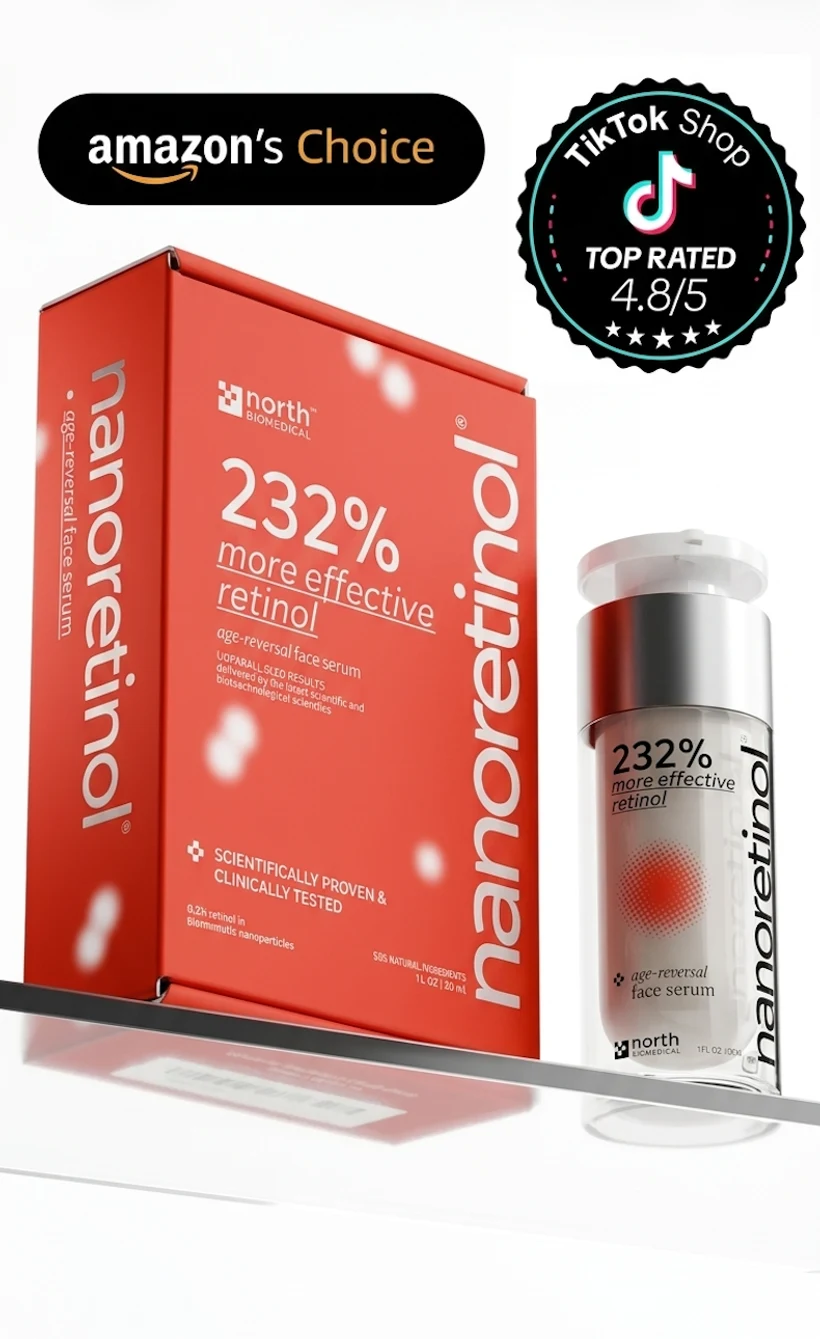
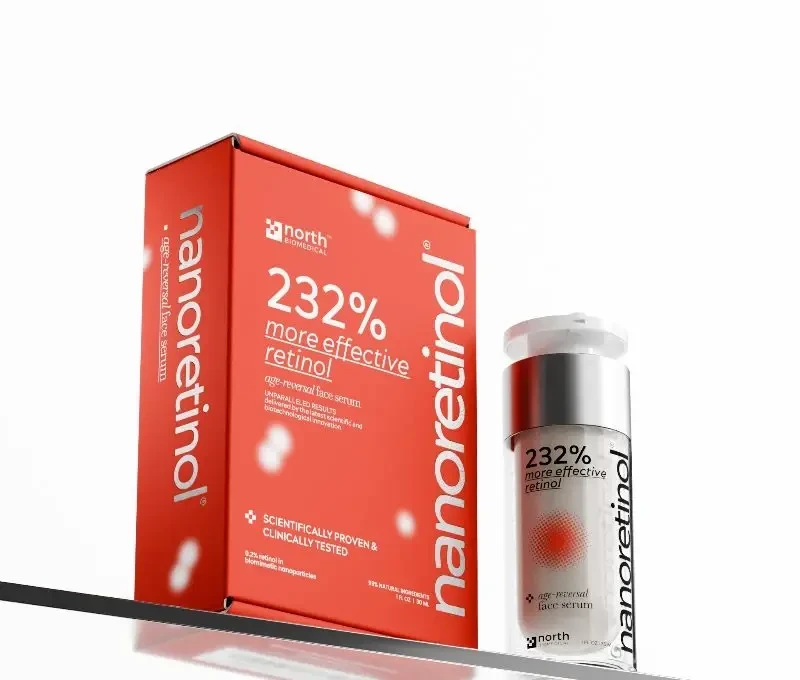
The usual problem is tolerance. Prescription retinoids such as tazarotene are effective but often cause redness and peeling, which is hard to manage alongside lasers or needling. Nanoretinol was developed for that gap. It carries 0.2% retinol in biomimetic lipid nanoparticles, in a water-based gel suitable for sensitive and oily skin. In North Biomedical’s clinical study it was 232% more effective in collagen recovery than conventional retinol, with a 61% increase in skin firmness after 56 days and milder side effects than conventional retinol [9]. Use it at night between procedures, as your clinician advises, and keep it off freshly treated or broken skin.
References
- Jacob CI, Dover JS, Kaminer MS. “Acne Scarring: A Classification System and Review of Treatment Options.” Journal of the American Academy of Dermatology. 2001;45(1):109-117. doi:10.1067/mjd.2001.113451
- Fabbrocini G, Annunziata MC, D’Arco V, De Vita V, Lodi G, Mauriello MC, et al. “Acne Scars: Pathogenesis, Classification and Treatment.” Dermatology Research and Practice. 2010;2010:893080. doi:10.1155/2010/893080
- Harris AG, Naidoo C, Murrell DF. “Skin Needling as a Treatment for Acne Scarring: An Up-to-Date Review of the Literature.” International Journal of Women’s Dermatology. 2015;1(2):77-81. doi:10.1016/j.ijwd.2015.03.004
- Afra TP, Razmi TM, Narang T, Dogra S, Kumar A. “Topical Tazarotene Gel, 0.1%, as a Novel Treatment Approach for Atrophic Postacne Scars: A Randomized Active-Controlled Clinical Trial.” JAMA Facial Plastic Surgery. 2019;21(2):125-132. doi:10.1001/jamafacial.2018.1404
- Kravvas G, Al-Niaimi F. “A Systematic Review of Treatments for Acne Scarring. Part 2: Energy-Based Techniques.” Scars, Burns & Healing. 2018;4:2059513118793420. doi:10.1177/2059513118793420
- Lee JB, Chung WG, Kwahck H, Lee KH. “Focal Treatment of Acne Scars with Trichloroacetic Acid: Chemical Reconstruction of Skin Scars Method.” Dermatologic Surgery. 2002;28(11):1017-1021. doi:10.1046/j.1524-4725.2002.02095.x
- Orentreich DS, Orentreich N. “Subcutaneous Incisionless (Subcision) Surgery for the Correction of Depressed Scars and Wrinkles.” Dermatologic Surgery. 1995;21(6):543-549. doi:10.1111/j.1524-4725.1995.tb00259.x
- Kafi R, Kwak HS, Schumacher WE, Cho S, Hanft VN, Hamilton TA, et al. “Improvement of Naturally Aged Skin with Vitamin A (Retinol).” Archives of Dermatology. 2007;143(5):606-612. doi:10.1001/archderm.143.5.606
- North Biomedical LLC. “Nanoretinol vs. Conventional Retinol: Efficacy in Collagen and Elastin Recovery.” Clinical Study Summary, 2024. Study summary