Calendula Cream: What the Marigold Flower Really Does for Skin
Calendula is one of the oldest soothing remedies in skincare. What the studies on moisture, irritation and firmness show, who should skip it, and how to use it
Calendula cream is the kind of product people keep in a drawer for years: a small tube of something golden and herbal that comes out for chapped hands, a raw nose in winter or skin that has had a rough week. It is made from the bright orange flowers of Calendula officinalis, the pot marigold, and it has been rubbed on skin for centuries.
The research behind it is smaller than its reputation, but it is real. This guide explains what calendula cream actually does, what the studies show, who should skip it, and how it fits a routine for skin that is starting to age.
What calendula cream is
Not every product labelled calendula is the same thing.
- Calendula extract creams: an extract of the flowers, made with oil, alcohol or carbon dioxide, blended into an ordinary moisturising base. Most skincare products fall into this group.
- Calendula ointments: thicker, often based on petroleum jelly, wax or lanolin, and good for chapped patches. Some are sold as homeopathic remedies, so check the label for how much flower extract the product actually contains.
- Calendula oil: a carrier oil, usually sunflower or olive, in which the petals have been soaked. It is a soothing body oil rather than a cream.
The active compounds sit mainly in the petals. The best studied are triterpenoids, especially esters of a molecule called faradiol, along with flavonoids and the carotenoids that give the flower its colour.
What it does in the skin
It calms inflammation. When researchers split a calendula flower extract into its separate parts and tested each one in a standard laboratory model of skin inflammation, the triterpenoids did most of the work. Free faradiol, the most active of them, matched the anti-inflammatory drug indomethacin in that test [1]. That is a lab finding, not a promise for your face, but it explains why calendula has such a long history on irritated skin.
Your skin can hold more water within 4 days on a calendula cream than on the same cream made without the flower, at least after a mild irritant.
It helps stressed skin hold water. A recent double-blind trial deliberately irritated small patches on the forearms of 20 healthy volunteers, then left one patch untreated and treated the others with a plain emollient cream or the same cream with 1% calendula extract. The calendula patch held more water than both of the others by day 4 and still did on day 8, and it lost less water through the surface than the untreated patch on day 3, a sign of faster barrier repair [2]. Redness was the same at all three sites.
Your skin can hold more water within 4 days on a calendula cream than on the same cream made without the flower, at least after a mild irritant.
It may soften and firm, a little. In an eight-week study, 21 volunteers applied a cream with calendula extract to one cheek and the plain base to the other. Measured with a suction device that tests how skin stretches and springs back, the calendula side showed better hydration and firmness, although most of the other elasticity readings did not change [3]. It is a small study at a single site, so treat it as a hint rather than proof.
Why the radiation-skin trials disagree
The best-known calendula studies come from cancer care, where radiotherapy often leaves breast skin red and sore. In a French trial of 254 women, a calendula ointment cut the rate of moderate-to-severe skin reactions to 41%, against 63% with trolamine, a standard hospital cream [4]. A later Swedish trial that analysed 411 women found no difference at all between a calendula cream and a simple aqueous cream [5].
A systematic review of calendula for wound healing found the same pattern across the wider evidence: encouraging results in animal studies and some small trials, and mixed results in larger human trials on burns and leg ulcers [6].
The fair reading is that calendula is a good soothing ingredient with some evidence behind it, and that the cream it comes in matters a great deal. It is not a treatment for any skin condition, and anyone having radiotherapy should follow their care team’s advice on what to put on their skin.
Your skin may feel calmer within days of a good calendula cream, but any change in firmness takes 8 weeks or longer and is far smaller than its reputation suggests.
Your skin may feel calmer within days of a good calendula cream, but any change in firmness takes 8 weeks or longer and is far smaller than its reputation suggests.
Who should be careful
Calendula belongs to the daisy family, the Compositae, along with chamomile, arnica and echinacea. A review of herbal remedies and cosmetics lists marigold among the plants suspected of causing allergic contact dermatitis in people sensitised to that family, although the evidence for calendula is anecdotal and sensitisation to most plants in the family appears to be rare [7].
If you have reacted to chamomile or arnica products before, patch test first: dab a little cream on the inside of the forearm twice a day for several days, and stop if itching or a rash appears.
How to choose a calendula cream
- Check where calendula sits on the label: on the ingredient list it appears as Calendula Officinalis Flower Extract. If it comes after the preservatives, the amount is tiny.
- Prefer fragrance-free: a soothing cream that also contains perfume works against its own purpose.
- Look at the base: ceramides, glycerin and shea butter do much of the moisturising work, so a good calendula cream is a good moisturiser first.
- Match texture to the job: a light cream for the face, a thicker ointment for chapped hands, elbows and heels.
Calendula sits alongside other calming plant ingredients, from aloe vera to the centella in cica cream. They do overlapping jobs, so one well-made soothing cream is usually enough, and very dry, itchy skin may do better with the barrier evidence behind colloidal oatmeal.
Calendula cream and aging skin
Calendula comforts skin; it does not rebuild it. The changes that make skin look older, such as thinning collagen, loosening elastin and slower cell turnover, need an ingredient with much stronger evidence. The best studied is retinol: in a 24-week trial in older adults, 0.4% retinol improved fine wrinkling and increased collagen production compared with the plain base [8].
The two work well together, because retinol’s main drawback is the dryness and redness it can cause in the first few weeks, and calming that phase is exactly what calendula cream is good at. People with reactive skin often find that a soothing moisturiser makes retinol easier to live with, and our guide to retinol for sensitive skin explains how to build up use slowly.
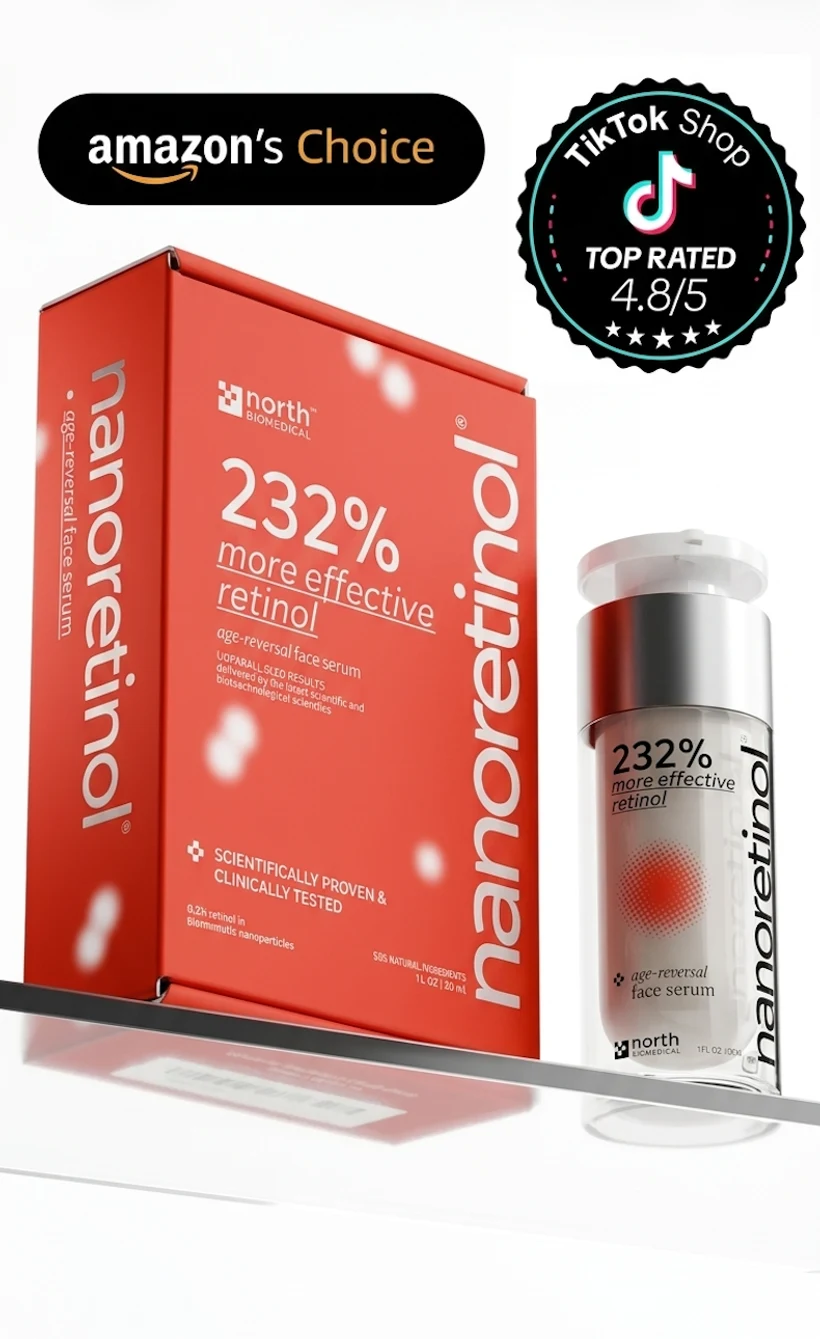
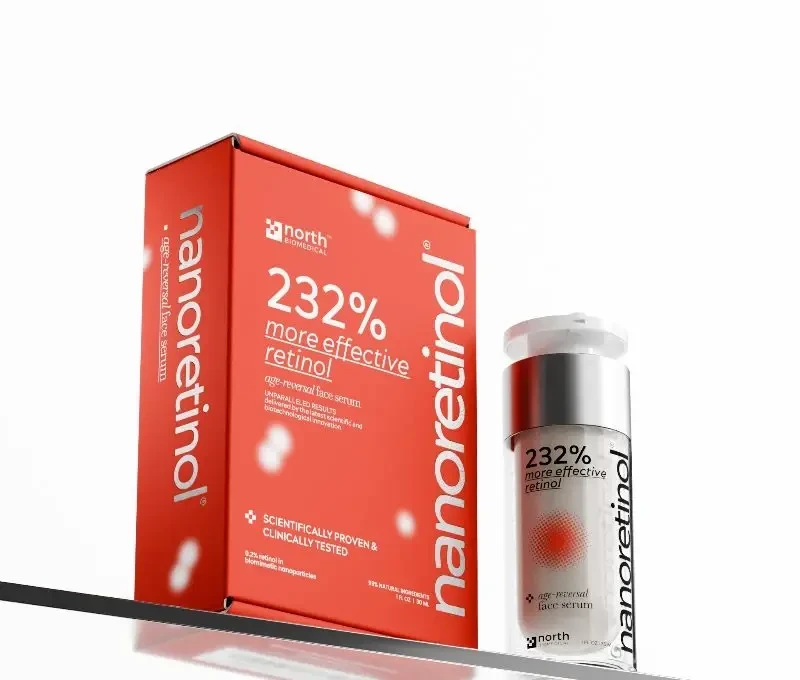
Nanoretinol was designed to make that adjustment gentler from the start. It delivers 0.2% retinol inside biomimetic lipid nanoparticles in a light, water-based gel, so it does not need the petroleum-derived chemicals that conventional formulas use to force retinol through the barrier. In North Biomedical’s clinical study it was 232% more effective in collagen recovery and 73% more effective in elastin recovery than conventional retinol, and users saw a 61% increase in firmness and a 56% increase in elasticity after 56 days, with milder side effects than conventional retinol [9].
A simple evening routine: Nanoretinol on clean, dry skin, a minute to absorb, then a fragrance-free calendula cream on top. Skip the retinol on any patch that is broken or sunburnt and let the calendula cream do the soothing there. In the morning, finish with sunscreen.
References
- Della Loggia R, Tubaro A, Sosa S, Becker H, Saar S, Isaac O. “The Role of Triterpenoids in the Topical Anti-Inflammatory Activity of Calendula officinalis Flowers.” Planta Medica. 1994;60(6):516-520. doi:10.1055/s-2006-959562
- Crnčević MŠ, Durdov T, Rušić D, Ramić L, Ćosić A, Bukić J, Jokić S, Aladić K. “Double-Blind Randomised Controlled Trial of an Emollient Cream With and Without 1% Supercritical CO2 Extract of Calendula officinalis in Contact Dermatitis.” Acta Pharmaceutica. 2025;75(4):699-708. doi:10.2478/acph-2025-0035
- Akhtar N, Zaman SU, Khan BA, Amir MN, Ebrahimzadeh MA. “Calendula Extract: Effects on Mechanical Parameters of Human Skin.” Acta Poloniae Pharmaceutica. 2011;68(5):693-701. PubMed: 21928714
- Pommier P, Gomez F, Sunyach MP, D’Hombres A, Carrie C, Montbarbon X. “Phase III Randomized Trial of Calendula officinalis Compared With Trolamine for the Prevention of Acute Dermatitis During Irradiation for Breast Cancer.” Journal of Clinical Oncology. 2004;22(8):1447-1453. doi:10.1200/JCO.2004.07.063
- Sharp L, Finnilä K, Johansson H, Abrahamsson M, Hatschek T, Bergenmar M. “No Differences Between Calendula Cream and Aqueous Cream in the Prevention of Acute Radiation Skin Reactions: Results From a Randomised Blinded Trial.” European Journal of Oncology Nursing. 2013;17(4):429-435. doi:10.1016/j.ejon.2012.11.003
- Givol O, Kornhaber R, Visentin D, Cleary M, Haik J, Harats M. “A Systematic Review of Calendula officinalis Extract for Wound Healing.” Wound Repair and Regeneration. 2019;27(5):548-561. doi:10.1111/wrr.12737
- Paulsen E. “Contact Sensitization From Compositae-Containing Herbal Remedies and Cosmetics.” Contact Dermatitis. 2002;47(4):189-198. doi:10.1034/j.1600-0536.2002.470401.x
- Kafi R, Kwak HS, Schumacher WE, Cho S, Hanft VN, Hamilton TA, et al. “Improvement of Naturally Aged Skin with Vitamin A (Retinol).” Archives of Dermatology. 2007;143(5):606-612. doi:10.1001/archderm.143.5.606
- North Biomedical LLC. “Nanoretinol vs. Conventional Retinol: Efficacy in Collagen and Elastin Recovery.” Clinical Study Summary, 2024. Study summary