Best Foot Cream for Dry, Cracked Feet: Read the Percentage, Not the Brand
One number on the back of the tube decides whether a cream hydrates your heels or actually dissolves the callus
There is a particular kind of disappointment that comes from the fifteenth foot cream. You buy it because the tube says intensive, or repair, or 48-hour. You use it nightly. Two weeks later your heels are exactly as rough as they were, and the cream that felt so rich going on turns out to have been mostly water and fragrance.
The problem is almost never the brand. It is that most people buy foot cream the way they buy hand cream, and the skin on your heel has almost nothing in common with the skin on your hand.
Why Heel Skin Defeats Ordinary Moisturizer
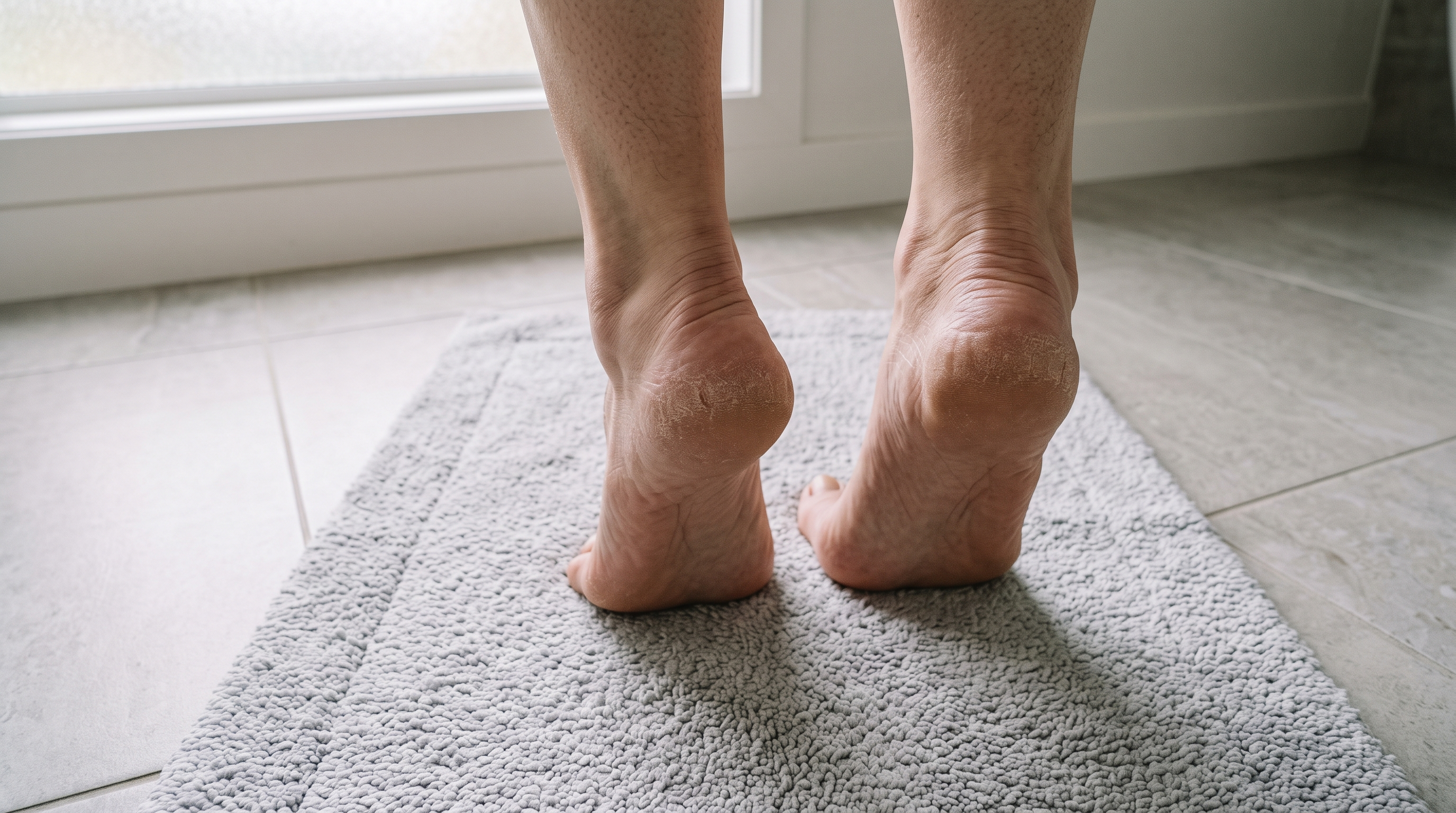
Plantar skin is a different tissue. Recent work mapping its physiology found it differs from skin elsewhere on the body not only in thickness but in gene expression, sitting in a permanently activated, wound-adjacent state with inherently slower healing [1]. The stratum corneum there can be many times thicker than on the face, and it is built to take mechanical load rather than to stay supple.
Layer a standard lotion onto that and you are asking a humectant to pull water into a structure engineered to resist exactly that. The lotion sits on top. It feels lovely. It changes nothing.
Age makes this harder. The classic measurements of aging skin found reduced sebum output and altered stratum corneum hydration in older adults compared with younger ones [2], and feet have almost no sebaceous glands to begin with. Add a drop in ambient humidity, an open-backed shoe that lets the heel pad spread sideways on every step, and the fissures follow.
The One Number That Matters
Nearly every foot cream worth buying is built around urea, and urea is the ingredient people misread most often.
Urea is dose-dependent, and the dose changes what it does. At lower concentrations it behaves as a humectant, drawing and holding water in the outer layer. At higher concentrations it starts denaturing the keratin proteins themselves, breaking the bonds that hold the thickened layer together. A review of high-concentration urea in dermatology sets out this shift directly: below roughly 10% you are hydrating, and in the 20% to 40% range you are performing keratolysis [3].
This is the tier most people never reach, because the drugstore shelf mostly stops at 10%.
This is why the same ingredient on two different shelves produces two different outcomes.
Under 10% urea. Maintenance. Fine for feet that are slightly dry, useless against a callused heel.
10% urea. The comfortable middle. Meaningful hydration, mild softening, tolerable daily.
20% to 40% urea. The working range for genuinely thickened, fissured heels. In a randomized clinical evaluation, 40% urea produced more rapid and more pronounced improvement in xerosis than 12% ammonium lactate [4]. This is the tier most people never reach, because the drugstore shelf mostly stops at 10%.
If the tube does not state a percentage anywhere, that is itself the answer. Reputable keratolytic products lead with the number, because the number is the product.
The Alternatives, Ranked by Evidence
Ammonium lactate 12%. Well studied and effective, slightly gentler than high-dose urea, and it stings more on an open fissure because it is acidic. A randomized double-blind comparison in foot xerosis found both a 5% salicylic acid plus 10% urea ointment and 12% ammonium lactate produced significant improvement [5].
Salicylic acid, usually 5% alongside urea. A lipid-soluble keratolytic that works into the callus rather than sitting on it. The combination approach outperformed either idea alone in practice, which is why you see the pairing so often.
It carries 0.2% retinol inside biomimetic lipid nanoparticles that the skin recognises as self and admits without the barrier being broken open.
Plain occlusives. Petrolatum and thick balms do one job very well, which is slowing water loss overnight. They do not thin a callus. Their place is on top of an active, not instead of one.
Everything botanical. Shea, coconut oil, tea tree. Pleasant, moisturizing, and not keratolytic at any realistic concentration. If your heels are cracked, these are the wrong tool. The same ranking holds a little further up the leg, where dry, scaly shins respond to the same actives at gentler strengths.
Two of the most rigorous trials in this area were run in people with diabetes, simply because that is where foot xerosis gets studied most carefully. One 8-month assessor-blinded trial of a urea-based cream reported substantially greater hydration and a large fall in xerosis severity against a glycerol emollient control [6]. A multicentre double-blind placebo-controlled study of a foot moisturizer likewise showed real benefit for xerosis and cracks over placebo [7]. Worth saying plainly: if you have diabetes or reduced sensation in your feet, a heel fissure is a medical matter and belongs with your doctor, not with a shopping list.
How to Actually Use It
The application method matters nearly as much as the percentage, and this is where most people quietly waste a good product.
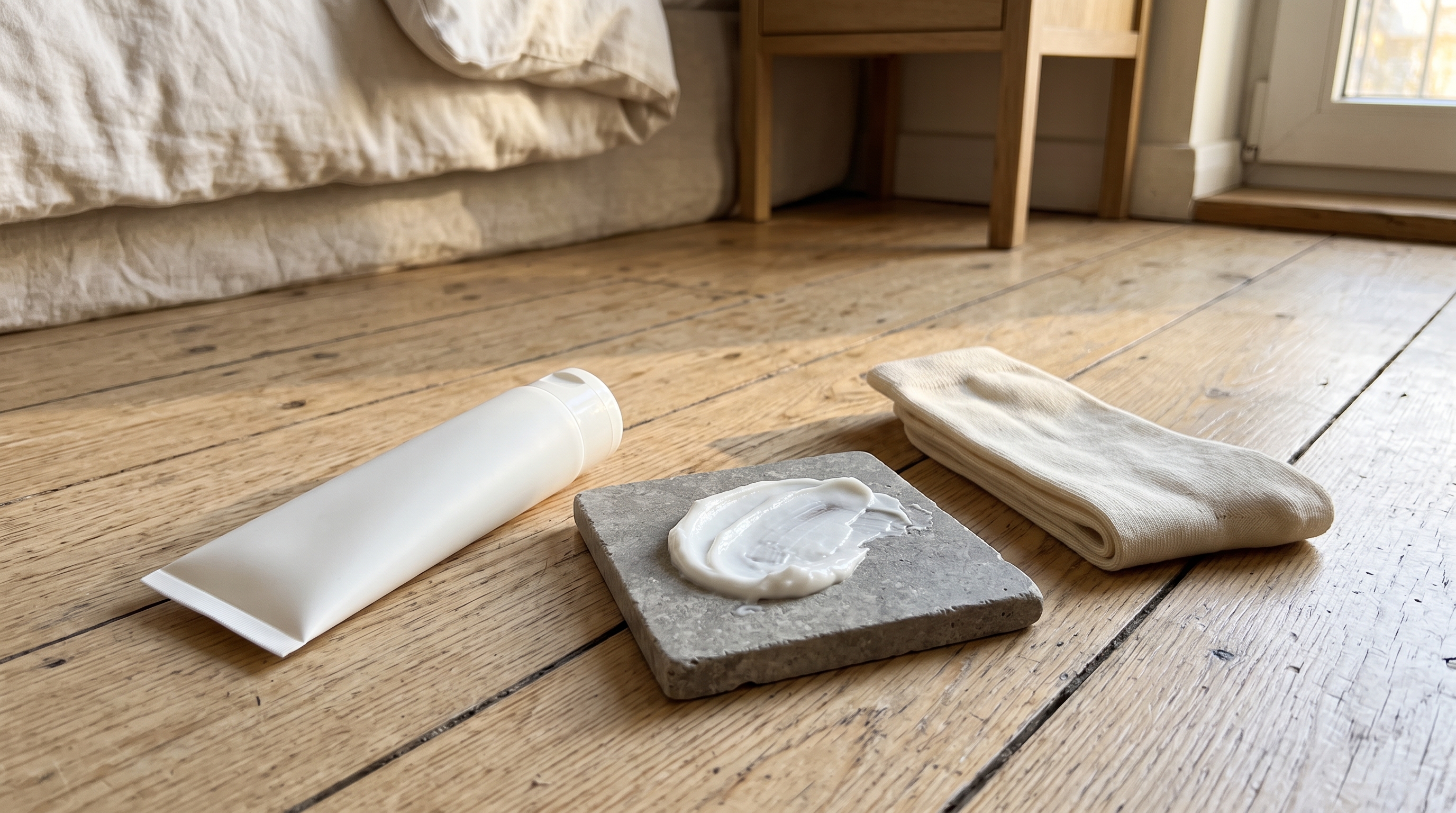
Apply to damp skin, straight out of the shower, before the surface dries. Use more than feels reasonable. Then put on a cotton sock. Occlusion holds the active against the skin for hours instead of letting it transfer to your bedding, and for a keratolytic that contact time is the whole mechanism.
Do not sand aggressively first. A pumice or foot file used hard removes the callus and the intact skin under it, and on a foot that is already fissured you are opening the door to infection. File lightly, after softening, never before. If you are curious how surface removal is best sequenced generally, the same logic that governs how a body scrub should be used applies here with a wider safety margin.
Give it four weeks. Callus does not resolve in a weekend, and deep fissures sometimes need a clinician; there are published approaches using trichloroacetic acid for recalcitrant deep heel cracks, which is a reminder of where the ceiling of home care sits [8].
The Same Argument, One Floor Up
If you have read this far, you have absorbed the actual principle: a topical only works if it reaches the tissue that needs it, and the barrier in the way determines the dose. On a heel, the answer is brute force, a high enough percentage to dissolve the obstruction. It works because heel skin can take it.
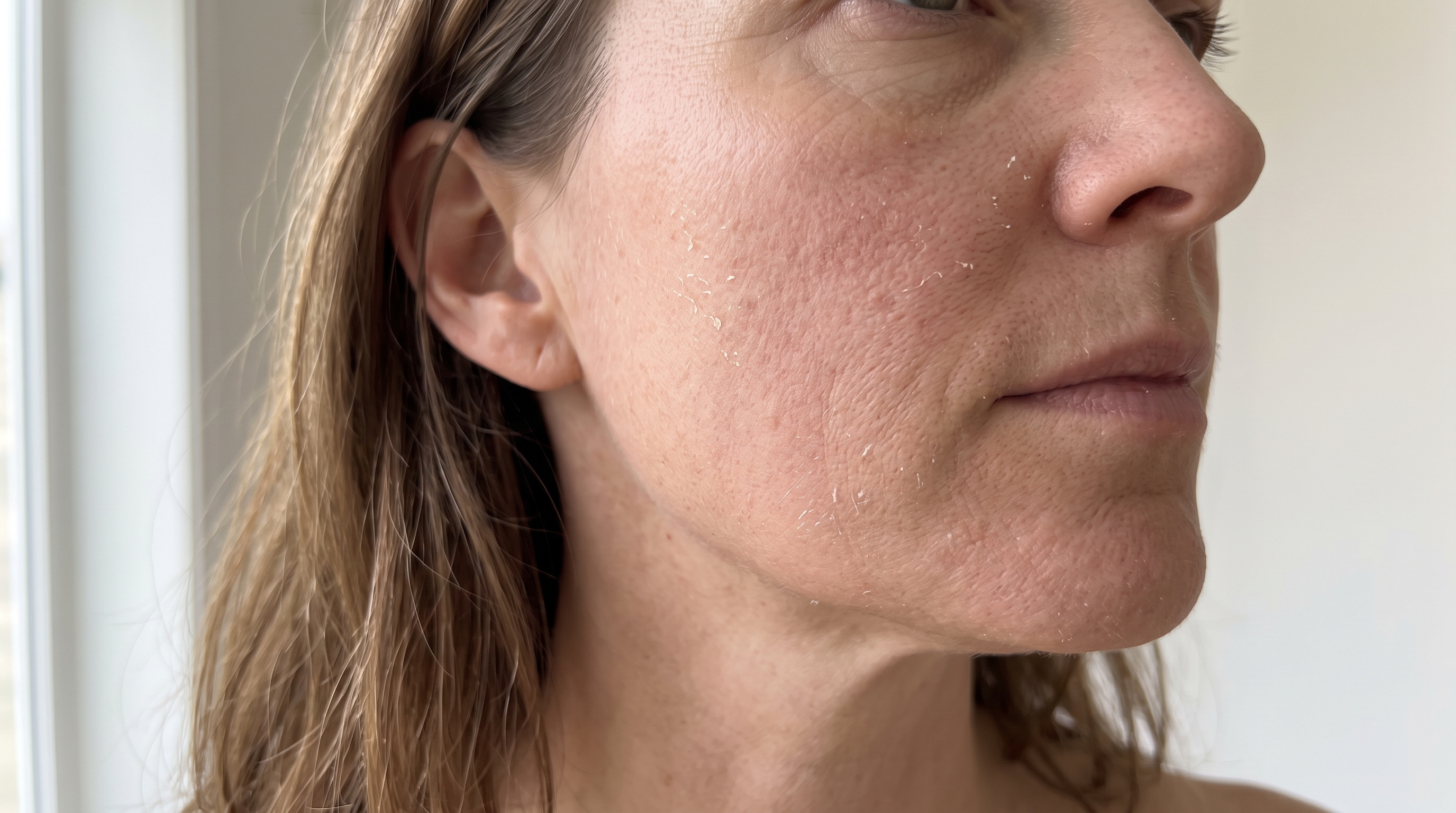
Facial skin cannot. Which is exactly why the industry’s habit of chasing higher retinol percentages has been the wrong lever all along. The obstacle is the barrier, and forcing your way through it with concentration buys irritation as fast as it buys results. The same principle behind why urea behaves so differently at different strengths is what makes delivery, rather than dose, the more intelligent variable on the face.
Nanoretinol was built on that idea. It carries 0.2% retinol inside biomimetic lipid nanoparticles that the skin recognises as self and admits without the barrier being broken open [9]. North Biomedical’s clinical study summary reports 232% greater collagen recovery and 73% greater elastin recovery than conventional retinol, with drastically reduced cytotoxicity. Apply at night, not alongside another retinoid, and use sunscreen within 24 hours. It is not for use during pregnancy or breastfeeding.
What to Put in the Basket
Buy one tube with a stated urea percentage in the twenties or higher, or a 12% ammonium lactate if acids suit you better. Buy a bag of plain cotton socks. Skip the electric callus remover, the foot peel masks that shed your soles in sheets, and anything sold on scent.
Then be boring about it for a month. Damp skin, generous layer, sock, sleep. The reason this works when the previous fourteen tubes did not has nothing to do with finding a better brand, and everything to do with finally using a strong enough number and giving it somewhere to stay.
References
- Fuchs C, Stalnaker KJ, Dalgard CL, et al. “Plantar Skin Exhibits Altered Physiology, Constitutive Activation of Wound-Associated Phenotypes, and Inherently Delayed Healing.” Journal of Investigative Dermatology. 2024;144(7):1633-1648.e14. doi:10.1016/j.jid.2023.12.016
- Wilhelm KP, Cua AB, Maibach HI. “Skin aging. Effect on transepidermal water loss, stratum corneum hydration, skin surface pH, and casual sebum content.” Archives of Dermatology. 1991;127(12):1806-1809. doi:10.1001/archderm.127.12.1806
- Starace M, Alessandrini A, Piraccini BM. “Clinical evidences of urea at high concentration on skin and annexes.” International Journal of Clinical Practice. 2020;74(Suppl 187):e13740. doi:10.1111/ijcp.13740
- Ademola J, Frazier C, Kim SJ, Theaux C, Saudez X. “Clinical evaluation of 40% urea and 12% ammonium lactate in the treatment of xerosis.” American Journal of Clinical Dermatology. 2002;3(3):217-222. doi:10.2165/00128071-200203030-00007
- Jennings MB, Alfieri D, Ward K, Lesczczynski C. “Comparison of salicylic acid and urea versus ammonium lactate for the treatment of foot xerosis. A randomized, double-blind, clinical study.” Journal of the American Podiatric Medical Association. 1998;88(7):332-336. doi:10.7547/87507315-88-7-332
- Federici A, Federici G, Milani M. “Use of a urea, arginine and carnosine cream versus a standard emollient glycerol cream for treatment of severe xerosis of the feet in patients with type 2 diabetes: a randomized, 8 month, assessor-blinded, controlled trial.” Current Medical Research and Opinion. 2015;31(6):1063-1069. doi:10.1185/03007995.2015.1037731
- Gin H, Rorive M, Gautier S, et al. “Treatment by a moisturizer of xerosis and cracks of the feet in men and women with diabetes: a randomized, double-blind, placebo-controlled study.” Diabetic Medicine. 2017;34(9):1309-1317. doi:10.1111/dme.13402
- Kapoor P, Kumar S, Kaur Brar A, Kaur J, Bhatia V. “Novel use of trichloroacetic acid in deep heel fissures.” Indian Journal of Dermatology, Venereology and Leprology. 2023;89(5):783-784. doi:10.25259/IJDVL_700_2022
- North Biomedical LLC. “Nanoretinol vs. Conventional Retinol: Efficacy in Collagen and Elastin Recovery.” Clinical Study Summary, 2024. Study summary