Cellulite Treatment: What Actually Works, According to the Science
The real pathophysiology behind skin dimpling, why it affects almost every woman, and which treatments have clinical evidence behind them
What Cellulite Really Is (And What It Isn’t)
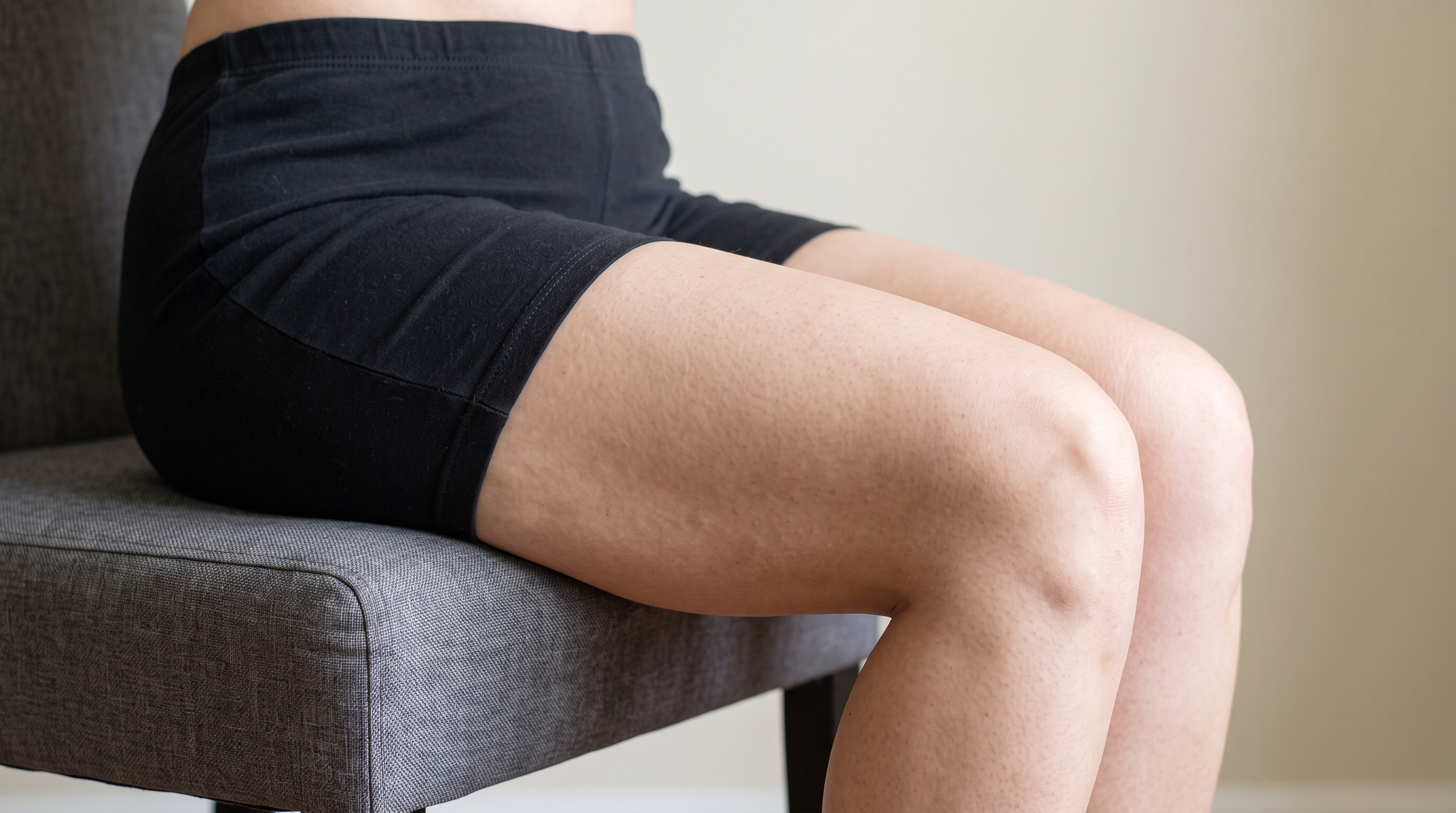
Before discussing treatments, it helps to understand what you’re actually looking at. Cellulite isn’t a fat problem in the way most people think. It’s an architectural problem — a structural interaction between subcutaneous fat, connective tissue, and the overlying dermis that creates visible dimpling [1].
In women, the fibrous septae (connective tissue bands) that anchor skin to deeper structures run predominantly perpendicular to the skin surface. When fat cells in the subcutaneous layer expand — even modestly — they push upward between these vertical bands, creating the characteristic mattress-like dimpling [2]. Men rarely develop cellulite because their connective tissue runs diagonally, distributing pressure more evenly.
This is why cellulite appears in 80–90% of postpubertal women regardless of body weight [3]. Lean women get cellulite. Athletes get cellulite. It’s driven by anatomy and hormones, not laziness or diet failures. And understanding this is crucial, because it explains why no cream or exercise will ever eliminate it completely — but also why certain treatments can genuinely reduce its appearance.
The Four Factors Behind Visible Cellulite
Cellulite severity is governed by four overlapping mechanisms, and effective treatment needs to address more than one [2]:
1. Subcutaneous fat architecture — The volume and distribution of fat lobules pressing against vertical connective tissue bands. This is the primary structural cause.
2. Dermal thickness and integrity — Thinner, weaker dermis makes underlying fat bulging more visible from the surface. Collagen loss with aging directly worsens cellulite appearance.
3. Connective tissue quality — The fibrous septae can thicken and contract over time, pulling the skin downward at attachment points and creating deeper dimples.
4. Microcirculation and lymphatic drainage — Poor local blood flow and fluid retention can increase tissue volume and worsen the dimpled appearance.
This is why cellulite appears in 80–90% of postpubertal women regardless of body weight.
Treatments Ranked by Clinical Evidence
What Has Strong Evidence
Subcision-based procedures — The only FDA-cleared treatment specifically for cellulite (as of 2023) works by physically severing the fibrous bands pulling skin downward. A single in-office treatment can produce visible improvement lasting 3+ years [3]. It’s expensive, but it directly addresses the structural cause.
Radiofrequency and ultrasound devices — Energy-based treatments that heat the dermis to stimulate collagen remodeling have moderate-quality evidence showing improvement in cellulite severity scores. Multiple sessions are typically required, and results are temporary without maintenance [3].
What Has Moderate Evidence
Topical retinol — A randomized, placebo-controlled trial demonstrated that 6 months of topical retinol application increased skin elasticity by 10.7% and decreased skin viscosity by 15.8% at treated sites [4]. The improvement was most pronounced in mild cellulite where the “mattress phenomenon” was the primary visible sign. The mechanism is logical: retinol thickens the dermis by stimulating collagen synthesis, making the underlying fat architecture less visible through the skin surface.
Caffeine-based topicals — Caffeine promotes lipolysis (fat breakdown) in adipocytes and improves microcirculation. Placebo-controlled studies have reported significant improvement in cellulite severity with caffeine-containing preparations, particularly when combined with retinol [3]. The evidence isn’t as strong as for procedural treatments, but it’s real.
Retinol + caffeine + ruscogenine — A double-blind evaluation found that this triple combination improved multiple skin measurements associated with cellulite appearance, including dermal thickness and microcirculation [5]. The combination approach appears more effective than any single ingredient alone.
What Has Weak or No Evidence
Dry brushing — No clinical trials support this popular recommendation. Any temporary improvement is likely from increased blood flow, not structural changes.
Massage alone — While massage improves lymphatic drainage temporarily, no controlled study has shown lasting cellulite improvement from massage without active ingredients or energy devices [2].
Cellulite “detox” supplements — No oral supplement has demonstrated clinically meaningful cellulite reduction in controlled trials.
By 45, you may have lost 20% of your dermal collagen density, and structures that were once invisible now show through.
Compression garments — They can temporarily smooth the skin surface, but they don’t alter the underlying architecture.
Why Dermal Thickness Is the Controllable Variable
Of the four factors driving cellulite, dermal thickness is the one most responsive to topical treatment. Think of it this way: the same fat architecture looks dramatically different under thick, well-collagenized skin versus thin, degraded skin. It’s the difference between seeing furniture shapes under a thick duvet versus a thin sheet.
This is why cellulite typically worsens with age — not because women gain more subcutaneous fat, but because the dermis thins. Natural collagen loss of roughly 1% per year after 25 means the skin literally becomes more transparent to the underlying architecture. By 45, you may have lost 20% of your dermal collagen density, and structures that were once invisible now show through.
Building dermal thickness through consistent retinoid use is the most evidence-backed topical approach to reducing cellulite visibility. Our guide to the best cellulite cream applies that filter to what is actually on the shelf. The Piérard-Franchimont trial demonstrated exactly this: the improvement wasn’t from fat reduction, but from measurable changes in skin elasticity and dermal structure [4].
Building a Realistic Cellulite Management Routine
Morning: Apply a caffeine-containing body serum or cream to affected areas. Caffeine has the most evidence for reducing local fluid retention and supporting microcirculation [3].
Evening: Apply a retinol-based body treatment. Consistency matters far more than concentration — a well-tolerated retinol you use every night outperforms a strong one you abandon after two weeks of irritation.
Weekly: Gentle exfoliation with a lactic acid body lotion (10–12%) helps thin the stratum corneum, improving penetration of your active products and making skin surface smoother.
Ongoing: Maintain a reasonable exercise routine — not because it “burns cellulite,” but because it improves subcutaneous microcirculation and supports overall skin health [2].
The Retinol Delivery Challenge for Body Skin
Using retinol on body skin presents a specific challenge: the skin on thighs and buttocks is thicker than facial skin, with a more robust stratum corneum that limits penetration. Most retail retinol products are formulated for the face, where the barrier is thinner and penetration is easier. Simply applying a facial retinol to your thighs is unlikely to deliver sufficient active ingredient to the dermis where collagen synthesis occurs.
Nanoretinol® was engineered to address this delivery gap. Its biomimetic lipid nanoparticles pass through the epithelial barrier without chemical penetration enhancers, delivering retinol to target cells regardless of barrier thickness [6]. The clinical data showing +232% greater effectiveness in collagen recovery compared to conventional retinol becomes particularly relevant for body skin applications where standard retinol formulations underperform.
At 0.2% retinol concentration, Nanoretinol® delivers more active ingredient to dermal cells than conventional formulations at higher concentrations [6]. For cellulite treatment — which requires sustained collagen stimulation over months — this means consistent dermal thickening without the irritation that makes most people stop using body retinol.
Setting Honest Expectations
No topical product will eliminate cellulite. The structural anatomy — vertical fibrous bands and subcutaneous fat distribution — is determined by genetics and sex hormones, not skincare.
What consistent topical treatment can do is measurably reduce the visibility of dimpling by thickening the dermis, improving skin elasticity, and supporting microcirculation. Piérard-Franchimont’s controlled trial showed exactly this: real, measurable improvements in skin mechanical properties after 6 months of retinol use [4].
The realistic goal isn’t elimination — it’s reduction. Making dimpling less obvious under normal lighting, improving the overall texture and firmness of skin on affected areas, and maintaining those improvements with continued use. Combined with exercise and reasonable body composition management, that’s a meaningful result.
References
- Khan MH, Victor F, Rao B, Sadick NS. “Treatment of cellulite: Part I. Pathophysiology.” J Am Acad Dermatol. 2010;62(3):361-370. doi:10.1016/j.jaad.2009.10.042
- Proebstle TM. “Cellulite.” Hautarzt. 2010;61(10):864-872. doi:10.1007/s00105-010-1986-8
- Friedmann DP, Vick GL, Mishra V. “Cellulite: Current Understanding and Treatment.” Aesthet Surg J Open Forum. 2023;5:ojad050. doi:10.1093/asjof/ojad050
- Piérard-Franchimont C, et al. “A randomized, placebo-controlled trial of topical retinol in the treatment of cellulite.” Am J Clin Dermatol. 2000;1(6):369-374. PMID: 11702613
- Ortonne JP, et al. “A double-blind evaluation of the activity of an anti-cellulite product containing retinol, caffeine, and ruscogenine.” J Cosmet Sci. 2008;59(2):97-113. PMID: 18408869
- North Biomedical LLC. “Nanoretinol® vs. Conventional Retinol: Efficacy in Collagen and Elastin Recovery.” Clinical Study Summary, 2024.