Dry Brushing Skin: What It Actually Does and What It Cannot
Three separate claims travel together under one ritual. Only one of them holds up.
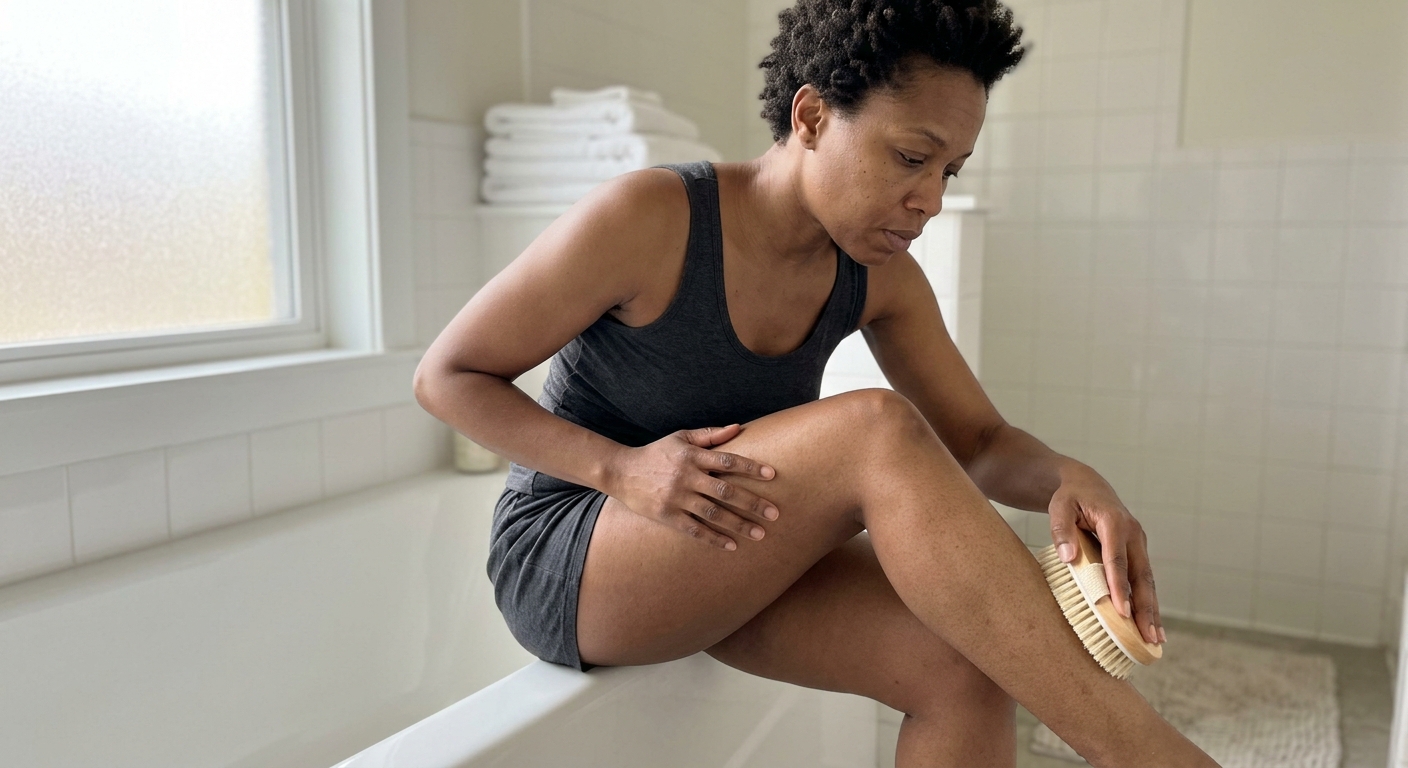
Dry brushing is one of the most durable rituals in body care. Two minutes with a stiff natural-bristle brush before the shower, always toward the heart, and the skin comes up warm and pink and noticeably smoother. It feels like it worked, which is most of the reason it has survived a century of changing skincare fashion.
The difficulty is that dry brushing is sold as three different things at once. It is presented as exfoliation, as lymphatic drainage, and as a cellulite treatment, and those three claims have wildly different amounts of evidence behind them. Grading them together produces either an unearned endorsement or an unfair dismissal. Graded separately, the picture is much clearer.
Claim One: Exfoliation
This is the claim that holds. A stiff brush dragged across dry skin removes loose corneocytes from the surface of the stratum corneum, and the immediate softness is real rather than imagined.
What is worth understanding is that shedding those cells was already happening. Desquamation is an actively regulated biological process, not a backlog waiting to be cleared. Corneocytes are released from the surface through enzymatic breakdown of the structures holding them together, in a sequence tuned to release single cells inconspicuously [1]. The stratum corneum sits in continual shedding and renewal, synchronised with cell division in the basal layer below [2].
That reframing sets a realistic expectation. Brushing gets you a smoother surface today by removing cells that were on their way out anyway. It is a genuine cosmetic effect with a short half-life, and it is the same category of benefit you get from any sensible approach to how often you exfoliate. Push the frequency or the pressure too far and the calculus flips, because the barrier those cells form is doing real work.
Brushing gets you a smoother surface today by removing cells that were on their way out anyway.
Claim Two: Lymphatic Drainage
Here the ground gets softer. The skin does contain a genuine lymphatic network, with initial lymphatic capillaries in the upper dermis feeding into larger collecting vessels deeper down, and that network does move fluid and immune cells. The anatomy is not in dispute.
The question is whether brushing the skin surface meaningfully drives it, and whether doing so produces a visible cosmetic result. Even manual lymphatic drainage performed by trained specialists, a far more deliberate intervention than a two-minute brush, sits on contested evidence. A recent appraisal of the technique concluded that the literature on its efficacy is often contradictory and that its addition is not always necessary [4].
If the evidence for skilled manual drainage in clinical settings is that equivocal, the case for firm brush strokes producing durable cosmetic change is weaker still. Any morning de-puffing you notice is plausible and probably transient.
Claim Three: Cellulite
This is where dry brushing is oversold most often, and the honest answer is unsatisfying for every product on the shelf rather than for brushes specifically.
A systematic review of cellulite treatments examined 67 studies, of which only 19 were randomised and placebo-controlled. Across creams, devices, lasers and mechanical therapies, the authors found no clear evidence of good efficacy for any evaluated treatment, with only acoustic wave therapy and one minimally invasive laser showing any potential benefit [3]. Cellulite arises from the architecture of fibrous septae tethering skin to deeper tissue, a structural arrangement that a surface brush does not reach.
Nanoretinol encapsulates a stabilised 0.2% retinol inside biomimetic lipid nanoparticles that pass the epithelial barrier because the skin reads them as self, removing the need for that disruption.
Temporary flushing and mild swelling can soften the visible dimpling for a short while, which is why before-and-after photos taken minutes apart look persuasive. That is a circulatory effect, and it fades.
What Actually Changes Crepey Body Skin
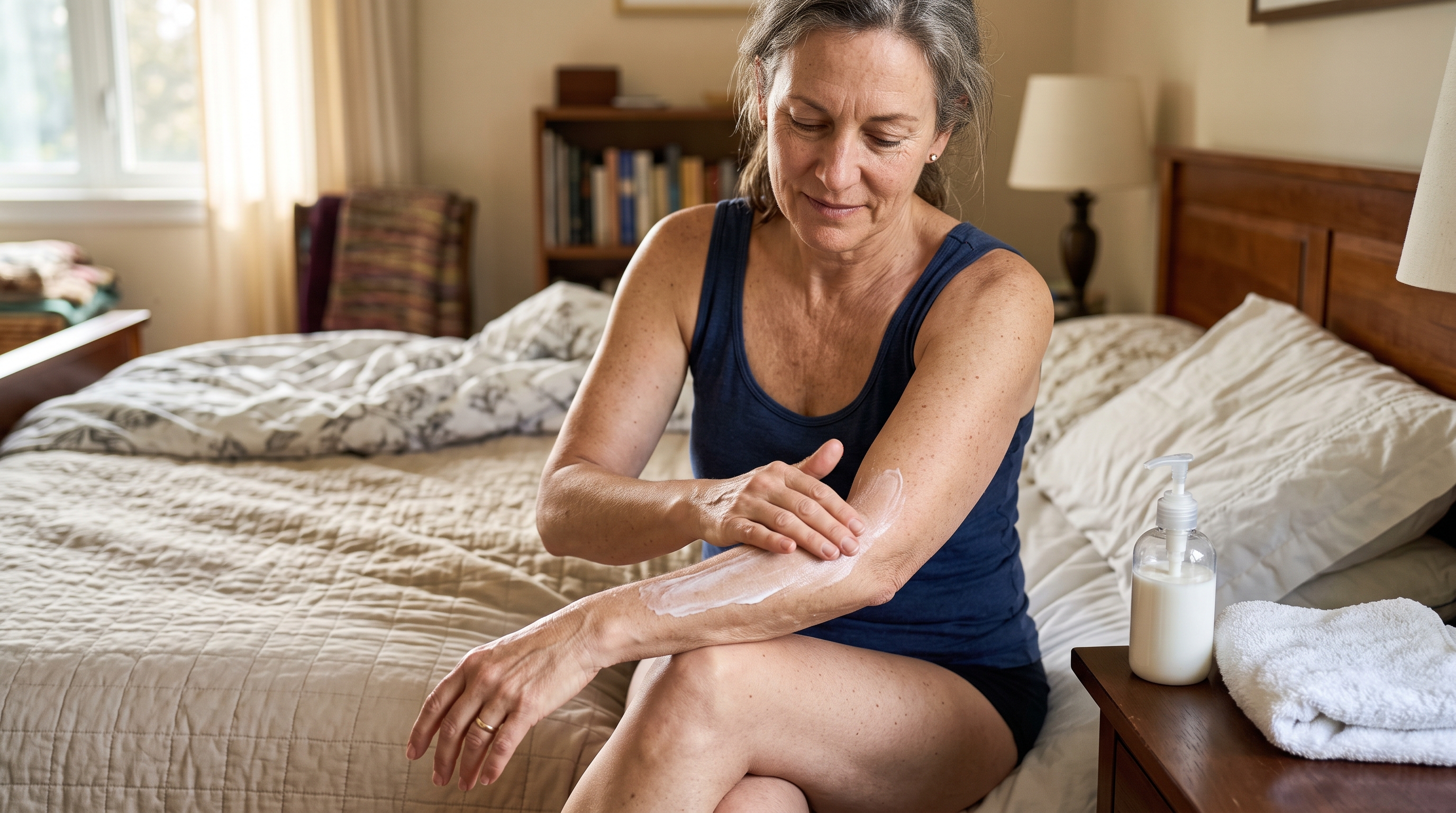
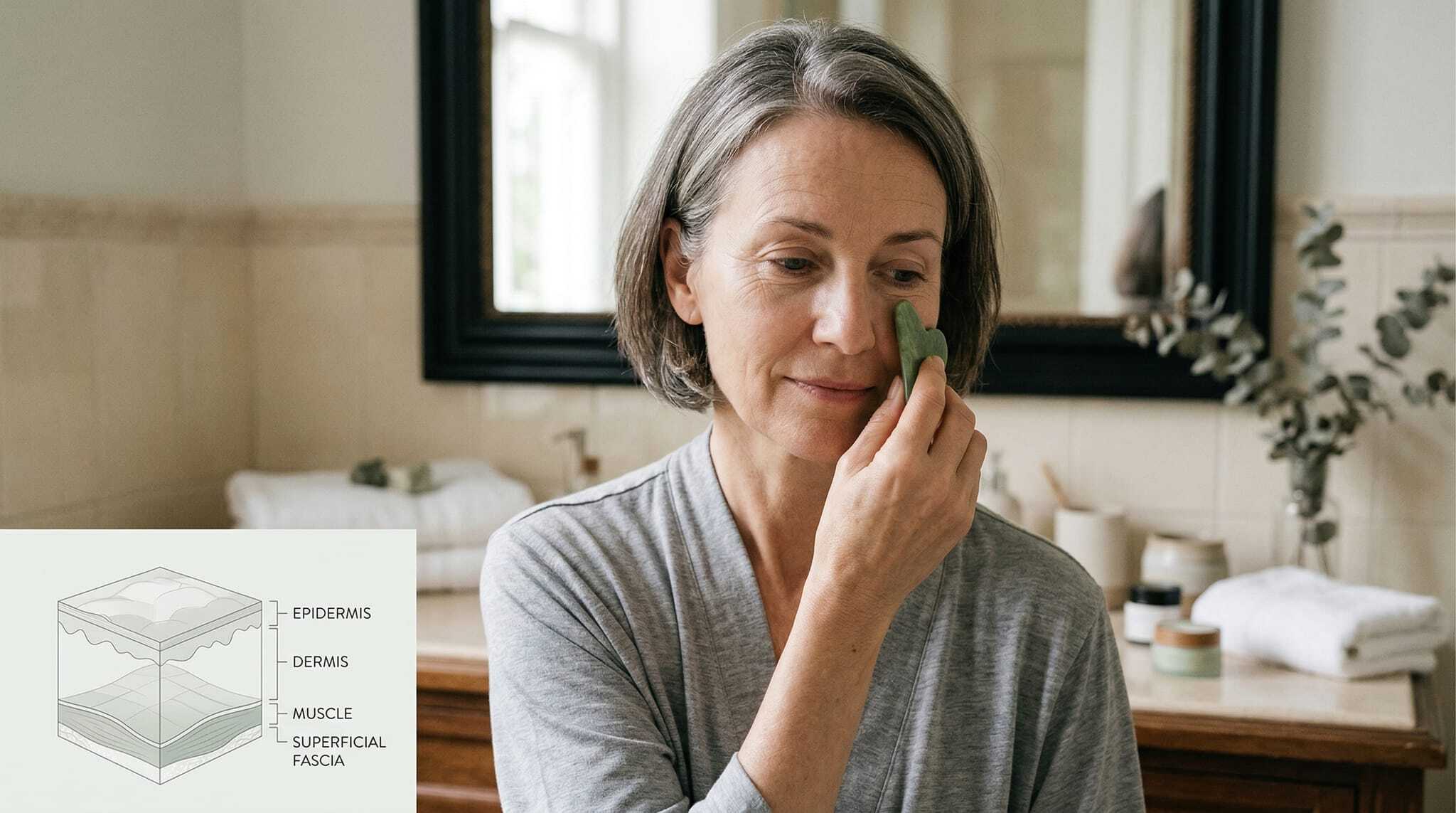
The reason many people take up dry brushing is not really surface roughness. It is the thin, finely lined quality that appears on the arms, thighs and shins with age, and that concern has a specific cause. Crepey texture reflects loss of collagen and elastin in the dermis, which no amount of surface abrasion can reach. Understanding how skin cell turnover works makes clear why exfoliation and dermal remodelling are separate projects.
Retinoids are the most thoroughly documented topical answer. In a controlled study of naturally aged skin, applying topical retinol three times weekly for 24 weeks significantly reduced fine wrinkles and increased production of both glycosaminoglycans and collagen, measured in tissue rather than judged by eye [5]. That is dermal change of the kind that brushing cannot produce, and it is why a retinoid belongs in any serious plan for crepey skin on the legs.
Extending a retinoid to the body has traditionally been the hard part. Body skin covers a large surface area, and conventional retinol formulations often depend on carriers that disturb the skin barrier to deliver the active, which makes wide application uncomfortable. Nanoretinol encapsulates a stabilised 0.2% retinol inside biomimetic lipid nanoparticles that pass the epithelial barrier because the skin reads them as self, removing the need for that disruption. North Biomedical’s clinical study found the approach 232% more effective than conventional retinol in collagen recovery and 73% more effective in elastin recovery, alongside drastically reduced cytotoxicity [6]. Anyone planning to use a retinoid on the body should apply it at night and use sunscreen the following day.
Brushing Without Undoing the Barrier
If you enjoy the ritual, it is worth keeping on sensible terms. Use light pressure, since the goal is loosening surface cells rather than reddening skin. Two or three sessions a week is plenty for most people, and daily brushing is where barrier trouble usually begins. Skip any area that is inflamed, broken, sunburned or actively irritated, and apply a moisturizer or treatment product afterward while the surface is freshly cleared.
Where That Leaves the Brush
Dry brushing earns its place as a pleasant, low-cost exfoliation habit with an immediate and honest payoff. It does not drain your lymphatic system in any way that shows on your body, and it does not treat cellulite, because nothing reliably does.
The gap between what dry brushing delivers and what people hope for is the gap between the surface and the dermis. That is a delivery problem, and it gets solved with chemistry rather than bristles.
References
- Pierard GE, Goffin V, Hermanns-Le T, Pierard-Franchimont C. “Corneocyte desquamation.” International Journal of Molecular Medicine. 2000;6(2):217-221. doi:10.3892/ijmm.6.2.217
- Brysk MM, Rajaraman S. “Cohesion and desquamation of epidermal stratum corneum.” Progress in Histochemistry and Cytochemistry. 1992;25(1):1-53. doi:10.1016/s0079-6336(11)80062-8
- Luebberding S, Krueger N, Sadick NS. “Cellulite: an evidence-based review.” American Journal of Clinical Dermatology. 2015;16(4):243-256. doi:10.1007/s40257-015-0129-5
- Ramadan F. “Manual lymphatic drainage: the evidence behind the efficacy.” British Journal of Community Nursing. 2024;29(2):83-84. doi:10.12968/bjcn.2024.29.2.83
- Kafi R, Kwak HS, Schumacher WE, Cho S, Hanft VN, Hamilton TA, et al. “Improvement of naturally aged skin with vitamin A (retinol).” Archives of Dermatology. 2007;143(5):606-612. doi:10.1001/archderm.143.5.606
- North Biomedical LLC. “Nanoretinol vs. Conventional Retinol: Efficacy in Collagen and Elastin Recovery.” Clinical Study Summary, 2024. Study summary