Ceramide Body Lotion: How to Repair Dry, Rough Skin From the Neck Down
Arms and legs lose barrier lipids with age and every winter, and they have little oil of their own to fall back on. Here is what a ceramide body lotion needs to contain, what the trials show and where retinol fits
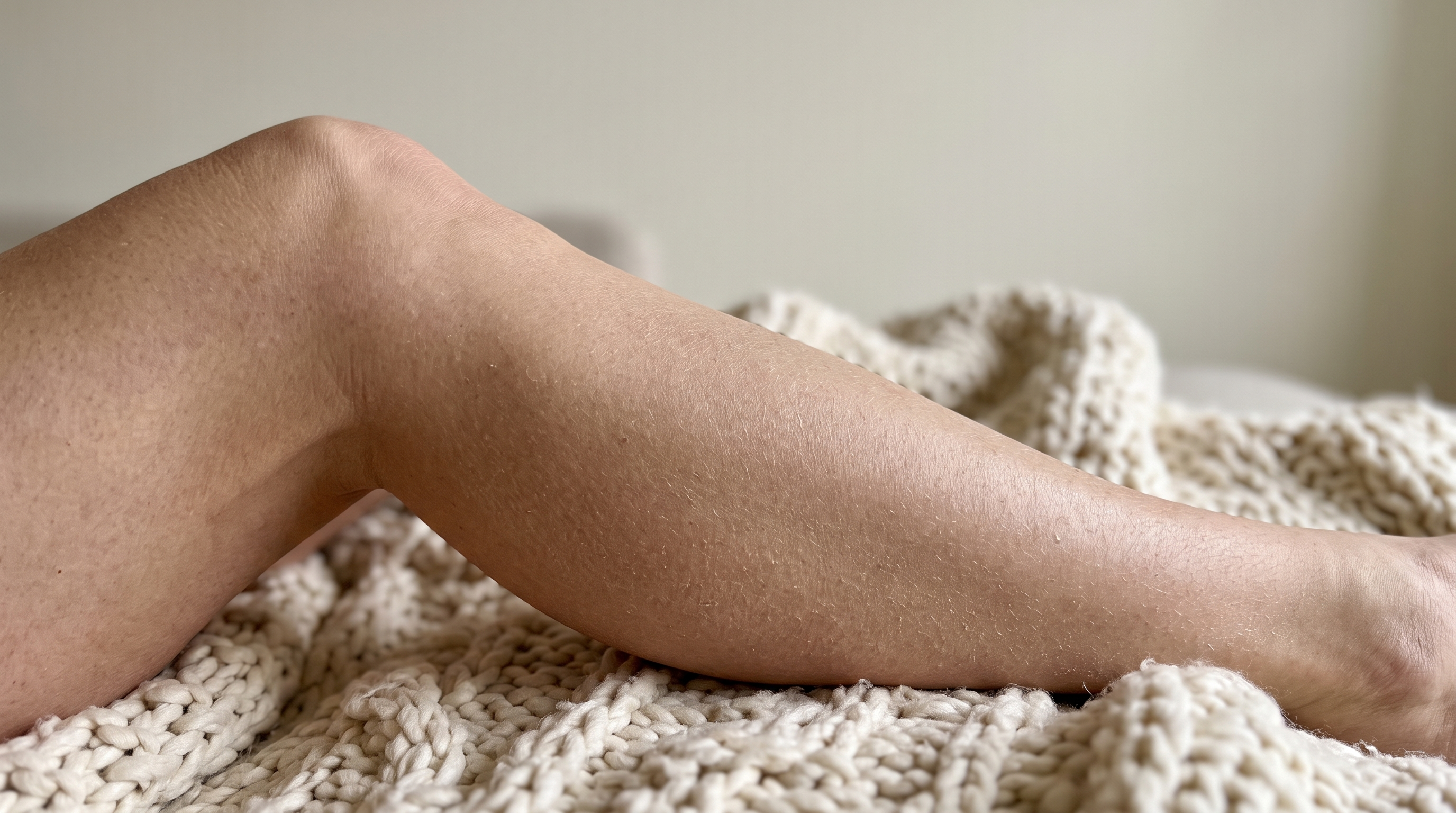
Dry shins that flake in winter, rough elbows, forearms that look papery under bright light: body skin often shows age and weather sooner than the face, yet it usually gets the least attention. Ceramide body lotions have become the default answer, and with good reason, because ceramides are one of the main building blocks of the skin barrier. But “with ceramides” on a label can mean a carefully balanced repair formula or a trace amount added for marketing.
This guide explains why body skin dries out the way it does, what a ceramide lotion needs to contain to repair it, what the clinical evidence shows and where a lotion stops and retinol takes over. For how ceramides work on the face, see our guide to ceramides for skin.
Why body skin dries out first
The outer skin layer is held together by a mix of lipids packed between flattened skin cells. Ceramides are a large part of that mix, and changes in ceramide content are linked to several dry and itchy skin conditions [1]. The exact composition differs across the body: a classic analysis of four sites, including the face and leg, found that lipid content and makeup varied from site to site in step with how leaky each site’s barrier was [2].
Your shins have far fewer oil glands than your face, so the lipids that seal them have little backup when winter air and hot showers strip them away. Two forces make that worse over time.
The first is age. When researchers sampled the outer layer of the face, hand and leg in women of different ages, every major lipid group, ceramides in particular, fell significantly with age [3]. The second is the season. In the same study, lipid levels at all three sites were dramatically lower in winter than in spring and summer [3]. A review of the aged barrier describes the same picture: a global drop in these lipids and a marked problem with cholesterol production, which leaves older skin slower to recover once its barrier is disturbed [4].
That is why the same legs that are fine in July can itch and flake by January, and why a plain moisturizer that only coats the surface often stops working as the years go on.
Your shins have far fewer oil glands than your face, so the lipids that seal them have little backup when winter air and hot showers strip them away.
Why the lipid ratio matters more than the word “ceramide”
Ceramides do not work alone. The barrier depends on three lipids together: ceramides, cholesterol and free fatty acids. In a key barrier repair study, applying only one or two of them to damaged skin actually delayed recovery, while an equal mix of all three allowed normal repair [5]. Raising any one of the three to up to three times the others sped repair further [5]. For aged skin specifically, a mix weighted toward cholesterol is the one recommended to restore normal function [4].
So the most useful question about a ceramide body lotion is whether it contains the whole set. On an ingredient list, look for:
- Ceramides by name: ceramide NP, ceramide AP and ceramide EOP are the common forms.
- Cholesterol: listed simply as cholesterol.
- Fatty acids: often stearic, palmitic or linoleic acid.
- Helpers: phytosphingosine is a ceramide building block, and “pseudo-ceramides” are synthetic lookalikes. Both can support the formula but are not a substitute for the full trio.
What the trials show on dry legs
The best evidence for ceramide moisturizers on the body comes from research on age-related dryness of the lower legs. In one double-blind, randomized study, 24 adults with an average age of about 55 applied a cream containing ceramides to one shin and a standard hydrophilic cream to the other [6]. A single application of the ceramide cream improved hydration, water loss through the skin and skin pH for up to 24 hours. After 28 days of twice-daily use the gap widened, and the ceramide side also showed less redness and better wrinkle and texture scores. Seven days after stopping, the ceramide side was still ahead on hydration, water loss and wrinkles [6].
Your shins can feel noticeably smoother within 28 days of a ceramide lotion used twice a day, and in one trial the gains still held 7 days after stopping. That last detail matters, because it suggests the lotion was helping the barrier repair itself rather than just sitting on top of it.
Your shins can feel noticeably smoother within 28 days of a ceramide lotion used twice a day, and in one trial the gains still held 7 days after stopping.
Lotion or cream: matching the format to the area
Lotions contain more water, spread easily and absorb quickly, which makes them practical for arms, chest and large areas every day.
Creams are thicker and more occlusive. They suit shins, knees, elbows and feet, where the barrier is weakest, and they are the better choice in winter.
Whichever you use, timing helps. Apply within a few minutes of showering, while the skin is still slightly damp, and keep showers short and warm rather than hot. Our guide to the best body lotion for aging skin compares ceramide formulas with other options such as urea and lactic acid lotions.
How to choose a ceramide body lotion
- Look for the trio: ceramides plus cholesterol plus fatty acids, ideally in the first half of the ingredient list.
- Prefer fragrance-free: dry, cracked body skin reacts to fragrance more easily than intact skin.
- Add a humectant: glycerin or a low-strength urea pulls water into the outer layer while the lipids hold it there.
- Choose a pump or tube: this keeps the formula cleaner and makes twice-daily use more realistic.
- Give it a month: the leg trial measured its main results at 28 days, so judge a new lotion on that timescale.
What a ceramide lotion cannot do
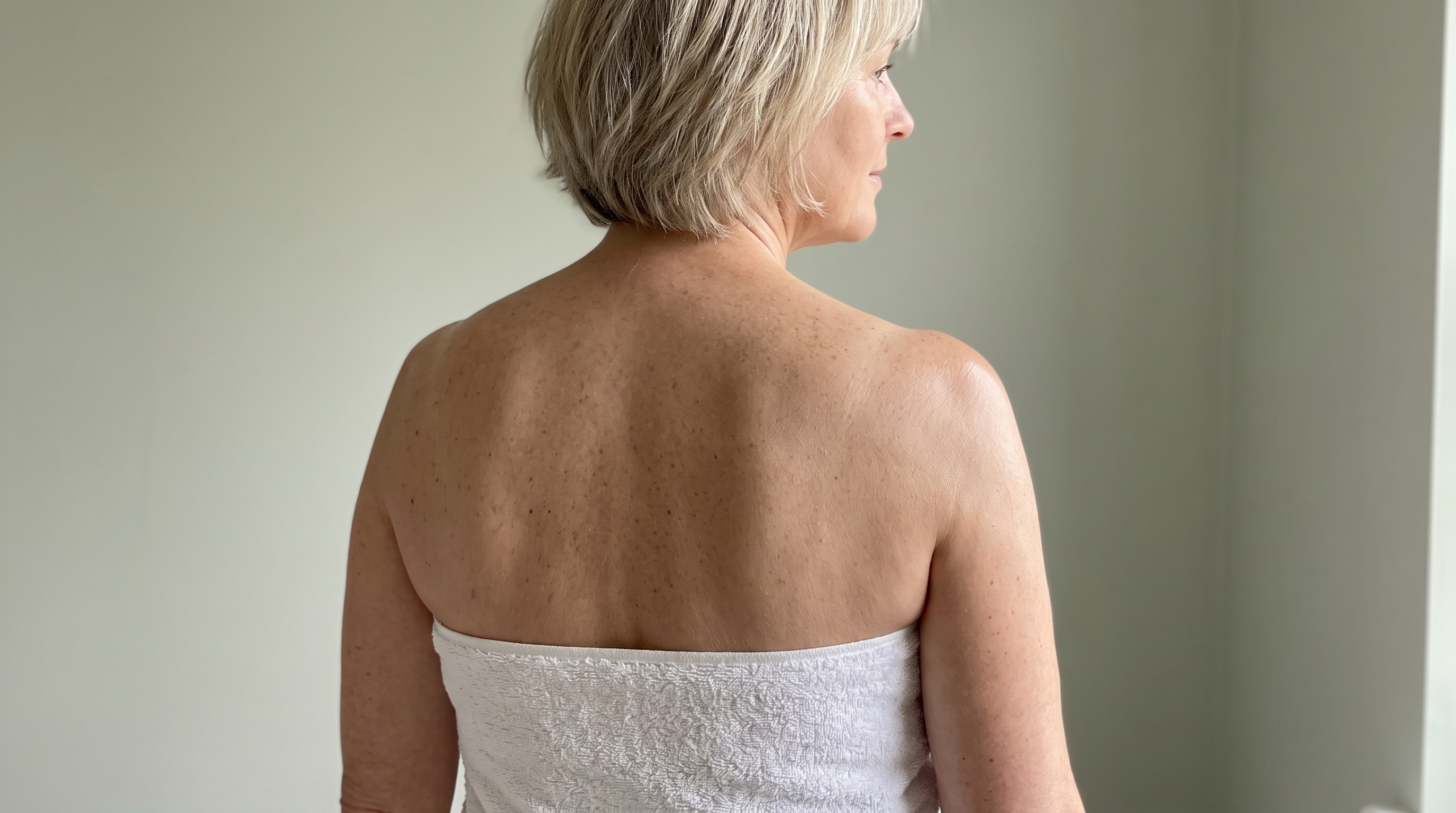
Ceramides repair the barrier, the thin outer seal. They do not rebuild the collagen and elastin deeper down, and that deeper loss is what makes skin on the arms and legs look crepey rather than just dry. Our guide to crepey skin on the arms covers why that happens.
Retinoids are the topical ingredient with the strongest evidence for reversing that deeper damage, because they stimulate new collagen [7]. The catch is that conventional retinol tends to dry and irritate skin, and body skin with a weak barrier is the last place you want more irritation. That is why the two work best as a pair: a ceramide lotion to keep the barrier intact and a retinoid to work on firmness. Our guide to retinol for the body explains how to build that routine.
A barrier first, then collagen
Nanoretinol is designed around the irritation problem. Its 0.2% retinol is encapsulated in biomimetic lipid nanoparticles that the skin recognizes as its own, so the retinol passes the epithelial barrier without the lipid-disrupting chemicals many conventional formulas rely on. In North Biomedical’s study it was 232% more effective than conventional retinol in collagen recovery and 73% more effective in elastin recovery, and clinical trials found minimal side effects that were milder than those of conventional retinol [8]. Over 56 days of use it produced a 61% increase in skin firmness and a 56% increase in elasticity.
Keep a ceramide body lotion as your daily barrier care, apply Nanoretinol at night, and wear sunscreen on any area that sees daylight.
References
- Meckfessel MH, Brandt S. “The structure, function, and importance of ceramides in skin and their use as therapeutic agents in skin-care products.” Journal of the American Academy of Dermatology. 2014;71(1):177-184. doi:10.1016/j.jaad.2014.01.891
- Lampe MA, Burlingame AL, Whitney J, Williams ML, Brown BE, Roitman E, Elias PM. “Human stratum corneum lipids: characterization and regional variations.” Journal of Lipid Research. 1983;24(2):120-130. PubMed: 6833889
- Rogers J, Harding C, Mayo A, Banks J, Rawlings A. “Stratum corneum lipids: the effect of ageing and the seasons.” Archives of Dermatological Research. 1996;288(12):765-770. doi:10.1007/BF02505294
- Elias PM, Ghadially R. “The aged epidermal permeability barrier: basis for functional abnormalities.” Clinics in Geriatric Medicine. 2002;18(1):103-120. PubMed: 11913735
- Man MQ, Feingold KR, Thornfeldt CR, Elias PM. “Optimization of physiological lipid mixtures for barrier repair.” Journal of Investigative Dermatology. 1996;106(5):1096-1101. doi:10.1111/1523-1747.ep12340135
- Lueangarun S, Tragulplaingam P, Sugkraroek S, Tempark T. “The 24-hr, 28-day, and 7-day post-moisturizing efficacy of ceramides 1, 3, 6-II containing moisturizing cream compared with hydrophilic cream on skin dryness and barrier disruption in senile xerosis treatment.” Dermatologic Therapy. 2019;32(6):e13090. doi:10.1111/dth.13090
- Mukherjee S, Date A, Patravale V, Korting HC, Roeder A, Weindl G. “Retinoids in the treatment of skin aging: an overview of clinical efficacy and safety.” Clinical Interventions in Aging. 2006;1(4):327-348. doi:10.2147/ciia.2006.1.4.327
- North Biomedical LLC. “Nanoretinol vs. Conventional Retinol: Efficacy in Collagen and Elastin Recovery.” Clinical Study Summary, 2024. Study summary