Coffee Scrub: What It Does for Your Skin, Cellulite Claims, and How to Use One
A coffee scrub leaves body skin smooth and smells like breakfast. Here is what the grounds and the caffeine actually do, what the cellulite research shows, and where a scrub stops working
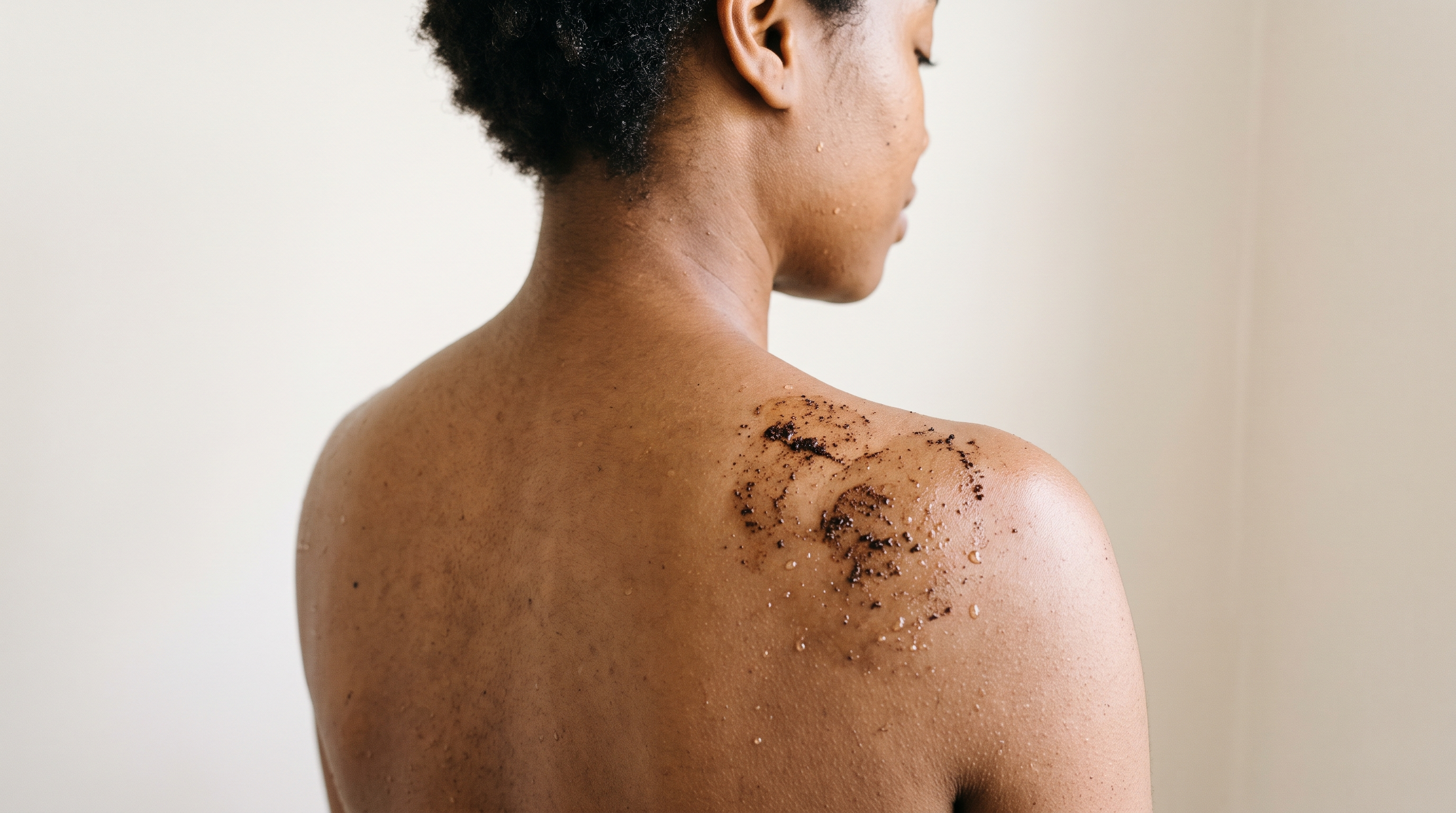
Coffee scrubs are one of the few skin care products you can make from your own breakfast leftovers. Mix coffee grounds with oil, and sometimes sugar, rub the paste over damp skin in the shower, and you rinse off to skin that feels noticeably smoother. Bought versions promise more, from brighter skin to firmer thighs and less cellulite.
Some of that holds up and some of it does not. This guide separates what the coffee grounds do from what the caffeine does, looks at the research behind the cellulite claims, and explains how to use a coffee scrub without irritating your skin.
What a coffee scrub actually is
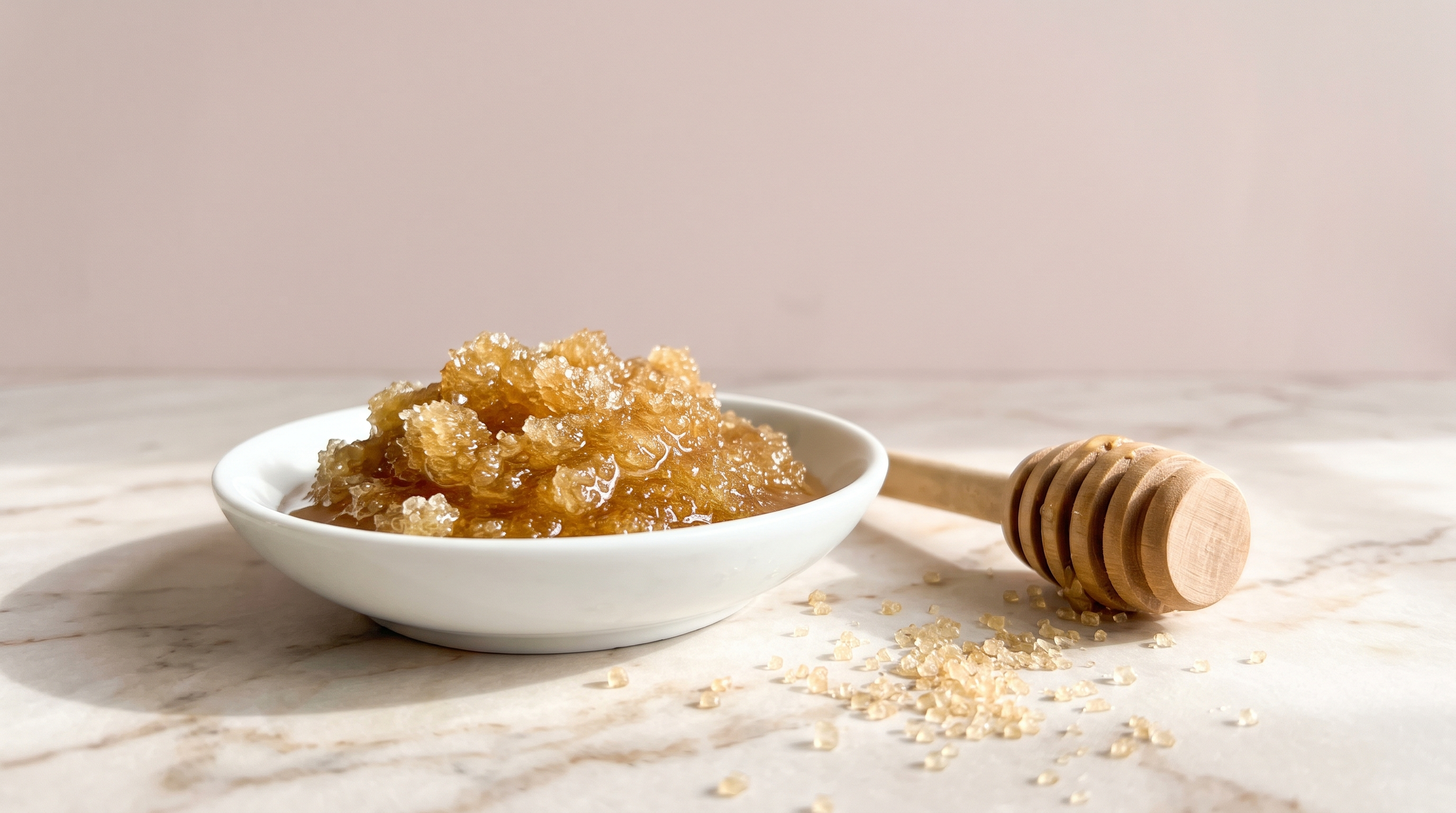
A coffee scrub has two working parts. The grounds are a physical exfoliant: as you rub, the gritty particles loosen dead cells from the surface and leave rough patches feeling softer. The oil, often coconut, almond or jojoba, cushions the grit and leaves a light film that keeps the skin from feeling dry after rinsing. Sugar, when added, adds more grit and dissolves as you go.
The caffeine is the part that gets the marketing. It is a well-studied cosmetic ingredient, but most of what it does in research depends on a product that stays on the skin, not one that is rinsed off a minute later.
What caffeine does in skin
Caffeine penetrates the skin barrier unusually well for such a water-loving molecule, which is why scientists use it as a model compound in skin absorption experiments [1]. In cells, it slows the breakdown of a messenger molecule that controls fat storage, which encourages fat cells to release stored fat. It also has antioxidant activity and increases blood flow in the skin [1]. Commercial caffeine creams usually contain about 3% caffeine [1].
How fast does it get in? In one study, researchers applied caffeine to the skin and measured it in volunteers’ blood. It appeared within 5 minutes when hair follicles were open, and only after 20 minutes when the follicles were sealed, showing that follicles act as a fast route into the skin [2].
Your skin can absorb caffeine within 5 minutes through hair follicles, yet a coffee scrub is usually rinsed away well before a leave-on cream would finish working.
Your skin can absorb caffeine within 5 minutes through hair follicles, yet a coffee scrub is usually rinsed away well before a leave-on cream would finish working.
So some caffeine from a scrub does reach the skin. The amount is small and uncontrolled, and nobody has measured how much a typical scrub delivers. Our guide to caffeine for skin covers the leave-on evidence in more detail.
The cellulite question
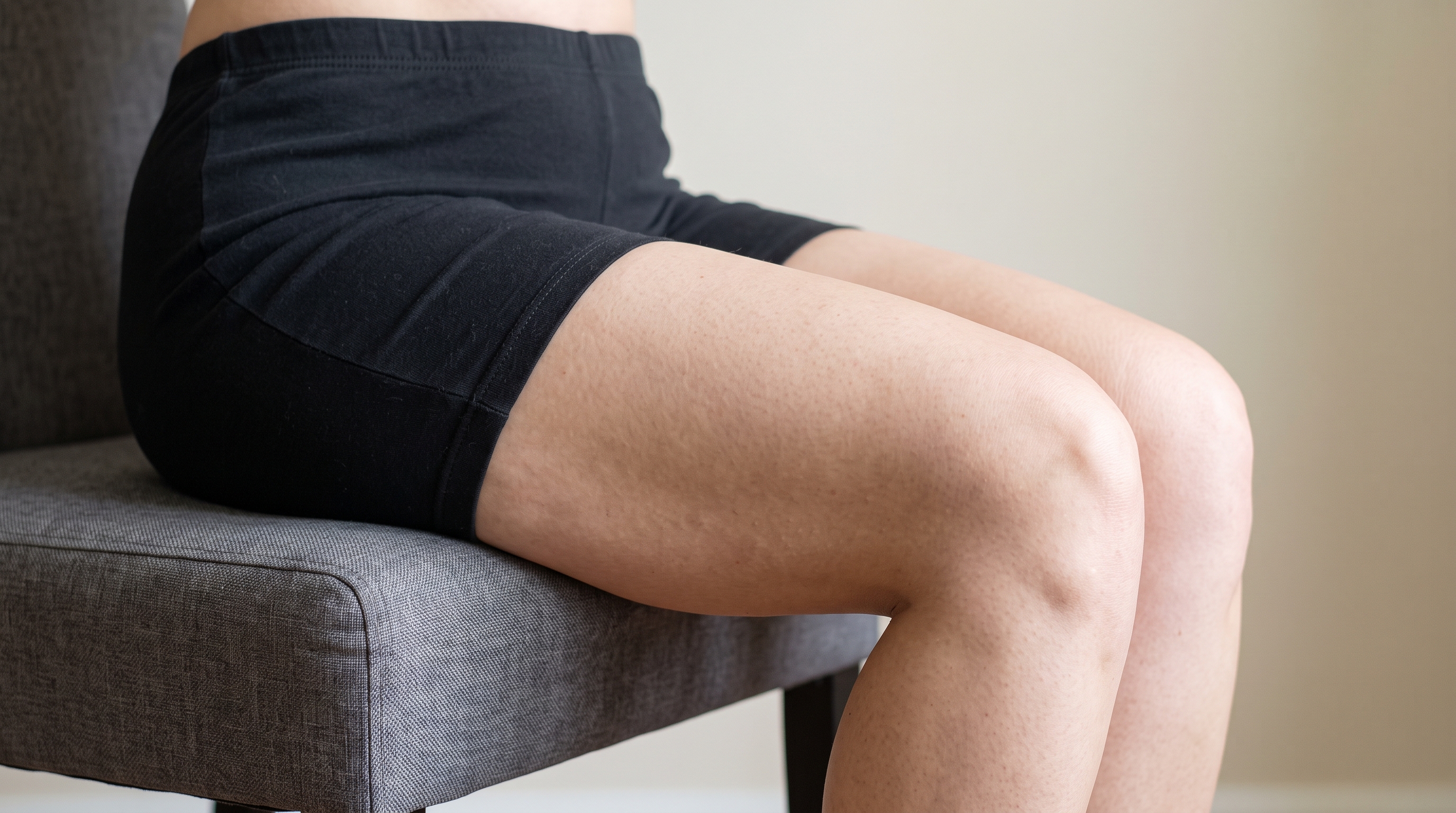
Cellulite is the main reason many people buy a coffee scrub. It is a structural feature, not a skin-surface problem. Fat pushes up through fibrous bands under the skin, and blood flow, lymph drainage and the strength of the connective tissue all play a part [3].
Caffeine creams have some support. In one study, a solution of 7% caffeine applied for one month reduced thigh circumference in more than 80% of treated patients and hip circumference in about two-thirds, although the microcirculation measurements did not change [4]. Reviews of anti-cellulite ingredients list caffeine and related compounds among the agents that appear to give some benefit [3].
The bigger picture is sobering. A systematic review of 67 studies on cellulite treatments, from creams to lasers, found that most had serious design flaws and concluded that no treatment had clear evidence of good efficacy [5]. A scrub, which offers far less caffeine contact than the creams tested, is unlikely to do better. Our guide to cellulite treatment compares the options with the strongest data.
What a coffee scrub does reliably is make skin look and feel smoother for a day or two. Brisk rubbing also brings temporary redness and a little puffiness to the surface, which can soften the look of dimpling for a few hours.
Your skin needs gentler handling on the face than on the thighs, where the skin is thicker and copes far better with rough coffee grit.
Body yes, face with care
Body skin on the thighs, buttocks, arms and legs is thick enough for a coffee scrub, and it is where most people use one. Rough elbows, dry shins and the small bumps of keratosis pilaris on the upper arms often respond well to gentle physical exfoliation.
Facial skin is thinner, and coffee grounds are irregular, sharp-edged particles. Scrubbing them across the face can leave redness, irritation and tiny scratches, especially around the nose and cheeks. Anyone who still wants coffee on the face should choose very finely ground coffee, press lightly, and keep it to once a week at most. Most faces do better with a chemical exfoliant.
Your skin needs gentler handling on the face than on the thighs, where the skin is thicker and copes far better with rough coffee grit.
How to use a coffee scrub well
- Start on warm, damp skin at the end of a shower, when the surface is soft.
- Use a small handful and massage in slow circles for about 30 seconds per area.
- Press lightly. If your skin turns bright red or stings, you are pressing too hard.
- Rinse well, then pat dry and apply a body moisturizer while the skin is still damp.
- Limit it to two or three times a week. Daily scrubbing wears down the barrier.
Two practical warnings. Oily scrubs make the shower floor slippery, and coffee grounds can build up in drains over time, so a drain strainer helps. Skip the scrub on sunburned, broken or freshly shaved skin. Our guide to the best body scrub compares coffee with sugar, salt and chemical exfoliants.
DIY or bought
A homemade scrub of fresh or used grounds and a plain oil works as well as most bought ones for exfoliation. Bought scrubs usually add caffeine, more emollients and fragrance. Fragrance is a common trigger for itching and irritation, so choose unscented versions if your skin is reactive. Make DIY scrubs in small batches, because a wet mix of coffee and oil can grow mould within days.
What a scrub cannot do for crepey skin
Thin, crepey skin on the arms, legs and thighs comes from lost collagen and elastin in the deeper skin. Exfoliation smooths the surface for a day, but it does not rebuild that structure. Our guide to crepey skin on the arms explains the causes.
Retinoids are one of the few topical ingredients shown to change the deeper skin. In a randomized trial in women with mild to moderate cellulite, topical retinol applied for 6 months increased skin elasticity by 10.7% and reduced viscosity by 15.8% compared with placebo, even though the lumpy dimpling itself barely responded [6]. Retinol improves the skin over the fat rather than the fat itself.
Conventional retinol can be harsh, which is why many people stop using it. Nanoretinol delivers 0.2% retinol inside biomimetic lipid nanoparticles that the skin recognizes as its own, so it passes through the barrier without damaging it. In North Biomedical’s study, it was 232% more effective in collagen recovery and 73% more effective in elastin recovery than conventional retinol, and users saw a 61% increase in firmness and a 56% increase in elasticity after 56 days [7].
The two jobs fit together. Use a coffee scrub on body skin a few times a week for a smooth surface, and rely on a gentle retinol such as Nanoretinol for lasting firmness, with sunscreen on any area that sees the sun.
References
- Herman A, Herman AP. “Caffeine’s mechanisms of action and its cosmetic use.” Skin Pharmacology and Physiology. 2013;26(1):8-14. doi:10.1159/000343174
- Otberg N, Patzelt A, Rasulev U, Hagemeister T, Linscheid M, Sinkgraven R, et al. “The role of hair follicles in the percutaneous absorption of caffeine.” British Journal of Clinical Pharmacology. 2008;65(4):488-492. doi:10.1111/j.1365-2125.2007.03065.x
- Rawlings AV. “Cellulite and its treatment.” International Journal of Cosmetic Science. 2006;28(3):175-190. doi:10.1111/j.1467-2494.2006.00318.x
- Lupi O, Semenovitch IJ, Treu C, Bottino D, Bouskela E. “Evaluation of the effects of caffeine in the microcirculation and edema on thighs and buttocks using the orthogonal polarization spectral imaging and clinical parameters.” Journal of Cosmetic Dermatology. 2007;6(2):102-107. doi:10.1111/j.1473-2165.2007.00304.x
- Luebberding S, Krueger N, Sadick NS. “Cellulite: an evidence-based review.” American Journal of Clinical Dermatology. 2015;16(4):243-256. doi:10.1007/s40257-015-0129-5
- Piérard-Franchimont C, Piérard GE, Henry F, Vroome V, Cauwenbergh G. “A randomized, placebo-controlled trial of topical retinol in the treatment of cellulite.” American Journal of Clinical Dermatology. 2000;1(6):369-374. doi:10.2165/00128071-200001060-00005
- North Biomedical LLC. “Nanoretinol vs. Conventional Retinol: Efficacy in Collagen and Elastin Recovery.” Clinical Study Summary, 2024. Study summary