Dark Elbows and Dark Knees: Why They Darken and How to Lighten Them
The real reasons your extensor joints hyperpigment — and the evidence-backed routine that fades them
Why Some Joints Go Dark
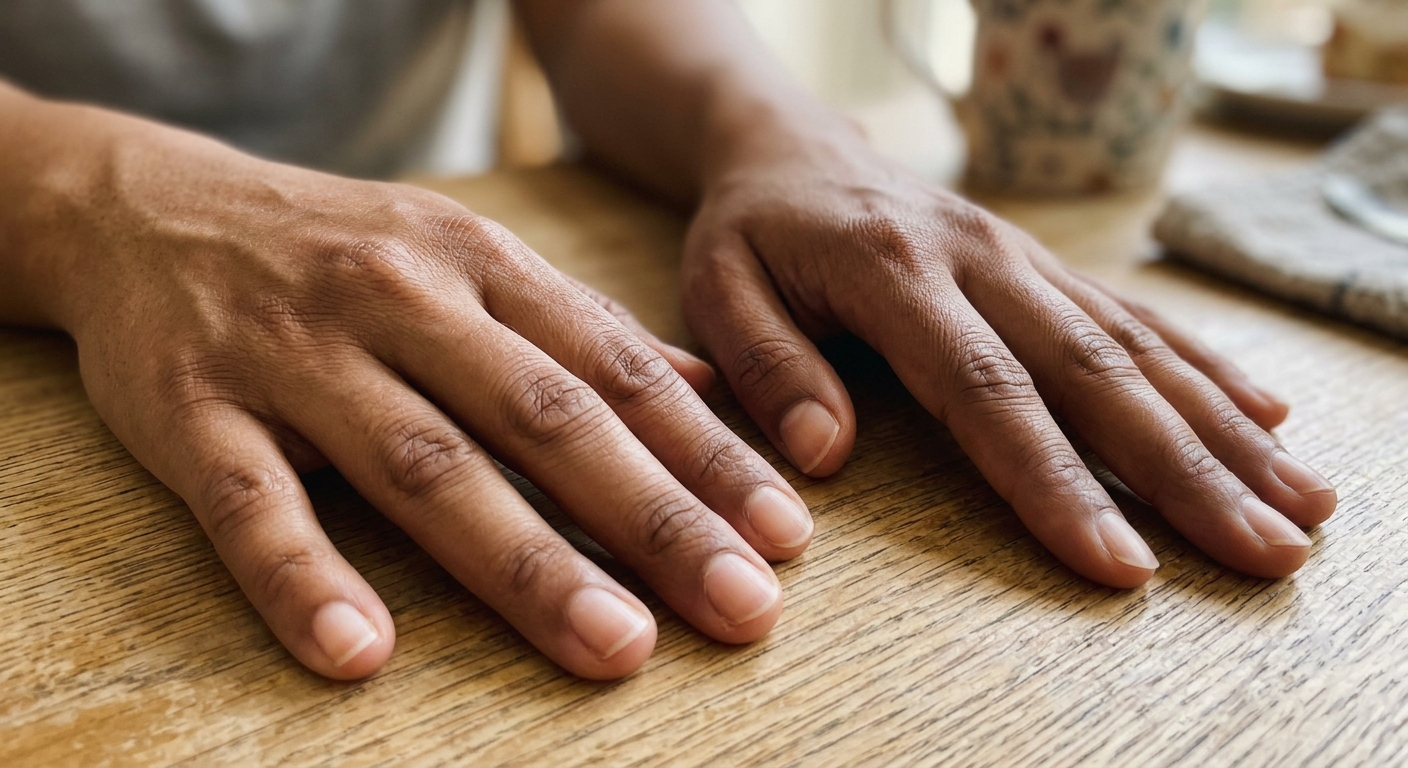
Look at your elbows in good light. Then your knees. If they’re noticeably darker than the surrounding skin — and they are for a lot of people — you’re dealing with a specific, well-documented phenomenon that dermatology has a name for: frictional asymptomatic darkening of the extensor surfaces, or FADES.
The name is clinical, but the mechanism is straightforward. The bony protrusions of the elbows and knees sit just under thin, tightly adherent skin. Every time you lean on a table, kneel on a floor, or move through daily life, that skin experiences micro-trauma from friction and pressure. Over years, this stimulates melanocytes — the cells responsible for producing pigment — to overproduce melanin in those areas [1].
Add chronic dryness (these joints have fewer sebaceous glands than surrounding skin), UV exposure, and darker baseline skin tones that are already more melanocyte-reactive, and you get reliably darker extensor surfaces that don’t lighten easily on their own.
The Three Drivers Behind Elbow and Knee Darkening
Research identifies a clear triad of contributing factors [2]:
Repetitive friction from clothing, surfaces, and habitual postures is the primary trigger. Studies of friction melanosis show that sustained mechanical pressure on skin overlying bony prominences causes progressive melanin deposition in both the epidermis and dermis [1]. The dermis-level deposition is what makes the darkening so resistant — melanin trapped beneath the surface doesn’t simply exfoliate away.
Chronic xerosis compounds the problem. Dry skin has a compromised barrier, meaning mechanical stress penetrates deeper and the inflammatory response is amplified. Inflamed skin triggers post-inflammatory hyperpigmentation (PIH), adding a layer of discoloration on top of the friction-driven kind.
UV radiation stimulates tyrosinase (the enzyme that synthesizes melanin) and directly damages melanocytes, pushing them into a hyperactive state.
Sun exposure without SPF on knees and elbows is easily overlooked. UV radiation stimulates tyrosinase (the enzyme that synthesizes melanin) and directly damages melanocytes, pushing them into a hyperactive state [3]. Most sunscreen routines simply don’t extend to the elbows and knees.
What Actually Fades Them
No ingredient works overnight on elbow and knee darkening. Body skin cell turnover is significantly slower than on the face — taking up to 40–56 days versus approximately 28 days on the face — and reaching dermally-deposited melanin requires sustained intervention over weeks to months. But the right combination works.
Kojic acid is one of the most clinically tested brighteners for hyperpigmentation. It inhibits tyrosinase, preventing new melanin from being synthesized. In a controlled study, kojic acid treatment increased skin brightness in 75% of participants, reduced skin contrast in approximately 83%, and improved skin homogeneity in roughly 67% of cases [4]. It’s particularly well-suited to stubborn body hyperpigmentation because it works at the source of production, not just on surface pigment.
Niacinamide targets a different step in the same process. Rather than preventing melanin synthesis, it interrupts the transfer of melanosomes — melanin-containing packets — from melanocytes to surrounding keratinocytes [5]. Clinical trials show that 5% niacinamide applied twice daily significantly decreased hyperpigmentation and increased skin lightness versus vehicle after just 4 weeks. Because it works via a different mechanism than kojic acid, combining both compounds results.
AHA exfoliants (glycolic acid, lactic acid) don’t fade pigment directly, but they accelerate cellular turnover, removing surface melanin faster and allowing brightening actives to penetrate more effectively. Consistent exfoliation is particularly important for elbow and knee skin, which tends to accumulate dead cell buildup that traps melanin at the surface.
Retinol contributes through two mechanisms: it accelerates cell turnover, pushing pigmented cells to the surface where they can shed, and it suppresses melanocyte activity through retinoic acid receptor signaling [3]. For body skin, retinol works by the same pathways as on the face but requires longer timelines given slower baseline turnover rates.
Dermal melanin — the kind deposited from years of friction — takes 3–6 months to show visible improvement even with consistent active use.
The Routine That Works
Consistency over 8–12 weeks is the minimum to expect visible change.
Step 1 — Gentle exfoliation 2–3× per week Use a body wash or scrub with lactic acid or glycolic acid on the elbow and knee areas. This removes surface melanin buildup and primes the skin for actives.
Step 2 — Apply brightening actives daily After showering, apply a product combining kojic acid, niacinamide, or both directly to the elbows and knees while skin is still slightly damp. Damp skin absorbs topicals better, and these joints are notorious for barrier compromise that limits effective penetration.
Step 3 — Moisturize immediately after actives Lock in with an occlusive or ceramide-based moisturizer. Dry, cracked elbow and knee skin will always look darker than well-hydrated skin of the same baseline pigmentation. Hydration also reduces the friction-driven inflammation cycle that perpetuates darkening.
Step 4 — SPF on exposed days Any day knees or elbows are exposed, apply SPF. UV exposure will undo brightening progress faster than any topical can keep up with.
Managing Expectations and Timeline
The deeply deposited melanin in elbow and knee skin is the reason quick fixes don’t exist. Surface brighteners work on epidermal melanin relatively quickly (4–8 weeks). Dermal melanin — the kind deposited from years of friction — takes 3–6 months to show visible improvement even with consistent active use.
People with darker skin tones often have higher melanocyte density, which produces more baseline pigment and can respond more intensely to inflammation and friction. The same ingredients work, but the timeline is longer and the SPF step is especially critical to prevent UV from restimulating melanin production while brighteners are working.
On what doesn’t help much: hydrogen peroxide bleaches, abrasive mechanical scrubs, and “whitening” products that rely purely on occlusives offer minimal long-term benefit and can irritate skin, worsening PIH. The evidence-backed approach is the trio of kojic acid and niacinamide for melanin production and transfer inhibition, retinol for turnover, AHAs for exfoliation, and SPF to stop new damage at its source. If the skin over your knees looks creased rather than only darkened, see knee wrinkles.
For more on how retinol contributes to dark spot fading, our guide to retinol for dark spots covers the mechanism in detail. And for facial hyperpigmentation, alpha arbutin for skin brightening works by a similar tyrosinase-inhibition pathway to kojic acid.
References
- Krishnamurthy S, Sigdel S, Brodell RT. “Frictional asymptomatic darkening of the extensor surfaces.” Cutis. 2005;75(6):349-55. PMID 16047873
- Arora G, Khandpur S, Bansal A, et al. “Current understanding of frictional dermatoses: A review.” Indian Journal of Dermatology, Venereology and Leprology. 2023;89(2):170-188. doi:10.25259/IJDVL_519_2021
- Thawabteh AM, Jibreen A, Karaman D, Thawabteh A, Karaman R. “Skin Pigmentation Types, Causes and Treatment—A Review.” Molecules. 2023;28(12):4839. doi:10.3390/molecules28124839
- Wawrzyk-Bochenek I, Rahnama M, Stachura M, Wilczyński S, Wawrzyk A. “Evaluation of the Reduction of Skin Hyperpigmentation Changes under the Influence of a Preparation Containing Kojic Acid Using Hyperspectral Imaging—Preliminary Study.” Journal of Clinical Medicine. 2023;12(7):2710. doi:10.3390/jcm12072710
- Hakozaki T, Minwalla L, Zhuang J, et al. “The effect of niacinamide on reducing cutaneous pigmentation and suppression of melanosome transfer.” British Journal of Dermatology. 2002;147(1):20-31. doi:10.1046/j.1365-2133.2002.04834.x