Dark Spots on Nose: Why They Appear There and How to Actually Fade Them
Sun-driven pigmentation lands on the nose first — here's the science of what causes it and the ingredients that genuinely fade it
The nose is the highest point of the face, the part that meets the sun first and most often. So it makes sense that as the years add up, the nose is frequently where the first stubborn dark spots appear — a faint brown patch on the bridge, a freckle-like cluster on one side, a shadow that foundation no longer fully covers. Many people assume these are blackheads or simply “getting older,” and reach for a scrub. But scrubbing a pigment spot is like sanding a stain that lives below the surface: it irritates the skin without touching the cause.
Before treating anything, it helps to know what you’re actually looking at. The marketing word “dark spots” hides several different things, and they don’t all respond to the same fix.
What dark spots on the nose really are
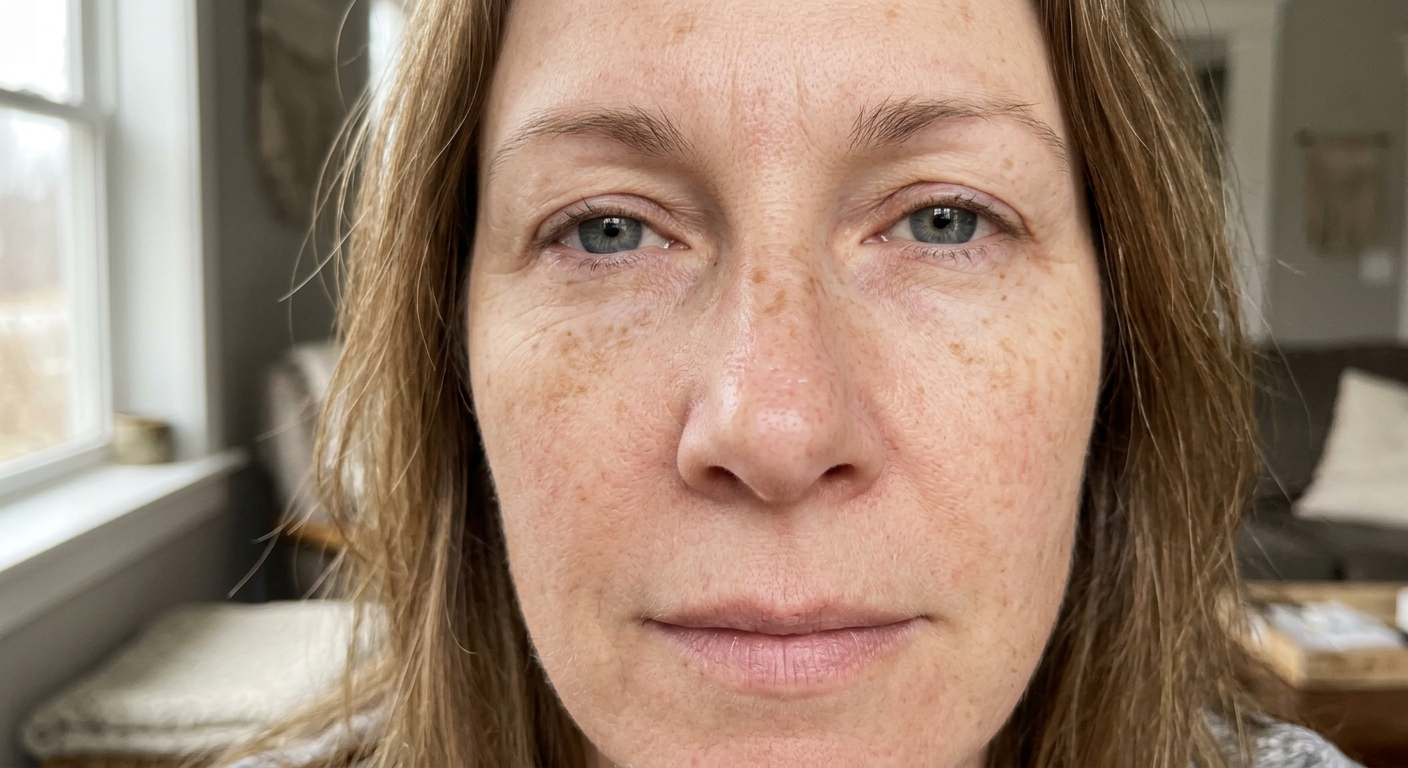
The most common dark spots on the nose are solar lentigines — sun spots. Decades of UV exposure prompt the skin’s pigment cells, called melanocytes, to overproduce melanin in concentrated patches. Unlike a tan, which fades, these deposits become semi-permanent because the UV damage reprograms the pigment cells to keep churning out color. The nose, sitting front and center, simply accumulates more lifetime sun than the cheeks or jaw.
A second cause is post-inflammatory hyperpigmentation — the brown mark left behind after a blemish, a picked spot, or irritation heals. This is why squeezing a pimple on the nose so often trades a temporary bump for a longer-lasting stain.
Retinoids work by accelerating cell turnover — pushing pigmented cells up and out faster — while also calming the melanin machinery.
It’s worth a quick reality check on one thing: the small dark dots clustered across the nose are often not pigment at all but sebaceous filaments or blackheads — oxidized oil in the pores. Those are a texture issue, not a pigment one, and they need a different approach. If a spot is flat, brown, and doesn’t sit inside a visible pore, you’re almost certainly dealing with pigmentation. And pigmentation, unlike a stubborn personality, can genuinely be changed.
Why the nose is so prone to it
Skin produces melanin as a defense — pigment absorbs UV and shields the cell’s DNA. The problem is that this defense system, after years of repeated sun, gets stuck in the “on” position in certain spots. The nose’s geometry works against it: it protrudes, it rarely sits in shade, and it’s the spot most people forget when applying sunscreen. Add the fact that glasses can concentrate light on the bridge, and you have a perfect storm for localized pigment.
The ingredients that actually fade pigment
Fading dark spots is a matter of two jobs done together: slowing the overproduction of melanin, and clearing the pigment that’s already there. A few ingredients have real clinical evidence behind them.
Retinoids. Topical tretinoin, a prescription retinoid, was shown in a 10-month randomized, double-blind study to significantly lighten sun-induced “liver spots,” with the lesions staying improved for months after treatment stopped [1]. Retinoids work by accelerating cell turnover — pushing pigmented cells up and out faster — while also calming the melanin machinery. Over-the-counter retinol works by the same mechanism, more gradually.
This is the recurring frustration with brightening products: the active that fades spots often can’t penetrate to where the spots actually live.
Niacinamide. This vitamin B3 derivative doesn’t bleach skin; it blocks the transfer of melanin from pigment cells to the surface skin cells. In a controlled study, niacinamide significantly reduced facial hyperpigmentation and increased skin lightness compared with placebo [2]. It is gentle enough for daily use and pairs well with retinol.
Tyrosinase inhibitors. Many brightening ingredients work by blocking tyrosinase, the enzyme that kick-starts melanin production. Niacinamide has even been tested head-to-head against hydroquinone, the long-standing gold-standard skin lightener, and produced comparable improvement in pigmented patches with fewer side effects [3]. Ingredients like azelaic acid, kojic acid, and vitamin C act on the same pathway. Our guide to tyrosinase inhibitors ranks them by evidence.
The step almost everyone skips
Here is the part that determines whether any of this works: sun protection. You cannot fade a sun spot while continuing to feed it sunlight. In a randomized trial, a broad-spectrum sunscreen that also blocked short-wavelength visible light dramatically reduced the return of facial pigmentation compared with a sunscreen guarding against UV alone [4]. Daily SPF isn’t an optional finishing step for dark spots — it is half the treatment. A tinted mineral sunscreen, which adds iron-oxide protection against visible light, is especially useful on the exposed bridge of the nose. (More on this in our piece on sunscreen for hyperpigmentation.)
Why delivery makes the difference
Pigment that forms on the nose sits in the lower epidermis and upper dermis — deeper than a surface exfoliant can reach. This is the recurring frustration with brightening products: the active that fades spots often can’t penetrate to where the spots actually live. Retinol in particular is both unstable and a poor barrier-crosser, so much of what’s in a typical bottle never arrives.
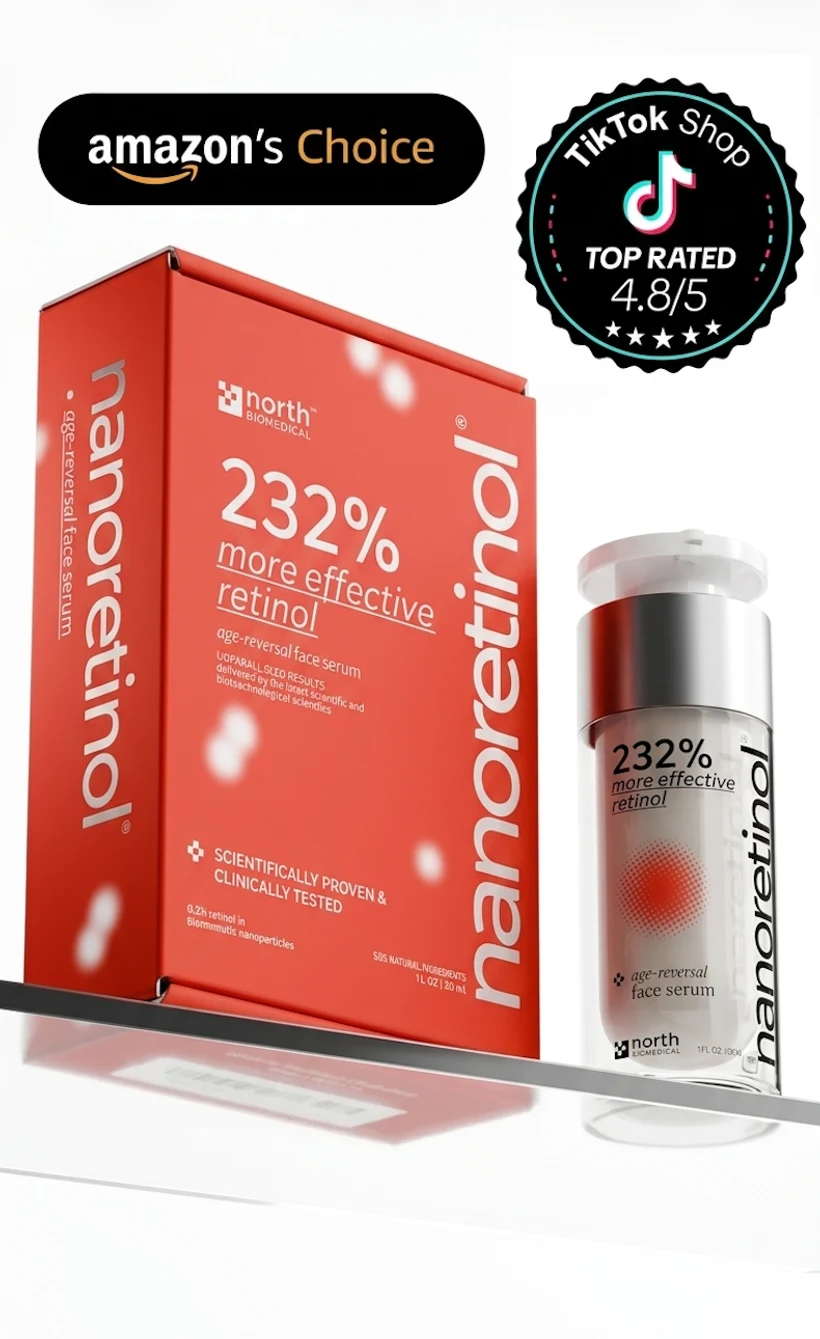
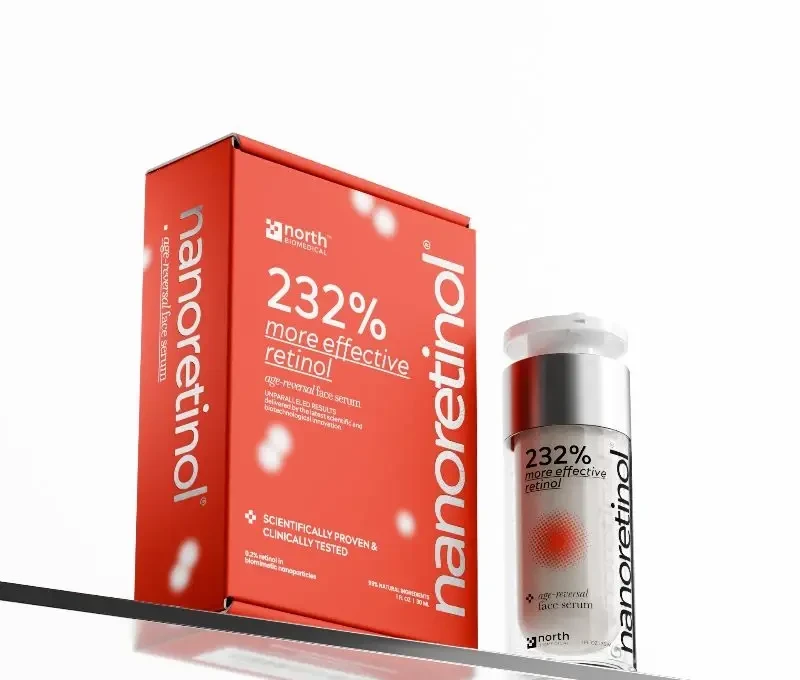
This is precisely the problem North Biomedical’s Nanoretinol was built to solve. By encapsulating retinol inside biomimetic lipid nanoparticles, it carries the active through the skin barrier intact — the skin recognizes the nanoparticles as its own and lets them pass, rather than blocking them. The retinol is then released in the deeper layers where pigment forms and cell turnover happens. Because the delivery is so efficient, a gentle 0.2% formula proved 232% more effective at collagen recovery than conventional retinol in lab testing — while being significantly less irritating, which matters on the thin, central skin of the nose. For stubborn pigment, getting the active to the right depth is everything. You can read more in our overview of retinol for dark spots.
What realistic results look like
Pigment fades slowly. Cell turnover takes weeks, and a sun spot that took 20 years to form will not vanish in 20 days. With consistent use of a retinoid, a brightening agent like niacinamide, and — non-negotiably — daily sunscreen, most people see meaningful fading over two to four months. Picking, scrubbing, or chasing instant results with harsh acids usually backfires, leaving new inflammation and fresh pigment. Patience and protection, in that order, win.
References
- Rafal ES, Griffiths CEM, Ditre CM, et al. “Topical tretinoin (retinoic acid) treatment for liver spots associated with photodamage.” New England Journal of Medicine. 1992;326(6):368-374. doi:10.1056/NEJM199202063260603
- Hakozaki T, Minwalla L, Zhuang J, et al. “The effect of niacinamide on reducing cutaneous pigmentation and suppression of melanosome transfer.” British Journal of Dermatology. 2002;147(1):20-31. doi:10.1046/j.1365-2133.2002.04834.x
- Navarrete-Solís J, Castanedo-Cázares JP, Torres-Álvarez B, et al. “A double-blind, randomized clinical trial of niacinamide 4% versus hydroquinone 4% in the treatment of melasma.” Dermatology Research and Practice. 2011;2011:379173. doi:10.1155/2011/379173
- Boukari F, Jourdan E, Fontas E, et al. “Prevention of melasma relapses with sunscreen combining protection against UV and short wavelengths of visible light: a prospective randomized comparative trial.” Journal of the American Academy of Dermatology. 2015;72(1):189-190.e1. doi:10.1016/j.jaad.2014.08.023