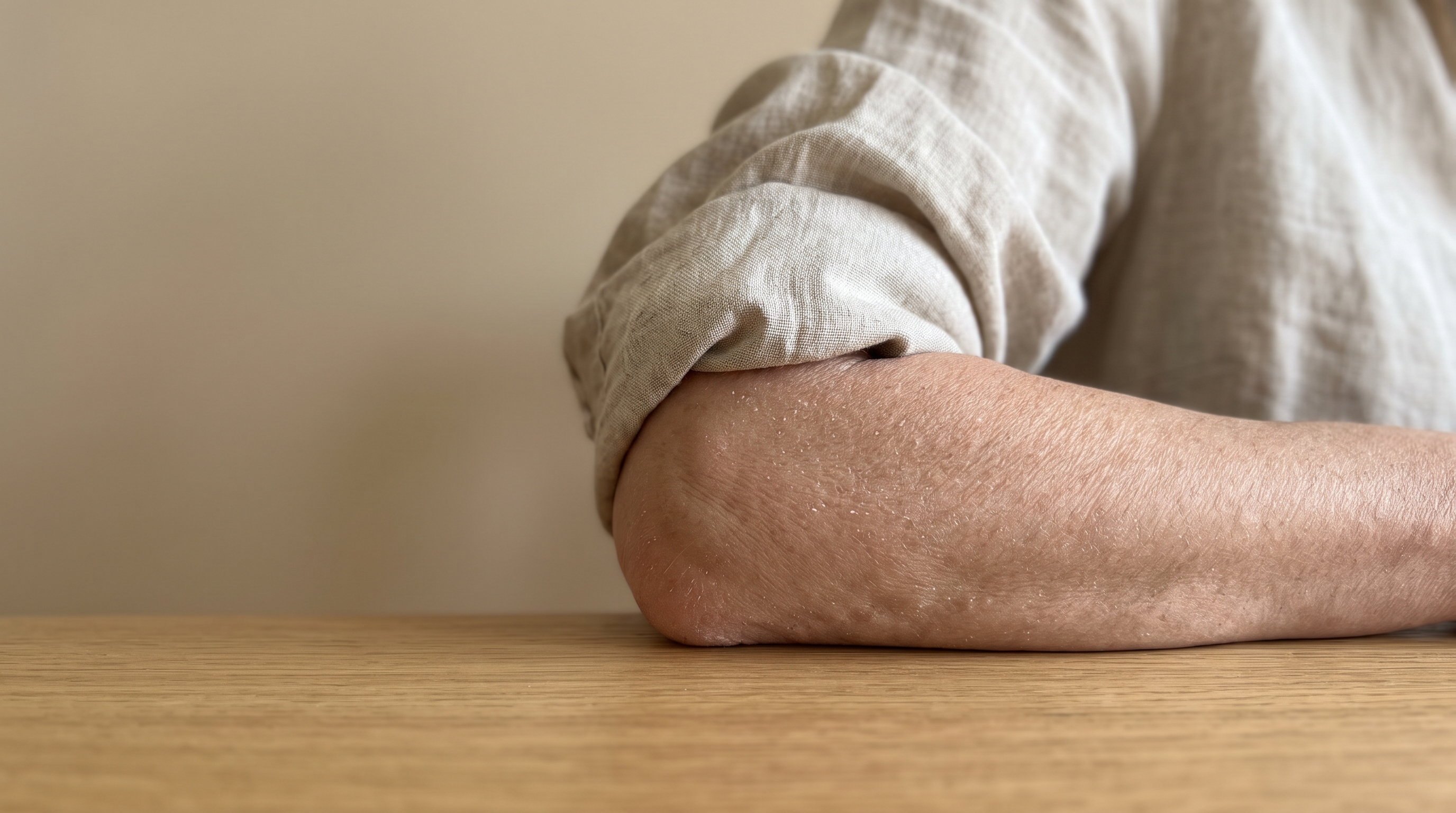
Dry Elbows: Why They Get Rough and How to Soften Them
Elbow skin is thick, has few oil glands and takes a lot of friction. What actually softens rough, cracked or ashy elbows, what the trials show for urea and lactic acid, and where retinol fits
Elbows are easy to forget until you catch one in the mirror or brush it against a sleeve. The skin there can turn rough like fine sandpaper, grey and dusty-looking, or so dry it cracks at the crease. It is rarely painful, but it is stubborn: the same lotion that softens your hands seems to do nothing for your elbows.
There is a reason for that. Elbow skin is built differently from the skin on your face or hands, and it lives a harder life. Once you know why it dries out, the fix is fairly simple, and it does not involve scrubbing it raw.
Why elbows get so dry
The skin is thicker. The outer layer of skin, the stratum corneum, varies a lot across the body. A study that counted its cell layers at different sites in 301 people found about 9 layers on the face and about 15 on the arms and legs, with far more on the palms and heels [1]. Thicker outer skin holds onto dead cells longer, so flakes build up into a rough, dull crust.
There are few oil glands. The face and scalp are packed with oil glands that coat the skin with a natural moisturizer. The outer elbow has very few, so it relies almost entirely on what you put on it.
It takes constant friction. Leaning on desks, armrests and car doors presses and rubs the same patch of skin every day. Skin responds to repeated friction by thickening, the same way a guitarist’s fingertips toughen. That thickened skin is harder for moisture to reach.
Winter makes it worse. Heated air, hot showers and wool sleeves all pull water from skin. A review of dry skin in older adults notes that changes in how skin cells mature and in the fats between them, along with heaters and frequent hot bathing, all add up to drier skin with age [2].
Your skin on the elbows can carry nearly twice as many layers of dead cells as the skin on your face, so it needs more than a quick swipe of lotion.
Your skin on the elbows can carry nearly twice as many layers of dead cells as the skin on your face, so it needs more than a quick swipe of lotion.
Why elbows look ashy
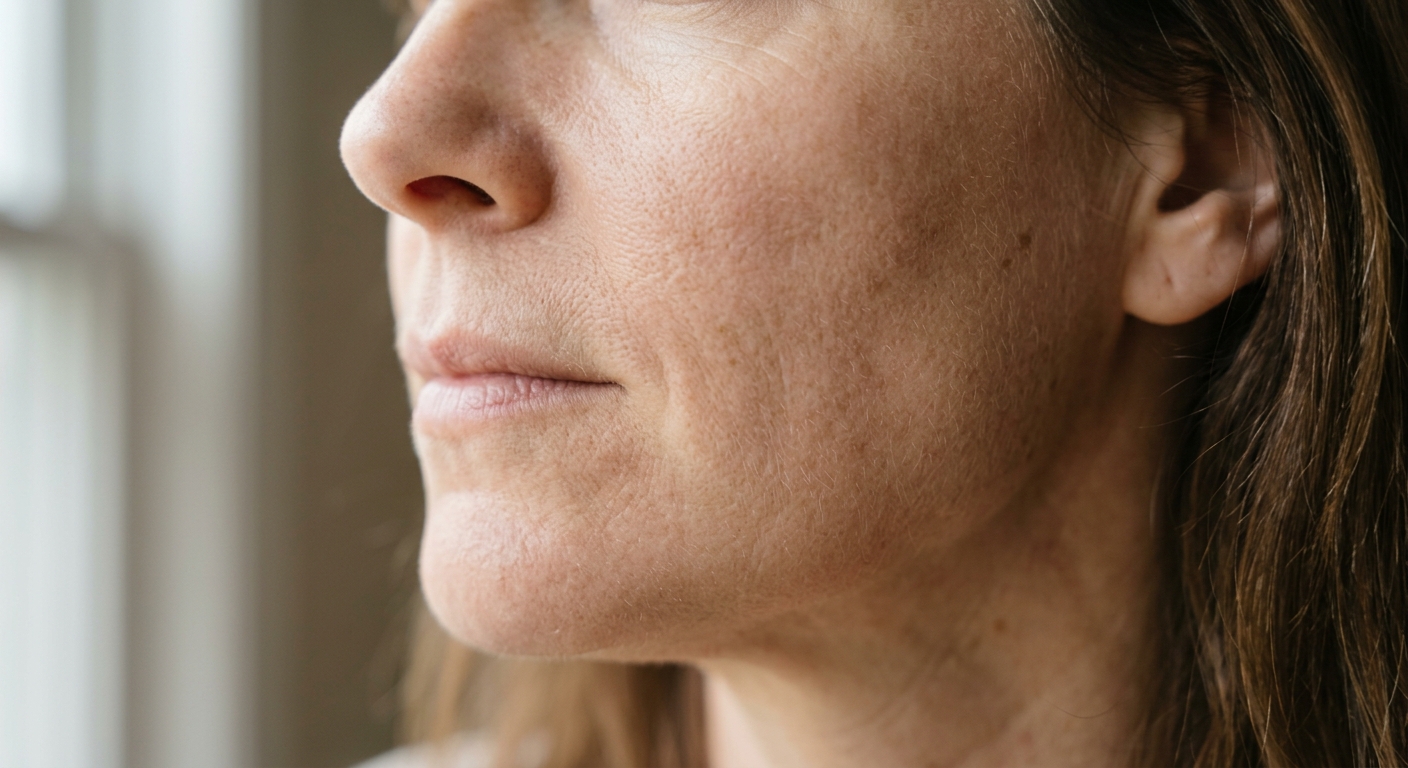
On medium and darker skin tones, dry elbows often look grey or chalky rather than flaky. That ashy look is light bouncing off thousands of tiny lifted flakes against a deeper skin tone, the same reason dry shins look dusty in winter. It is a sign of dryness, not dirt, and it fades as the surface is smoothed and hydrated.
Darker skin tends to have a more compact outer layer, and research reviews report that it often holds up well to chemical and mechanical challenges [3]. But it still dries out, and because ashiness is so visible, it often prompts people to scrub harder. That backfires. Rough scrubbing can trigger inflammation that leaves darker marks, which is a separate problem covered in our guide to dark elbows and knees.
What actually softens rough elbows
The goal is to do two things at once: dissolve the extra dead skin gently and pull water back into what remains. Two families of ingredients do both.
Urea. Urea is one of the substances skin uses to hold water naturally. At lower strengths, around 10%, it is mainly a moisturizer. At 20% to 40%, it also loosens the bonds between dead cells so thick patches soften and shed. A review of the clinical literature found urea consistently helpful for dry, rough and thickened skin [4]. In a head-to-head trial in 25 people with moderate to severe dry skin, a 40% urea cream improved roughness, cracking, thickness and dryness faster than a 12% ammonium lactate lotion, with the clearest difference at 2 weeks [5]. Our guide to urea lotion explains how to choose a strength.
Your skin on rough elbows can look visibly smoother after 2 weeks of a urea cream, a far gentler route than scrubbing it raw.
Lactic acid and ammonium lactate. Lactic acid is a gentle acid that also acts as a humectant. Buffered as ammonium lactate, it has been used for rough, dry skin for decades. In a trial on dry feet, both a 10% lactic acid lotion and a 12% ammonium lactate lotion significantly improved dryness over 2 and 4 weeks, with no real difference between them [6]. Elbows respond to the same approach.
Your skin on rough elbows can look visibly smoother after 2 weeks of a urea cream, a far gentler route than scrubbing it raw.
An occlusive on top. Petrolatum, shea butter or a thick balm over the active cream slows water loss and keeps the softened skin from drying out again by morning.
A simple nightly routine for dry elbows
- Wash gently. Use a mild, soap-free cleanser and lukewarm water. Skip the scrub brush.
- Pat damp, then treat. While the skin is still slightly damp, massage in a pea-sized amount of urea or lactic acid cream.
- Seal it. Add a thin layer of balm or petroleum jelly on top. On very rough elbows, a loose cotton sleeve overnight helps it stay put.
- Exfoliate lightly, once a week at most. A soft washcloth in the shower is enough. The cream is doing the real exfoliating.
- Stop leaning. A cushion on your desk or armrest takes the daily friction away, and the skin slowly thins back toward normal.
Most people see softer, less grey elbows within 1 to 2 weeks. Once they are smooth, drop to a lower-strength urea or a regular body cream every night to keep them that way.
When dry elbows need a doctor
Ordinary dryness is rough, maybe a little flaky, and improves with the routine above. Book a doctor’s visit if the patch is thick, silvery and sharply edged, which can be psoriasis; if it is intensely itchy, weeping or blistered; if it cracks and bleeds; or if it shows no improvement after 4 weeks of consistent care. These need a diagnosis, not a stronger cream.
Dry elbows, crepey arms and retinol
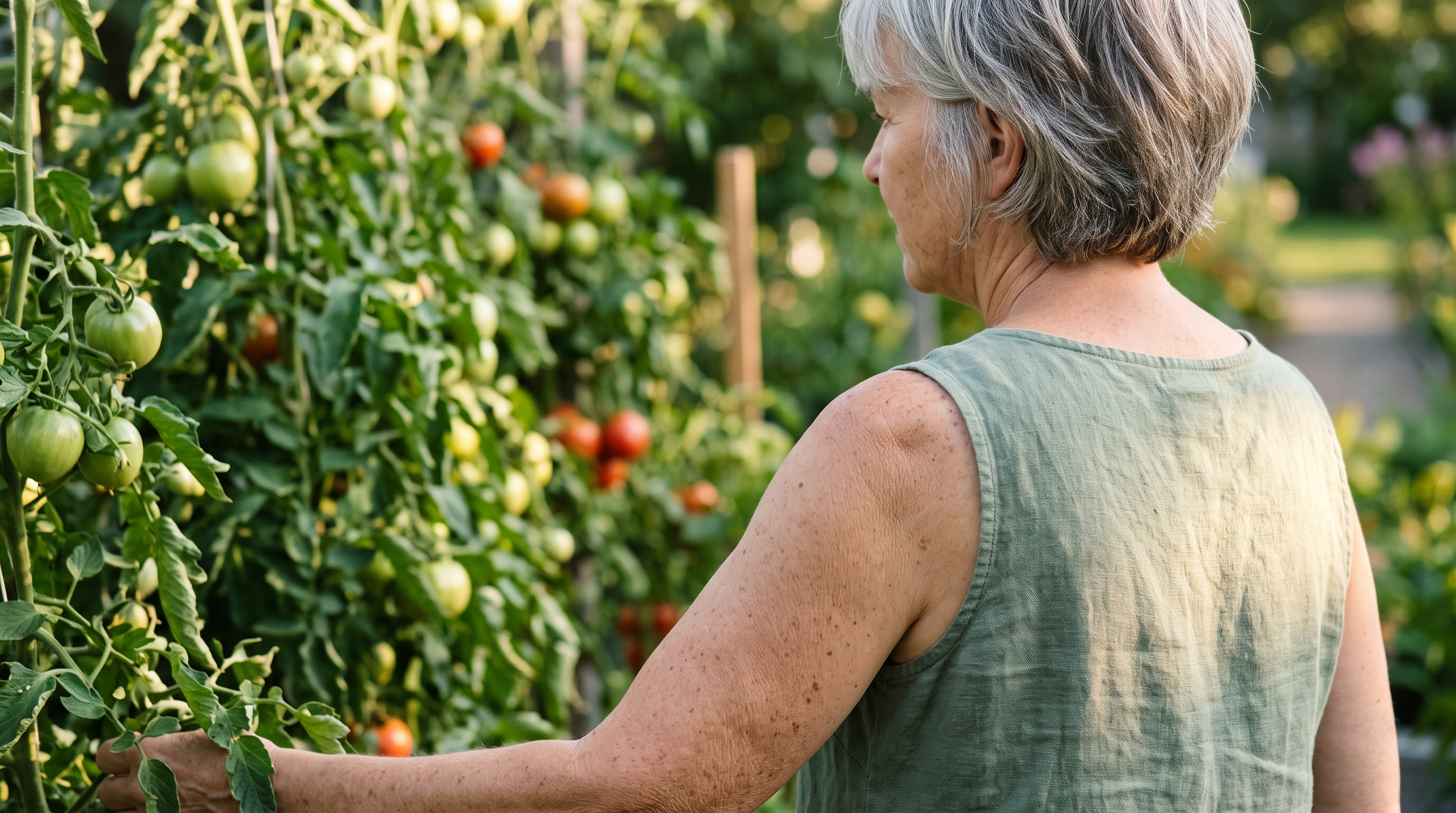
Rough elbows are a surface problem. But many people over 50 notice something else around the elbow: loose, finely wrinkled skin that bunches when the arm straightens. That is not dryness. It is the slow loss of collagen and the water-holding molecules that keep skin plump.
Retinol is the best-studied topical ingredient for that deeper change. In a 24-week trial in people with an average age of 87, a 0.4% retinol lotion applied to one arm significantly improved fine wrinkling compared with the other arm, and skin samples showed more collagen production and more of the molecules that hold water in skin [7]. Our guide to the best retinol body lotion covers how to use one on the arms and legs.
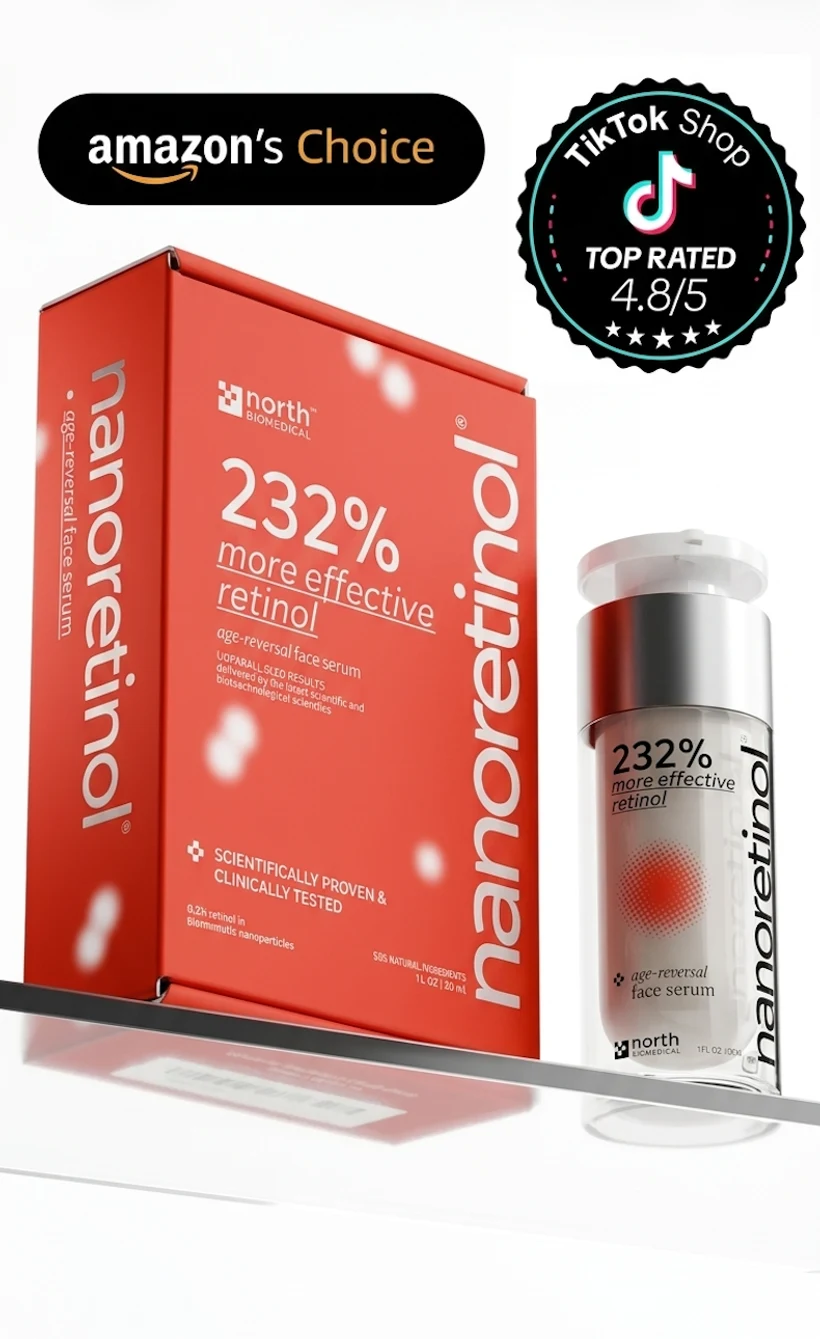
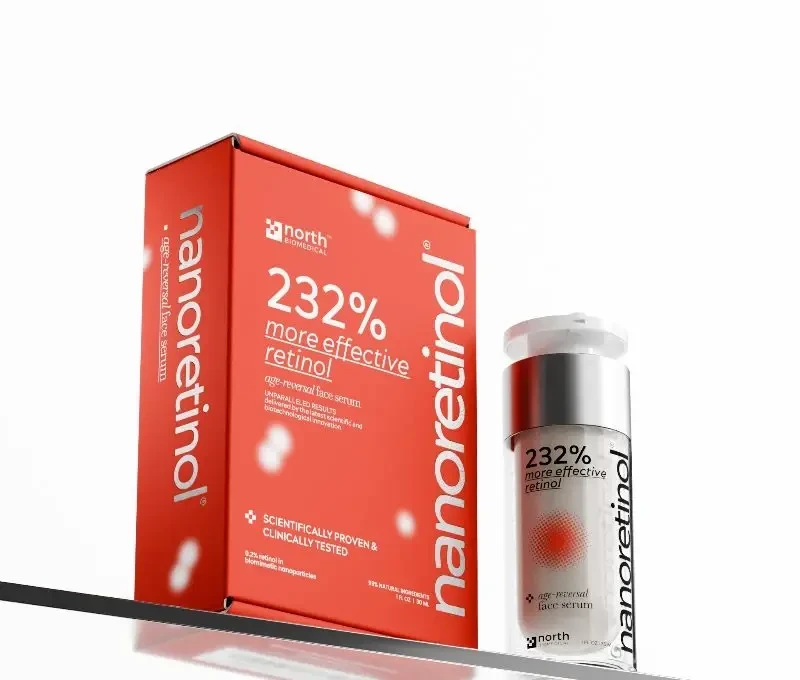
Order matters. Settle the rough, cracked patch first with urea and a balm, then bring in retinol on the arms on alternate nights, never on the same night as a strong acid. Nanoretinol is a good fit for body skin that is already dry: it delivers 0.2% retinol in biomimetic lipid nanoparticles within a light, water-based gel, so it does not depend on the harsh solvents that strip an already dry barrier. In North Biomedical’s study it was 232% more effective in collagen recovery and 73% more effective in elastin recovery than conventional retinol, with a 56% increase in skin elasticity after 56 days [8]. Smooth the surface, then work on what lies under it.
References
- Ya-Xian Z, Suetake T, Tagami H. “Number of cell layers of the stratum corneum in normal skin - relationship to the anatomical location on the body, age, sex and physical parameters.” Archives of Dermatological Research. 1999;291(10):555-559. doi:10.1007/s004030050453
- White-Chu EF, Reddy M. “Dry skin in the elderly: complexities of a common problem.” Clinics in Dermatology. 2011;29(1):37-42. doi:10.1016/j.clindermatol.2010.07.005
- Rawlings AV. “Ethnic skin types: are there differences in skin structure and function?” International Journal of Cosmetic Science. 2006;28(2):79-93. doi:10.1111/j.1467-2494.2006.00302.x
- Pan M, Heinecke G, Bernardo S, Tsui C, Levitt J. “Urea: a comprehensive review of the clinical literature.” Dermatology Online Journal. 2013;19(11):20392. PubMed 24314769
- Ademola J, Frazier C, Kim SJ, Theaux C, Saudez X. “Clinical evaluation of 40% urea and 12% ammonium lactate in the treatment of xerosis.” American Journal of Clinical Dermatology. 2002;3(3):217-222. doi:10.2165/00128071-200203030-00007
- Jennings MB, Logan L, Alfieri DM, et al. “A comparative study of lactic acid 10% and ammonium lactate 12% lotion in the treatment of foot xerosis.” Journal of the American Podiatric Medical Association. 2002;92(3):143-148. doi:10.7547/87507315-92-3-143
- Kafi R, Kwak HS, Schumacher WE, et al. “Improvement of naturally aged skin with vitamin A (retinol).” Archives of Dermatology. 2007;143(5):606-612. doi:10.1001/archderm.143.5.606
- North Biomedical LLC. “Nanoretinol vs. Conventional Retinol: Efficacy in Collagen and Elastin Recovery.” Clinical Study Summary, 2024. Study summary