Rough, Bumpy Skin on the Face: What Causes It and How to Get Smooth Skin Back
Why facial texture roughens with age — and the evidence-backed routine that brings smoothness back
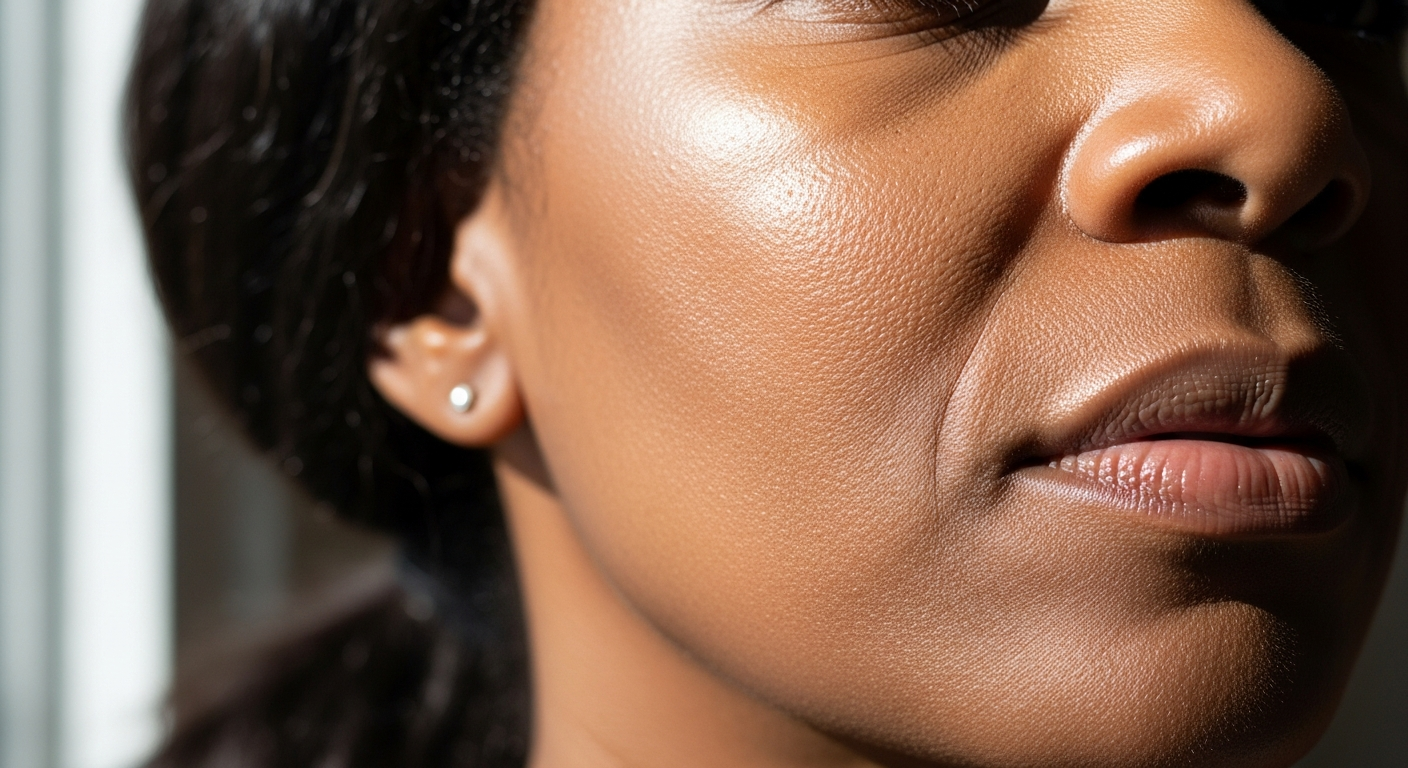
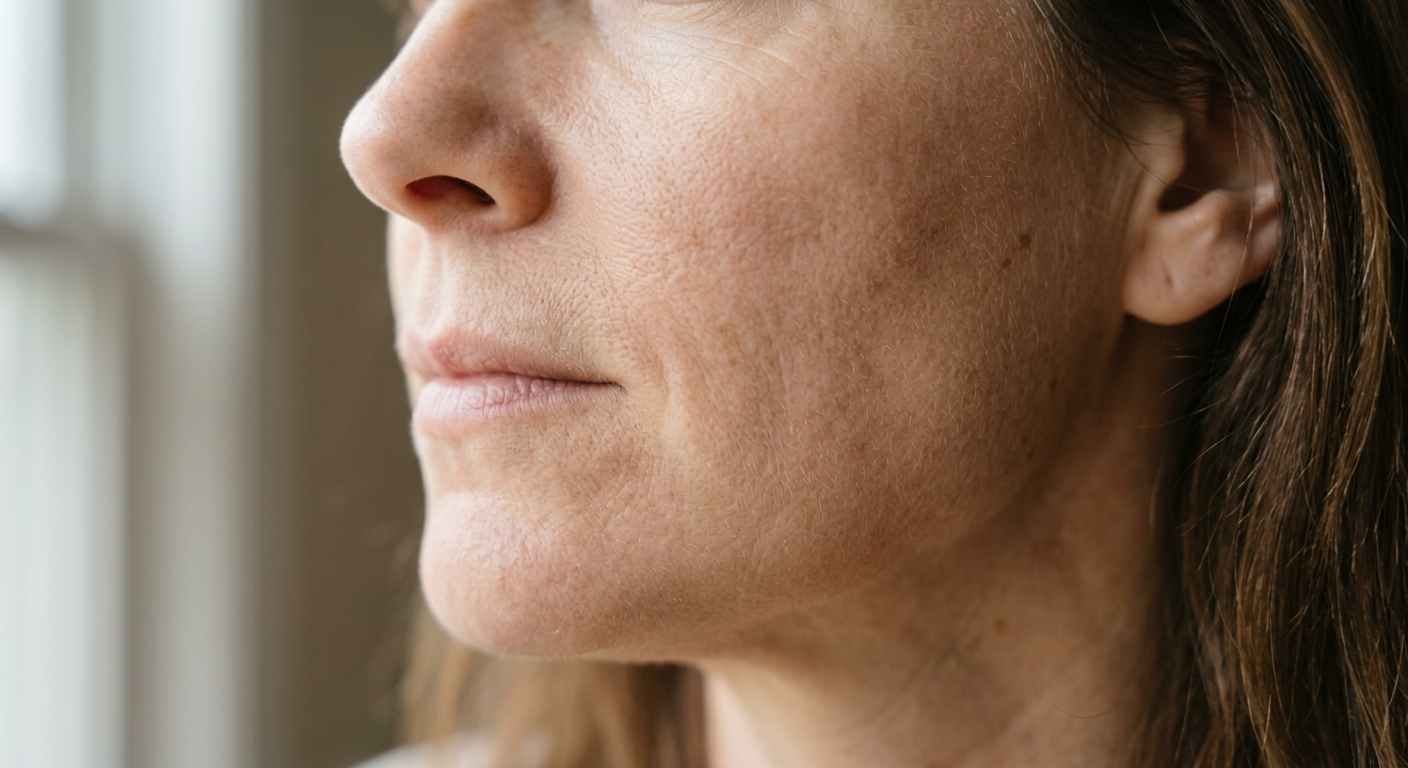
You run your hand across your cheek and feel it before you see it: a fine, sandpapery roughness where skin used to glide. In the right light, your foundation catches on tiny bumps and settles into a texture that reads as tired rather than radiant. If you are over 40 and wondering why your face suddenly feels like the surface of an orange, you are not imagining it — and you are not doing anything wrong.
Rough, bumpy skin on the face is one of the most common texture complaints in mature skin, and the good news is that it is largely a surface story. That means it responds, often dramatically, to the right routine. Let’s unpack what is actually happening on your skin and, more importantly, how to get smooth skin back.
Why Skin Texture Roughens With Age
Healthy young skin behaves like a self-cleaning surface. Deep in the epidermis, new cells are born, push upward over a few weeks, flatten into protective shingles called corneocytes, and then quietly shed — an invisible conveyor belt called cell turnover that keeps the surface fresh and reflective.
Here is the catch: that conveyor belt slows down with age. In a classic study of human epidermal renewal, the surface layer of young adults completely refreshed itself in roughly 20 days, while in older adults the same process took more than ten days longer [1]. When shedding lags but cell production continues, dead corneocytes pile up on the surface like leaves that never get raked. That accumulation is the single biggest driver of a rough skin texture on the face — a dull, uneven, bumpy skin texture that scatters light instead of reflecting it.
Three other everyday factors stack on top of slowed turnover:
Dehydration and a Tired Barrier
Mature skin holds less water. The outer layer depends on a mortar of lipids — ceramides chief among them — to seal moisture in, and that mortar thins over time. When the barrier weakens, water escapes, corneocytes shrivel and curl at the edges, and the surface turns flaky. This is the classic dry bumpy face: tight, rough, and quick to flake even when you moisturize. (If this sounds like your daily reality, our guide to dehydrated skin goes deeper on the water side of the equation.)
If you are over 40 and wondering why your face suddenly feels like the surface of an orange, you are not imagining it — and you are not doing anything wrong.
Congestion and Clogged Pores
When dead cells linger, some get trapped in pore openings along with the skin’s natural oil, creating small bumps and a gritty, congested feel — especially across the nose, chin, and cheeks. This kind of rough and bumpy skin on the face is less about dryness and more about traffic jams in the pores.
Sun Damage and Product Buildup
Decades of UV exposure thicken and disorganize the outer layer, leaving a leathery, irregular surface. And the very products meant to help — heavy creams, layered sunscreens, long-wear makeup — can build up if exfoliation has stalled, dulling the finish further.
The Evidence-Backed Routine for Smoother Skin
If accumulation and dehydration are the problem, the solution is a routine that gently clears the surface, refills the barrier, and protects your progress. Here is how to smooth skin texture, in order of impact. When the roughness is surface build-up rather than damage, choosing the best face scrub for your skin type is the simplest place to start.
Step 1: Gentle Exfoliation
Exfoliation restarts the stalled conveyor belt by loosening the “glue” between dead cells so they release on schedule. Two families do the heavy lifting:
Alpha-hydroxy acids (AHAs) like glycolic and lactic acid are water-loving and work across the whole surface. Glycolic acid has been shown to dissolve the desmosomal bonds that hold dead corneocytes together — encouraging them to shed without compromising the skin’s underlying barrier when used appropriately [2]. The result is a smoother, more even surface and brighter tone.
Beta-hydroxy acid (BHA), namely salicylic acid, is oil-loving, so it slips into pores and clears the congestion AHAs can’t reach. It is a well-documented exfoliant and a useful tool for the bumpy, clogged variety of texture [3]. If pores are part of your concern, our piece on how to shrink pores pairs well here.
Compared with conventional retinol, Nanoretinol drove 232% greater collagen recovery and 73% greater elastin recovery in our testing.
The cardinal rule: do not over-exfoliate. Two to three times a week is plenty for most mature skin. Daily acid use strips the barrier, and a stripped barrier produces more roughness, not less — the exact opposite of your goal.
Step 2: Hydration and Barrier Support
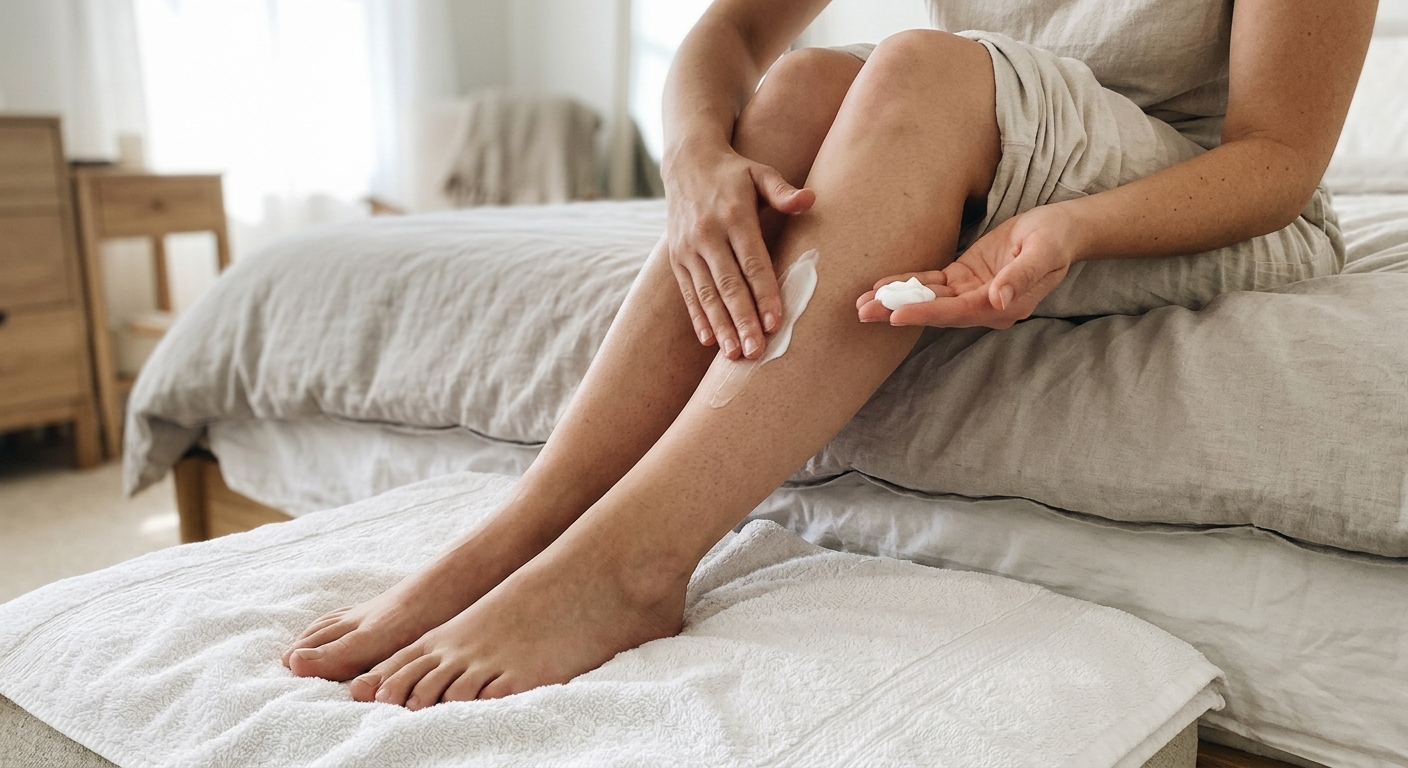
Smooth skin is well-hydrated skin. After exfoliating, you need to refill the tank and reseal the wall. Reach for humectants like hyaluronic acid and glycerin, which draw water into the surface, plump shriveled corneocytes, and instantly soften texture. Then lock it in with ceramides, the lipids that rebuild the barrier’s mortar. In controlled testing, ceramide-containing formulations meaningfully raised skin hydration and reduced water loss through the surface [4]. A plump, well-sealed surface simply feels — and looks — smoother.
Step 3: Daily Sun Protection
This is the least glamorous step and the most non-negotiable. Broad-spectrum SPF 30 or higher every morning prevents the future UV damage that thickens and roughens skin, and it protects the freshly resurfaced cells your exfoliation just revealed. Skip it and you are bailing water out of a leaking boat.
Step 4: Retinoids — The Most Powerful Texture Tool
If exfoliation clears the surface, retinoids retrain the factory underneath. Derived from vitamin A, retinoids are the most rigorously studied ingredient in texture correction. They work at the cellular level to normalize and speed up turnover, so fresh cells reach the surface faster and shed on time — and over months they smooth the surface in a way nothing else matches. In a controlled study, topical retinol applied to naturally aged skin measurably improved its quality and surface [5]. For the full picture on how retinoids and pores interact, see our deep dive on retinol and pores.
The trade-off with conventional retinol is well known: it can disrupt the skin barrier on its way in, triggering the redness, flaking, and peeling that send so many women over 40 quitting in week two. That irritation is not the retinol working — it is the delivery failing.
A Gentler Way to Deliver Retinol
This is the problem North Biomedical set out to solve with Nanoretinol. Instead of letting raw retinol force its way through the skin barrier, we encapsulate it inside biomimetic lipid nanoparticles — a kind of biological Trojan horse the skin recognizes as “self.” The retinol crosses the barrier without damaging it, sidestepping the redness-and-peeling cycle that derails conventional retinol on sensitive, mature skin.
The performance follows the delivery. Compared with conventional retinol, Nanoretinol drove 232% greater collagen recovery and 73% greater elastin recovery in our testing [6]. In a 56-day clinical evaluation, users saw 61% improved firmness and 56% improved elasticity — with drastically reduced cytotoxicity and only minimal, milder side effects. It is a water-based gel, 0.2% stabilized retinol, 99% natural, vegan, gentle enough for all skin types including sensitive, and safe even for the delicate eye contour. What matters here is not concentration but delivery efficiency: getting retinol where it works without the collateral damage.
Smooth Skin Is a Marathon, Not a Sprint
The hardest part of fixing texture is patience. Because the work happens at the level of cell turnover, real change takes weeks to months, not days. Resist the urge to over-exfoliate or pile on actives to speed things up — that backfires into the rough, irritated skin you are trying to escape. Keep it simple and consistent: gentle exfoliation a few times a week, daily hydration and barrier support, sunscreen every morning, and a well-delivered retinoid in the evening. For more on building texture habits that last, our overview of how to fix skin texture is a useful companion.
One honest caveat: this is a skincare playbook for cosmetic texture, not a diagnosis. If a bump is new and growing, persistently itches or bleeds, or simply will not respond to a consistent routine, see a board-certified dermatologist. But for the everyday rough, bumpy, dull-feeling skin that arrives with the decades — the kind you can smooth with a thoughtful routine — the path back to glide is clearer than it feels at 6 a.m. in front of the mirror. Give it time, be gentle, and your skin will meet you halfway.
References
- Grove GL, Kligman AM. “Age-associated Changes in Human Epidermal Cell Renewal.” Journal of Gerontology. 1983;38(2):137–142. doi:10.1093/geronj/38.2.137
- Fartasch M, Teal J, Menon GK. “Mode of action of glycolic acid on human stratum corneum: ultrastructural and functional evaluation of the epidermal barrier.” Archives of Dermatological Research. 1997;289(7):404–409. doi:10.1007/s004030050212
- Arif T. “Salicylic acid as a peeling agent: a comprehensive review.” Clinical, Cosmetic and Investigational Dermatology. 2015;8:455–461. doi:10.2147/CCID.S84765
- Huang HC, Chang TM. “Ceramide 1 and ceramide 3 act synergistically on skin hydration and the transepidermal water loss of sodium lauryl sulfate-irritated skin.” International Journal of Dermatology. 2008;47(8):812–819. doi:10.1111/j.1365-4632.2008.03687.x
- Kafi R, Kwak HSR, Schumacher WE, et al. “Improvement of naturally aged skin with vitamin A (retinol).” Archives of Dermatology. 2007;143(5):606–612. doi:10.1001/archderm.143.5.606
- North Biomedical LLC. “Nanoretinol vs. Conventional Retinol: Efficacy in Collagen and Elastin Recovery.” Clinical Study Summary, 2024.