
Dysport Explained: How It Works, How It Compares to Botox, and What It Can't Do
A clear look at the frown-line injectable — its speed, its spread, its honest limits, and the skin-quality gap it leaves behind.
The Line Between the Eyebrows
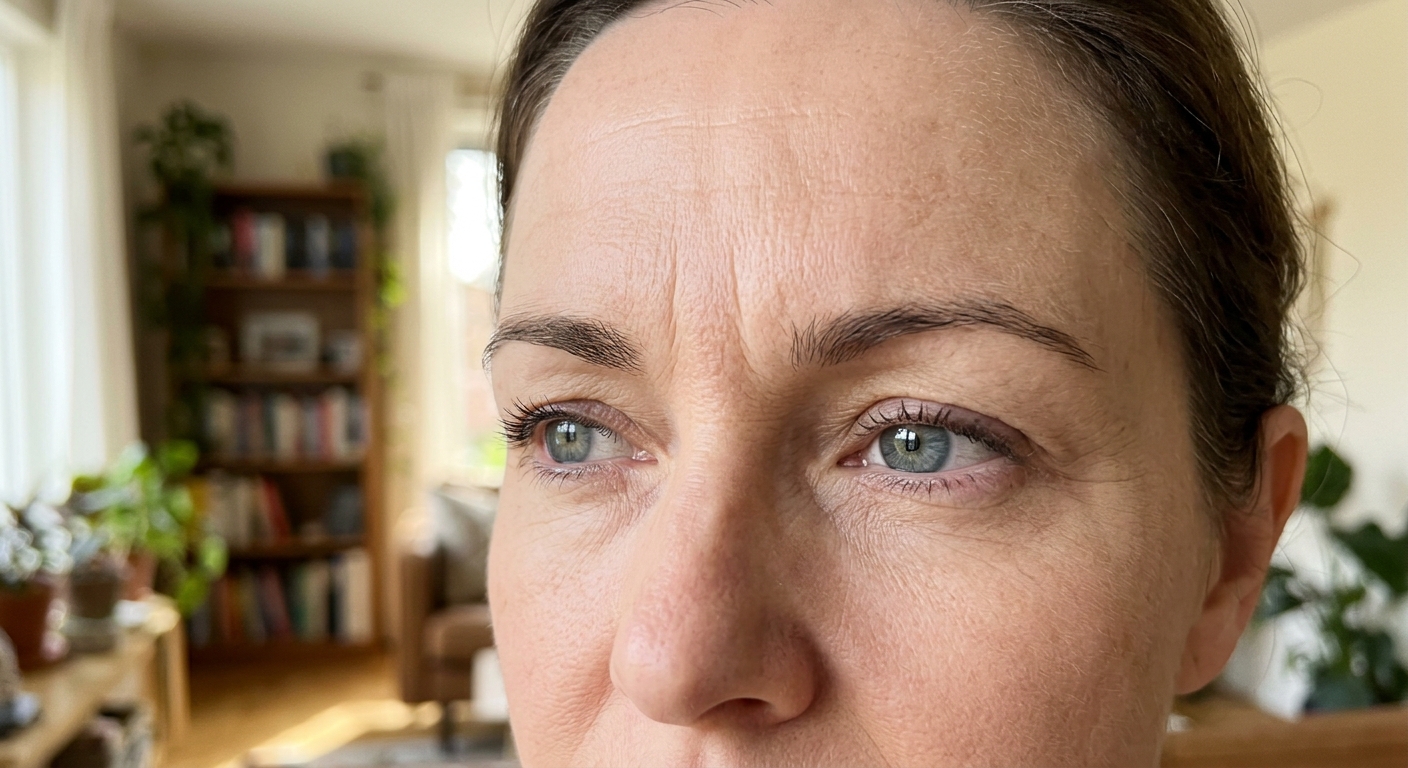
Of all the wrinkles that make a face look tense or older, the two vertical creases between the eyebrows — the “elevens” — are the ones people fixate on most. They deepen every time you concentrate, squint, or frown, and by the mid-forties they often stay etched even at rest. That is why the frown zone, known medically as the glabella, is the most-treated area in cosmetic injectables, and Dysport is one of the two names you will hear most often for treating it.
Dysport is a brand of abobotulinumtoxinA, a purified botulinum toxin type A. Its job is narrow and specific: to relax the small muscles that pleat the skin when you make expressions, softening the folds those muscles create. Understanding what it does — and, just as important, what it leaves untouched — is the key to using it wisely.
How Dysport Works
Every time you frown, a nerve tells the muscle to contract by releasing a chemical messenger called acetylcholine across the gap where nerve meets muscle. Botulinum toxin type A interrupts that message. It cleaves a docking protein called SNAP-25 that the nerve needs to release acetylcholine, so the signal never arrives and the targeted muscle stays relaxed [1]. Less contraction means the overlying skin stops folding, and the dynamic wrinkle fades.
The effect is temporary by design. As nerve terminals regenerate that docking machinery over the following months, signaling returns and movement comes back — which is why the treatment typically lasts three to six months and then needs repeating [1].
Understanding what it does — and, just as important, what it leaves untouched — is the key to using it wisely.
Dysport vs. Botox: The Real Differences
Dysport and Botox (onabotulinumtoxinA) are close cousins, and for the frown lines both are highly effective. In a head-to-head randomized, double-blind trial, the average onset of a visible effect in women was 5.32 days for Dysport versus 5.29 days for Botox — statistically indistinguishable — using the conventional dosing ratio of roughly three Dysport units for every one Botox unit [2]. The units are not interchangeable, which is why an experienced injector matters.
Where they can differ is in feel and spread. Dysport is formulated to diffuse over a slightly wider field from each injection point, which some injectors prefer for broad, flat areas like the forehead and others dose more conservatively near delicate zones. Efficacy at the frown lines is comparable: in a pivotal phase 3 trial that included a Botox comparator arm, Dysport was non-inferior to Botox, with adjusted responder rates of 94.7% versus 97.0% [3].
The headline data for Dysport itself are strong. In a placebo-controlled phase 3 study of Dysport for moderate-to-severe glabellar lines, 88.3% of treated patients responded at day 29 versus 1.4% on placebo, with a median duration of effect around 4.5 months [4]. Onset can be quick, too: another trial reported a median time to visible effect of about two days, with roughly a third of patients noticing improvement as early as day one [5].
If you are weighing your options, our overview of Botox alternatives puts Dysport in context alongside other approaches.
What Dysport Cannot Do
Here is the distinction that gets lost in the marketing. Dysport treats dynamic wrinkles — the ones created by muscle movement. It does nothing for the quality of the skin itself: the crepiness, the sun-spotted tone, the fine surface lines that appear even when your face is completely still. A perfectly relaxed frown muscle sitting under thin, photoaged, collagen-poor skin will still look aged.
This is not a knock on injectables — it is a map of their edges. The glabella and forehead respond beautifully to toxin; the surrounding skin quality is a separate project handled by topicals and, sometimes, resurfacing. Many people combine the two, pairing an injectable with the kind of collagen-focused routine we describe for forehead wrinkles and frown lines. If you are weighing your options, our overview of Botox alternatives puts Dysport in context alongside other approaches.
The Skin-Quality Half of the Equation
The evidence for treating skin quality — as opposed to muscle movement — points clearly to topical retinoids. A systematic review of seven randomized controlled trials found that topical tretinoin significantly improved wrinkling, mottled pigmentation, and sallowness, with benefits appearing as early as one month and persisting for up to two years, by stimulating new collagen and inhibiting the enzymes that break it down [6]. That is a fundamentally different mechanism from a neurotoxin: one relaxes muscle, the other rebuilds the dermis. They address different problems, and used together they cover far more of what makes skin look older than either does alone.
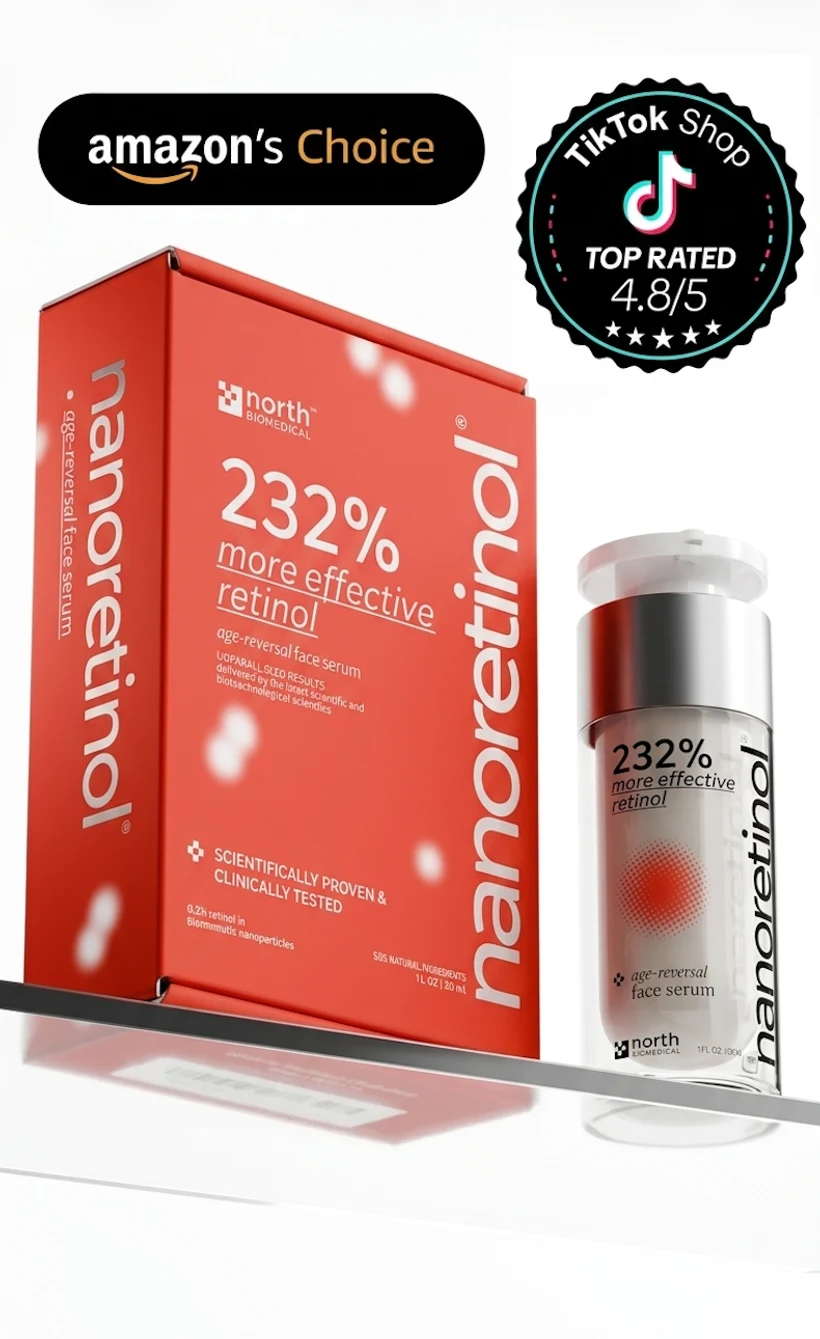
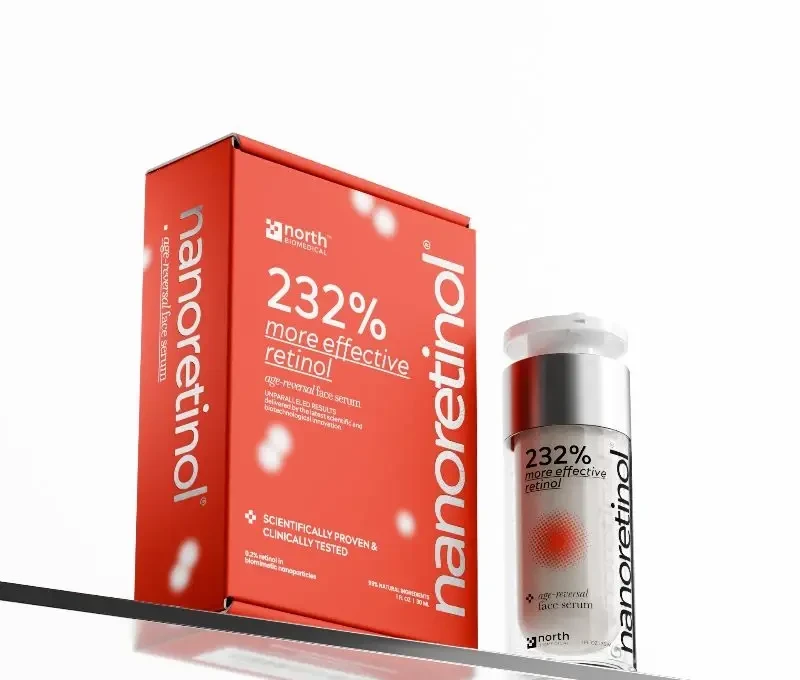
The practical obstacle with conventional retinol has always been tolerance — the irritation that makes people abandon it before it works. Nanoretinol was designed to solve the delivery problem directly, encasing retinol in biomimetic lipid nanoparticles the skin accepts as its own so the active reaches the dermis without stripping the barrier. In North Biomedical’s clinical comparison, that approach was 232% more effective at collagen recovery and 73% more effective at elastin recovery than standard retinol, with a 61% rise in firmness and a 56% rise in elasticity over 56 days [7]. Its gentle, water-based 0.2% formula is easy to keep using between injector visits — working on the still-face skin quality that no toxin can touch.
The Takeaway Worth Keeping
Dysport is an excellent, well-studied tool for one specific job: quieting the muscles that carve frown lines and forehead creases. Ask it to do that, and it delivers in days and lasts for months. Just remember it treats movement, not skin — and that the smoothest, most convincing results come from also tending the collagen and tone the needle was never meant to reach.
References
- Satriyasa BK. “Botulinum toxin (Botox) A for reducing the appearance of facial wrinkles: a literature review of clinical use and pharmacological aspect.” Clinical, Cosmetic and Investigational Dermatology. 2019;12:223-228. doi:10.2147/CCID.S202919
- Rappl T, Parvizi D, Friedl H, Wiedner M, May S, Kranzelbinder B, Wurzer P, Hellbom B. “Onset and duration of effect of incobotulinumtoxinA, onabotulinumtoxinA, and abobotulinumtoxinA in the treatment of glabellar frown lines: a randomized, double-blind study.” Clinical, Cosmetic and Investigational Dermatology. 2013;6:211-219. doi:10.2147/CCID.S41537
- Wu Y, Fang F, Lai W, Li C, Li L, Liu Q, Lu J, Pang X, Sun J, Shi X, Picaut P, Prygova I, Andriopoulos B, Sun Q. “Efficacy and Safety of AbobotulinumtoxinA for the Treatment of Glabellar Lines in Chinese Patients: A Pivotal, Phase 3, Randomized, Double-Blind and Open-Label Phase Study.” Aesthetic Plastic Surgery. 2023;47(1):351-364. doi:10.1007/s00266-022-03164-3
- Ascher B, Rzany B, Kestemont P, Hilton S, Heckmann M, Bodokh I, Noah EM, Boineau D, Kerscher M, Volteau M, Le Berre P, Picaut P. “Liquid Formulation of AbobotulinumtoxinA: A 6-Month, Phase 3, Double-Blind, Randomized, Placebo-Controlled Study of a Single Treatment, Ready-to-Use Toxin for Moderate-to-Severe Glabellar Lines.” Aesthetic Surgery Journal. 2019;40(1):93-104. doi:10.1093/asj/sjz003
- Schlessinger J, Friedmann DP, Mayoral F, Mraz Robinson D, Glaser D, Wu D, Marcus K, Somenek M, Lin X. “AbobotulinumtoxinA Treatment of Glabellar Lines Using a New Reconstitution and Injection Volume: Randomized, Placebo-Controlled Data.” Journal of Drugs in Dermatology. 2021;20(9):988-995. doi:10.36849/JDD.6130
- Sitohang IBS, Makes WI, Sandora N, Suryanegara J. “Topical tretinoin for treating photoaging: A systematic review of randomized controlled trials.” International Journal of Women’s Dermatology. 2022;8(1):e003. doi:10.1097/JW9.0000000000000003
- North Biomedical LLC. “Nanoretinol vs. Conventional Retinol: Efficacy in Collagen and Elastin Recovery.” Clinical Study Summary, 2024. Study summary