Daxxify: How the Longer-Lasting Botox Alternative Works (and What It Can't Fix)
A science-based look at the neuromodulator that lasts up to twice as long — and the wrinkles it leaves untouched
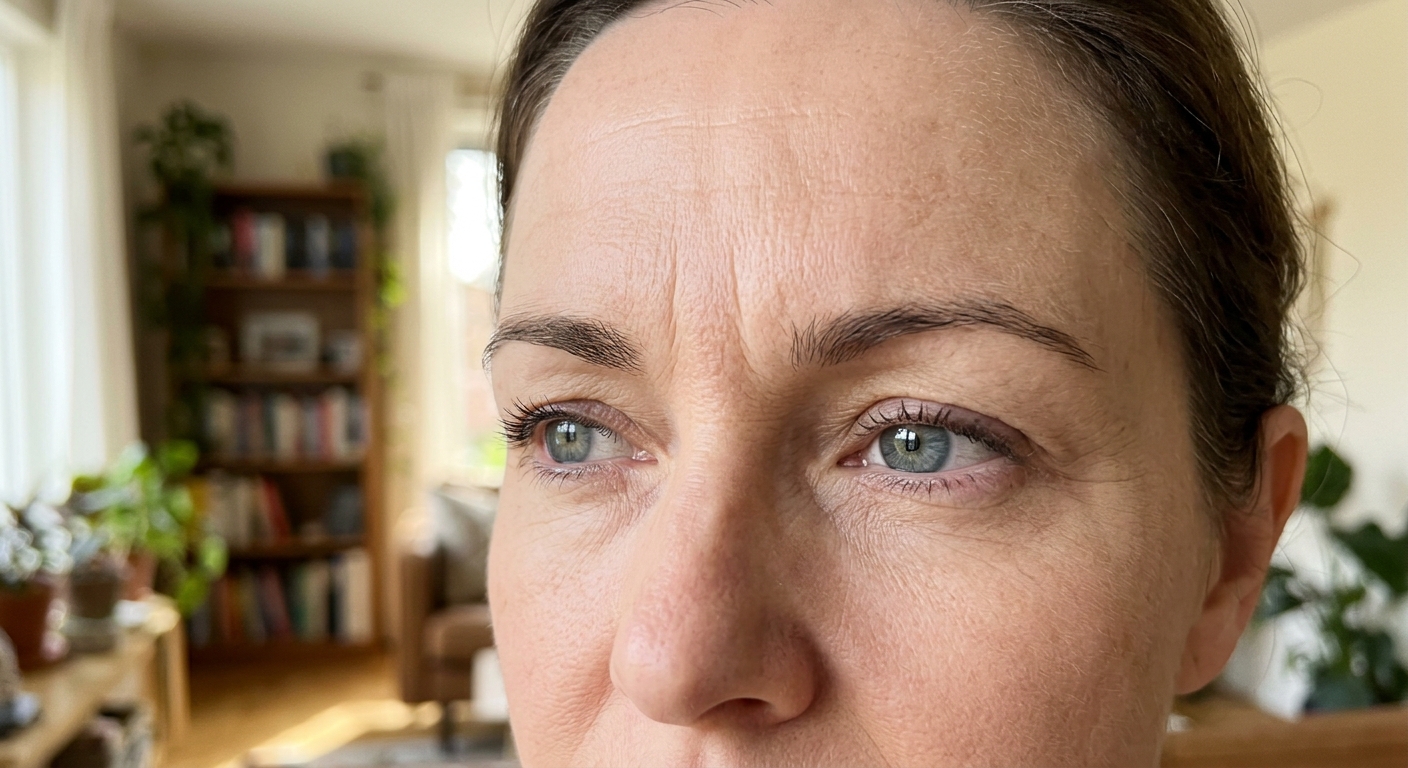
If you’ve ever had Botox for the vertical “11” lines between your brows, you know the rhythm: the frown softens beautifully for a couple of months, and then, somewhere around month three, the lines start creeping back and it’s time to book again. For a lot of people, the cost and the calendar-watching are the most annoying part of the whole thing.
That frustration is exactly what Daxxify was built around. It’s one of the newest injectable wrinkle relaxers, and its headline promise is simple: the same smoothing, but for longer. If you’ve been researching ways to soften frown lines without going under a needle every season, it’s worth understanding what Daxxify actually is, what the clinical trials really showed, and — just as importantly — which wrinkles it can’t do anything about.
What Daxxify Actually Is
Daxxify (the generic name is DaxibotulinumtoxinA) belongs to the same family as Botox, Dysport, and Jeuveau: it’s a botulinum toxin type A neuromodulator. These are some of the most studied aesthetic treatments in the world, and they all work by the same elegant mechanism.
When you frown, nerves release a chemical messenger called acetylcholine that tells the underlying muscle to contract. Botulinum toxin type A blocks that signal. Specifically, it cleaves a protein called SNAP-25 that the nerve needs in order to release acetylcholine, which temporarily quiets the muscle [1]. With the muscle relaxed, the skin above it stops creasing, and the dynamic lines that form when you frown soften or disappear.
What makes Daxxify different isn’t the toxin itself — it’s the formulation around it. Instead of being stabilized with human albumin like older products, Daxxify uses a novel peptide as its stabilizer. That peptide is the reason behind its central selling point: a longer duration of effect.
How Long Does Daxxify Actually Last?
This is the question everyone asks, so let’s go straight to the trial data rather than the marketing.
Instead of being stabilized with human albumin like older products, Daxxify uses a novel peptide as its stabilizer.
Daxxify was tested in a large clinical program called SAKURA. In the two pivotal Phase 3 trials, the median duration of meaningful response was about 24 weeks — and it took a median of 24 weeks for frown lines to return even to a moderate severity, with some patients holding results out to six months [2]. For comparison, conventional botulinum toxin treatments for frown lines typically last around three to four months.
A larger, long-term safety study called SAKURA 3 followed nearly 2,700 people through repeated treatments and confirmed both the extended duration and a reassuring safety profile, with treatment-related side effects occurring in roughly 18% of subjects and generally being mild and temporary [3]. The most common issues were the familiar ones for this category: headache and, less often, temporary eyelid or brow heaviness.
So the longer-lasting claim holds up — for many people, Daxxify means two or three treatments a year instead of three or four. That’s a real convenience advantage, though it’s worth noting that an unwanted result also lasts longer, which makes injector skill especially important.
Daxxify vs. Botox: Which Makes Sense?
Neither is universally “better.” Botox has decades of track record and is highly predictable. Daxxify’s draw is duration. If you’re someone who hates the maintenance treadmill and your injector knows the product well, the longer interval can be appealing. If you’re new to neuromodulators or want the most established option, starting with a conventional toxin is perfectly reasonable.
Either way, both belong to the same toolbox, and both share the same fundamental limitation — one that’s easy to overlook in the duration debate. If you’re weighing your options more broadly, our overview of Botox alternatives lays out the full landscape, and our piece on preventative Botox covers the “start early” strategy.
In 56 days of use, participants saw a 61% increase in skin firmness and a 56% increase in elasticity.
The Wrinkles Daxxify Can’t Touch
Here’s the part the brochures gloss over. Neuromodulators only address one specific kind of wrinkle: dynamic lines caused by muscle movement — the frown lines, forehead lines, and crow’s feet that deepen when you make expressions.
They do nothing for the other major category: static changes driven by the skin itself. That includes fine lines that sit on the surface even when your face is at rest, crepey texture, dullness, enlarged pores, mottled tone, and the slow loss of firmness that comes from collagen breakdown. Those problems live in the skin’s structure, not in the muscle underneath it. You can relax the muscle completely and still have skin that looks aged, rough, and thin.
This is why so many people who get regular injectables are quietly disappointed that their skin still doesn’t look “good” — smoother, yes, but not necessarily healthier or more radiant. The frown line is gone, but the skin quality around it hasn’t changed at all. Treating movement lines while ignoring skin quality is like ironing a shirt made of worn-out fabric: you remove the creases, but the cloth is still threadbare. (Our guides to frown lines and forehead wrinkles get into the static-versus-dynamic distinction in more detail.)
What Actually Improves Skin Quality
Skin quality is built from the dermis up, and the most evidence-backed way to improve it topically is with a retinoid. Retinoids signal the skin to manufacture new collagen and to switch off the enzymes that degrade it. In a controlled study, retinoid treatment drove an 80% increase in new collagen formation in photoaged skin, versus a decline under placebo [4]. Systematic reviews of randomized trials confirm that retinoids reliably improve fine lines, texture, and tone — exactly the static problems no injectable addresses [5].
The historical catch with retinoids is tolerability: traditional retinol can leave skin red, flaky, and stinging, because conventional formulas push the ingredient through the barrier by partially breaking it down.
Nanoretinol takes a different route. It encapsulates retinol inside biomimetic lipid nanoparticles that your skin recognizes as “self,” allowing the active through the barrier intact rather than forcing its way past it. The payoff is both potency and comfort: compared with conventional retinol, Nanoretinol proved +232% more effective at collagen recovery and +73% more effective at elastin recovery, with dramatically reduced cytotoxicity and only minimal, milder side effects. In 56 days of use, participants saw a 61% increase in skin firmness and a 56% increase in elasticity.
That makes a topical retinoid like Nanoretinol the natural partner to an injectable — not a competitor. Daxxify smooths the lines your expressions create; a nightly retinoid works on the skin’s actual structure, improving the texture, firmness, and radiance that injectables leave behind. If you’re already investing in skin care that lasts, our guide to retinol for wrinkles explains how to fold it into a routine.
The Honest Bottom Line on Daxxify
Daxxify is a genuine advance for one job: relaxing the muscles behind frown lines, and doing it for longer than older neuromodulators. For people tired of quarterly appointments, that’s a meaningful benefit backed by solid Phase 3 data.
But it’s worth being clear-eyed about what you’re buying. A neuromodulator manages movement; it does not rebuild skin. The people who look genuinely refreshed — not just frozen — are almost always the ones pairing in-office treatments with consistent, collagen-building care at home. Daxxify can erase the crease. Whether the canvas underneath looks healthy is still up to you.
References
- Nestor MS, Arnold D, Fischer D. “The Mechanisms of Action and Use of Botulinum Neurotoxin Type A in Aesthetics: Key Clinical Postulates II.” Journal of Cosmetic Dermatology. 2020;19(11):2785-2804. doi:10.1111/jocd.13702
- Carruthers JD, Fagien S, Joseph JH, Humphrey SD, Biesman BS, Gallagher CJ, Liu Y, Rubio RG. “DaxibotulinumtoxinA for Injection for the Treatment of Glabellar Lines: Results From Each of Two Multicenter, Randomized, Double-Blind, Placebo-Controlled, Phase 3 Studies (SAKURA 1 and SAKURA 2).” Plastic and Reconstructive Surgery. 2020;145(1):45-58. doi:10.1097/PRS.0000000000006327
- Fabi SG, Cohen JL, Green LJ, Dhawan S, Kontis TC, Baumann L, Gross TM, Gallagher CJ, Brown J, Rubio RG. “DaxibotulinumtoxinA for Injection for the Treatment of Glabellar Lines: Efficacy Results From SAKURA 3, a Large, Open-Label, Phase 3 Safety Study.” Dermatologic Surgery. 2021;47(1):48-54. doi:10.1097/DSS.0000000000002531
- Griffiths CEM, Russman AN, Majmudar G, Singer RS, Hamilton TA, Voorhees JJ. “Restoration of Collagen Formation in Photodamaged Human Skin by Tretinoin (Retinoic Acid).” New England Journal of Medicine. 1993;329(8):530-535. doi:10.1056/NEJM199308193290803
- Sitohang IBS, Makes WI, Sandora N, Suryanegara J. “Topical Tretinoin for Treating Photoaging: A Systematic Review of Randomized Controlled Trials.” International Journal of Women’s Dermatology. 2022;8(1):e003. doi:10.1097/JW9.0000000000000003