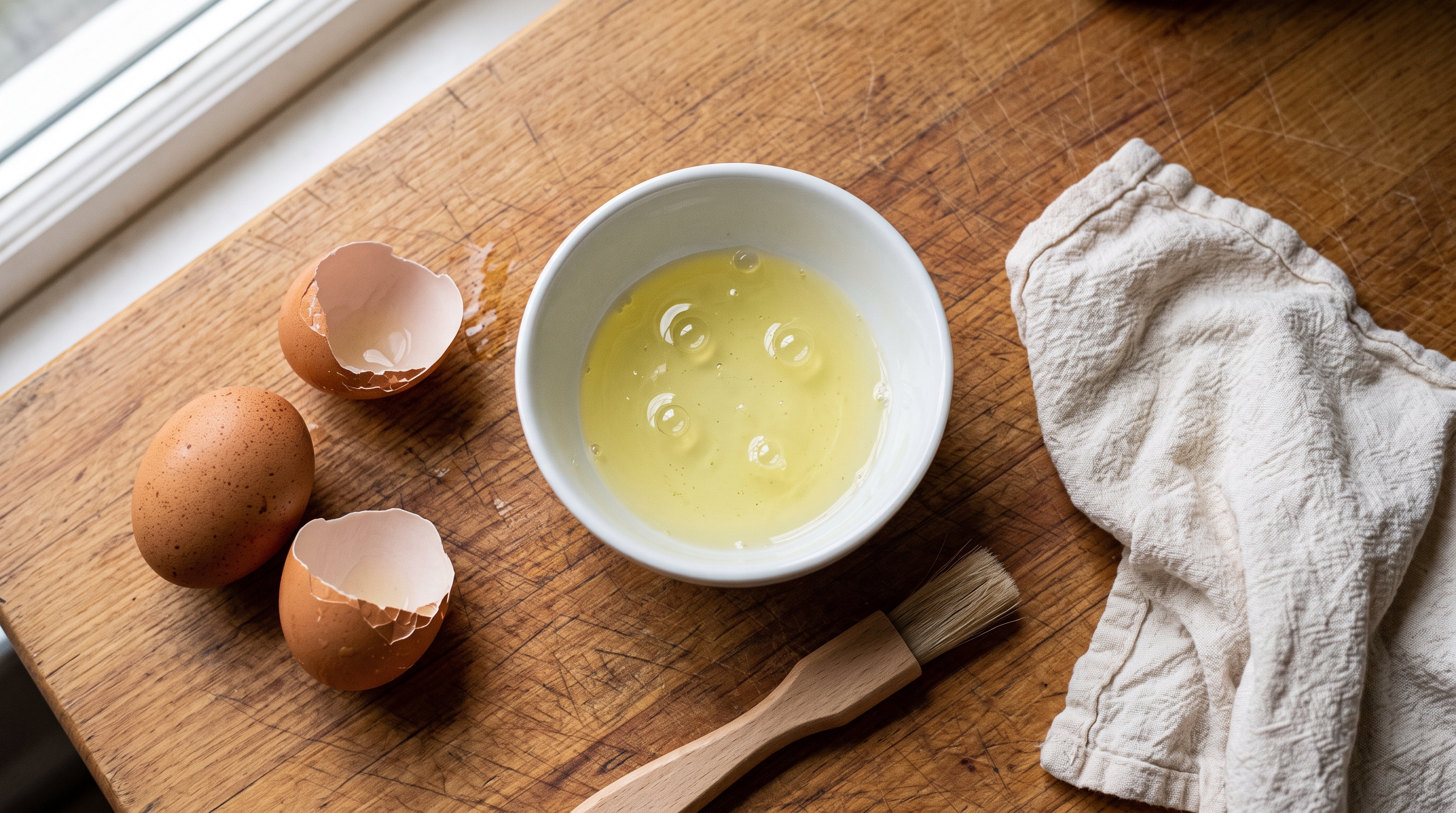
Egg White Face Mask: What the Tightening Feeling Actually Is
The kitchen mask that feels like it works, and what your skin is really doing under the film
The egg white mask has survived every skincare trend cycle of the last century, and it has survived for one honest reason: it delivers an unmistakable physical sensation within about ten minutes. Your skin pulls. Your pores look smaller. Something is clearly happening.
Something is happening. It is just not the thing most people think it is, and the gap between the sensation and the biology is one of the more instructive things in all of home skincare.
What is actually in an egg white
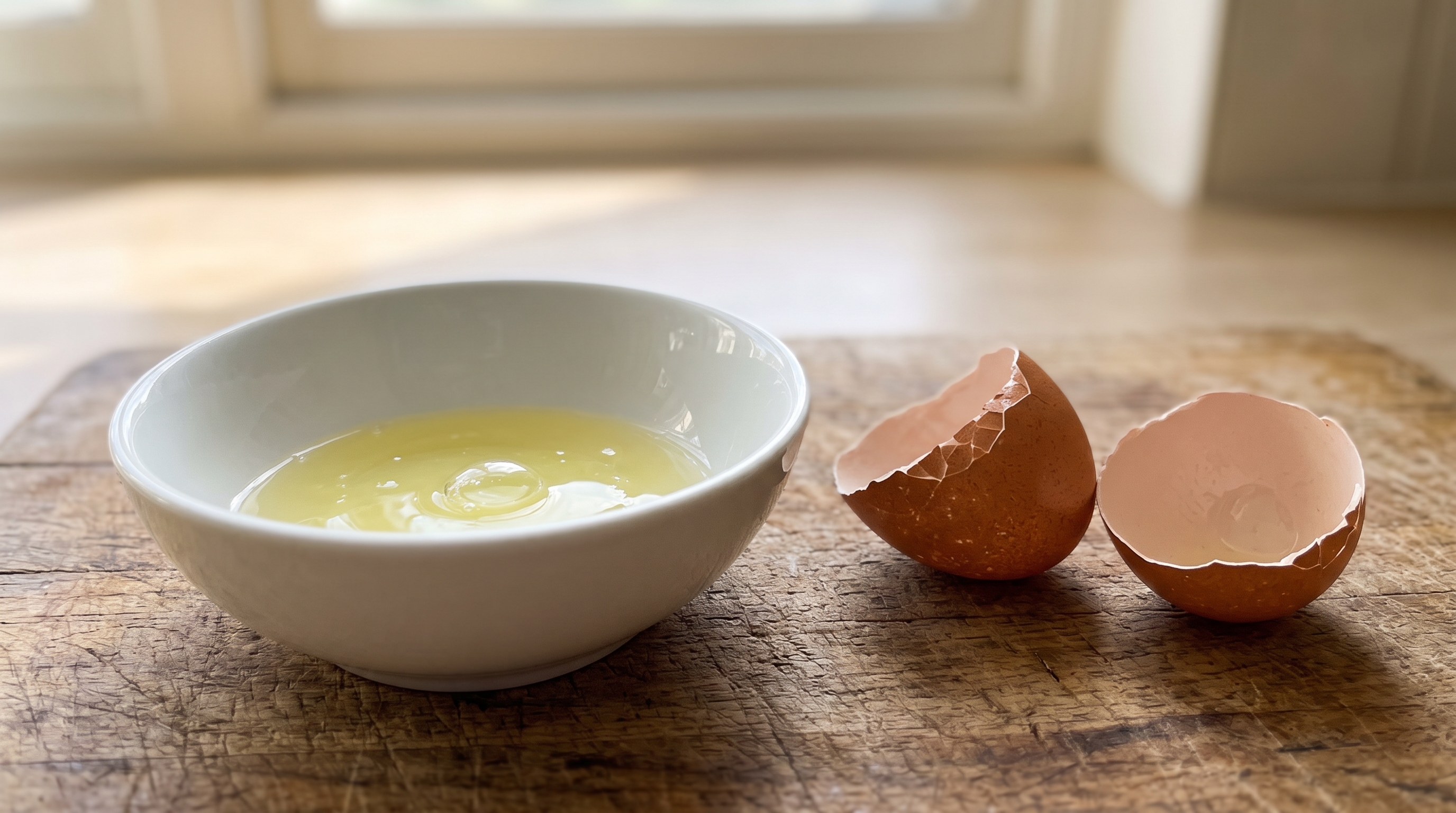
Egg white is roughly 88% water and about 10% protein, with almost no lipid content. That protein fraction is dominated by ovalbumin, joined by ovotransferrin, ovomucoid, and a small but famous amount of lysozyme.
That composition matters, because it tells you what an egg white can and cannot do on skin. It is a dilute protein solution with no oils, no acids, and no small molecules capable of signaling to a living cell.
The tightening feeling is a drying film
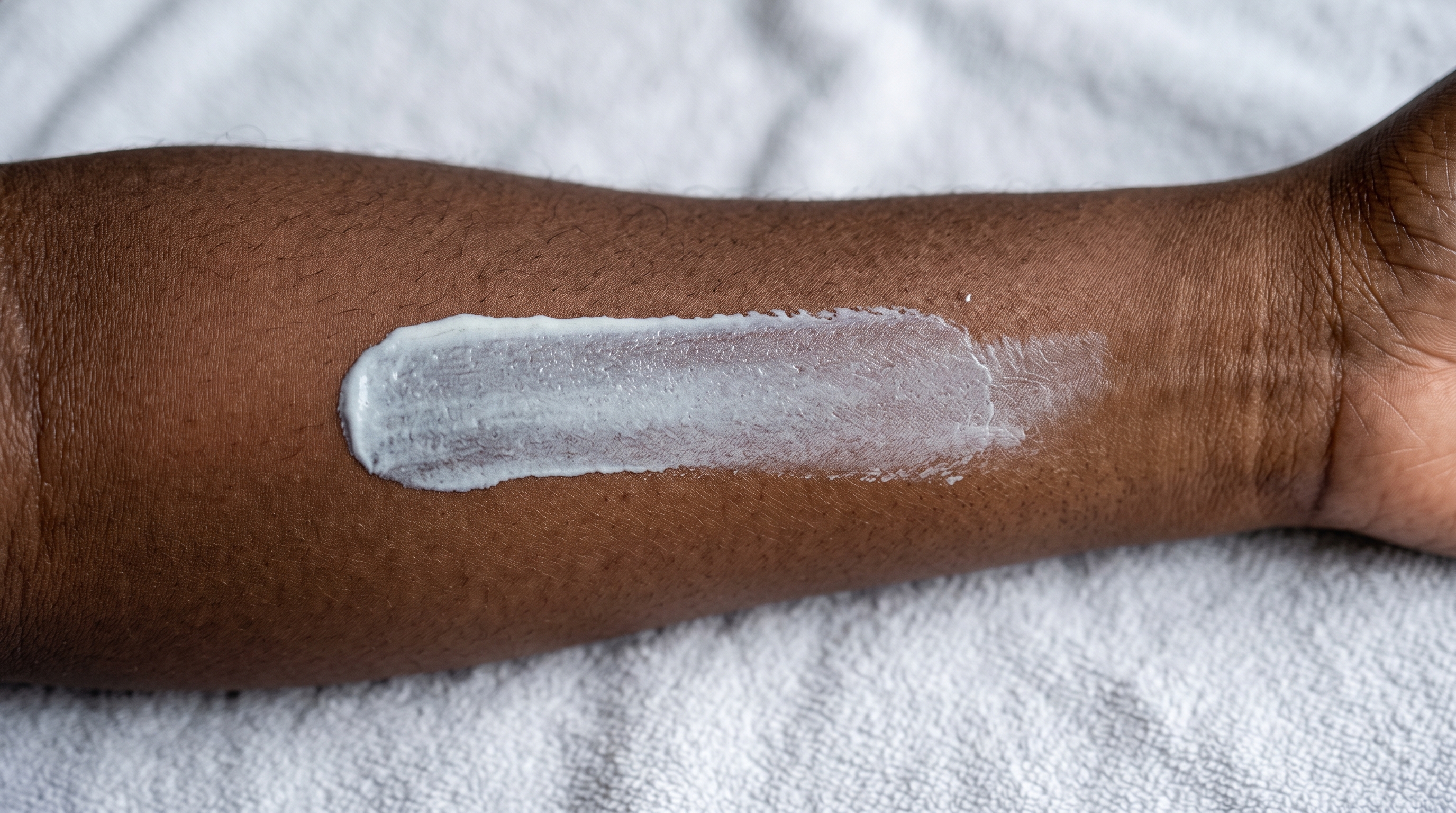
Spread egg white on skin and the water begins evaporating. As it goes, the dissolved proteins concentrate, partially unfold, and cross-link into a continuous sheet.
This is a genuinely well-characterized material. Egg albumen forms cohesive, self-supporting films with measurable tensile strength, which is why food scientists have studied it as an edible coating [1]. That film is what you are feeling. As it dries it contracts, and because it has adhered to the surface of your stratum corneum, it pulls the skin’s outermost layer taut with it.
Egg white is roughly 88% water and about 10% protein, with almost no lipid content.
The temporary smoothing is real. So is the temporary appearance of smaller pores, because a taut, flattened surface reflects light more evenly and the openings sit less shadowed. Both effects last exactly as long as the film does. Wash it off and the skin returns to baseline within minutes.
There is nothing dishonest about a temporary effect, and if you want to look smoother for an evening it works. The problem is the claim stacked on top of it.
Why it cannot shrink a pore
Pore size is not a surface phenomenon you can squeeze. The visible opening of a follicle is determined largely by sebaceous output, along with genetics, follicle diameter, and the condition of the surrounding dermal support tissue. Research measuring facial pore size against sebum production found sebum output to be a significant contributing factor [2].
An egg white film sits on top of the stratum corneum. It does not enter the follicle, does not alter sebaceous gland activity, and does not change the collagen and elastin scaffolding that holds the follicular opening in shape. There is no mechanism by which it could produce a lasting change in pore diameter, which is consistent with what people actually observe over months of use. For the approaches that do move that number, we covered them in how to shrink pores.
The lysozyme and avidin arguments
Two more sophisticated claims circulate, and both deserve a straight answer.
Lysozyme is real, and it is a genuine antimicrobial enzyme that cleaves bacterial cell walls. It has documented applications as an antibacterial agent [3]. The leap to “egg white treats acne” does not follow, though. Lysozyme is most effective against gram-positive organisms with accessible peptidoglycan, and its activity against Cutibacterium acnes inside a lipid-filled, anaerobic follicle is a very different proposition from its activity in a test tube. A protein this large also is not crossing an intact barrier to reach anything.
Raw egg carries a documented Salmonella risk, and that risk is not eliminated by the fact that you are applying it to your face rather than eating it.
Avidin is the opposite kind of claim. Raw egg white contains avidin, which binds biotin with extraordinary affinity. This is a real and well-known interaction, and it is an argument against raw egg white rather than for it, though the practical relevance of a topical application is minimal.
That last point is the one that resolves most DIY skincare debates. Ovalbumin is about 45 kilodaltons. Molecules generally need to be under roughly half a kilodalton to cross the stratum corneum with any efficiency. Egg white proteins are off that scale by roughly two orders of magnitude. Whatever they do, they do it on the surface.
The part nobody mentions
Raw egg carries a documented Salmonella risk, and that risk is not eliminated by the fact that you are applying it to your face rather than eating it [4]. You are handling raw egg near your eyes, nose, and mouth, and often washing it off in a sink you also use for dishes.
Egg is also one of the most common food allergens, and contact with raw egg protein can provoke reactions in sensitized individuals, including people who have never had a problem eating cooked eggs. If there is any egg allergy in your household, this mask is not worth the experiment.
What actually firms skin, and why it takes longer
The reason the egg white mask endures is that it delivers in ten minutes a preview of something people genuinely want. Real firmness is a structural property of the dermis, and it comes down to how much intact collagen and elastin you have and how well organized it is.
Rebuilding that is slow, and topical retinoids remain the most rigorously documented way to do it. Retinol suppresses the matrix metalloproteinases that break collagen down and stimulates fibroblasts to lay down new collagen. Studies of naturally aged human skin have shown vitamin A both blocking collagen degradation and increasing collagen accumulation [5], and a controlled trial of topical retinol on aged skin found significant improvement in fine wrinkling alongside increased collagen production [6]. Our guide to how to boost collagen production goes deeper into that pathway.
The historical obstacle has been delivery. Retinol is fragile and struggles to cross an intact skin barrier, so conventional formulas have relied on solvents that force passage by disrupting the barrier itself. That is the mechanism behind the burning, redness, and peeling that make so many people quit.
Nanoretinol was engineered around that constraint. It encapsulates retinol in biomimetic lipid nanoparticles that are externally similar enough to skin cells that the body recognizes them as self and permits passage, so nothing has to be broken to get the molecule where it works. In North Biomedical’s clinical study, this delivery system proved 232% more effective than conventional retinol for collagen recovery and 73% more effective for elastin recovery, with drastically reduced cytotoxicity. Over 56 days, participants showed a 61% increase in skin firmness and a 56% increase in elasticity. If the loss of firmness is what sent you to the kitchen in the first place, skin firmness loss explains what is happening underneath.
Where that leaves the egg
Use it if you enjoy it and you understand what you are buying: a short-lived cosmetic film, not a change to your skin. Handle the raw egg carefully, skip it entirely if allergies are anywhere in the picture, and do not expect the mirror to hold that result past your next wash.
The sensation was always the product. Ten minutes of tightness is a convincing impression of firmness, and an impression is a fine thing to want. It is simply a different purchase from the structural repair it imitates. The other kitchen fixes divide along the same line, as the guide to home remedies for face wrinkles shows.
References
- Gennadios A, Weller CL, Hanna MA, Froning GW. “Mechanical and Barrier Properties of Egg Albumen Films.” Journal of Food Science. 1996;61(3):585-589. doi:10.1111/j.1365-2621.1996.tb13164.x
- Roh M, Han M, Kim D, Chung K. “Sebum output as a factor contributing to the size of facial pores.” British Journal of Dermatology. 2006;155(5):890-894. doi:10.1111/j.1365-2133.2006.07465.x
- Ferraboschi P, Ciceri S, Grisenti P. “Applications of Lysozyme, an Innate Immune Defense Factor, as an Alternative Antibiotic.” Antibiotics. 2021;10(12):1534. doi:10.3390/antibiotics10121534
- Whiley H, Ross K. “Salmonella and Eggs: From Production to Plate.” International Journal of Environmental Research and Public Health. 2015;12(3):2543-2556. doi:10.3390/ijerph120302543
- Varani J, Warner RL, Gharaee-Kermani M, Phan SH, Kang S, Chung JH, Wang ZQ, Datta SC. “Vitamin A Antagonizes Decreased Cell Growth and Elevated Collagen-Degrading Matrix Metalloproteinases and Stimulates Collagen Accumulation in Naturally Aged Human Skin.” Journal of Investigative Dermatology. 2000;114(3):480-486. doi:10.1046/j.1523-1747.2000.00902.x
- Kafi R, Kwak HSR, Schumacher WE, Cho S, Hanft VN, Hamilton TA, King AL, Neal JD. “Improvement of Naturally Aged Skin With Vitamin A (Retinol).” Archives of Dermatology. 2007;143(5):606-612. doi:10.1001/archderm.143.5.606