Home Remedies for Face Wrinkles: What Works and What Only Feels Like It Does
Sorting the kitchen fixes by mechanism instead of by ingredient, and finding the one step every single one of them fails at
Search for a natural wrinkle treatment and you get the same eight ingredients in a different order every time: egg white, coconut oil, olive oil, lemon juice, honey, aloe, banana, baking soda. The lists never explain why any of them should work, which makes them impossible to evaluate. They are also not equally harmless.
Sorted by mechanism rather than by ingredient, the whole category collapses into three things a kitchen remedy can physically do to a face. Once you can name which of the three is in play, you can predict how long the result will last before you smear anything on yourself.
The three mechanisms, and nothing else
A home remedy can form a film on the surface, it can occlude the skin and slow water loss, or it can mildly exfoliate with acid. That is the complete list. Nothing in a kitchen reaches the dermis, where the collagen and elastin that give skin its structure actually live.
Those three mechanisms produce genuinely different durations. A film lasts until you wash. Occlusion lasts hours to a day. Mild acid exfoliation is the only one that compounds, and it compounds slowly.
Every home remedy for wrinkles works for hours, for a day, or not at all, and the ingredient list tells you which before you try it.
Egg white, gelatin and the tightening illusion
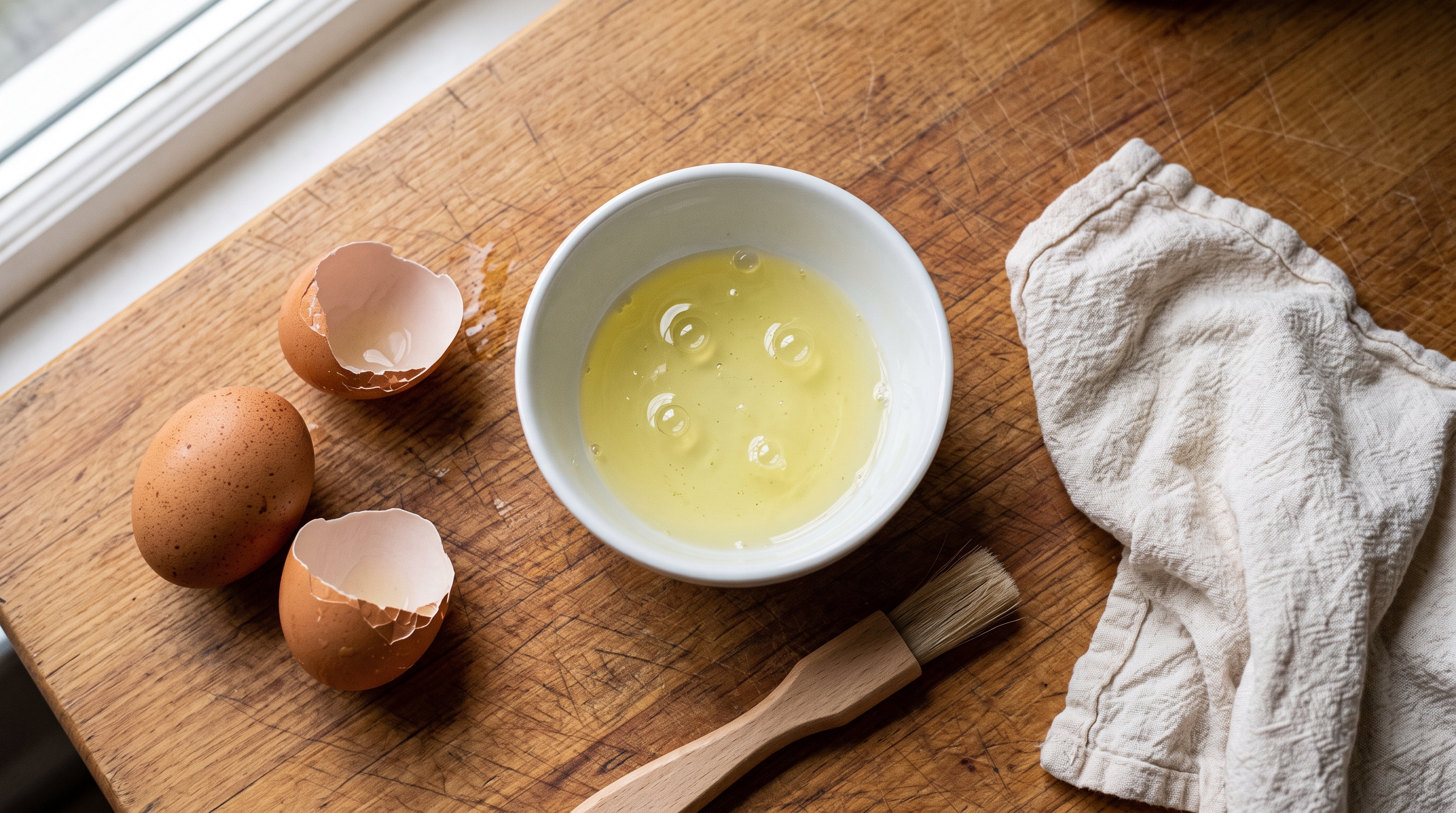
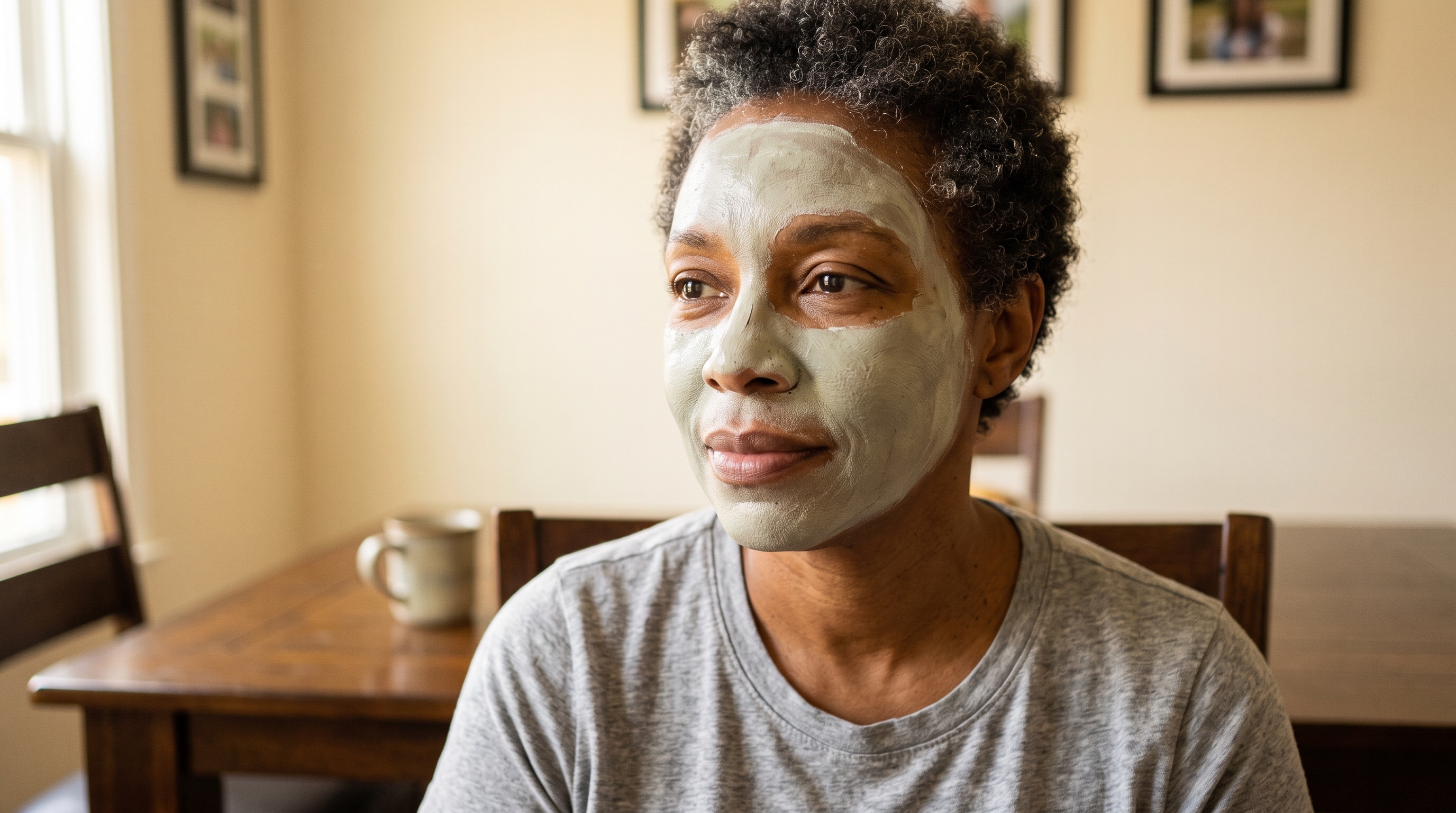
The most convincing home remedy is also the most purely cosmetic. Whip an egg white, spread it on, and as the albumin proteins dry they contract into a thin tensile film that pulls the skin surface taut. Fine lines flatten under it. The face genuinely looks smoother, and in a photograph the effect is unmistakable.
It is also entirely mechanical, and it reverses the moment the film is rinsed away. The same applies to gelatin masks, starch masks and the “instant lift” serums built on film-forming polymers, which are that trick in a bottle with better rheology. There is nothing wrong with using it before an event as long as you understand you are buying two hours, not a change in your skin. An egg white face mask is a styling tool, not a treatment.
Oils, and why the choice of oil matters more than you would expect
Facial oils are the occlusion category, and they do a real job. Coconut oil in particular has been tested properly: in a randomised double-blind controlled trial against mineral oil in mild to moderate xerosis, virgin coconut oil performed as an effective moisturiser with no reports of itching, redness or worsening dryness [1]. Better-hydrated skin reflects light more evenly and fine lines look shallower, which is a legitimate improvement in appearance even though no collagen has been made.
Olive oil is where the folk wisdom goes wrong. In forearm-controlled mechanistic studies in adult volunteers, twice-daily application of olive oil for several weeks significantly damaged the skin barrier, with transepidermal water loss rising faster on treated skin than on untreated skin, while sunflower seed oil applied in the same protocol did not do this [2]. The oleic acid content that makes olive oil good on bread is the same feature that disorganises the lipids holding your barrier together. A weakened barrier means drier skin, and drier skin shows lines more, so the remedy runs in reverse.
If you want the occlusive effect, coconut oil and sunflower seed oil are the defensible picks, and the ceiling on all of them is the same: a better-looking surface, for as long as you keep applying.
The remedies that actively cost you
Two popular ones are worse than useless.
Lemon juice is recommended constantly for spots and brightening, usually next to advice about sitting in the sun. Citrus fruits carry furocoumarins, and furocoumarins plus ultraviolet light produce phytophotodermatitis, a phototoxic reaction that begins as redness within a day, can blister by day three, and resolves into hyperpigmentation that persists for months and occasionally years [3]. On a face you are trying to even out, that is a durable own goal.
Baking soda is the other. Healthy skin surface sits at an average pH below 5, and that acidity is not incidental, it supports the resident flora and the enzymes that assemble barrier lipids [4]. A baking soda paste sits around pH 9. Repeated alkalinisation strips the acid mantle, and the skin spends days recovering ground it did not need to lose.
Lemon juice and baking soda are the two remedies that can leave your face measurably worse than the day you started, and both are on almost every list.
The one category with genuine support
Mild acid exfoliation is the remedy family that survives scrutiny, because it is the same mechanism as the professional version at a lower dose. Yoghurt supplies lactic acid, and fermented rice water and diluted apple cider vinegar work on the same principle. The improvement is real and slow, and it operates on texture and tone.
Vitamin C deserves an honest note here too, because it is the ingredient most often approximated with orange slices. Vitamin C is genuinely essential to skin: it is a cofactor for the enzymes that stabilise collagen, and it functions as an antioxidant in both epidermis and dermis [5]. Rubbing citrus on your face does not deliver it in a stable, absorbable form, and it reintroduces the furocoumarin problem. The nutrient is right. The delivery is not.
Where all of them stall
Notice that every remedy above fails at exactly the same step. The mechanism is either confined to the surface, or the active molecule cannot get through the stratum corneum intact and in a stable form. Delivery is the whole problem, and it is why boosting collagen production is not something a pantry can do.
Controlled research on ingredients that do change the dermis makes the contrast plain. Applying 0.4% retinol lotion up to three times a week for 24 weeks raised glycosaminoglycan levels around 40% above vehicle-treated skin and increased collagen production, which the investigators identified as the likely basis for the wrinkle effacement they measured [6].
That is the gap Nanoretinol was built to close. Rather than using solvents and penetration enhancers that force a path through the barrier by damaging it, the retinol is carried inside biomimetic lipid nanoparticles that the skin reads as self and admits without disruption. In North Biomedical’s clinical study summary the nanoparticle-delivered form proved 232% more effective in collagen recovery and 73% more effective in elastin recovery than conventional retinol, at a gentle 0.2% concentration in a water-based formula of 99% natural ingredients.
Keeping what is worth keeping
None of this makes the kitchen useless. Coconut oil on dry skin, a yoghurt mask for texture, an egg white before a photograph: all are cheap, pleasant and mildly effective at what they actually do. Use them for that.
Just stop asking them to do the structural job, and take lemon juice and baking soda off the list entirely. When you are ready for the part that changes the dermis rather than the surface, the options for getting rid of wrinkles are narrower, slower and considerably more reliable than any list of eight ingredients.
References
- Agero AL, Verallo-Rowell VM. “A randomized double-blind controlled trial comparing extra virgin coconut oil with mineral oil as a moisturizer for mild to moderate xerosis.” Dermatitis. 2004;15(3):109-116. doi:10.2310/6620.2004.04006
- Danby SG, AlEnezi T, Sultan A, Lavender T, Chittock J, Brown K, Cork MJ. “Effect of olive and sunflower seed oil on the adult skin barrier: implications for neonatal skin care.” Pediatric Dermatology. 2013;30(1):42-50. doi:10.1111/j.1525-1470.2012.01865.x
- Hankinson A, Lloyd B, Alweis R. “Lime-induced phytophotodermatitis.” Journal of Community Hospital Internal Medicine Perspectives. 2014;4:25090. doi:10.3402/jchimp.v4.25090
- Lambers H, Piessens S, Bloem A, Pronk H, Finkel P. “Natural skin surface pH is on average below 5, which is beneficial for its resident flora.” International Journal of Cosmetic Science. 2006;28(5):359-370. doi:10.1111/j.1467-2494.2006.00344.x
- Pullar JM, Carr AC, Vissers MCM. “The Roles of Vitamin C in Skin Health.” Nutrients. 2017;9(8):866. doi:10.3390/nu9080866
- Kafi R, Kwak HS, Schumacher WE, Cho S, Hanft VN, Hamilton TA, King AL, Neal JD, Varani J, Fisher GJ, Voorhees JJ, Kang S. “Improvement of naturally aged skin with vitamin A (retinol).” Archives of Dermatology. 2007;143(5):606-612. doi:10.1001/archderm.143.5.606