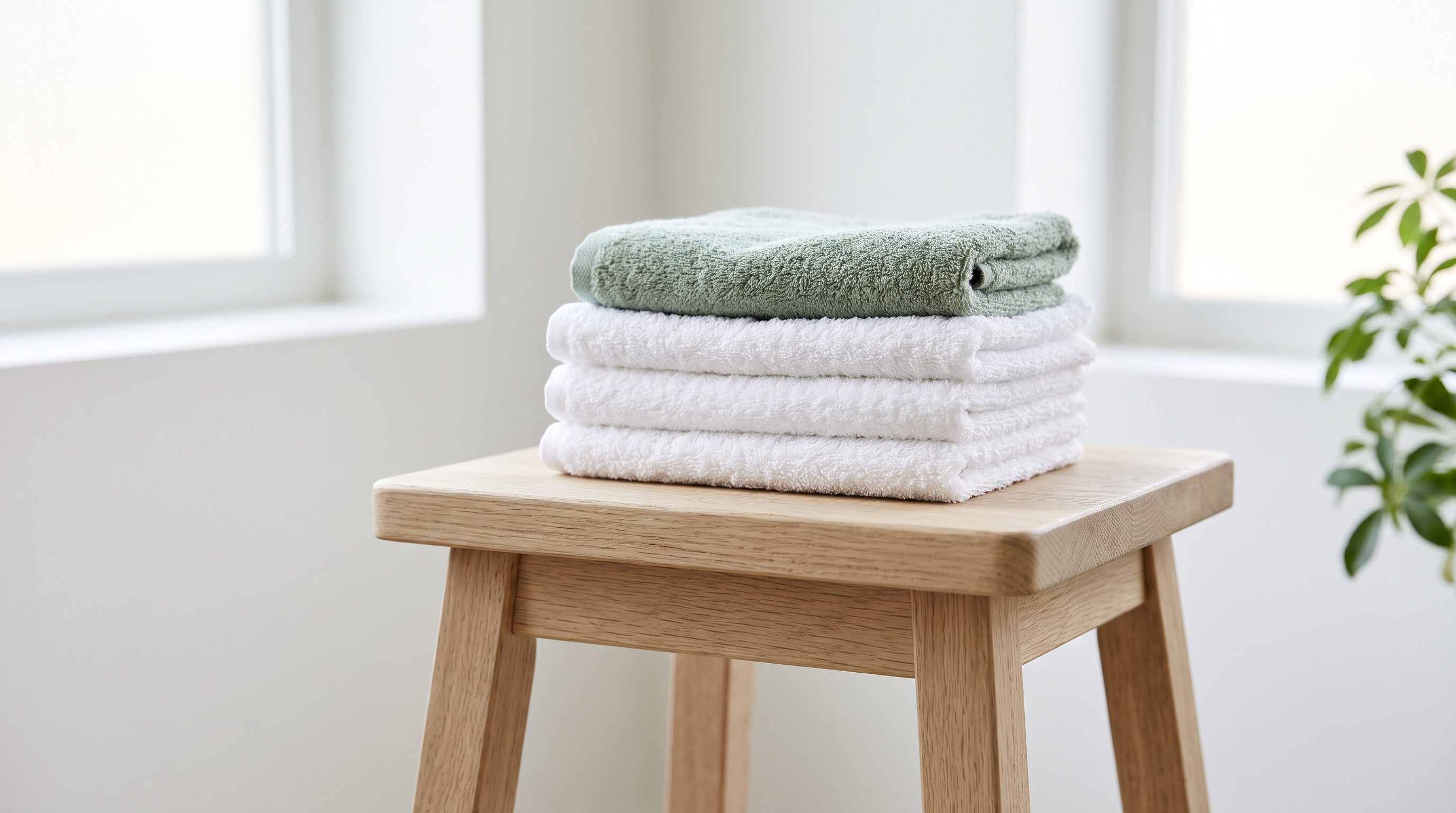
Face Towel: How to Choose, Use and Wash the Towel You Dry Your Face With
Cotton, microfibre or disposable? What grows on a damp towel, why rubbing can darken skin, and how drying your face affects the products you put on next
You can spend a small fortune on a cleanser, a serum and a night cream, then dry your face with the same bath towel the whole family grabbed after their showers. For most people the face towel is the one part of a skincare routine nobody thinks about.
It deserves a little thought. A towel touches your freshly cleansed skin twice a day, at the exact moment the barrier is most exposed. What it is made of, how damp it stays and how you use it all affect irritation, breakouts and even pigmentation. Here is what the evidence says, and what to look for when you buy one.
What Lives on a Damp Towel
Towels are designed to hold water, and anything that stays warm and damp in a bathroom becomes a home for microbes. Every time you dry your face, you also leave behind skin cells, sebum and traces of cleanser, which gives bacteria something to feed on.
The risk is easy to overstate for a towel only you use, since most of what grows on it came from your own skin. Shared towels are a different story. In an investigation of a skin-infection outbreak in a college football team, sharing towels was one of the factors linked to carrying the outbreak strain of staph bacteria in the nose [1]. Your face is not a locker room, but the principle holds: a towel passed between people passes their bacteria too.
Washing temperature matters more than most people realise. In a 2026 laboratory study of kitchen towels made of cotton, cotton-linen blend and polyester microfibre, washing at 60 °C with detergent removed more than 99.999% of the test bacteria, while a 40 °C wash left all three species behind in meaningful numbers [2]. Bathroom towels are not kitchen towels, but the lesson carries over: cool, quick wash cycles do not reliably clean a cloth.
How Often to Change Your Face Towel
There is no trial that sets a precise number, so the practical answer comes from drying and use:
Your skin meets a used face towel 14 times a week if you keep one for 7 days, far more contact than you would accept from a makeup brush.
- Use a separate, small towel for your face, not the body towel you use after a shower.
- Swap it every two to three days, or daily if you have acne-prone skin or use it after a workout.
- Hang it fully open to dry between uses, ideally outside a steamy bathroom. A towel that is still damp the next morning is the one to replace.
- Never share it.
Your skin meets a used face towel 14 times a week if you keep one for 7 days, far more contact than you would accept from a makeup brush.
Rubbing Versus Patting: What the Research Shows
Most skincare advice says to pat your face dry and never rub. The reason is friction. Repeated rubbing with rough textiles is a recognised cause of friction melanosis, a brownish darkening of skin over bony areas. A study of young Japanese women linked it to scrubbing with nylon towels and bath brushes [3], and a Jordanian case series found that every patient had a history of repeatedly rubbing their skin with loofahs or bath towels [4]. The doctors’ advice was to stop vigorous rubbing and switch to soft cotton.
There is a twist, though. When a research team compared washing and drying methods on volunteers’ forearms, soap-and-water washing followed by towel drying raised water loss through the skin, a sign of barrier stress, and patting left the skin almost as wet as not drying at all [5]. The authors concluded that patting offered no advantage over gentle rubbing, because skin left wet is more vulnerable to friction afterwards.
The sensible middle ground: press a soft towel against your face for a few seconds, move it, press again, and finish with one light, gentle sweep. The goal is skin that is dry, not skin that has been scrubbed.
Cotton, Microfibre or Disposable?
Each option has a real trade-off:
- Cotton (terry or waffle weave). Soft, absorbent and washable at high temperatures. Choose a dense, smooth weave over a rough, stiff one, and skip fabric softener, which coats fibres and leaves fragrance residue that can irritate sensitive skin.
- Microfibre. Very absorbent and dries quickly, which limits microbial growth between uses. The finest weaves feel smooth; cheaper ones can feel grabby on dry skin. Synthetic fibres also shed microplastics in the wash.
- Disposable face towels. Thick, dry paper-like cloths used once and thrown away. They solve the hygiene problem completely and are popular with people who have acne or very reactive skin. The downsides are cost and waste.
Your skin gets dried by a face towel about 700 times a year, so a soft weave you can wash hot matters far more than thread count.
Whichever you choose, smaller is better. A face towel that dries fully between uses beats a plush bath towel that stays damp all day.
Your skin gets dried by a face towel about 700 times a year, so a soft weave you can wash hot matters far more than thread count.
How Drying Affects the Products You Use Next
This is the part most guides skip. When you finish drying, the next step is usually a serum or treatment, and many active ingredients behave differently on damp skin. Water on the surface helps some ingredients spread and penetrate faster, which is why the instructions for prescription retinoids generally advise applying them to completely dry skin after washing. Faster, uneven penetration of a retinoid is one of the reasons people get stinging and redness around the nose and mouth.
So for retinoids and strong acids, the order is simple: cleanse, dry gently but completely, wait a few minutes, then apply. Our guide on how to use retinol covers the full routine, and our article on how often to wash your face explains why cleansing more than twice a day undermines it. If you remove makeup in the evening, a gentle double cleansing routine before you reach for the towel reduces the rubbing at every step.
Hydrating products such as hyaluronic acid serums are the exception. They are designed to go onto slightly damp skin, so the towel step can be lighter on mornings without actives.
A Gentler Retinol for a Gentler Routine
A soft towel and a light hand protect the barrier, but the retinoid you use matters just as much. Many conventional retinol formulas rely on chemicals and petroleum derivatives that loosen the lipids of the skin barrier to push the active in, which is why the first weeks can feel like a fight.
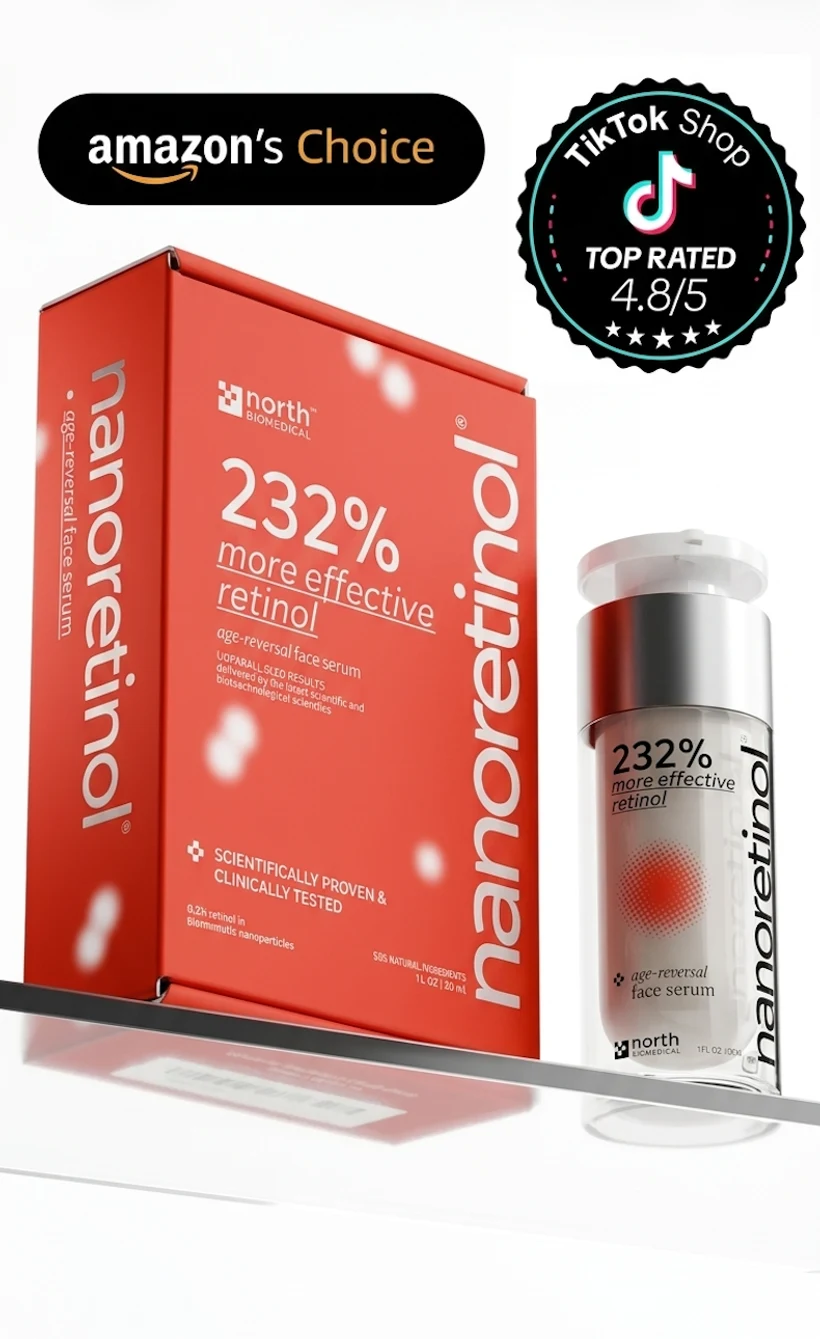
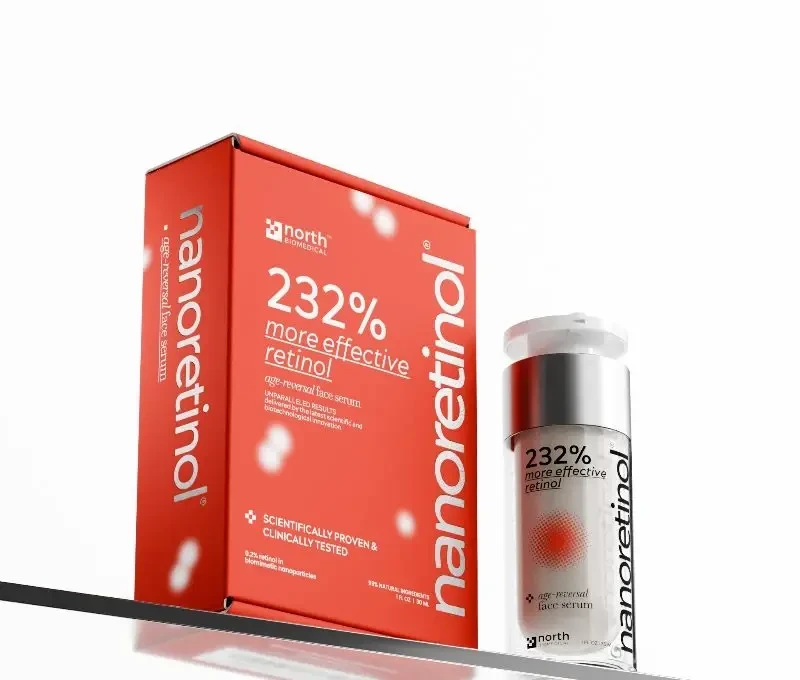
Nanoretinol, from North Biomedical, delivers 0.2% retinol inside biomimetic lipid nanoparticles that cross the skin barrier without breaking it down. The water-based gel absorbs completely to a matte finish and is made with 99% natural ingredients. In laboratory testing it was 232% more effective than conventional retinol in collagen recovery, and in clinical use it increased skin firmness by 61% and elasticity by 56% in 56 days, with milder side effects than conventional retinol when any occurred. Apply it at night to fully dry skin and wear sunscreen the next day.
What to Look For When You Buy
- A small, dense, smooth towel you can wash hot (60 °C)
- Enough towels to rotate every two to three days
- No fabric softener and a fragrance-free detergent
- Disposable cloths if you have acne-prone or easily irritated skin
A face towel will never be the most exciting thing in your bathroom. Kept clean, used gently and swapped often, it quietly makes everything else in your routine work better.
References
- Nguyen DM, Mascola L, Brancoft E. “Recurring methicillin-resistant Staphylococcus aureus infections in a football team.” Emerging Infectious Diseases. 2005;11(4):526-532. doi:10.3201/eid1104.041094
- Čuk N, Lunder M, Tomšič B, Fink R. “Domestic low temperature washing as a critical point in kitchen towel hygiene. Effectiveness of washing temperature, disinfectant and antibacterial finishing.” BMC Microbiology. 2026;26(1):979. doi:10.1186/s12866-026-05521-7
- Hata S, Tanigaki T, Misaki K, Nakata K, Okada A. “Incidence of friction melanosis in young Japanese women induced by using nylon towels and brushes.” Journal of Dermatology. 1987;14(5):437-439. doi:10.1111/j.1346-8138.1987.tb03606.x
- Al-Aboosi M, Abalkhail A, Kasim O, et al. “Friction melanosis: a clinical, histologic, and ultrastructural study in Jordanian patients.” International Journal of Dermatology. 2004;43(4):261-264. doi:10.1111/j.1365-4632.2004.01606.x
- Voegeli D. “The effect of washing and drying practices on skin barrier function.” Journal of Wound, Ostomy and Continence Nursing. 2008;35(1):84-90. doi:10.1097/01.WON.0000308623.68582.d7