Exfoliating Face Mask: Acid, Enzyme or Clay? How to Choose and Use One
Exfoliating masks promise brighter, smoother skin in ten minutes. Here is how acid, enzyme, clay and gritty masks differ, what the research shows, and how often each skin type can use one
Dull skin is often just old skin that has not let go. As we age, the outer layer sheds more slowly, so dead cells pile up, scatter light unevenly and make the surface feel rough. An exfoliating mask speeds that shedding along. You smooth it on, wait a few minutes, rinse, and skin looks brighter and feels noticeably softer.
But “exfoliating mask” covers very different products, from a gentle papaya enzyme gel to a strong glycolic acid treatment. Pick the wrong one and you get a stinging, red face instead of a glow. This guide explains how each type works, what makes one effective, and how to use them safely.
How exfoliation works
The cells in the outer layer of skin are held together by protein bridges and a mortar of lipids. Normally, enzymes in the skin break those bridges and cells drift off unseen. An exfoliating mask either loosens the bridges chemically or rubs cells away physically.
Chemical exfoliants are the best studied. Alpha hydroxy acids such as glycolic, lactic and mandelic acid weaken the bonds between dead cells, while beta hydroxy acid (salicylic acid) is oil-soluble and works inside pores. Polyhydroxy acids such as gluconolactone are larger and gentler [1].
The four types of exfoliating mask
- Acid masks. Glycolic, lactic, mandelic or a blend, often 5 to 15%, sometimes with salicylic acid. These give the most visible result in one session.
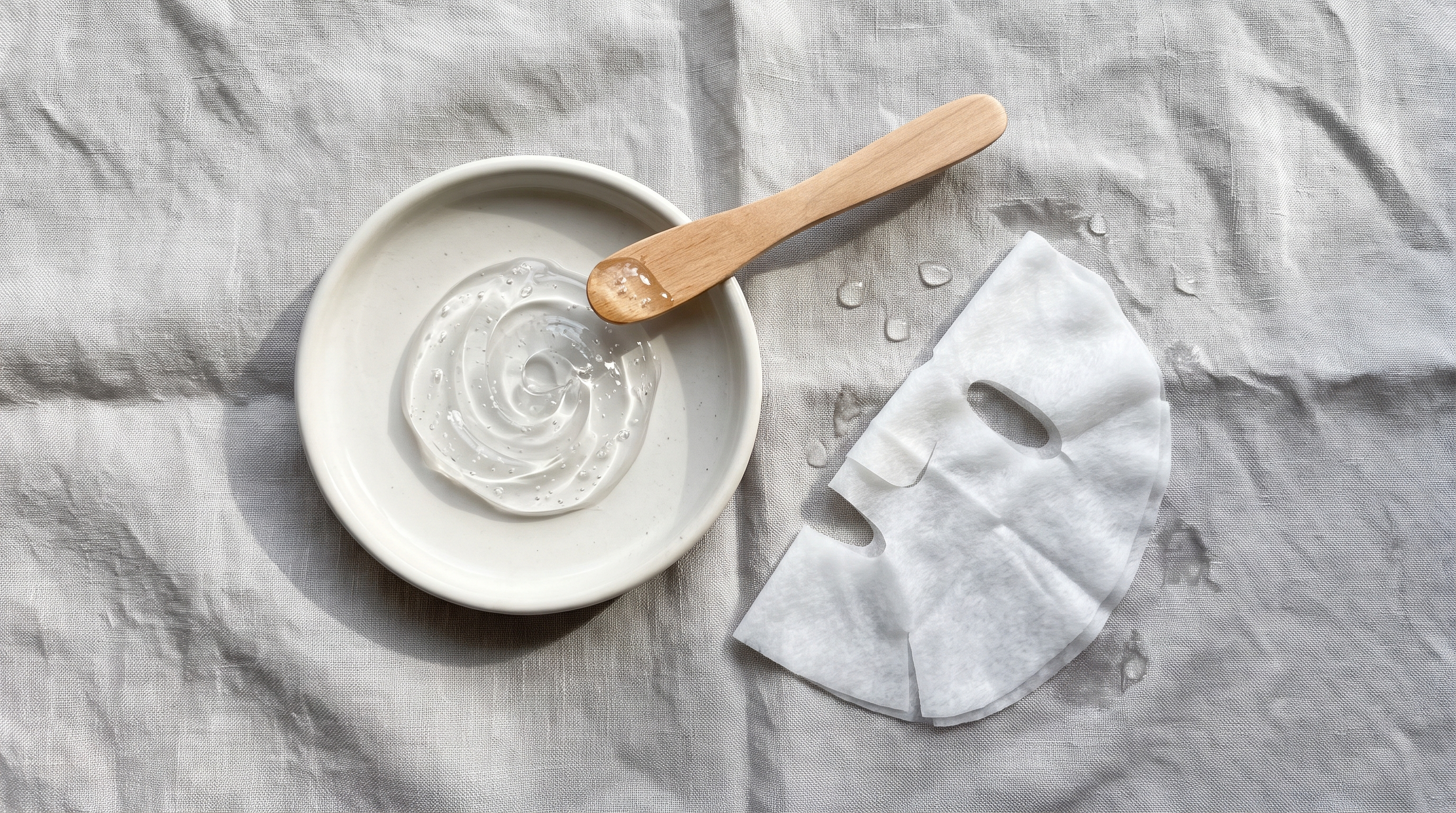
- Enzyme masks. Papain from papaya, bromelain from pineapple, or pumpkin enzymes. They digest the protein bridges directly and tend to tingle less. Our guide to the enzyme exfoliant covers them in depth.
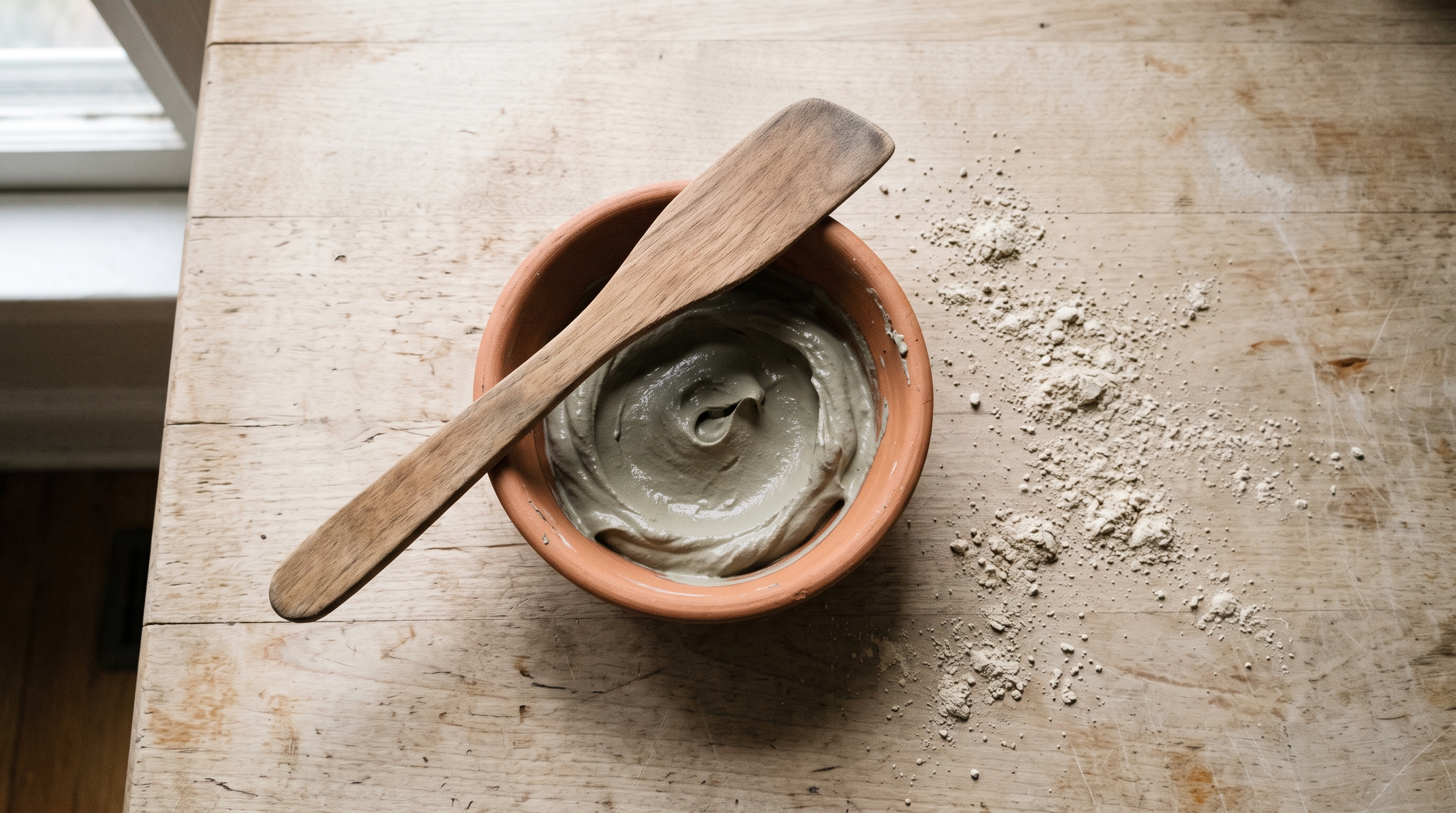
- Clay masks with acid. Kaolin or bentonite to absorb oil, plus a low dose of acid. These suit oily and combination skin; our clay mask guide compares the clays.
- Peel-off and gritty masks. These remove cells physically. Peel-off masks pull a film away, and scrub masks rely on beads or powder. They are the hardest to control. See our review of the peel-off face mask for the trade-offs.
Your skin only needs 5 to 10 minutes under most acid masks, so treat the timing on the label as a limit rather than a target.
Your skin only needs 5 to 10 minutes under most acid masks, so treat the timing on the label as a limit rather than a target.
Strength and pH: what makes an acid mask work
The percentage on the front of a box tells only half the story. In a placebo-controlled study, 26 women applied 10% lactic acid at three different pH levels, and lactic acid at three strengths at the same pH. The exfoliating effect depended strongly on both: at a fixed strength, more acidic formulas worked better, and at a fixed pH, higher strengths worked better [2]. The researchers concluded that the “free” acid, the portion not neutralized by the formula, is what does the work.
That is why two 10% glycolic masks can feel completely different. A lower pH, around 3 to 4, is more active and more likely to sting. Brands rarely print the pH, but a strong tingle within the first minute is a clue.
What acids can do for aging skin
Used regularly, alpha hydroxy acids do more than polish. In a pilot study, people applied a lotion with 25% glycolic, lactic or citric acid to one forearm for about six months. Treated skin was about 25% thicker, with a thicker epidermis, more collagen density and better-quality elastic fibres, and no inflammation [3].
A weekly mask is far milder exposure than daily lotion for six months, so do not expect structural change from a mask alone. Its real value is surface renewal: brighter tone, softer texture, and a smoother base for makeup. For the background on the most common acid, see our guide to glycolic acid benefits.
What about enzymes?
Enzymes are popular because they feel gentle, but the science is thinner. A review of proteolytic enzymes as exfoliants found only 11 relevant studies, few of them clinical trials. The results suggested enzymes can exfoliate and improve skin, but the authors called for more robust studies and flagged enzyme stability and the risk of irritation or allergy [4]. Enzyme masks are a reasonable choice for sensitive skin, as long as you patch test.
Your skin can stay more sensitive to sunburn for about 7 days after you stop using an acid, so the morning after a mask night needs sunscreen more than ever.
Your skin can stay more sensitive to sunburn for about 7 days after you stop using an acid, so the morning after a mask night needs sunscreen more than ever.
The sun sensitivity catch
That warning comes from a randomized study in which 29 volunteers applied 10% glycolic acid or a placebo to their backs six days a week for four weeks. The acid-treated skin burned more easily and formed more sunburn cells after UV exposure. The extra sensitivity disappeared within a week of stopping [5]. A weekly mask is a smaller exposure, but the advice holds: apply sunscreen the following morning and through the week.
How often to use an exfoliating mask
| Skin type | Suggested frequency | Best mask types |
|---|---|---|
| Oily or combination | 1 to 2 times a week | Clay with acid, salicylic acid, glycolic |
| Normal | Once a week | Glycolic, lactic, enzyme |
| Dry or mature | Once every 1 to 2 weeks | Lactic, mandelic, enzyme |
| Sensitive | Every 2 weeks, after a patch test | Enzyme, polyhydroxy acid |
Leave it on for the time on the label, and rinse early if it burns rather than tingles. Always moisturize afterwards.
Labels that hint at a harsh mask
- A high percentage of glycolic acid with no soothing ingredients listed.
- Alcohol or strong fragrance near the top of the ingredient list.
- Large, jagged scrub particles such as crushed nut shells.
- Instructions to leave it on until it is “fully dry” or overnight.
Fitting a mask around retinol
An exfoliating mask and a retinoid both speed up cell turnover, and together they can tip skin into irritation. Keep them on separate nights. Use the mask, moisturize, and leave a night or two before your next retinol night. Skip the mask entirely if your skin is flaking, red or stinging.
A brighter surface, a firmer foundation
An exfoliating mask is one of the quickest ways to make dull skin look awake. It clears away dead cells, evens out tone, and helps serums spread better. Its effect is on the surface, and that surface keeps renewing. For lasting change in firmness and fine lines, skin needs more collagen.
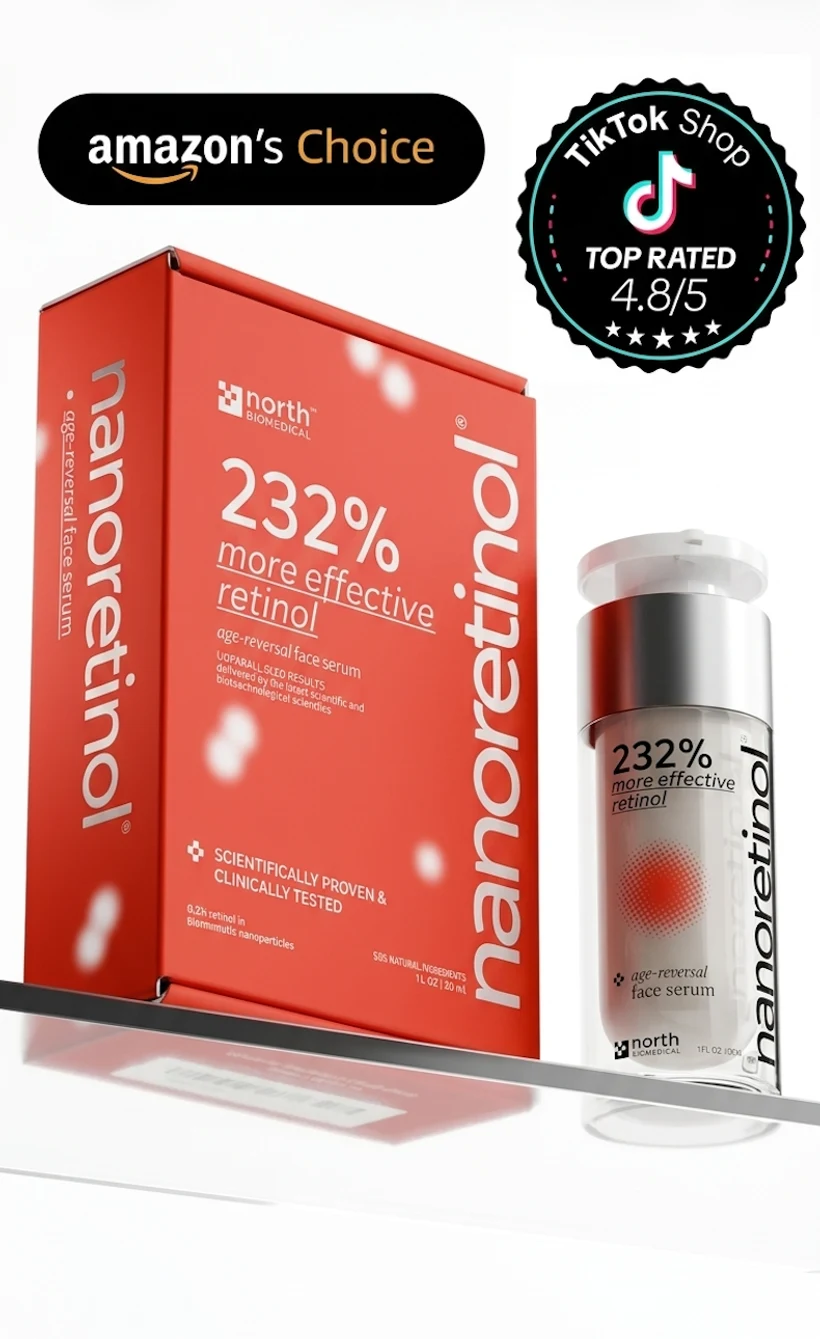
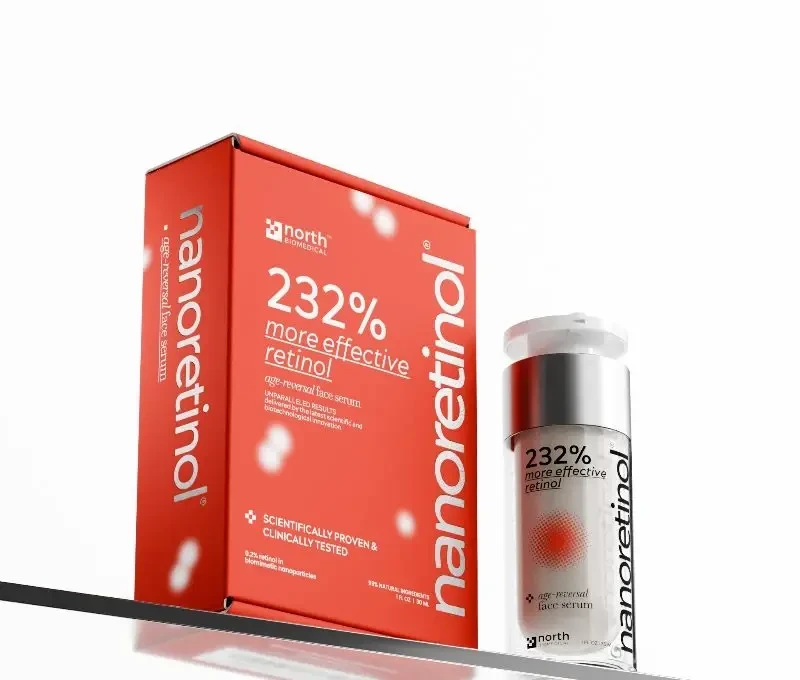
Retinol is the best-studied topical way to get there; in one trial, it increased collagen production in naturally aged skin within 24 weeks [6]. Nanoretinol delivers 0.2% retinol in biomimetic lipid nanoparticles, in a water-based gel designed to be gentler than conventional retinol. In North Biomedical’s clinical study, it was 232% more effective in collagen recovery than conventional retinol, with a 61% increase in firmness after 56 days and milder side effects [7]. Save the mask for once a week, and let a gentle nightly retinol do the structural work on the other nights.
References
- Kornhauser A, Coelho SG, Hearing VJ. “Applications of Hydroxy Acids: Classification, Mechanisms, and Photoactivity.” Clinical, Cosmetic and Investigational Dermatology. 2010;3:135-142. doi:10.2147/CCID.S9042
- Thueson DO, Chan EK, Oechsli LM, Hahn GS. “The Roles of pH and Concentration in Lactic Acid-Induced Stimulation of Epidermal Turnover.” Dermatologic Surgery. 1998;24(6):641-645. doi:10.1111/j.1524-4725.1998.tb04221.x
- Ditre CM, Griffin TD, Murphy GF, Sueki H, Telegan B, Johnson WC, et al. “Effects of Alpha-Hydroxy Acids on Photoaged Skin: A Pilot Clinical, Histologic, and Ultrastructural Study.” Journal of the American Academy of Dermatology. 1996;34(2 Pt 1):187-195. PubMed:8642081
- Trevisol TC, Henriques RO, Souza AJA, Furigo A Jr. “An Overview of the Use of Proteolytic Enzymes as Exfoliating Agents.” Journal of Cosmetic Dermatology. 2022;21(8):3300-3307. doi:10.1111/jocd.14673
- Kaidbey K, Sutherland B, Bennett P, Wamer WG, Barton C, Dennis D, Kornhauser A. “Topical Glycolic Acid Enhances Photodamage by Ultraviolet Light.” Photodermatology, Photoimmunology & Photomedicine. 2003;19(1):21-27. doi:10.1034/j.1600-0781.2003.00013.x
- Kafi R, Kwak HS, Schumacher WE, Cho S, Hanft VN, Hamilton TA, et al. “Improvement of Naturally Aged Skin with Vitamin A (Retinol).” Archives of Dermatology. 2007;143(5):606-612. doi:10.1001/archderm.143.5.606
- North Biomedical LLC. “Nanoretinol vs. Conventional Retinol: Efficacy in Collagen and Elastin Recovery.” Clinical Study Summary, 2024. Study summary