Retinol and Salicylic Acid: Can You Use Them Together, and How?
One clears out pores, the other changes how they shed. Here is what each does, why the pairing dries skin, and three safe ways to use both in one routine
Salicylic acid and retinol are two of the most useful ingredients for clogged pores, blackheads and breakouts, and they show up together in a lot of routines. They also show up together in a lot of complaints about flaking, stinging and tight, shiny-but-raw skin.
The short answer is yes, you can use them together. They do not cancel each other out, and dermatologists combine them regularly. The catch is that both increase dryness, so the way you combine them matters more than whether you do. This guide explains what each one does, where they overlap, and three ways to fit both into a routine without wrecking your skin barrier.
What salicylic acid does
Salicylic acid is a beta hydroxy acid. Its useful trick is that it dissolves in oil, so it can move into the oily lining of a pore instead of staying on the surface the way water-soluble acids do.
Once there, it loosens the connections that hold dead cells together. Researchers once called it a keratolytic, an agent that breaks down keratin, but it is now understood to work mainly by disrupting the junctions between cells, so they shed instead of packing into a plug [1]. That is why it is so good at softening blackheads and whiteheads, and why it has been used as a peel for acne, uneven tone and sun damage [1].
It also seems to calm oil glands. In cultured human oil-gland cells, salicylic acid reduced fat production and switched off an inflammation pathway, and in an animal acne model it lowered inflammatory signals around lesions after three weeks [2]. Those are lab findings, but they fit with what people notice on their faces: less shine and fewer angry spots.
In over-the-counter acne products, salicylic acid usually appears at 0.5% to 2%, in cleansers, toners, serums and spot treatments. Our guide to the salicylic acid serum compares those formats.
What retinol does
Retinol works on the same problem from a different direction. Instead of dissolving a plug that has already formed, retinoids change how the lining of the pore grows and sheds, so fewer plugs form in the first place. In acne research, topical retinoids normalize that shedding, reduce the tiny early blockages called microcomedones and have an anti-inflammatory effect of their own [3].
Your skin replaces the cells lining a pore every few weeks, so a retinoid needs 8 to 12 weeks to show its full effect, far longer than a salicylic acid wash.
That is why acne guidelines put retinoids at the center of topical treatment, and why they recommend combining them with other agents rather than using any single product alone [4]. Salicylic acid is listed as an option there too, although the evidence behind it is thinner than for retinoids [4].
Your skin replaces the cells lining a pore every few weeks, so a retinoid needs 8 to 12 weeks to show its full effect, far longer than a salicylic acid wash.
Retinol also does something salicylic acid cannot. The skin converts it into retinoic acid, and in a study of human skin, retinol thickened the epidermis and switched on the same retinoid-responsive genes as prescription retinoic acid, with far less redness [5]. Over months, that activity supports collagen and smoother texture, which is why retinol doubles as an anti-aging ingredient [6].
Why the combination can backfire
Neither ingredient deactivates the other, and there is no chemical reason they cannot share a routine. The problem is that they hit the same weak spot. Salicylic acid strips oil and loosens surface cells. Retinol speeds up cell turnover and, in its early weeks, often causes dryness, peeling and irritation. Stack both on the same patch of skin every night and the effects add up.
A trial in 46 adults with mild to moderate acne shows how closely matched the two can be. One group used tretinoin, a prescription retinoid, and the other used a 3% salicylic acid preparation, each alongside the same antibiotic lotion for 12 weeks [7]. Both groups improved by a similar amount by the end. The retinoid cleared lesions faster, with a difference visible as early as week two, while salicylic acid lowered skin oil more. In both groups, side effects peaked around week two and then eased [7].
The first two weeks are when most people quit, which is exactly why it pays to introduce the pair slowly rather than all at once.
Your skin is most likely to flake in the first 14 days of a new retinoid, so adding salicylic acid in that window piles on dryness for little extra benefit.
Your skin is most likely to flake in the first 14 days of a new retinoid, so adding salicylic acid in that window piles on dryness for little extra benefit.
Three ways to use them together
1. Split them by time of day. Use salicylic acid in the morning, as a cleanser or toner, and retinol at night. This is the simplest option for oily, acne-prone skin. Finish the morning with moisturizer and sunscreen, since both ingredients make skin more sensitive to sun.
2. Alternate nights. Use retinol on some evenings and salicylic acid on others. This suits combination or drier skin, or anyone still getting used to retinol. Start with retinol two or three nights a week and salicylic acid once or twice, then adjust.
3. Use salicylic acid as a rinse-off. A cleanser has only a minute or so of contact, which is far gentler than a leave-on serum or pad. Many people do well with a salicylic acid wash at night followed by retinol once the face is fully dry. Our guide to the salicylic acid cleanser covers how to choose one.
Whichever approach you pick, a few rules make it easier on your skin:
- Introduce one product at a time and wait two weeks before adding the next.
- Apply retinol to dry skin, and use a pea-sized amount for the whole face.
- Put a plain moisturizer on afterwards, or before retinol if you are sensitive.
- Skip both on any night your skin stings, feels hot or looks raw.
If you also use glycolic or lactic acid, count it as a third exfoliant, not a separate category. Our guide to retinol and glycolic acid explains how to manage that pairing.
Who should be careful
People with dry, sensitive or rosacea-prone skin often find even alternating nights too much. For them, retinol alone, with salicylic acid kept to the occasional spot treatment, is usually the better plan. If your skin is already peeling, tight or stinging, read our guide to retinol and the skin barrier before adding anything else.
Retinoids are not for use during pregnancy or breastfeeding. Salicylic acid is chemically related to aspirin, so anyone who is pregnant, breastfeeding or allergic to aspirin should ask a doctor before using it, especially as a peel or over large areas [1].
A gentler retinol leaves room for the acid
Most problems with this pairing come from the retinol side. Conventional retinol formulas rely on solvents and penetration enhancers that disrupt the skin barrier to get the ingredient in, and that is where much of the redness and peeling comes from. Add an acid on top and the barrier has little left to give.
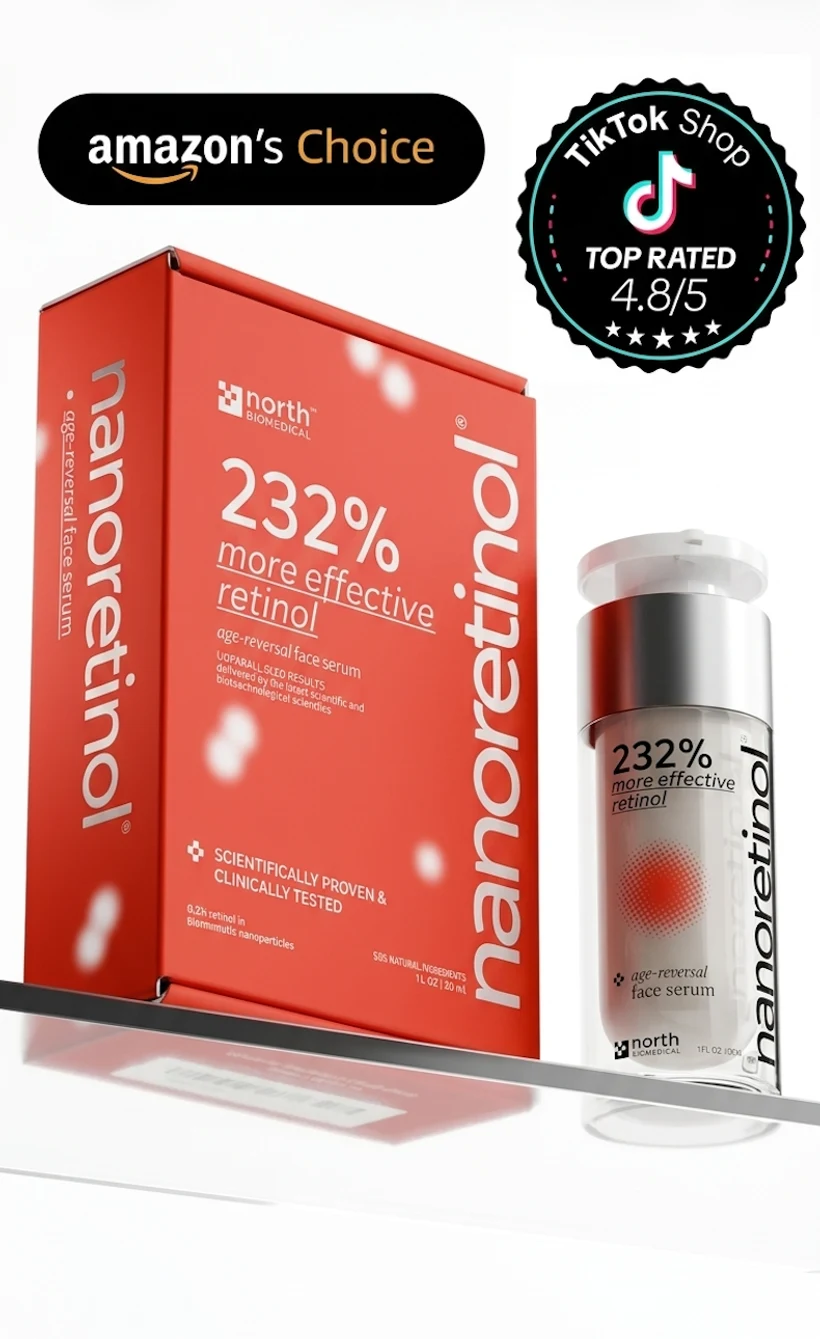
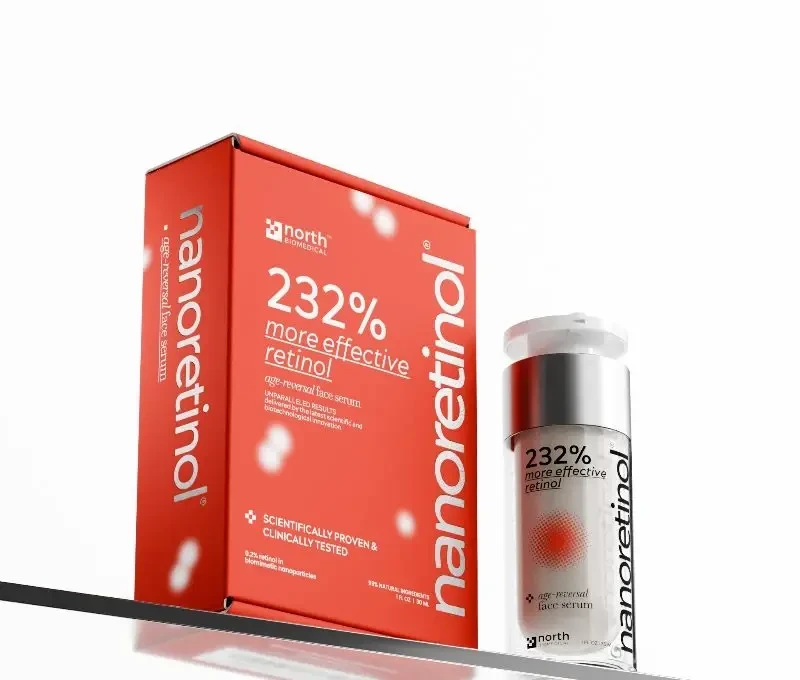
Nanoretinol was built to avoid that trade-off. It carries 0.2% retinol inside biomimetic lipid nanoparticles that the skin recognizes as its own, so the retinol passes through the epithelial barrier without damaging it. In North Biomedical’s study, Nanoretinol was 232% more effective in collagen recovery and 73% more effective in elastin recovery than conventional retinol, and users saw a 61% increase in skin firmness and a 56% increase in elasticity after 56 days [8]. Its water-based gel suits oily and combination skin, which is the skin type most likely to want salicylic acid too.
A simple routine looks like this: a salicylic acid cleanser or toner in the morning, followed by moisturizer and sunscreen, and Nanoretinol at night. Do not layer it with other retinoid products, and if your skin feels irritated, use it less often.
References
- Arif T. “Salicylic acid as a peeling agent: a comprehensive review.” Clinical, Cosmetic and Investigational Dermatology. 2015;8:455-461. doi:10.2147/CCID.S84765
- Lu J, Cong T, Wen X, Li X, Du D, He G, et al. “Salicylic acid treats acne vulgaris by suppressing AMPK/SREBP1 pathway in sebocytes.” Experimental Dermatology. 2019;28(7):786-794. doi:10.1111/exd.13934
- Thielitz A, Gollnick H. “Topical retinoids in acne vulgaris: update on efficacy and safety.” American Journal of Clinical Dermatology. 2008;9(6):369-381. doi:10.2165/0128071-200809060-00003
- Zaenglein AL, Pathy AL, Schlosser BJ, Alikhan A, Baldwin HE, Berson DS, et al. “Guidelines of care for the management of acne vulgaris.” Journal of the American Academy of Dermatology. 2016;74(5):945-973. doi:10.1016/j.jaad.2015.12.037
- Kang S, Duell EA, Fisher GJ, Datta SC, Wang ZQ, Reddy AP, et al. “Application of retinol to human skin in vivo induces epidermal hyperplasia and cellular retinoid binding proteins characteristic of retinoic acid but without measurable retinoic acid levels or irritation.” Journal of Investigative Dermatology. 1995;105(4):549-556. doi:10.1111/1523-1747.ep12323445
- Mukherjee S, Date A, Patravale V, Korting HC, Roeder A, Weindl G. “Retinoids in the treatment of skin aging: an overview of clinical efficacy and safety.” Clinical Interventions in Aging. 2006;1(4):327-348. doi:10.2147/ciia.2006.1.4.327
- Babayeva L, Akarsu S, Fetil E, Güneş AT. “Comparison of tretinoin 0.05% cream and 3% alcohol-based salicylic acid preparation in the treatment of acne vulgaris.” Journal of the European Academy of Dermatology and Venereology. 2011;25(3):328-333. doi:10.1111/j.1468-3083.2010.03793.x
- North Biomedical LLC. “Nanoretinol vs. Conventional Retinol: Efficacy in Collagen and Elastin Recovery.” Clinical Study Summary, 2024. Study summary