Thinning Lips: Why Your Lips Lose Volume With Age and What Actually Restores Fullness
The dermal, muscular, and bony changes behind disappearing lip volume — and the topical strategies with real clinical evidence
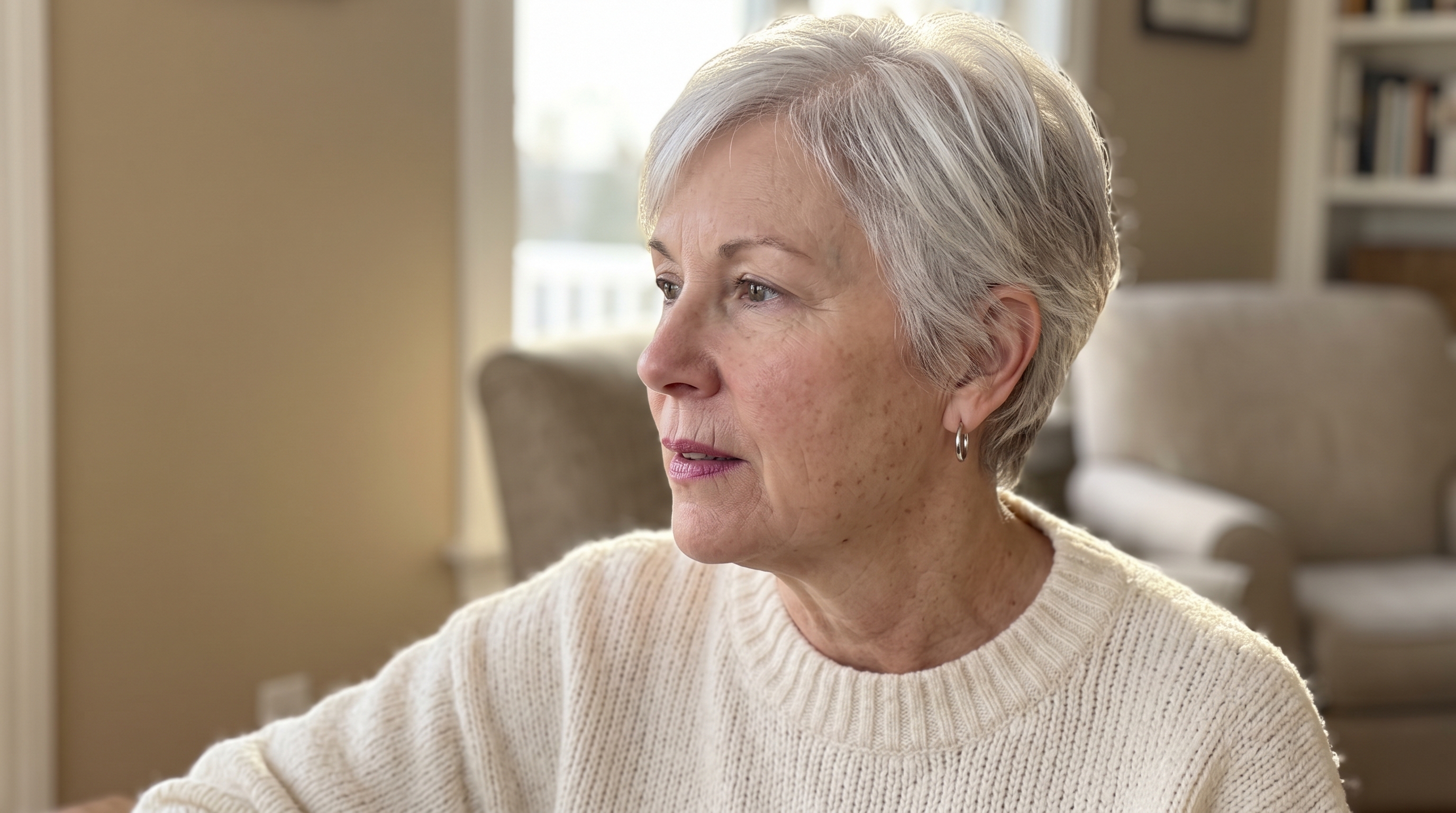
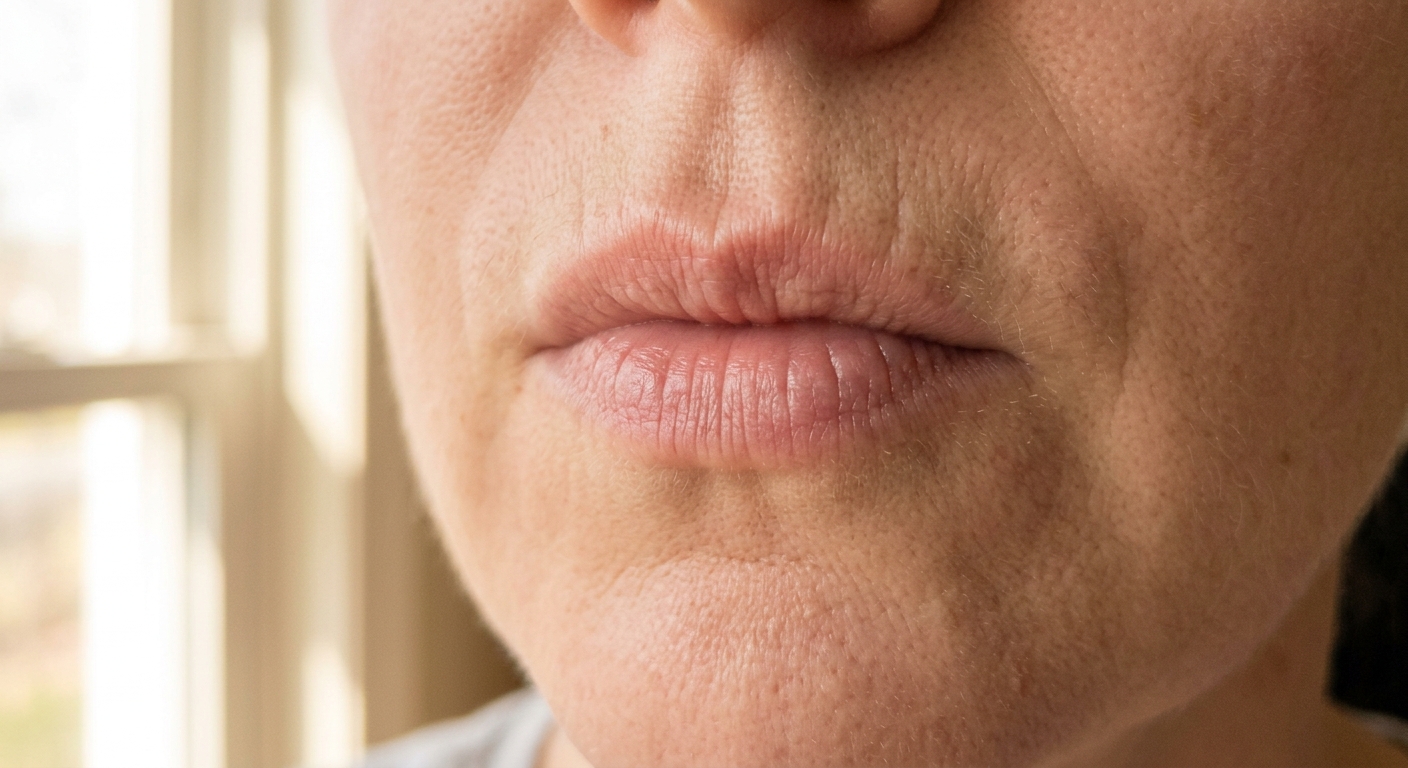
If you have looked in the mirror sometime after your fortieth birthday and noticed your lips no longer look the way they used to — flatter, less defined, with a shrinking pink edge — you are not imagining it. Lips genuinely thin with age, and they do so through a sequence of changes that is more complex than most lip plumpers ever address.
This is not vanity. Lip volume is a structural feature of the face. As lips lose mass, the perioral region collapses inward, vertical lines deepen above the mouth, and the corners begin to turn down. Restoring even a fraction of that lost fullness can shift how the entire lower face reads. Surface hydration is a separate job, and the guide to choosing an overnight lip mask covers it.
The good news is that the biological drivers of lip thinning are now well mapped, and a handful of topical strategies have measurable clinical effects. The less good news is that most products marketed for “plumping” rely on irritation rather than restoration. Knowing the difference matters.
What Actually Happens to a Lip as It Ages
The vermilion — the visible pink portion of the lip — is anatomically unusual. Unlike most facial skin, it has no sweat glands and very few sebaceous glands. Its color comes from a dense capillary bed that sits unusually close to the surface, beneath an epidermal layer that is dramatically thinner than that of the surrounding face. Underneath sits the orbicularis oris, the ring-shaped muscle responsible for puckering, kissing, and forming consonant sounds.
Histological studies comparing young and aged lips have documented several simultaneous changes [1][2]. The dermal layer becomes measurably thinner. Collagen fibers reduce in density and become disorganized. Elastic fibers fragment and lose their springiness. Hyaluronic acid content — the molecule responsible for water-binding and tissue plumpness — declines significantly in the upper vermilion dermis with age [3].
Just as importantly, the orbicularis oris muscle itself atrophies. Comprehensive histology of upper lip vermilion samples shows that the area occupied by muscle fibers correlates negatively with age, and that specific myosin heavy chain isoforms (MYH-2 and MYH-7) are reduced in older tissue [3]. The shape of the muscle bundle also changes — researchers describe young orbicularis oris as having a “J” shape, while the aged muscle takes on an “I” configuration [1]. The muscle pulls back from the vermilion border, which is why the pink edge of the lip retreats inward.
Behind the soft tissue, the maxilla and mandible undergo bone resorption. This bony shrinkage removes the scaffold that the upper lip rests against, allowing the philtrum to lengthen and the vermilion to roll inward [2].
First, the effect is purely cosmetic and reverses within an hour or two.
Why Common “Plumpers” Don’t Address the Problem
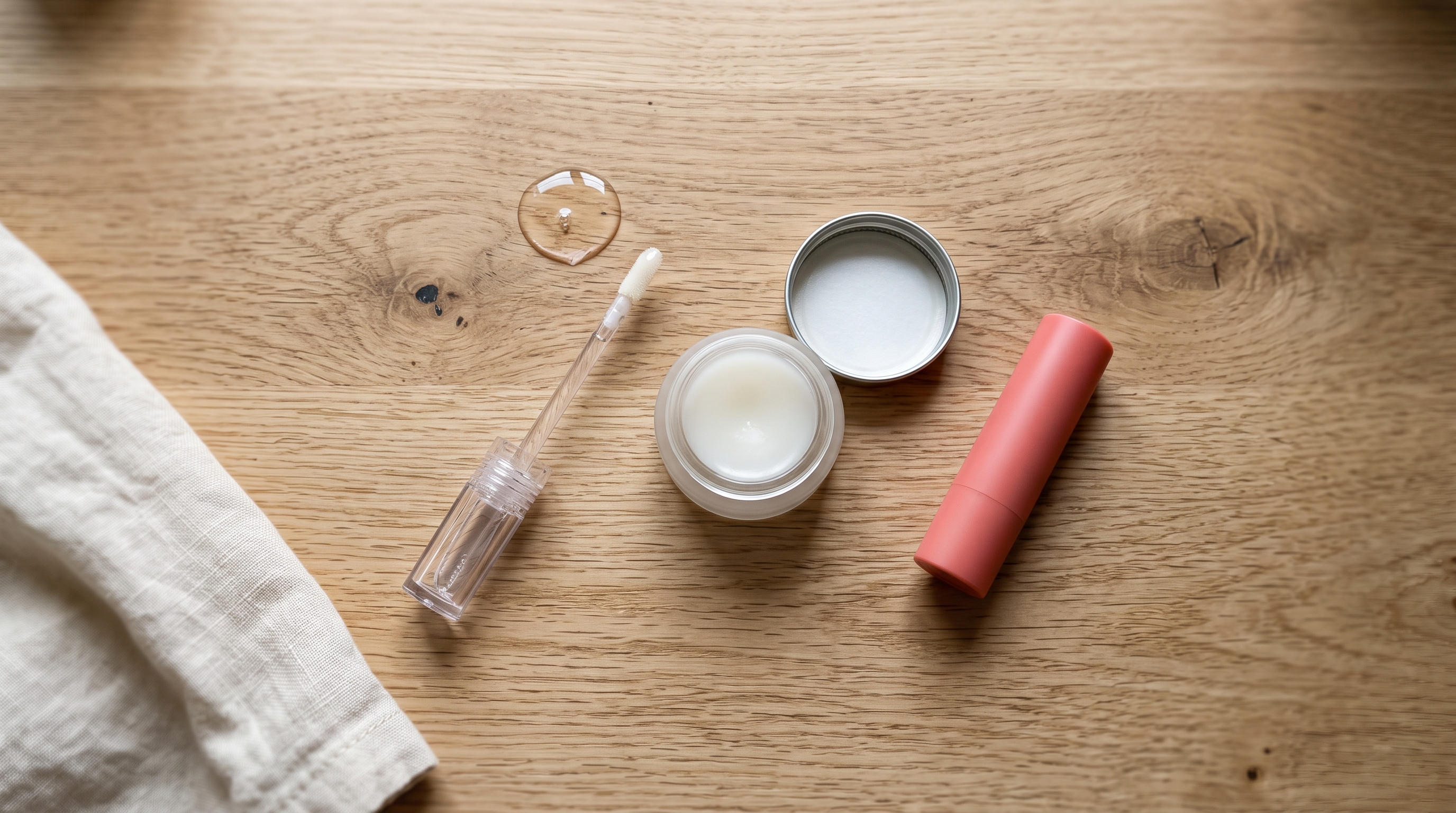
Most over-the-counter lip plumpers rely on irritants — capsaicin, cinnamon, ginger, menthol, or peptides that mimic bee venom. These ingredients trigger localized inflammation and vasodilation. The result is a temporary swell that lasts thirty to ninety minutes and is, mechanically, a mild allergic response.
This approach has two problems. First, the effect is purely cosmetic and reverses within an hour or two. Second, repeated low-grade inflammation is not neutral on aging skin. Chronic irritation accelerates collagen breakdown via matrix metalloproteinase upregulation — meaning the very products marketed as anti-aging plumpers may modestly contribute to the structural thinning they pretend to treat. The differences between irritant, humectant, and purely optical formulas are worth knowing before you buy, and the best lip plumper guide breaks down what each mechanism actually delivers.
Restoring lip volume topically requires changing the underlying tissue, not provoking it.
What the Clinical Evidence Actually Supports
Topical retinoids
Retinoids — the vitamin A family that includes retinol, retinaldehyde, and tretinoin — are the most extensively studied topical anti-aging actives. They activate nuclear retinoic acid receptors in fibroblasts, which upregulate the genes responsible for type I and type III collagen synthesis while inhibiting matrix metalloproteinases that degrade existing collagen [4].
Applied to the lip border and the perioral skin (rather than directly to the vermilion), retinol thickens the dermal collagen matrix over twelve to twenty-four weeks. This rebuilds the structural foundation that the vermilion rests on. It also softens the vertical lines that converge on the lip line, which is part of why lip definition appears to return: the surrounding skin is no longer corrugated.
The catch with the lip area is irritation. The skin immediately around the mouth is thinner than the skin of the cheek and is mechanically stretched dozens of times per hour by talking, eating, and expression. Conventional retinol formulations frequently cause flaking, redness, and stinging here, which is one of the main reasons users discontinue treatment before reaching the time horizon at which collagen rebuilding becomes visible.
The conventional industry workaround has been to brute-force higher concentrations — 0.5%, 1%, even 2% — accepting irritation as the cost of penetration.
Topical hyaluronic acid
Topical hyaluronic acid does not penetrate deeply enough to plump the lip from within. But applied as a vehicle, it delivers a meaningful surface effect by binding water at the stratum corneum and reducing transepidermal water loss. A four-week clinical study of a two-step topical hyaluronic acid lip-care system reported physician-assessed improvements in fine lip lines and visual roughness ranging from 81 to 94 percent at the four-week mark, with parallel gains in lip color, contour, and overall condition [5].
These are real effects, but they are surface-level — improvements in hydration, smoothness, and apparent border definition — not true volume restoration. Used in combination with a collagen-stimulating active, hyaluronic acid is a reasonable supporting player. Used alone, it cannot restore tissue mass.
Sun protection
The single most underrated lip intervention is daily SPF on the lip border and the philtrum. The vermilion has very little melanin and minimal stratum corneum, which makes it disproportionately vulnerable to ultraviolet damage. Photoaging is responsible for the majority of premature elastin and collagen breakdown in this region. Most lip balms do not contain meaningful UV protection, and tinted lipsticks rarely block the lip border where the worst damage accumulates; our guide to choosing an SPF lip balm sets out what actually stays put. Our guide to the best lip balm for dry lips covers what to look for on the ingredient list. A mineral SPF 30+ applied to the perioral skin, reapplied through the day, is the closest thing to a free intervention available.
Why Delivery Matters More Than Concentration
Conventional retinol is highly effective in laboratory cultures of fibroblasts, but most of what is in the bottle never reaches the dermis. The stratum corneum is engineered to keep things out, and retinol is fragile, prone to oxidation, and irritating on first contact. The conventional industry workaround has been to brute-force higher concentrations — 0.5%, 1%, even 2% — accepting irritation as the cost of penetration.
That approach does not work on the lip area. The skin is too thin and too mobile to tolerate aggressive retinol concentrations without producing the very inflammation that breaks down collagen.
This is the gap Nanoretinol was developed to close. It encapsulates retinol inside biomimetic lipid nanoparticles whose membrane resembles the skin’s own cellular membrane. The nanoparticle is recognized as “self” and crosses the epithelial barrier intact, releasing retinol where fibroblasts are actually located. Because penetration is not driven by barrier disruption, the formulation runs at 0.2% — a concentration that is gentle enough to use on the perioral skin without the redness and flaking that derail conventional retinol on the lip area. Clinical data on the formulation show 232% greater collagen recovery and 73% greater elastin recovery versus conventional retinol, with skin firmness and elasticity gains of 61% and 56% respectively after fifty-six days of use [6].
For thinning lips specifically, this matters because the perioral region is precisely where conventional retinol most often fails — not from lack of efficacy at the cellular level, but from the user being unable to tolerate it long enough to see structural change. Lip aging is a multi-year process, and any topical that cannot be used continuously cannot reverse it.
Volume loss also changes how makeup sits on the lip, which is why the best lipstick for older women is usually a waxier bullet applied over a full base of liner. Choosing that liner is its own decision, covered in the guide to the best lip liner for mature lips.
A Realistic Plan for Aging Lips
If you are over forty and noticing lip thinning, the science supports a layered approach: a daily mineral SPF on the perioral skin, a hyaluronic-acid-based lip treatment for surface hydration and short-term smoothness, and a retinol formulation applied to the lip border and philtrum at night to rebuild the underlying dermal collagen. The first two effects are visible within weeks. The third takes months — but it is the only one that addresses what is actually happening underneath.
Lip volume loss is not reversible to the precise contour of a twenty-five-year-old without injectable filler. But the trajectory is modifiable, and a meaningful fraction of what has been lost can be returned through tools that rebuild rather than inflame.
References
- Penna V, Stark GB, Eisenhardt SU, Bannasch H, Iblher N. “The aging lip: a comparative histological analysis of age-related changes in the upper lip complex.” Plastic and Reconstructive Surgery. 2009;124(2):624-628. doi:10.1097/PRS.0b013e3181addc06
- Sun F, Liu Y, Zhang T. “Aging of the Human Lip: Current Knowledge and Clinical Implications.” Journal of Cosmetic Dermatology. 2025;24(8):e70310. doi:10.1111/jocd.70310
- Gomi T, Imamura T. “Comprehensive histological investigation of age-related changes in dermal extracellular matrix and muscle fibers in the upper lip vermilion.” International Journal of Cosmetic Science. 2020;42(4):359-368. doi:10.1111/ics.12622
- Mukherjee S, Date A, Patravale V, Korting HC, Roeder A, Weindl G. “Retinoids in the treatment of skin aging: an overview of clinical efficacy and safety.” Clinical Interventions in Aging. 2006;1(4):327-348. doi:10.2147/ciia.2006.1.4.327
- Makino ET, Tan P, Qian K, Babcock M, Mehta RC. “Clinical Assessment of Immediate and Long-Term Effects of a Two-Step Topical Hyaluronic Acid Lip Treatment.” Journal of Drugs in Dermatology. 2017;16(4):366-371. PubMed:28403271
- North Biomedical LLC. “Nanoretinol vs. Conventional Retinol: Efficacy in Collagen and Elastin Recovery.” Clinical Study Summary. 2024. Study PDF