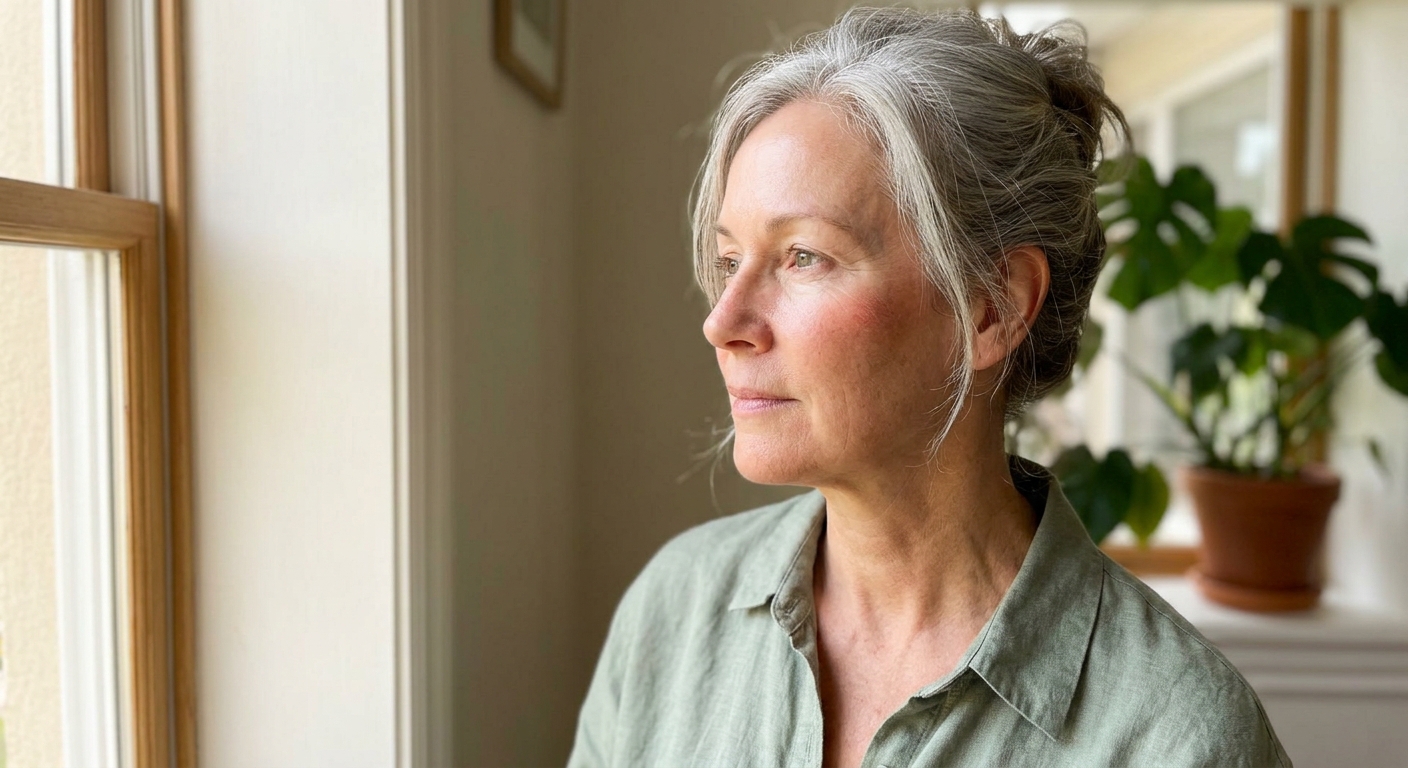
Best Blush for Mature Skin: Why Formula Matters More Than Shade
What actually changed on your cheek, and which blush chemistry survives it
Somewhere in your forties or fifties, a blush you have used for a decade stops behaving. The colour goes on and then sits in the fine lines across your cheek instead of blending out of them. By lunchtime it has either vanished or settled into a patchy stripe that looks nothing like it did in the mirror at eight in the morning.
The usual advice is to change the shade. Go warmer, go softer, avoid anything with shimmer. That advice helps, and it still aims at the wrong variable, because the surface underneath the colour is what changed.
Three things happened to your cheek
The first is sebum. Sebaceous output falls with age, and in women the decline is tied closely to menopause rather than to birthdays alone. A study comparing postmenopausal women on hormone replacement against those receiving none found a significant fall in sebum excretion rate in the untreated group, progressing over the first decade after menopause [1]. Sebum is what a powder pigment normally meets and softens into. Take it away and the powder has nothing to bind with.
The second is surface texture. Skin roughness increases measurably with age, and it does so at specific sites. Comparing aged and young women across five anatomical locations, roughness was significantly higher in the older group, and scaliness tracked with how hydrated the stratum corneum was [2]. A rougher surface has more edges for dry pigment to catch on, which is exactly what patchiness looks like at close range.
The third is structural, and it explains why your usual placement stopped flattering you. Computed tomography of the midfacial fat compartments across two age brackets showed the compartments migrate downward and lose volume in the upper and malar regions with age [3]. The apple of the cheek that used to sit high and full has, quietly, moved south. Colour placed where it always went now sits below the point it is supposed to lift. Our page on facial volume loss covers that anatomy in more depth.
Why powder turned on you
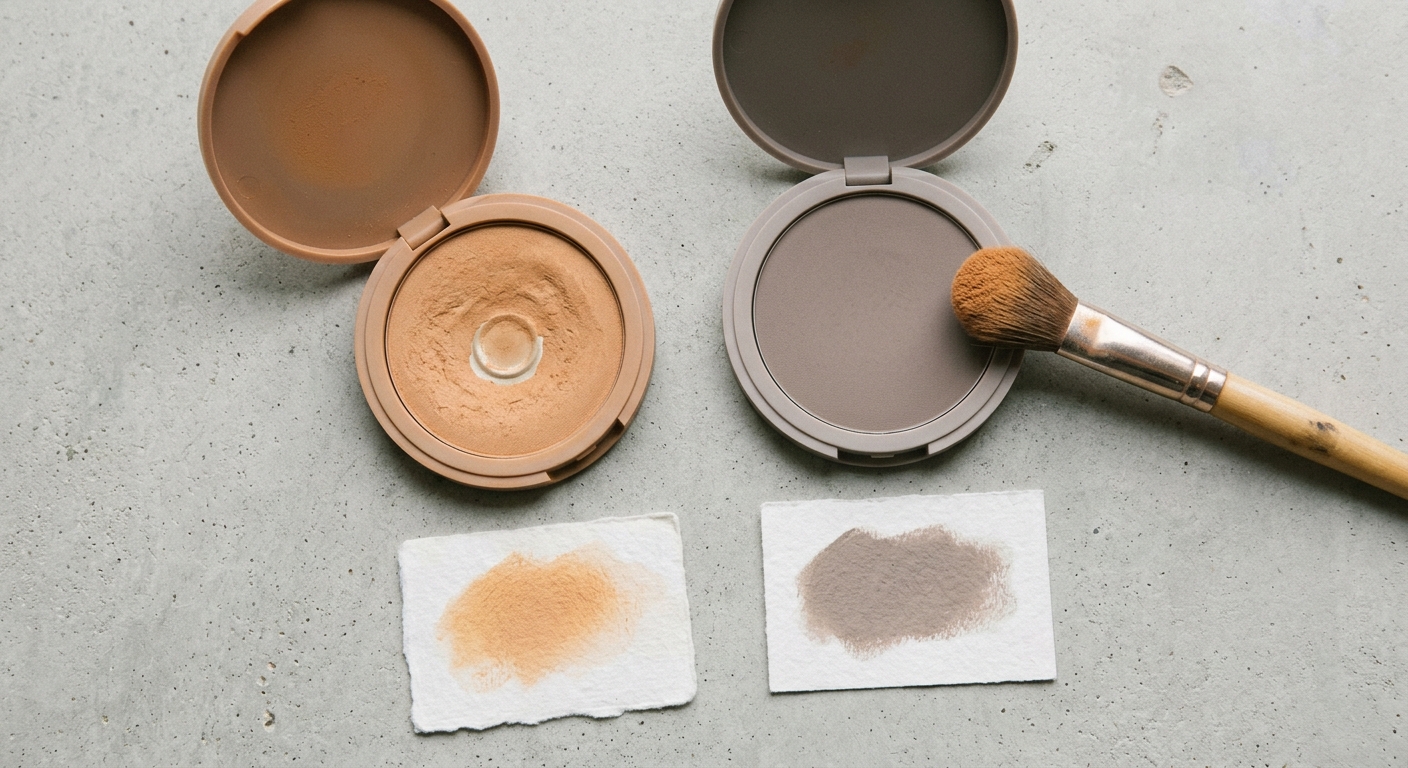
Pressed powder blush works by depositing dry pigment held together with binders and a filler, usually talc or mica. On skin with normal oil flow, a thin film of sebum lets that pigment settle evenly and diffuse at the edges. On a drier, rougher surface, the same pigment grabs at the high points and skips the low ones. That is the patchy stripe.
Somewhere in your forties or fifties, a blush you have used for a decade stops behaving.
Matte powders are the worst offenders because they contain the highest ratio of pigment and absorbent filler to emollient. They are engineered to soak up oil, which is a virtue at twenty-five and a liability at fifty-five. Setting a cream blush with translucent powder recreates the same problem from the other direction.
None of this makes powder unusable. It makes powder conditional. If your skin still runs oily through the T-zone and cheeks, powder remains the most controllable format there is.
What a cream actually does differently
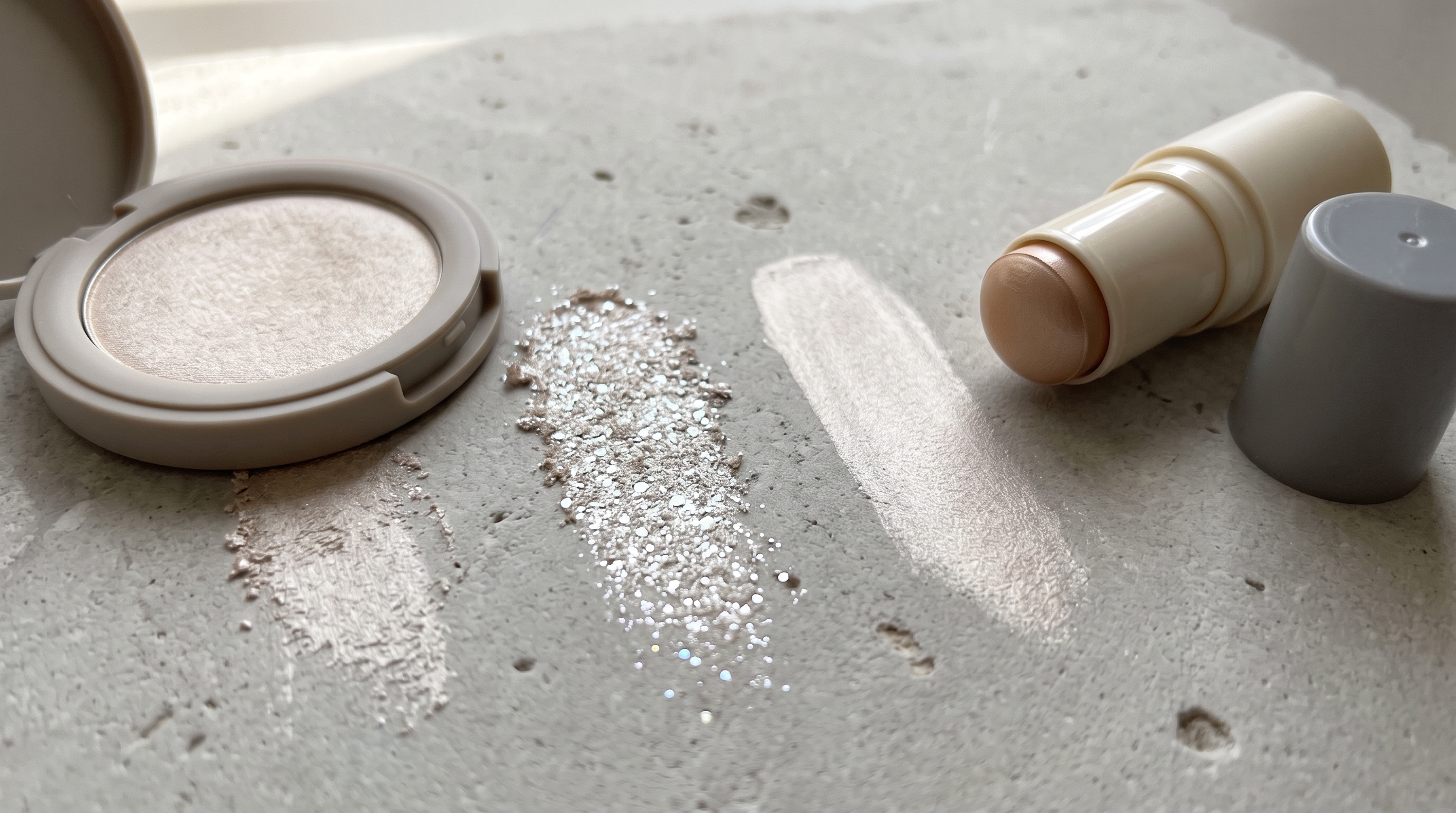
The functional difference between a cream blush and a powder one is the ratio of emollient to pigment. A cream carries its colour in an oil or wax base that stays slightly mobile after application. It fills the microscopic texture rather than sitting on top of it, and because it does not dry to a rigid film, it moves with the skin instead of cracking across it.
This is why cream and liquid formulas photograph better on mature skin even when the shade is identical. The pigment is suspended in something that reflects light diffusely, and diffuse reflection is what reads as healthy skin rather than applied colour.
Stick formats sit between the two. They carry enough wax to be portable and blendable but usually less oil than a pot cream, so they suit combination skin better than genuinely dry skin. Liquid tints have the least filler of all, which makes them the sheerest and also the least forgiving of uneven texture, because there is nothing in the formula to fill anything.
Where the colour goes now
Placement matters more than it used to, and it moves upward. Because the malar fat has descended, colour applied to the roundest part of the cheek when you smile now lands lower on the face than it did at thirty, and low colour drags the whole midface down visually [3].
In photodamaged human skin, collagen I formation was 56% lower than in sun-protected skin, and ten to twelve months of topical tretinoin produced an 80% increase in collagen I formation against a 14% decrease with vehicle alone.
The correction is to work along the top of the cheekbone and angle back toward the temple, stopping well short of the nasolabial fold. Blending downward emphasises the fold. Blending upward and outward does the opposite.
Two other adjustments help. Apply blush before setting anything, so it has bare or lightly moisturised skin to melt into. And apply less than feels right, then build, because a cream deposits more pigment per pass than a powder does. If you are rebuilding a whole routine, our guide to the best foundation for mature skin covers the base layer that sits underneath.
The part no formula can fix
Every one of these adjustments is a workaround. They make colour behave on the surface you have; they do not change the surface.
What changed underneath is collagen. In 69 untreated postmenopausal women, skin collagen content fell progressively with each year since menopause, and hormone replacement prevented that decline [4]. The barrier changed too. Transepidermal water loss in adults aged 69 to 85 was significantly higher than in adults aged 19 to 42, and recovery after disruption took roughly twice as long [5]. Thinner, drier, less resilient skin is the reason pigment catches, and no amount of shade correction addresses it. Our page on how to fix skin texture works through the surface side of that problem.
There is one intervention with strong evidence for reversing part of it. In photodamaged human skin, collagen I formation was 56% lower than in sun-protected skin, and ten to twelve months of topical tretinoin produced an 80% increase in collagen I formation against a 14% decrease with vehicle alone [6]. Retinoids rebuild the scaffold rather than concealing its absence.
The catch has always been tolerance. Conventional retinol reaches the dermis by chemically disrupting the skin barrier, and on already dry, thin, postmenopausal cheeks that produces the flaking and redness that ends most attempts inside a month, which is precisely the texture problem you were trying to solve.
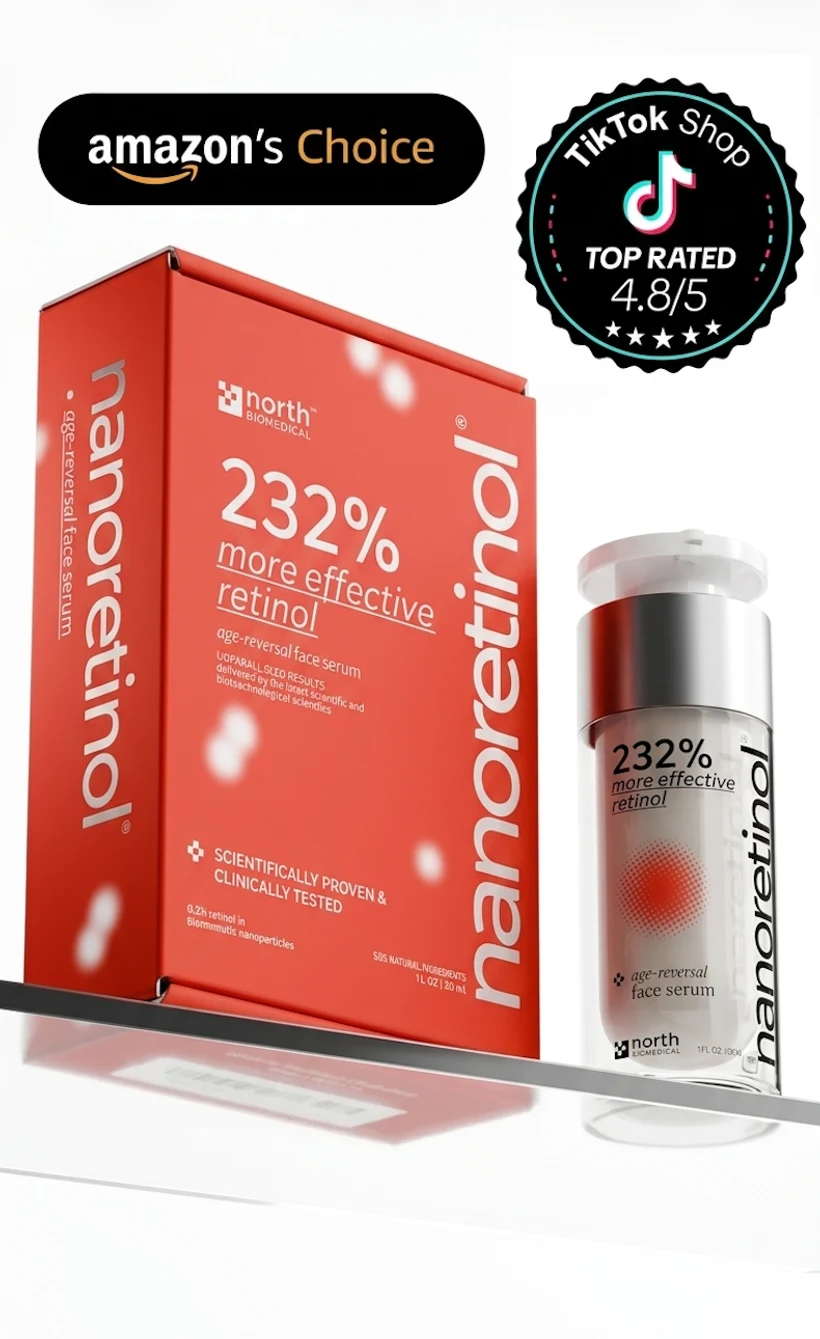
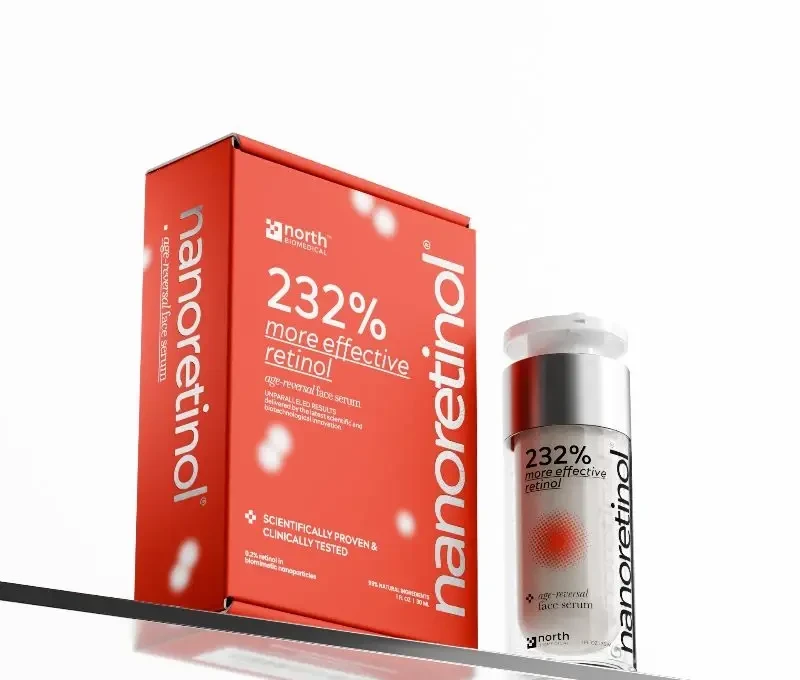
Nanoretinol takes a different route. Its 0.2% retinol travels inside biomimetic lipid nanoparticles that the skin recognises as self and admits intact, in a water-based, 99% natural formulation suitable for sensitive skin. Against conventional retinol it delivered 232% greater collagen recovery and 73% greater elastin recovery with drastically reduced cytotoxicity, and over 56 days produced a 61% increase in firmness and a 56% increase in elasticity. Firmer, smoother skin is the surface every blush was designed for in the first place. If sagging along the cheek is your primary concern, sagging cheeks addresses it directly.
What to buy on the counter
Reach for a cream, stick or liquid before a pressed powder unless your cheeks still run oily. Check the ingredient list for emollients in the first third rather than talc. Skip anything labelled matte or long-wear, since both achieve their claim through absorbency. Test it on your cheek rather than your hand, because the texture of the back of your hand tells you nothing about how a formula behaves over fine lines.
Then treat the makeup as the short game and the skin as the long one. The best blush for mature skin is the one that has the least work to do.
References
- Piérard-Franchimont C, Piérard GE. “Postmenopausal aging of the sebaceous follicle: a comparison between women receiving hormone replacement therapy or not.” Dermatology. 2002;204(1):17-22. PMID: 11834844
- Manuskiatti W, Schwindt DA, Maibach HI. “Influence of Age, Anatomic Site and Race on Skin Roughness and Scaliness.” Dermatology. 1998;196(4):401-407. doi:10.1159/000017932
- Gierloff M, Stöhring C, Buder T, Gassling V, Açil Y, Wiltfang J. “Aging Changes of the Midfacial Fat Compartments: A Computed Tomographic Study.” Plastic and Reconstructive Surgery. 2012;129(1):263-273. PMID: 21915077
- Brincat M, Moniz CF, Kabalan S, Versi E, O’Dowd T, Magos AL, Montgomery J, Studd JW. “Decline in Skin Collagen Content and Metacarpal Index After the Menopause and Its Prevention with Sex Hormone Replacement.” British Journal of Obstetrics and Gynaecology. 1987;94(2):126-129. doi:10.1111/j.1471-0528.1987.tb02338.x
- Roskos KV, Guy RH. “Assessment of Skin Barrier Function Using Transepidermal Water Loss: Effect of Age.” Pharmaceutical Research. 1989;6(11):949-953. PMID: 2594686
- Griffiths CEM, Russman AN, Majmudar G, Singer RS, Hamilton TA, Voorhees JJ. “Restoration of Collagen Formation in Photodamaged Human Skin by Tretinoin (Retinoic Acid).” New England Journal of Medicine. 1993;329(8):530-535. doi:10.1056/NEJM199308193290803