Hand Balm: When Your Hands Need More Than a Cream
How a water-free hand balm differs from hand cream, which ingredients the hand-washing trials support, and how to use one overnight for cracked winter hands
By the middle of winter, many people find that their usual hand cream has stopped working. It feels pleasant for ten minutes, then the knuckles tighten again, the skin beside the nails splits, and the backs of the hands look dull and crosshatched. That is usually the point where a hand balm earns its place.
A balm is not simply a thicker cream. It is built differently, it works differently, and it suits a different job. Knowing what separates the two, and which ingredients the clinical evidence supports, makes choosing one far easier than reading the marketing on the tin.
What Makes a Balm Different From a Hand Cream
Most hand creams are emulsions: water and oil held together by an emulsifier, usually 60 to 80 percent water. The water evaporates quickly, which is why a cream feels light and absorbs fast. What stays behind is a thin layer of oils and humectants.
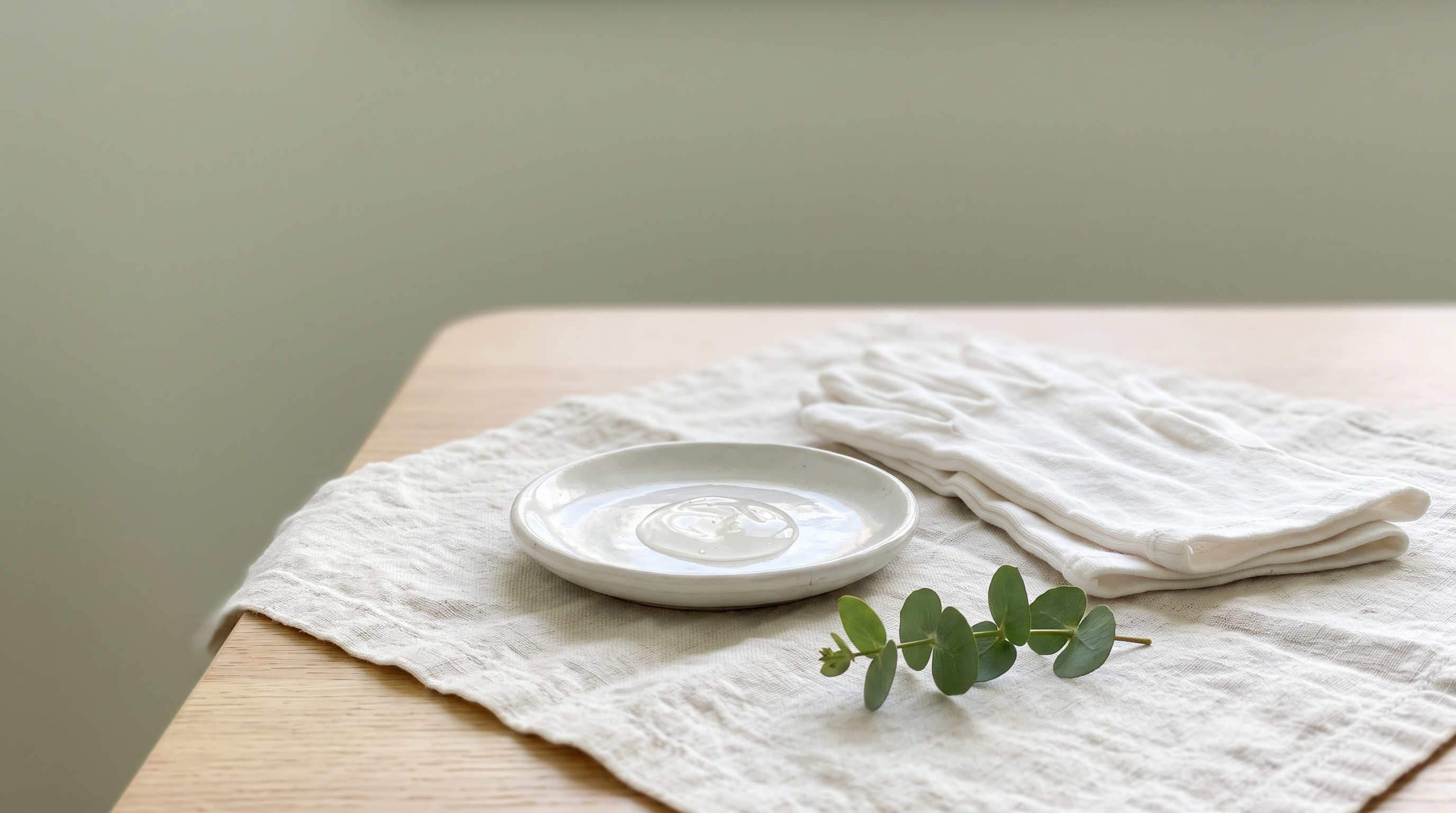
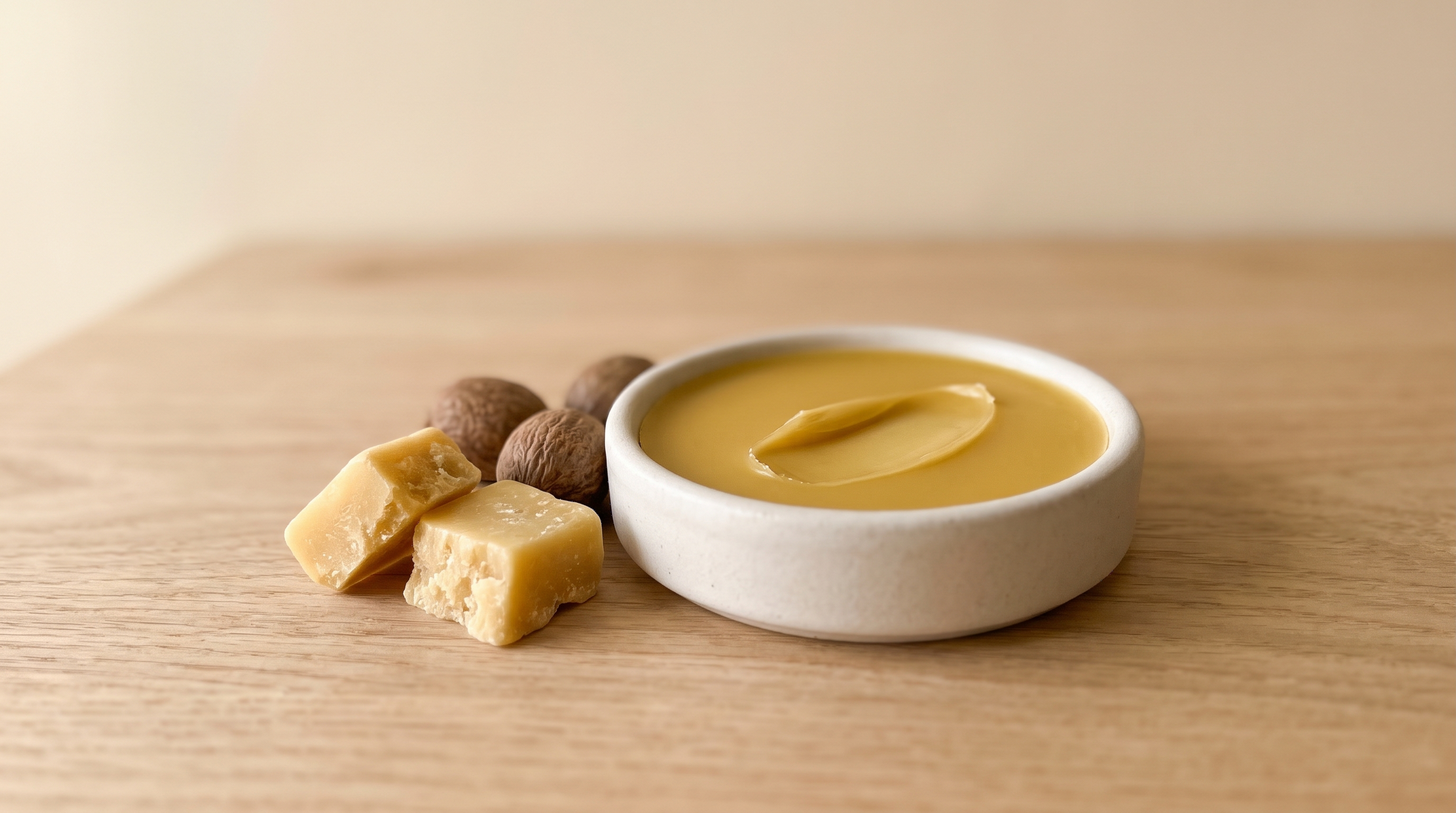
A balm usually contains little or no water. It is made mostly of waxes, butters and heavy oils, such as petrolatum, beeswax, shea butter, lanolin and plant oils, sometimes with glycerin or urea mixed in. Because nothing has to evaporate, almost everything you apply stays on the skin as a protective film. That film slows the water escaping from your skin far more than the residue a cream leaves.
The trade-off is texture. A balm feels richer, can leave a slight sheen, and takes longer to settle. That is why balms suit nights, cold days outdoors and badly cracked skin, while creams suit the moments when you need to type or hold a phone a minute later.
Why Hands Dry Out Faster Than the Rest of You
Your hands face a harsher routine than almost any other skin on your body. Each wash with soap strips away some of the lipids that seal the outer layer, and hot water and winter air make the loss worse. Dermatologists saw a wave of hand dermatitis during the pandemic, when frequent washing broke down the barrier and set off inflammation in people who had never had trouble before [1].
Your skin can visibly worsen within 14 days of washing your hands 15 times a day with no moisturizer, far faster than most people expect.
The skin itself also varies across the hand. The palms carry a stratum corneum of around 47 cell layers, compared with about 15 on the backs of the hands and other limbs [2]. The thick palm skin rarely cracks unless it gets very dry, while the thinner backs of the hands and the knuckles chap, redden and look crepey first. Fingertips sit in between: thick, but bent and pressed all day, which is why the splits there hurt so much (our guide to cracked fingertips covers those in detail).
Your skin can visibly worsen within 14 days of washing your hands 15 times a day with no moisturizer, far faster than most people expect. In a double-blind trial that simulated hospital hand hygiene, volunteers who washed 15 times a day with soap alone got measurably worse hand eczema scores by day 14, while those who used a moisturizer after washing did not [3].
What the Evidence Supports in a Hand Balm
No trial has pitted one branded hand balm against another, but several ingredients that make up most balms have solid evidence behind them.
- Petrolatum. The most studied occlusive in dermatology. In barrier studies, petrolatum moved into the gaps between the outer skin cells and sped up barrier recovery after damage, rather than just sitting on top [4].
- Urea. A humectant that pulls water into the outer layer and softens thick, scaly skin. At 10 percent and above it also loosens rough buildup, which helps on knuckles and the sides of fingers [5].
- Glycerin. The workhorse humectant. Balms that blend glycerin with occlusives give the film some water to hold in place.
- Shea butter, beeswax and lanolin. Rich emollients and partial occlusives that give a balm its body. Lanolin is very effective, but a small number of people are allergic to it, so patch test if your hands are already irritated.
- Ceramides and plant oils. Useful supporting players. They feel lovely, but the strongest evidence still sits with petrolatum and humectants.
Skip balms that lead with fragrance or essential oils. Cracked skin lets allergens in more easily, and hands are a common site for contact allergy. For skin that is already split and raw, a plain ointment for dry skin is often the gentler first step before you move to a scented balm.
How Often Should You Reapply?
The simple answer is after every wash, or as close to it as you can manage. Soap removes the film along with everything else. Hospital studies show that the habit matters more than any single product: in a year-long trial with healthcare workers, wards given easy access to hand cream, with reminders, saw a larger relative improvement in hand eczema than wards without (56 percent versus 44 percent), with the biggest gains in people with mild symptoms [6].
Your skin gets 8 hours of uninterrupted repair from a balm worn overnight, far longer than the minutes it survives between daytime washes.
Washing itself is part of the problem. Soap and water irritate hands far more than an alcohol hand rub, which is why dermatologists who study hand hygiene recommend rubs over repeated soap washes when hands are not visibly dirty [7]. If your hands sting when you use a rub, the burning comes from skin that is already cracked, not from an allergy.
The Overnight Balm Routine
Your skin gets 8 hours of uninterrupted repair from a balm worn overnight, far longer than the minutes it survives between daytime washes. Night is when a balm does its best work, so build your routine around it:
- Wash and pat almost dry. Leave the skin slightly damp, because a balm locks in whatever water is already there.
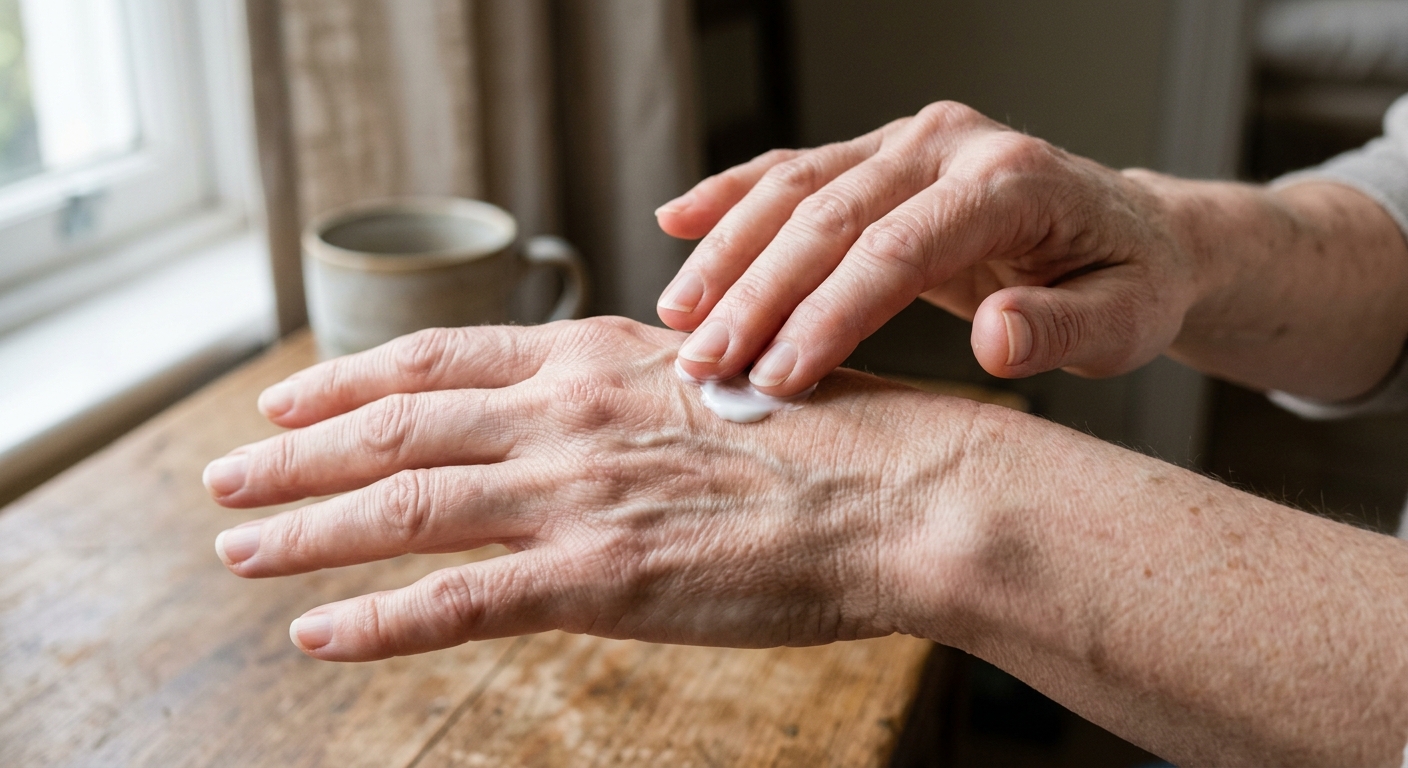
- Use more than you think. A cherry-sized amount for both hands is fine at night. Work it into the knuckles, between the fingers and along the nail folds.
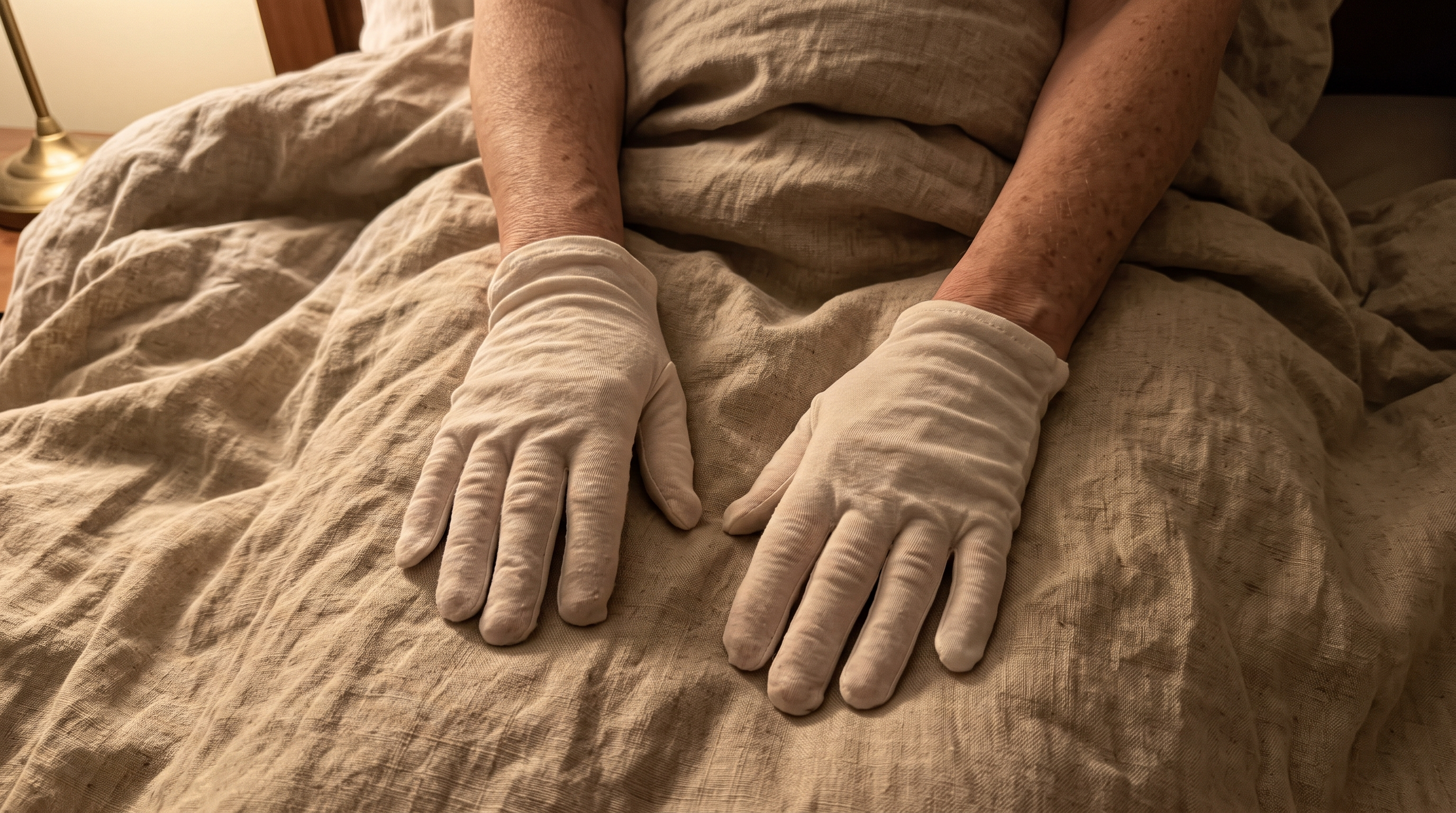
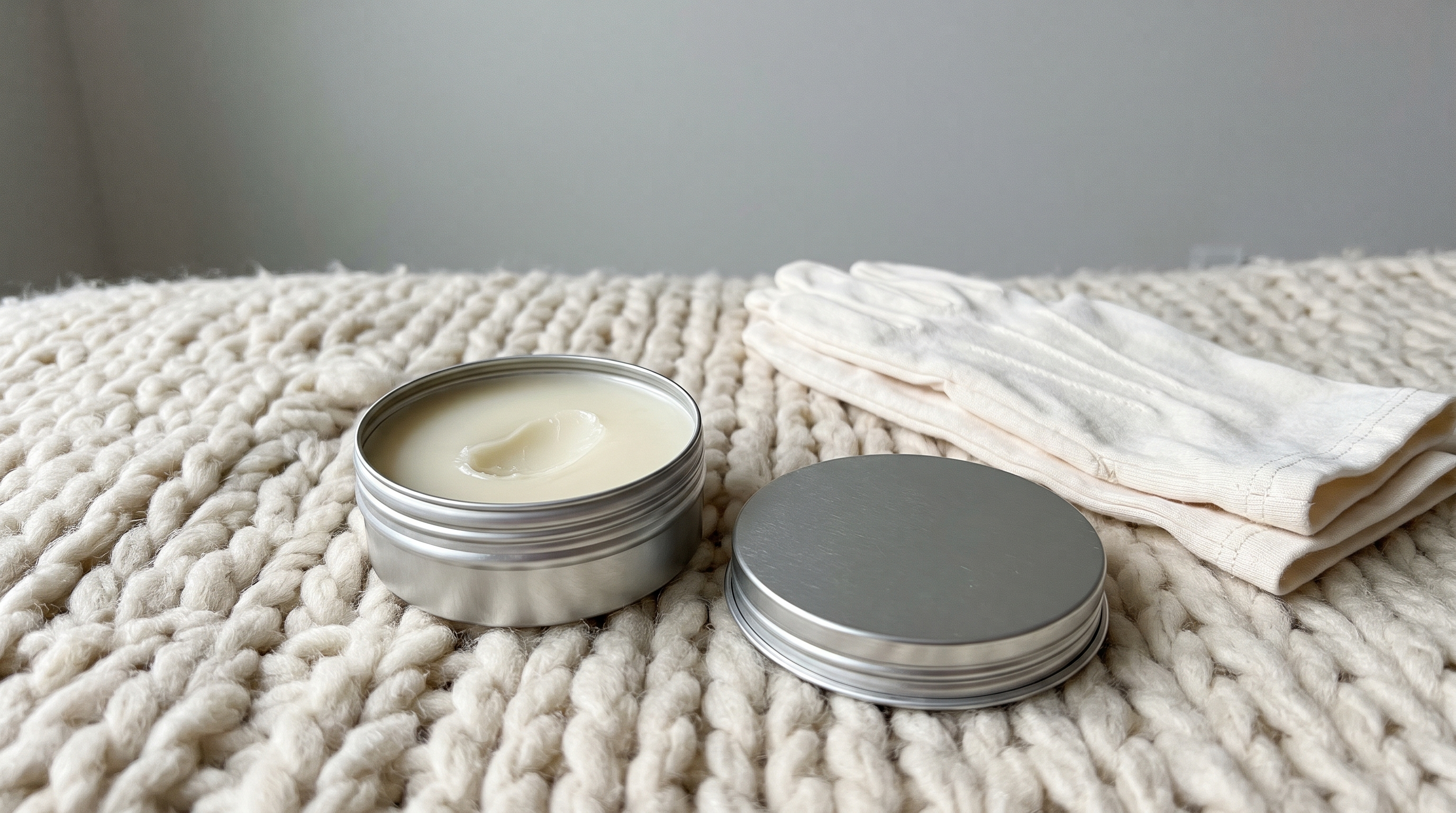
- Add cotton gloves for bad weeks. Gloves keep the balm on your hands instead of the pillow and boost the occlusion. Three or four nights in a row usually takes the sting out of open cracks.
- Keep a cream for daytime. A lighter cream between washes keeps your hands usable, with a thin layer of balm on the knuckles if they are chapped.
If the skin is weeping, swollen, or still cracking after two weeks of this routine, see a dermatologist. That pattern can be hand eczema or contact allergy, which needs more than a moisturizer.
What a Balm Cannot Do for Aging Hands
A balm fixes the surface: roughness, flaking, cracks and the tight feeling after washing. It does not touch what makes hands look older over the years, which is the slow loss of collagen and elastin in the dermis and the thinning fat pad that lets veins and tendons show.
That deeper work needs an active ingredient. In a 24-week trial in older adults, a 0.4 percent retinol lotion applied to the arms increased collagen production and reduced fine wrinkling compared with the vehicle alone [8]. The same logic applies to the backs of the hands, which age under sun and washing in a similar way. A hand serum with retinol under your night balm gives you both halves of the job.
The problem is that conventional retinol and chapped hands are a bad mix. Retinol creams often rely on solvents that loosen the skin barrier to push the active through, which is exactly the barrier your hands are already short of.
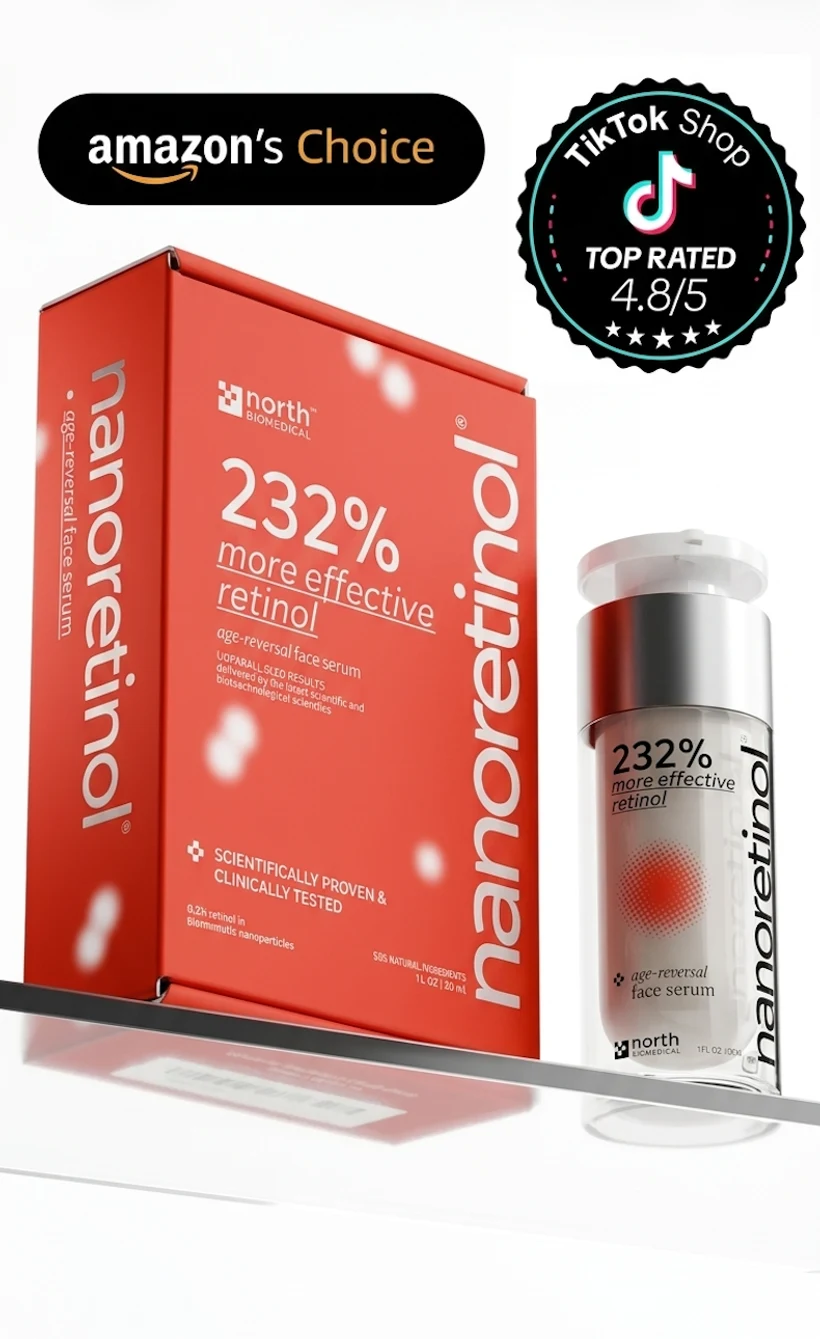
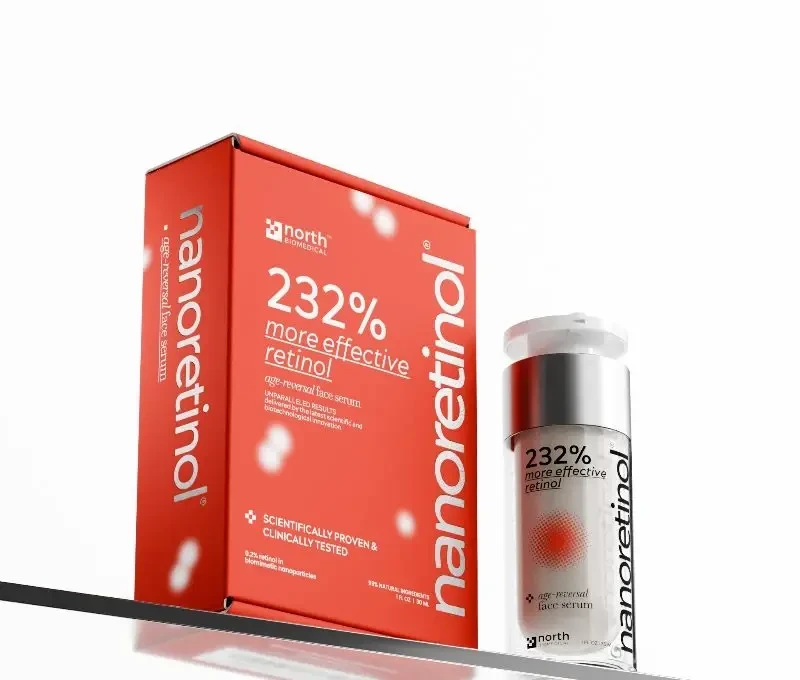
Nanoretinol takes a different route. It is a water-based gel with 0.2 percent retinol inside biomimetic lipid nanoparticles that the skin recognizes as its own, so the retinol gets through without breaking down the barrier. In North Biomedical’s study, Nanoretinol was 232 percent more effective in collagen recovery and 73 percent more effective in elastin recovery than conventional retinol, and users saw a 61 percent increase in skin firmness after 56 days [9]. Smooth a pea-sized amount over the backs of your hands at night, let it absorb for a minute, and seal it with your balm. Wear sunscreen on your hands during the day, and skip it if you are pregnant or breastfeeding.
Choosing Your Balm
The best hand balm is the one you will actually use. Look for petrolatum, shea butter or beeswax near the top of the list, a humectant such as glycerin or urea, and no added fragrance. Keep a tube by the sink and one on your nightstand. Your hands will tell you within a week whether it is working.
References
- Beiu C, Mihai M, Popa L, Cima L, Popescu MN. “Frequent Hand Washing for COVID-19 Prevention Can Cause Hand Dermatitis: Management Tips.” Cureus. 2020;12(4):e7506. doi:10.7759/cureus.7506
- Ya-Xian Z, Suetake T, Tagami H. “Number of cell layers of the stratum corneum in normal skin - relationship to the anatomical location on the body, age, sex and physical parameters.” Archives of Dermatological Research. 1999;291(10):555-559. doi:10.1007/s004030050453
- Williams C, Wilkinson SM, McShane P, et al. “A double-blind, randomized study to assess the effectiveness of different moisturizers in preventing dermatitis induced by hand washing to simulate healthcare use.” British Journal of Dermatology. 2010;162(5):1088-1092. doi:10.1111/j.1365-2133.2010.09643.x
- Ghadially R, Halkier-Sorensen L, Elias PM. “Effects of petrolatum on stratum corneum structure and function.” Journal of the American Academy of Dermatology. 1992;26(3 Pt 2):387-396. PubMed 1564142
- Pan M, Heinecke G, Bernardo S, Tsui C, Levitt J. “Urea: a comprehensive review of the clinical literature.” Dermatology Online Journal. 2013;19(11):20392. PubMed 24314769
- Soltanipoor M, Kezic S, Sluiter JK, et al. “Effectiveness of a skin care programme for the prevention of contact dermatitis in healthcare workers (the Healthy Hands Project): A single-centre, cluster randomized controlled trial.” Contact Dermatitis. 2019;80(6):365-373. doi:10.1111/cod.13214
- Löffler H, Kampf G. “Hand disinfection: how irritant are alcohols?” Journal of Hospital Infection. 2008;70(Suppl 1):44-48. PubMed 18994681
- Kafi R, Kwak HS, Schumacher WE, et al. “Improvement of naturally aged skin with vitamin A (retinol).” Archives of Dermatology. 2007;143(5):606-612. doi:10.1001/archderm.143.5.606
- North Biomedical LLC. “Nanoretinol vs. Conventional Retinol: Efficacy in Collagen and Elastin Recovery.” Clinical Study Summary, 2024. Study summary